Category: CONVENTION RIGHTS
18 October 2010 by Rosalind English
 An injunction sought against the publication of certain information has been granted by the High Court in Northern Ireland under Article 2 (the right to life). The claimant also invoked the Prevention of Harassment (NI) Order and sought damages for misuse of private information. The Article 8 claim was only partially successful and the harassment claim was dismissed.
The claimant, who had been accused and subsequently cleared of murdering a journalist working for the defendant newspaper sought to prevent the publication of details relating to his address, his partner, his wedding plans and other personal information and photographs. The judge held that the publication of this information, in the light of threats from loyalist paramilitaries and dissident republican paramilitaries, would result in a “real and immediate risk” to the claimant’s life.
Continue reading →
Like this:
Like Loading...
18 October 2010 by Alasdair Henderson
 A (a minor) and B (a minor) v. A Health and Social Services Trust, [2010] NIQB 108 – Read judgment
In a fascinating case involving IVF treatment, the High Court in Northern Ireland has held that no duty of care is owed to human cells and that having a skin colour different to that intended cannot be considered legally recognisable loss and damage.
Professor Robert Edwards, the British scientist who pioneered in vitro fertilisation, was recently awarded the Nobel Prize for Medicine. But while Professor Edwards’ achievements have changed the lives of millions of infertile couples around the world, they have also given rise to a whole host of thorny ethical and legal questions. A recent decision by Mr Justice Gillen in an extremely unusual case has attempted to wrestle with some of these issues, and in particular with the rights (if any) of human cells.
Continue reading →
Like this:
Like Loading...
18 October 2010 by Matthew Hill

No victory this time
R (British Gurkha Welfare Society and ors) v Ministry of Defence [2010] EWCA Civ 1098 – read judgment
The Court of Appeal has rejected a fresh attempt, based on Article 14 of the European Convention on Human rights (anti-discrimination), to obtain equal pension rights for Gurkhas who served in the British Army before 1997.
The long-running campaign for Gurkha rights has been highly publicised and successful, but it has not ensured equality of treatment in respect of pensions. The MoD continues to calculate accrued pension rights at a lower rates for Gurkhas than for other soldiers in respect of service performed before 1997, the date on which the majority of Gurkhas ceased to be based in Hong Kong and were instead moved to the UK.
Continue reading →
Like this:
Like Loading...
15 October 2010 by Rosalind English
 Communications from an accountant giving legal advice do not attract legal professional privilege. The rule is only available if the advice is sought from a lawyer.
Notices under the Taxes Management Act 1970 (“Section 20 notices”) were served on the appellant company by the Revenue with a view to investigating a commercially marketed tax avoidance scheme. The appellant asserted that the notices required production of documents by which they sought or received legal advice on tax matters, in some cases from counsel and foreign lawyers, and in others from accountants.
Continue reading →
Like this:
Like Loading...
14 October 2010 by Rosalind English
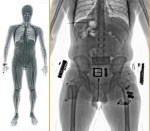 Full body scanners are to become the only security option for people flying out of Manchester Airport, the BBC reports today. The excessive amount of coverage given to the disapproval expressed by civil liberties groups has now been counterbalanced by passengers’ attitudes, since it appears that people actually prefer the scanners to the full body pat down, and have been voting with their feet.
According to Manchester Airport, 95% of travellers prefer the scanners and queuing times have been radically reduced. It takes 2 minutes to undergo a pat down, but a mere 27 seconds to pass through a scanner.
Continue reading →
Like this:
Like Loading...
11 October 2010 by Adam Wagner
 Ex-Guantanamo Bay prisoner Binyam Mohamed failed this weekend to prevent the Daily Mail reporting that he had been granted permanent residency in Britain. The case highlights a growing trend for the courts to enforce open justice in two significant ways, both which rely heavily on protections guaranteed under human rights law.
Interestingly, two crucial aspects of open justice have been reinforced as a result of a case involving Mohamed himself. In fact, the open justice aspects of Mohamed’s case against the security services will probably emerge as amongst the most important legal rulings arising from the ‘war on terror’ era. Unfortunately for him, this may have had the unintended consequence of destroying any chances of maintaining his privacy.
Continue reading →
Like this:
Like Loading...
8 October 2010 by Isabel McArdle
 (1)A Chief Constable, (2) AA v (1)YK, (2)RB, (3)ZS, (4)SI, (5)AK, (6)MH, [2010] EWHC 2438 (Fam) – Read judgment
The High Court has given guidance on the role which special advocates may play in forced marriage and honour violence cases. The controversial special advocates system has been used in anti-terrorism trials to prevent national secrets being revealed to terrorist subjects. However, recently the courts have roundly rejected attempts for the advocates to be used in non-criminal scenarios, on the basis that open justice is a fundamental legal right.
Forced marriage cases often involve information which it is in the public interest not to disclose because to do so would, for example, endanger police informants. Special advocates are not normally needed, because the legislation in question allows the courts to make orders to prevent forced marriages without those suspected of attempting to force a marriage from being notified at all.
Continue reading →
Like this:
Like Loading...
8 October 2010 by Adam Wagner

Ain't no sovereignty clause
Some of this week’s human rights news, in bite-size form. The full list of our external links can be found on the right sidebar or here.
Speeches: “The English Law of Privacy: An Evolving Human Right” – Lord Walker – UKSC blog: Supreme Court Justice Lord Walker of Gestingthorpe gave a speech to Anglo-Australasian Lawyers Society on the subject of privacy. The lecture contains an interesting overview of the current law of privacy, particularly in relation to the media.
Kenneth Clarke reveals what cuts will mean for the courts – Joshua Rozenberg: The Ministry of Justice has to make £2bn cuts from its £9bn budget (see our post on where the cuts are likely to come from). According the justice ministers’ Tory conference speech, legal aid is in line for a “total review” – no surprises there – and that popular panacea, alternative dispute resolution, will be encouraged and court discouraged. Rozenberg concludes: “Things are not going to get better and nobody should pretend otherwise. All we can hope for is the best publicly funded legal system that we can afford.” Difficult times ahead for access to justice.
Continue reading →
Like this:
Like Loading...
7 October 2010 by Adam Wagner
 Updated | George Bathurst-Norman, the judge at the centre of the controversial acquittal of five activists against the 2008/9 Gaza war, has been officially reprimanded by the Office for Judicial Complaints.
The news was reported on Joshua Rozenberg’s Standpoint blog. The OJC press release says:
At short notice, the judge assigned to try a politically sensitive trial at Hove Crown Court on 28 and 29 June 2010 was unable to sit. To avoid an adjournment, His Honour Bathurst-Norman agreed to replace to him.
A number of complaints were made about some of the observations he made during the trial and summing up. An investigation found that a number of these observations did not arise directly from the evidence at trial and could be seen as an expression of the judge’s personal views on a political question. This was an error.
Continue reading →
Like this:
Like Loading...
7 October 2010 by Adam Wagner

Ghailani
The New York Times reports that those prosecuting Ahmed Khalfan Ghailani in the first civilian trial of a man held at Guantanamo Bay have suffered a setback: “just as the trial was to begin on Wednesday, Judge Kaplan ruled that he would not allow [a man who was to testify that Ghailani sold weapons to him] to testify. … the government had acknowledged that it had identified and located the witness through interrogation of Mr. Ghailani when he was earlier held in a secret overseas jail run by the Central Intelligence Agency. His lawyers have said he was tortured there.” The judge said:
Continue reading →
Like this:
Like Loading...
7 October 2010 by Maria Roche
 Kevin O’Dowd v UK (application no. 7390/07) [2010] ECHR 1324 (21 September 2010) – Read judgment
The European Court of Human Rights has ruled that a man’s pre-trial detention did not breach his right to liberty. Mr O’Dowd, who had a previous conviction for rape, was denied bail despite the maximum custody time limit having expired.
Kevin O’Dowd was charged with rape, false imprisonment and indecent assault in early December 2001. He had a prior conviction for rape which brought him within the provisions of Section 25 of the Criminal Justice and Public Order Act 1994 (“the 1994 Act”) that bail should only be granted if there are exceptional circumstances justifying it.
Continue reading →
Like this:
Like Loading...
6 October 2010 by Adam Wagner
 Two prominent public law barristers spoke last night on the future of the Human Rights Act at the annual seminar organised by the Constitutional and Administrative Bar Association.
The seminar had a special significance as the HRA has just celebrated its 10th birthday. Both speakers looked to the future of the act in light of the coming budget cuts and economic austerity policies.
Continue reading →
Like this:
Like Loading...
6 October 2010 by Matthew Hill
 British Broadcasting Corporation v Harpercollins Publishers Ltd & Anor [2010] EWHC 2424 (Ch) – Read judgment
As has been widely reported, the BBC has failed in its attempts to obtain an injunction preventing the driver Ben Collins from revealing in an autobiography that he was The Stig in Top Gear. On 4 October 2010 Mr Justice Morgan handed down his reasoned judgment in the case, which has been summarised on the Inforrm blog.
The judgment itself contains few surprises. Morgan J held that Collins himself was not a party to any contracts with the BBC, the contracts in question having been agreed between the Corporation and a company established to service Collins’ business interests (para.20). It followed that the BBC had no claim in contract law against him personally for an alleged breach of a confidentiality clause. However, Collins was still bound by an equitable duty of confidentiality that prevented him from revealing The Stig’s identity (para. 20). Morgan J considered that this duty would still have applied at the date of the trial if this information had continued to be confidential (para. 50). However, as a result of numerous press reports (para. 52):
Continue reading →
Like this:
Like Loading...
6 October 2010 by Matthew Flinn
 CA v Secretary of State for the Home Department [2010] EWHC 2278 (10 September 2010) – Read judgment
The High Court has ruled that a a control order which required the “controlee” to relocate and live at an address in Ipswich, away from his family in Crawley, was unlawful.
In Secretary of State for the Home Department v AP [2010] UKSC 24, the Supreme Court allowed the appeal of a man subject to a control order based on the argument that confinement to a flat 150 miles away from his family amounted to a breach of his human rights under Article 5 of the ECHR (right to liberty). The case of CA provides another example of the court striking down a relocation provision in a control order, and is the latest in a long series of court judgments which have chipped away at the controversial scheme.
Continue reading →
Like this:
Like Loading...
5 October 2010 by Adam Wagner
 Updated Al-Saadoon and Mufdhi v the United Kingdom – 61498/08 [2010] ECHR 282 – Read judgment / court press release
The European Court of Human Rights has declared that a decision in the cases of two Iraqi murder suspects in UK custody in Iraq is now final and will not be reconsidered. The court has effectively prohibited the death penalty under the European Convention on Human Rights, despite Article 2 (the right to life) appearing to expressly allow it.
The judgment is an important restatement of the prohibition against the death penalty which has been agreed to by all Council of Europe states. However, the reasoning of the court in prohibiting it under the European Convention, founded on the men’s “mental suffering caused by the fear of execution amounting to inhuman treatment”, rather than a prohibition against states carrying out the death penalty itself, may generate difficulties in future cases relating to inhuman and degrading treatment.
Continue reading →
Like this:
Like Loading...

 An injunction sought against the publication of certain information has been granted by the High Court in Northern Ireland under Article 2 (the right to life). The claimant also invoked the Prevention of Harassment (NI) Order and sought damages for misuse of private information. The Article 8 claim was only partially successful and the harassment claim was dismissed.


Recent comments