Category: CONVENTION RIGHTS
29 March 2010 by Rosalind English
 R (on the application of LG) (Appellant) v Independent Appeal Panel for Tom Hood School (Respondent) & Secretary of State for the Department for Children, Schools and Families (Interested Party) [2010] EWCA Civ 142
(Read judgment here)
CA (Civ Div) (Rix LJ, Wilson LJ, Sir Scott Baker) February 26 2010
An exclusion hearing by a school does not engage the pupil’s Article 6 of the Convention since there is no “civil right” to education recognized as such either by the Convention or by domestic law.
Summary
The appellant pupil (VG) had been involved in a fight at the school. He was accused of having a knife, which he denied. The school permanently excluded VG and he appealed. The panel, in accordance with the Education (Pupil Exclusions and Appeals) (Maintained Schools) (England) Regulations 2002 reg.7A, found on the balance of probabilities that he had carried a knife, and upheld his exclusion. VG appealed against a decision ((2009) EWHC 369 (Admin), (2009) BLGR 691) to refuse his application for judicial review of the decision of the respondent panel to uphold a decision to permanently exclude him from a school. He argued that his right to a fair hearing under Article 6 was engaged, either on the basis that the panel had determined his civil right not to be excluded from the school without good reason, or on the basis that the panel had determined a criminal charge against him, and that right had been infringed by the decision to exclude him having been based on allegations established against him on the balance of probabilities rather than on the criminal standard of proof. He also contended that regulation 7A(c), although purportedly made pursuant to the Education Act 2002 s.52, was ultra vires in that a rule about standard of proof was one of evidence and not procedure as permitted by s.52(3)(d).
Continue reading →
28 March 2010 by Adam Wagner
 Carson and Others v The United Kingdom (Application no. 42184/05)
The European Court of Human Rights has rejected a claim by British pensioners living abroad that their pension payments should be uplifted to take into account inflation. The case was supported by Pension Parity UK, a pressure group. The majority in the Court held that the pensions system was not a breach of ECHR Article 14 (non discrimination), saying at [86]:
Continue reading →
19 March 2010 by Adam Wagner
 Catholic Care (Diocese of Leeds) v Charity Commission for England and Wales (Equality and Human Rights Commission intervening) [2010] EWHC 520 (Ch)
The High Court have found that a Roman Catholic adoption agency (Catholic Care) could rely on regulation 18 of the Equality Act (Sexual Orientation) Regulations 2007 in refusing same-sex couples adoption services.
Continue reading →
17 March 2010 by Adam Wagner
 Baroness Deech, the Chair of the Bar Standards Board, has given the second lecture in her series on family law at Gresham College. In this lecture she questions whether the current law of marriage is compatible with human rights law. In particular, homosexual couples cannot legally marry, and hetrosexual couples are disbarred from entering civil partnerships. She said:
“Since [the] acceptance and recognition [of gay rights] has grown, advanced by the Human Rights Act 1998 and the Equality Bill 2010. Gay couples may adopt children (Adoption and Children Act 2002); they have access to fertility services and full parentage of donor conceived children (Human Fertilisation and Embryology Act 2008). Same sex childless couples are deemed to be a “family” for the purpose of succeeding a deceased partner to a tenancy (Fitzpatrick v Sterling Housing Association [1998] Ch.304). This trend culminated in the legislative establishment of civil partnerships in the Civil Partnership Act 2004, creating a union almost identical to, but not marriage.”
Continue reading →
16 March 2010 by Rosalind English
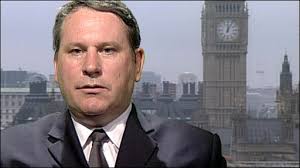
Colonel Richard Kemp, former Commander of British Forces in Afghanistan, has written in the Times that lawyers have no place on the battlefield. He said: “In the heat of battle, a commander can’t worry about the Human Rights Act. It would make war impossible”
- Read the full article here.
- Read our previous post on this topic here
16 March 2010 by Adam Wagner

Private Jason Smith
The case of R (on the application of Smith) (FC) (Respondent) v Secretary of State for Defence (Appellant) and another is being heard today in the Supreme Court.
The Secretary of State is appealing the 2009 decision of the Court of Appeal: See our case comment from the Court of Appeal judgment.
In short, the respondent’s son Smith was a member of the Territorial Army who had been posted to Iraq in June 2003. He had spent eight days in Kuwait for the purpose of acclimatisation. The room he occupied in Iraq did not have air conditioning. In August 2003 temperatures in the shade reached in excess of 50 degrees C, which was the maximum that available thermometers could measure. He reported sick complaining that he could not stand the heat. Some days later he suffered a cardiac arrest.
In this appeal the secretary of state appeals against the decision of the Court of Appeal ([2009] EWCA Civ 441) that the deceased had been within the jurisdiction of the United Kingdom for the purposes of the Article 1 of the European Convention on Human Rights 1950 and the Human Rights Act 1998 and that, consequently, the inquest into his death had to comply with Article 2.
The hearing is expected to last for four days. See coverage in The Times and the The Guardian.

5 March 2010 by Rosalind English
 Norris v United States [2010] UKSC 9
SC (Lord Phillips, Lord Hope, Lord Rodger, Lady Hale, Lord Brown, Lord Mance, Lord Judge, Lord Collins, Lord Kerr) 24 February 2010
In determining whether interference with an individual’s right to a family life was justified to achieve the aim of extradition, the court should not consider whether the circumstances were exceptional but should consider whether the consequences were exceptionally serious
SUMMARY
The appellant had recently retired from his job as CEO of a company that had been involved in price fixing. He had successfully resisted an extradition order sought by the United States on the grounds that price-fixing in the UK was not illegal (Norris v United States (2008) UKHL 16, (2008) 1 AC 920). However, the court held that the other charge against him – obstructing justice – justified extradition and his case was remitted to a district judge. The district judge decided that he should be extradited. His decision was upheld by the divisional court, which concluded that the obstruction of justice charges were very grave and that a high threshold would have to be reached before the appellant’s rights under Article 8 could outweigh the public interest in extradition ((2009) EWHC Admin 995, (2009) Lloyd’s Rep FC 475).
Read judgment here or
Continue reading →
5 March 2010 by Adam Wagner
 Re W (Children) [2010] UKSC 12 [On appeal from [2010] EWCA Civ 57]
The Supreme Court has ruled that refusing an application for a child to give evidence in a trial may contravene Article 6 of the European Convention on Human Rights (ECHR).
At issue in this case is the care of five children. All the children were taken into foster care and the four younger children are having supervised contact with both parents. The father has since been charged with 13 criminal offences and is currently on bail awaiting trial.
In the family proceedings the parties originally agreed that there would be a fact finding hearing in which the 14 year old girl would give evidence via a video link. In November 2009 the judge decided to refuse the father’s application for her to be called. Instead, she would rely on the other evidence, including a video-recorded interview with the child.
Continue reading →
25 February 2010 by Adam Wagner

Debbie Purdy
The Director of Public Prosecutions has published the long awaited Crown Prosecution Service guidance on assisted suicide, following the judgment of the House of Lords in the Debbie Purdy case. The DPP website says:
The public can have full confidence in the policy the CPS will follow in deciding whether or not to prosecute cases of assisted suicide, Keir Starmer QC, Director of Public Prosecutions, said today.
Mr Starmer published the policy after taking account of thousands of responses received as part of what is believed to be the most extensive snapshot of public opinion on assisted suicide since the Suicide Act 1961 was introduced. Nearly 5,000 responses were received by the Crown Prosecution Service (CPS) following the consultation exercise launched in September.
Mr Starmer said: “The policy is now more focused on the motivation of the suspect rather than the characteristics of the victim. The policy does not change the law on assisted suicide. It does not open the door for euthanasia. It does not override the will of Parliament. What it does is to provide a clear framework for prosecutors to decide which cases should proceed to court and which should not.
Click here to read the CPS guidance and here to read a summary of the Purdy case. See also the Dianne Pretty case.
Update – 26 Feb 2010: Commentary on the guidance from the Guardian and The Times
24 February 2010 by Adam Wagner
 The Queen on the Application of Ghai v Newcastle City Council & Others [2009]EWHC 978 (Admin)
Read the 1COR case comment
A devout Hindu man has won the right to have his body to cremated in accordance with his religious beliefs as a Hindu.
In the previous hearing, the Judge, Cranston J, proceeded on the assumption that the cremation desired by Mr Ghai would be in the open air, i.e. not within any structure. It was accepted by Mr Ghai that such an open air cremation would have been precluded by the legislation relating to cremation, at least if interpreted without reference to section 3 of the Human Rights Act 1998. Mr Ghai’s primary case before the Judge was that, if this was the right interpretation of the legislation, there would be an impermissible interference with his right to manifest his religion or belief under Article 9 of the European Convention. Although the Judge accepted that Article 9 was engaged, he went on to hold that the interference was justified . Mr Ghai also relied on Article 8 and Article 14 of the Convention, but the Judge held that they were not engaged.
Continue reading →
17 February 2010 by Adam Wagner
 The Equality and Human Rights Commission have written to the Government urging caution before the introduction of full body scanners at UK airports; not that it has slowed the Government down – apparently, the scanners will be in UK airports as early as next week. Passengers at Manchester Airport have been experiencing full body scans since October, but clearly the recent botched ‘Detroit Bomber’ terrorist attack has speeded up their uptake.
John Wadham, group director legal at the EHRC says:
The right to life is the ultimate human right and we support the government reviewing security in the light of recent alleged terrorist activity. However, the government needs to ensure that measures to protect this right also take into account the need to be proportionate in its counter-terrorism proposals and ensure that they are justified by evidence and effectiveness.
Continue reading →
9 February 2010 by Adam Wagner

Binyam Mohamed
Read our case comment here
The Government has lost its appeal (see the BBC report) against the Divisional Court’s decision to order it to release an unredacted version of an email relating to the “cruel, inhuman and degrading” treatment which Binyam Mohamed received during questioning by the Americans. The Foreign and Commonwealth Office (FCO) had previously argued that to release the full email would damage national security. The full email can now be read on the FCO website.
Continue reading →
9 February 2010 by Adam Wagner
R (Degainis) v Secretary of State for Justice [2010] EWHC 137 (Admin)
Mr Justice Saunders
When deciding whether to award damages under Article 5(5) of the European Convention on Human Rights (ECHR) for breach of Article 5(4), regard has to be paid to Article 8 and the limits on damages in that provision. Articles 5 and 8 are not, however, incompatible. There was no basis for the claim that Article 5(4) compensation can only be monetary, and in some cases a finding of a breach can be sufficient compensation.
Continue reading →
1 February 2010 by Adam Wagner
 There was significant media attention over the weekend on the imposing and then lifting of a so-called ‘super injunction’ against press coverage of Chelsea footballer and England Captain John Terry’s alleged extra-marital affair. Mr Justice Tugendhat reversed a previous decision to impose the injunction (read judgment). Super injunctions not only block publication of the details of the case, but also any mention of the case existing at all. This morning’s Guardian asks whether this decision could be the beginning of the end for the super injunction:
Article 8 of the European Convention on Human Rights enshrines the right to privacy. But Index on Censorship is concerned that this right is increasingly used as a pre-emptive alternative to a defamation suit. In some ways, a superinjunction works better than a libel suit: after all, in libel cases, the allegations must be published first, and there is a chance (though only slight) that the litigant may actually lose.
Continue reading →
27 January 2010 by Adam Wagner
 Her Majesty’s Treasury (Respondent) v Mohammed Jabar Ahmed and others (FC) (Appellants); Her Majesty’s Treasury (Respondent) v Mohammed al-Ghabra (FC) (Appellant); R (on the application of Hani El Sayed Sabaei Youssef) (Respondent) v Her Majesty’s Treasury (Appellant) [2010] UKSC 2
The Supreme Court has ruled that the Treasury cannot make orders to freeze the assets of terror suspects. The Terrorism (UN Measures) Order 2006 and the 2006 al-Qaeda and Taliban (UN Measures) Order were made under section 1 of the 1946 UN Act in order to implement resolutions of the UN Security Council, and were found by the Court to be unlawful.
As a preliminary point, the Court considered that a press report identifying M would engage article 8. In a separate judgment, the Court repealed all of the suspects’ anonymity orders, finding that these would not breach the suspects’ Article 8 rights to privacy.
Read press summary and full judgment relating to the asset freezing
Read press summary and full judgment relating to the anonymity orders

 R (on the application of LG) (Appellant) v Independent Appeal Panel for Tom Hood School (Respondent) & Secretary of State for the Department for Children, Schools and Families (Interested Party) [2010] EWCA Civ 142


Recent comments