We use cookies to enhance your browsing experience. If you continue to use our website we will take this to mean that you agree to our use of cookies. If you want to find out more, please view our cookie policy. Accept and Hide [x]
The new contact tracing app (NHSX) is due to be rolled out in the rest of the UK some time after the Isle of Wight trial in May. Is this a way out of lockdown or an irreversible erosion of our privacy? In the latest episode of Law Pod UK Rosalind English talks to Professor Lilian Edwards of Newcastle University, whose Coronavirus (Safeguards) Bill 2020 seeks to address some of these concerns, particularly potential issues of coercion and discrimination. See our previous post reporting on the Webinar “The Covid-19 App – does it threaten privacy rights” held by Professor Edwards and others on 13 May.
It emerged this week that Dominic Cummings drove 250 miles from London to Durham with his wife and child to be with his parents, while his wife was experiencing symptoms of COVID-19. In so doing, Mr Cummings appears to have flouted the government guidance of which he was one of the architects. Leading Tory MPs have called for the Prime Minister to sack Mr Cummings, but he has refused to do so, saying that Mr Cummings “followed the instincts of every father and parent”, and “has acted legally, responsibly, and with integrity”.
Apparently in response to the incident, a rogue Civil Service employee tweeted from the official Civil Service Twitter account “Arrogant and offensive. Can you imagine having to work with these truth twisters?” The Tweet was swiftly deleted, and a Cabinet Office investigation is under way into how it was released.
The situation in Hong Kong has escalated again this week, as Beijing gears up to enact Article 23 of the Basic Law, Hong Kong’s ‘mini-constitution’ of 1997, and impose national security laws to prohibit “treason, secession, sedition [and] subversion”. Protesters have been out in force in defiance of coronavirus restrictions, and police have repeatedly made use of tear gas, pepper spray, and water cannons. Notably, protesters have started to call for full independence for Hong Kong, which has not previously been one of the pro-democracy movement’s official objectives.
In the latest episode of Law Pod UK, Robert Spano, who recently commenced his tenure as President of the European Court of Human Rights in the difficult circumstances of lockdown and remote working, discusses with Rosalind English the challenges we face with automated decision making and governmental interference with our lives. The pandemic has sharpened this question, as the lifting of restrictions is made contingent on various automated projects such as the contact tracing app, which we will be considering in the next episode. Spano explains that rapid advances in AI will not just require new legal and regulatory responses. Artificial intelligence will also fundamentally alter the institutional capacities and legitimacy of courts as sources of governance. How will AI reshape our understandings and implementations of law? How will it reshape the internal workings of courts? Listen to Episode 112 to find out more.
I wrote up Jay J’s dismissal on the challenge to the lawfulness of trading restrictions in the 2018 Ivory Act here. The details of the appellant’s role and their arguments, as well as the reasoning behind the judge’s decision, are set out in that post. The thrust of the initial claim was that the prohibitions in the Act went too far and were disproportionate under Articles 34, 35 and 36 of the Treaty on the Functioning of the European Union (“TFEU”). The question before the Court of Appeal was whether the judge applied the proportionality test correctly.
The overarching complaint was that the evidence base was insufficient. The appellant’s criticisms of Jay J’s analysis can be summarised as follows:
(i) wrongful use of the precautionary principle and the acceptance of inadequate evidence to support the bans;
(ii) failure to take account of the failings in the Impact Assessment which preceded the Bill and the according of too much deference to Parliament; and
(iii) violation of the principle of respect for property and the wrongful failure to require a right to compensation.
The Court of Appeal noted that this appeal has arisen whilst the United Kingdom is in the transition period following exit day from the European Union. It sufficed to record that until the end of the “Implementation Period”, which is presently set at 11pm on 31st December 2020, the same rules apply as they did prior to exit day.
In the rush to lift the lockdown with safeguards, the government has given a green light to “contact tracing” via bluetooth apps on our smartphones (provided we own them and are willling to take up the app). See Rafe Jenning’s post on the technology behind this project.
Just to remind us what contact tracing via bluetooth apps means, I will recapitulate what Lord Sandhurst says in his introduction.
The government propose a centralised model, under which, I download the centralised app on to my phone. I will keep the phone, and the app, switched on at all times. It will record the identity of the phone of any person to whom I pass close and save that information. If I learn that I am infected I get that phone to pass that information to the central server of NHSX. The server then sends a message to all people with whom I’ve been in contact within a relevant time period, that tells them that they are at risk of infection but not directly, and from whom
This is a fast moving development and indeed this post may be rendered otiose in a week’s time, particularly as the UK does not, as yet, have entirely reliable antibody tests ( news just in is that this may change.) But on 13 May we had the benefit of a virtual gathering of legal experts in data protection, human rights and constitutional law facilitated by, amongst others, Lord Sandhurst (formerly Guy Mansfield QC of 1 Crown Office Row), on the results of the first test run of the tracing app in the Isle of Wight, courtesty of the Society of Conservative Lawyers.
assist advocates properly to prepare for, and effectively participate in, such hearings in public law cases which do not involve oral evidence
This post is just a signpost to ALBA’s paper, so we would urge you to click on the link above and save a copy of their guidance to your desktop. They cover issues such as document preparation, preparation of technology, and the etiquette to be observed for the actual presentation. We’re all getting used to the business of muting our microphones when not speaking, but there are other formalities to attend to for a court hearing.
In the latest episode of Law Pod UK, Rosalind English talks to William Edis QC of 1 Crown Office Row about the recent Supreme Court ruling on whether damages can be claimed against the NHS in respect of a commercial surrogacy arrangement in California, following the admitted negligence of a hospital in the UK rendering the respondent unable to bear a child. See Bill’s post on that ruling here.
Commercial surrogacy agreements – that is where the surrogate makes a profit for bearing the commissioning mother’s child – are against the law in this country. But it is not illegal to travel, so those with the means to do so can go to another jurisdiction where such arrangements are common practice. An interesting legal conundrum arose where a woman sought damages for such an arranged surrogacy in the States where a UK hospital, by its own admitted negligence, had rendered her unable to have a child. Here are the relevant laws and cases referred to in the podcast episode:
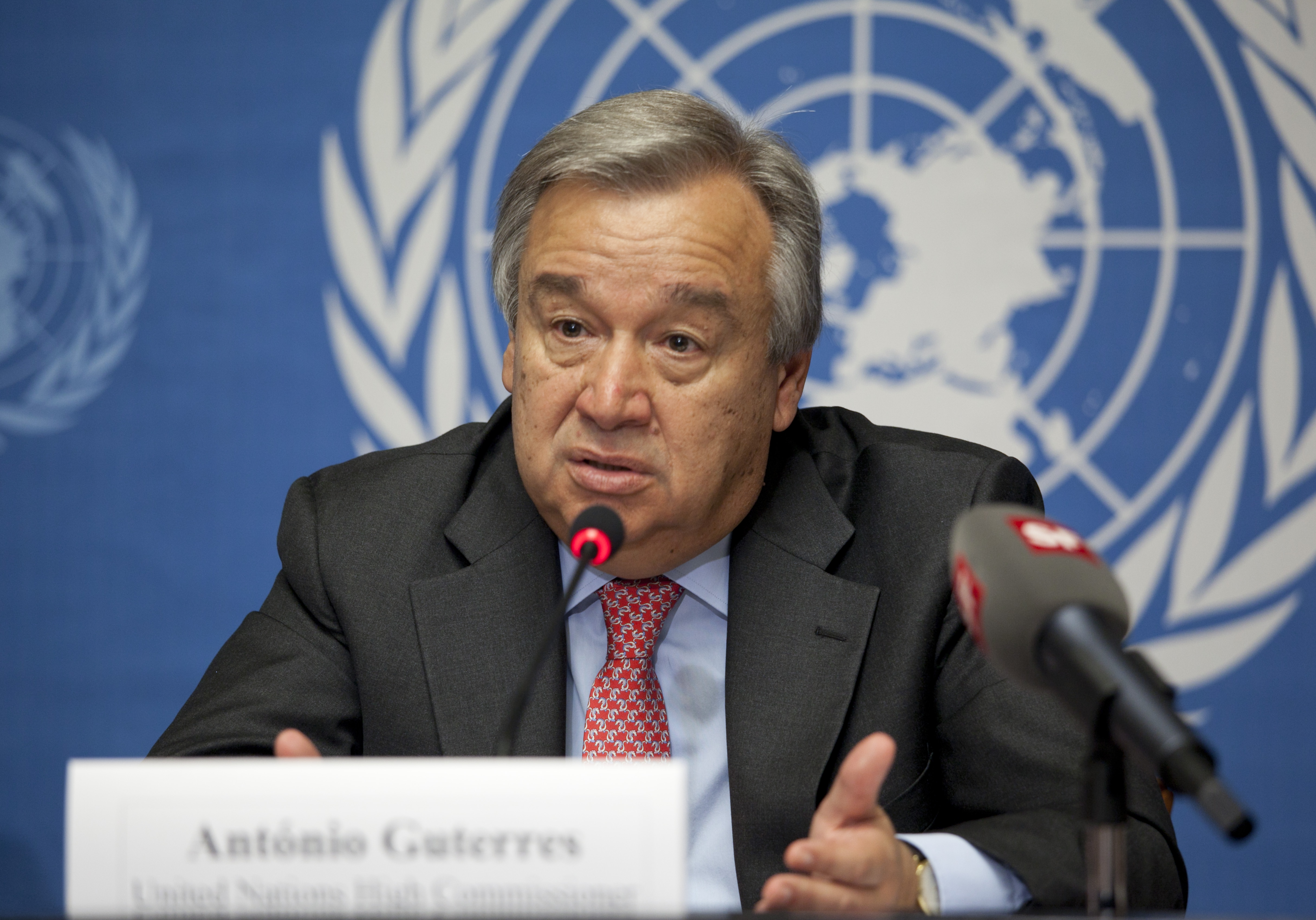
The world is reckoning this week with the human rights consequences of governmental efforts across the world to address the coronavirus pandemic. UN Secretary-General Antonio Gutierres has released a report on how the pandemic is becoming a ‘human rights crisis’. He highlights the disproportionate impact on minority communities, urging that national states of emergency must be proportionate, limited in scope, and alert to the risks of undue censorship and privacy violations. The report is available here.
Within the UK, the Equality and Human Rights Commission has been urging that more reasonable adjustments be made for the disabled and vulnerable in the handling of the pandemic.
In the sphere of criminal justice, the EHRC warns in an interim report that video hearings risk serious discrimination for people with learning disabilities, autism spectrum disorders, and mental health conditions. The report’s recommendations include ensuring disabled defendants have accessible information explaining their right to raise issues to do with participation, ensuring frontline professionals consider identifying people for whom video hearings may be unsuitable, and using registered intermediaries to support disabled defendants in video hearings. The report is available here.
In this latest episode we consider the probable attitude of the judiciary to any challenges regarding the government’s responsibility for providing sufficient PPE, the risk imposed on individuals, such as prisoners and mental health patients in detention during lockdown, their obligations under Articles 2 and 5 of the European Convention on Human Rights, as well as Article 11. How are we as a society, and the government, going to regard the question of “judicial activism” in this unprecedented situation in a post-pandemic UK?
Here are the statutes, statutory instruments and cases referred to in the course of my interview with Dominic Ruck-Keene and Darragh Coffey:
COVID-19 continues to dominate the news this week. The death toll in Europe has now risen to over 100,000, with the UK accounting for more than 16,000 of those. Although there appear to be signs that the infection curve is slowing elsewhere in Europe, and vaccine trials are now underway, it seems likely that we are in this for the long haul. UK government chief scientific adviser Patrick Vallance has written in the Guardian this week, explaining the challenges of ensuring any proposed vaccine is safe, and of scaling it up as required.
Pressure is building for the government to publish the findings of ‘Exercise Cygnus’, a three-day flu pandemic readiness exercise conducted in October 2016, as critics note the government’s apparent ill-preparedness for the coronavirus outbreak. According to the Observer, the New and Emerging Respiratory Virus Threats Advisory Group (Nervtag) recommended that the government:
Develop a ‘pandemic influenza concept of operations’ to improve coordination between the ‘complex network of partners’ involved;
Plan for ‘legislative easements’ to deal with the pandemic;
Work on ‘better understanding of the public reaction to a reasonable worst-case pandemic’; and
Strengthen ‘surge capability and capacity in operational resources in certain areas’, especially in respect of excess deaths, social care, and the NHS.
Lib Dem MP Philip Lee has urged Matt Hancock and Michael Gove to answer “when did they read the Cygnus report that has not been published and, having read that report, why did they conclude not to increase testing, PPE, and ventilator capacity in January?”. The Department of Health has insisted that the UK is “one of the most prepared countries in the world for pandemics.”
Concerns about criminal justice during the coronavirus pandemic continue. As the backlog builds up, DPP Max Hill QC has instructed the CPS to seek out-of-court solutions where possible, so as to limit the ‘expanding pipeline’ of cases waiting to be heard. Mr Hill and other voices such as James Mulholland, vice-chair of the Criminal Bar Association, have stressed the importance of deterrent sentences for offences related to COVID-19 and deliberate infection. However, ex-DPP Ken MacDonald QC has urged the courts not to mete out excessive jail term, arguing that prison is not the place for ‘nuisances’.
Lockdown is causing serious damage to family life too. There has been a surge in urgent care proceedings in the family courts, as increased drinking, money worries, and domestic violence put vulnerable children at risk. Unicef has released guidance for authorities on the protection of children during the COVID-19 pandemic. In light of the rise in domestic violence, Home Secretary Priti Patel this week launched an urgent awareness campaign, pledging £2m for domestic violence charities and the Domestic Abuse Commissioner.
The latest episode of Law Pod UK features energy expert Thomas Muinzer of Aberdeen University and David Hart QC of 1 Crown Office Row. They discuss the complex provisions of the Climate Change Act 2008, the extent to which the UK has reached its own goals for carbon emission reduction, and two recent challenges in the courts to projects involving GHG emissions:
In a paper published today Lord Sandhurst QC and Benet Brandret QC follow up on the previous paper co-authored by Lord Sandhurst QC by making concrete proposals for addressing the issues identified previously (see the previous paper here and our post on it here). It sets out a more concluded position on the doubts as to the vires for SI 2020/350 by explaining why the Statutory Instrument is, indeed, ultra vires, and the need for new legislation. It also sets out routes to put legislation and Guidance on a sound footing.
UKHRB readers may be interested to see a paper co-authored by Guy Mansfield QC, formerly member of 1 Crown Office Row. Guy – Lord Sandhurst QC – is a past Chairman of the Bar of England and Wales, and a current member of the Executive of the Society of Conservative Lawyers. He has kindly given us permission to link to the paper here.
Anthony Speaight QC is Chair of Research of the Society of Conservative Lawyers, and was a member of the Government Commission on a UK Bill of Rights.
Here is a very short summary of the paper’s arguments.
The Supreme Court has recently handed down two judgments rejecting vicarious liability of employers for the wrong doing of of an employee on the one hand, and an independent contractor on the other. In Episode 106 of the Law Pod UK series Rosalind English discusses these judgments and three other important decisions on vicarious liability with Robert Kellar QC and Isabel McArdle, both of 1 Crown Office Row.
This blog is maintained for information purposes only. It is not intended to be a source of legal advice and must not be relied upon as such. Blog posts reflect the views and opinions of their individual authors, not of chambers as a whole.
Our privacy policy can be found on our ‘subscribe’ page or by clicking here.





Recent comments