Search Results for: puberty blockers consent/page/33/Freedom of information - right of access) [2015] UKUT 159 (AAC) (30 March 2015)
6 June 2012 by Rachit Buch
 Last week the UN Human Rights Commissioner published the draft report of the second Universal Periodic Review (UPR) of the UK’s human rights record (draft report here, webcast of the UPR session here). The UPR involves delegations from UN member states asking questions and make recommendations to the UK government on the protection of human rights, which the government will consider before providing its response. The report is extremely wide-ranging, perhaps to its detriment, though many valuable and interesting insights are provided.
The UPR process was established in 2006. It involves a review of all 192 UN member states once every four years. As readers of this blog will know, the protection of human rights has a troubled recent history in the UK, with newspaper campaigns against “the hated Human Rights Act” providing the background to government pronouncements on human rights that veer from the sensible to the ridiculous. In this context, the UPR provides a valuable attempt at a serious assessment of human rights in this country.
Continue reading →
Like this:
Like Loading...
29 April 2019 by Thomas Hayes

Mourners including Irish Taoiseach Leo Varadkar, Sinn Fein leader Mary Lou McDonald, DUP leader Arlene Foster and SNP leader Ian Blackford give a standing ovation after Fr Martin Magill’s speech at the funeral of journalist Lyra McKee in Belfast – April 24th 2019. Credit: The Guardian.
This week saw the senior courts continue their Easter vacation between the Hilary and Easter Terms. Consequently, neither the Supreme Court, Civil Division of the Court of Appeal or Queen’s Bench Division of the High Court recorded any new decisions in the week commencing April 22nd.
Luckily for the writer of this Blog, the European Court of Human Rights does not share the relaxed attitude of the domestic courts towards Easter working, and on the April 25th gave judgement in the case of VM v United Kingdom (No 2).
The case concerned a Nigerian woman who entered the United Kingdom illegally in 2003. She subsequently pleaded guilty to cruelty to her son and was sentenced to twelve months imprisonment with a recommendation she be deported at the end of her sentence. Pursuant to this, upon her release, she was detained under immigration powers for two years and ten months.
Continue reading →
Like this:
Like Loading...
5 October 2012 by Rosalind English
 Ndiki Mutua and others v the Foreign and Commonwealth Office – read judgment
1 Crown Office Row’s Guy Mansfield QC acted for the Defendant, Henry Witcomb assisted by Maria Roche acted for the Claimants and Elizabeth-Ann Gumbel QC acted for intervener. None of them had anything to do with the writing of this post.
Although any claims regarding alleged acts of torture on Kenyan detainees during the 1950s state of emergency are technically time barred the High Court has allowed three of the claims to go ahead.
This was a trial of a preliminary issue in the Mau Mau detention camps case concerning the matter of limitation of claims for personal injury. In principle, the primary limitation periods in respect of the claims respectively ended in September 1960, 3 March 1962 and on dates in 1963 which are unclear. The period of delay was approximately fifty years in duration, i.e. from between 1960/1963 to the issue of these proceedings on 23 June 2009. The events to be investigated at any trial would extend back to 1952 at least, a period of 60 years or more by the likely date of trial.
Continue reading →
Like this:
Like Loading...
10 September 2018 by Guest Contributor
 The Director of the SFO v ENRC [2018] EWCA Civ 2006 – read judgment
Eurasian Natural Resources Corp, the defendant to the Serious Fraud Office’s application to enforce notices seeking to compel the production of documents, has had a chequered history in the last 10 years since it came to the London market (in January 2014 it delisted and went private). In December 2010, a whistleblower alerted the company by email to serious allegations of corruption, fraud and bribery within its group.
After substantial internal enquiries and investigations on the part of ENRC and professionals instructed by it, accompanied by correspondence and meetings between the SFO and lawyers instructed by ENRC, in February 2016 the SFO issued a Part 8 claim against ENRC. This sought a declaration that documents in for specific categories were not “information or… Any document which ENRC would be entitled to refuse to disclose or produce on grounds of legal professional privilege in proceedings in the High Court” within the meaning of section 2 (9) of the Criminal Justice Act 1987. The SFO’s pleaded case was that neither litigation privilege nor legal professional privilege attached to the documents in the first place, not that any privilege had been waived.
Continue reading →
Like this:
Like Loading...
2 May 2013 by Rosalind English
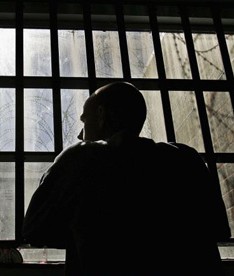 Faulkner, R (on the application of ) v Secretary of State for Justice and another [2013] UKSC 23 – read judgment
The Supreme Court has taken a fresh look at what is meant by the Human Rights Act exhortation to take Strasbourg jurisprudence “into account” when fashioning remedies for violations of Convention rights, in this case the right not to be arbitrarily detained under Article 5.
These appeals concerned the circumstances in which a prisoner serving a life sentence or an indeterminate sentence of imprisonment for public protection (“IPP”), who has served the minimum period specified for the purposes of retribution and deterrence (the “tariff”), and whose further detention is justified only if it is necessary for the protection of the public, should be awarded damages for delay in reviewing the need for further detention following the expiry of the tariff.
Appellate courts do not ordinarily interfere with an award of damages simply because they would have awarded a different figure if they had tried the case. However, as the Supreme Court was being asked in this case to give guidance on quantum, the Court determined the level of the award that would adequately compensate the appellants.
Continue reading →
Like this:
Like Loading...
8 March 2016 by Guest Contributor
 The JUSTICE Student Conference 2016 is on 19 March 2016, at the University of Law in London. The full programme is available here and you can book online here.
Spend a Saturday talking human rights and the Human Rights Act with Dominic Grieve QC, Shami Chakrabarti of Liberty, and the JUSTICE team.
Continue reading →
Like this:
Like Loading...
7 February 2018 by Guest Contributor
 When Britain joined the European Economic Community in 1973 along with Ireland and Denmark, it marked the first enlargement of what we today call the European Union. Since 1973, the club of the nine members has become a union of 28 member states. Most importantly, the law of the EU has developed significantly in terms of validity, scope and substance. What we were studied in the law school with EU law was in essence the institutions, the processes and the tools that are available for the European integration. And in fact EU law has achieved a remarkable degree of integration in some areas such as the Eurozone and the internal market. However, with Brexit, a new chapter is in the writing, this time on the withdrawal from the EU.
A constitutional pathology
The withdrawal of the United Kingdom from the European Union after 44 years poses unprecedented legal challenges but provides useful lessons for the withdrawal process. Until today, this issue was a footnote in the textbooks, with the case of Greenland (which left in 1985) being the only precedent. Greenland joined the European Economic Community in 1973 with Denmark, then gained its autonomy (home rule) from Denmark in 1979 and in a referendum that took place in 1982, 53% percent of the population voted in favour of leaving the European Community. But it is beyond doubt that the exit of Greenland was much less complex, with the main topic for negotiation being the fishing industry.
Continue reading →
Like this:
Like Loading...
1 March 2011 by Adam Wagner
 Updated | Association belge des Consommateurs Test-Achats ASBL, Yann van Vugt, Charles Basselier v Conseil des ministres, Case C‑236/09 – Read judgment / press release
The Court of Justice of the European Union (CJEU) has ruled that from December 2012, insurers will be prevented from charging different premiums on the basis of an insured person’s gender. A partner at a leading commercial law firm called September’s preemptive preliminary opinion “completely bonkers”. Can the same be said about the latest decision?
Coverage of the decision has already been largely negative. As well as involving Europe’s increasingly unpopular and possibly unelected judges, the ruling affects an interest group – insurance companies – with deep pockets and who are capable of sophisticated lobbying. And nobody wants to see their insurance premiums go up, if that is indeed to be the outcome of this ruling, something which is by no means clear. So expect to see plenty of critical articles. The Telegraph website is already sporting an unchallenged article/press release from Esure, including a video interview which begins with an advert for ESure’s “Sheila’s Wheels”.
Continue reading →
Like this:
Like Loading...
10 September 2018 by Eleanor Leydon

Image Credit: Guardian
NAVTEJ SINGH JOHAR & ORS VS. UNION OF INDIA, THR. SECRETARY, MINISTRY OF LAW AND JUSTICE: India’s supreme court has unanimously ruled that section 377 of the penal code, which criminalises consensual sex acts between same sex adults, is unconstitutional.
The judgment accordingly decriminalises gay sex, in a landmark ruling for gay rights. Chief Justice Dipak Misra said in his decision that “Criminalising carnal intercourse under section 377 Indian penal code is irrational, indefensible and manifestly arbitrary.”
The 160-year-old law was imposed on India by the British empire as part of a package of laws against public vice. Thursday’s judgment follows 24 years of legal challenges: most recently, the Delhi high court ruled against section 377 in 2009, but was overturned by the supreme court in 2013.
The breakthrough for lawyers came in August 2017, when the supreme court held that there was a fundamental right to privacy. In an unprecedented move, five judges commented in that judgment that the 2013 section 377 decision was wrong.
Trinidad & Tobago’s high court will also rule this month on whether to decriminalise sex between men, and similar rulings on decriminalising gay sex are awaited in Kenya and Botswana.
Continue reading →
Like this:
Like Loading...
4 February 2014 by Guest Contributor
 The business of the law can tend to harden the heart – but every now and then a case comes along that drives off the spectre of compassion fatigue. This was the effect of a recent libel claim in which I obtained substantial damages and published apologies for a 20-year-old Afghan refugee, Abdul Shizad, who – despite being entirely alone in the UK and having limited English – had the courage to sue the Daily Express, which had falsely accused him of being a “Taliban Suspect”.
The Express’s timing was particularly superlative, its 4 March 2013 article “Now Judges Let Taliban Suspect Stay” coming just a month after Abdul had succeeded in a stressful and exhausting 4 year quest for asylum in the UK.
Accompanied by a most unflattering photograph of two unsuspecting “Judges”, the article lambasted “a new human rights scandal” in which “judges have said a suspected Taliban member can stay in Britain”.
Continue reading →
Like this:
Like Loading...
22 July 2012 by David Hart KC
 Khaira v. Shergill [2012] EWCA Civ 893 read judgment
We have become used to the courts getting involved, more or less willingly, in religious issues, not least where religious freedoms conflict with legal rules which are said to be inconsistent with the exercise of those freedoms. But as Adam Wagner pointed out, in an earlier round of this litigation concerning two Sikh places of worship (Gurdwaras), the courts have developed rules stopping themselves from deciding certain cases, not least because the courts recognise they don’t know what they are doing once they get themselves immersed in issues of religious doctrine.
Continue reading →
Like this:
Like Loading...
30 December 2012 by Adam Wagner
 2012 has been a busy year on the UK human rights front, never short of controversy, hyperbole and even some interesting points of legal principle along the way.
Here are some of the biggest stories from April to June 2012. The first part of this post, January to March, is here. Feel free to comment on my choices, and add your own if you think something is missing.
Continue reading →
Like this:
Like Loading...
9 May 2022 by Rosalind English
Voting for the Northern Ireland Assembly took place on Thursday 5 May. This year, for the first time, Sinn Fein looks set to win a majority of the seats. Whether the Democratic Unionist Party agrees to the power sharing arrangement where it is relegated to second place remains to be seen. What continues to be hotly debated is the Northern Ireland Protocol, put in place to avoid a “hard border” between Northern Ireland and Ireland which of course is still part of the EU single market.
But the Protocol isn’t only about trade. Under Article 2 the UK government has made an important commitment regarding the rights of Northern Ireland’s citizens to equality, non-discrimination, transparency and a range of other rights protected under European Union law. Article of the 2 Protocol is a very new provision, applying the acquis communitaire of the CJEU to Northern Ireland, even though NI is part of post Brexit EU.
In our latest episode Rosalind English meets UKHRB Northern Ireland correspondent Anurag Deb in Belfast two days after the elections to discuss what this EU rights provision means for the citizens of Northern Ireland.
Continue reading →Like this:
Like Loading...
11 January 2021 by Hugo Murphy
In the news:
Last week’s round-up looked at the measures and messaging of the UK’s latest lockdown. This week we ask what it means for vulnerable children and victims of domestic abuse. Are sufficient legal safeguards in place?
For vulnerable children, it unfortunately seems not. On Wednesday, a Guardian investigation revealed that thousands of children were sent to unregulated care homes last year, while local authority provisions were stretched throughout many months of restrictions. These homes include supported accommodation facilities for over 16s, which are not subject to any inspections by regulators in England and Wales. The Children’s Commissioner for England Anne Longfield has warned that the children’s care system has been ‘left to slip deeper into crisis, seemingly unable to stop some of the most vulnerable children from falling through the gaps.’
Continue reading →Like this:
Like Loading...
7 November 2014 by Michael Deacon
 R (on the application of FI) v Secretary of State for the Home Department [2014] EWCA Civ 1272 – read judgment
The Court of Appeal has held that the physical restraint of persons being removed from the UK by aircraft is subject to a sufficient framework of safeguards to fulfil the state’s obligations under Articles 2 and 3 of the European Convention on Human Rights. Further, the decision of the Home Secretary not to publish aspects of the applicable policy on the use of such control and restraint is lawful.
FI was restrained by detainee custody officers during an attempt to remove her from the UK in 2011, though the issues on this appeal did not turn on the specific circumstances of her case. In issue was the sufficiency of the framework of safeguards on the use of such restraint as contained predominantly within the Use of Force Training Manual (the “Manual”).
Continue reading →
Like this:
Like Loading...



Recent comments