Category: LEGAL TOPICS
24 September 2012 by Guest Contributor
 Tomorrow, Liberal Democrats will debate the Justice and Security Bill and will vote on saying no to the Government’s controversial secret courts proposals. Played in the press as a good opportunity to put clear blue water between the coalition partners, the motion will give a party members a chance to speak out on a Bill which many see as an anathema to the traditional liberal commitment to open, fair and equal access to justice.
The Bill would – for the first time – introduce the controversial “closed material procedure” (CMP) into our ordinary civil justice system. In CMP, one party to proceedings and their legal representatives are excluded from a hearing and from seeing any evidence, argument or judgment associated with closed material, leaving Special Advocates (security vetted lawyers) who they cannot discuss the case with to represent their interests as best as possible. These exceptional procedures have been criticised by both commentators and courts since their inception as a flawed and unfair mechanism which endangers the rule of law and open justice (JUSTICE and others have dissected the Bill on this blog and elsewhere, highlighting its serious long-term political and legal implications).
Continue reading →
24 September 2012 by Guest Contributor
 BUCKLAND v. THE UNITED KINGDOM – 40060/08 – HEJUD [2012] ECHR 1710 – read judgment
The ECtHR’s recent decision in Buckland v UK demonstrates again how wonderfully delphic the subject of housing and Article 8 rights to private and family life has become.
In one sense, the outcome was fairly predictable because the case was determined by the UK Courts before the Supreme Court in Manchester CC v Pinnock established the principles of proportionality in possession claims.
Continue reading →
24 September 2012 by Jim Duffy
 JAMES, WELLS AND LEE v. THE UNITED KINGDOM – 25119/09 57715/09 57877/09 – HEJUD [2012] ECHR 1706 – Read judgment / press release
As Andrew Tickell noted in his post on Wednesday the European Court of Human Rights this week ruled that the UK violated the Article 5(1) ECHR rights of three prisoners sentenced to indeterminate prison sentences for public protection, where reasonable provision for their rehabilitation was not made.
In April 2005, the Government introduced indeterminate imprisonment for the public protection, or “IPP sentences”, whereby certain prisoners would not have a right to parole. Instead, under section 225 of the Criminal Justice Act 2003, they would remain in prison following expiry of their tariff periods until a Parole Board had decided they were no longer a risk to the public. Prior to an amendment in 2008, an IPP sentence was mandatory where there was a future risk of further offending, and there was an assumption of risk where there was a previous conviction for a violent or sexual offence unless the sentencing judge considered it unreasonable to make such an assumption.
Continue reading →
23 September 2012 by Adam Wagner
 Jonathan Fisher QC wrote an opinion piece in last week’s Jewish Chronicle entitled “The wrongs of human rights“. The article is highly critical of the human rights movement and raises the alarm over recent decisions on religious rights and “growing attacks on our traditions”. It also makes a strong case for the adding of a list of “responsibilities” to the Human Rights Act, which Fisher argues would be “more closely aligned with Judaism’s approach”. The article pulled no punches and chose the most emotive of starting points:
Using human-rights principles to attempt to ban circumcision in Germany is a grotesque insult to the memory of Holocaust victims. The Jewish jurists who helped inspire the human-rights movement must be spinning in their graves at the intellectual violence that their legacy has spawned.
I have written before about the misuse of the Holocaust to justify arguments for reforming the Human Rights Act (the human rights debate has its own version ‘Goodwin’s Law‘). But I will leave the substance of the article for another day – I will be responding soon in the same newspaper. Rather, I wanted to discuss the timing of the article.
As regular readers may know, Fisher is one of the eight member of the Commission on a Bill of Rights, which is currently consulting the public for a second time (see my post). The consultation is closing on 30 September 2012 and the Commission is due to report before the end of the year. No mention is made of the fact that Fisher is a Bill of Rights Commissioner; he is described as a “visiting professor of law at the London School of Economics”.
Does anyone else find this a little odd?
Continue reading →
21 September 2012 by Matthew Hill

Communist prisoners held during the Malaya emergency Photograph: Jack Birns/Time & Life Pictures
Chong Nyok Keyu and ors v Secretary of State for Foreign and Commonwealth Affairs and another [2012] EWHC 2445 (Admin), read judgment
Although the High Court has rejected an attempt to force the Government to hold a public inquiry into an alleged massacre of unarmed civilians by British troops in 1948, the case represents a further example of the use of the Courts to redress historical grievances.
There are two German words for dealing with the traumatic recent past, neither of which has a direct equivalent in English. This linguistic quirk reflects history and national self-identity. The defeats of the Kaiser, the Nazis and the GDR Communists led to national introspection in Germany, whereas the United Kingdom, on the winning side in each of the those three struggles, evaded such soul-searching. The post-war decline was relatively gentle and easy to fit in to the national myth of historical continuity. An Empire absent-mindedly acquired was considered to be the subject of an orderly and benevolent liquidation, with lasting benefits of railways and the rule of law left to the inheritors.
Continue reading →
20 September 2012 by Rosalind English
 Yes, says the US Court of Appeals for the Federal Circuit, upholding the validity of human gene patents related to breast and ovarian cancer (Association for Molecular Pathology and others v the Patent Office and Myriad Genetics – read judgment) UPDATED
The three judge panel ruled in a 2-1 decision that the biotechnology company Myriad was entitled to its patents on the molecules because each of them represented “a non-naturally occurring composition of matter”. The court also upheld Myriad’s patent on a technique for identifying potential cancer therapies by monitoring effects on cell growth, but denied their claim on assessing cancer risk by comparing DNA sequences because the method is based on “abstract, mental steps” of logic that are not “transformative”.
This fascinating judgment is a model of clarity and fluency in this difficult area. But what does this intellectual property tussle have to do with human rights? Well, there is nothing unfamiliar to human rights lawyers in litigation over the availability of life-saving treatment (patient B, the Herceptin case and the antiretroviral litigation in South Africa are three examples that spring to mind). And much of it begins in the laboratory, with the critical allocation of exclusivity rights.
Continue reading →
20 September 2012 by David Hart KC
 The Chagos Refugees Group in Mauritius v. Foreign and Commonwealth Office, First Tier Tribunal, 4 September 2012, read judgment
and Bancoult v. FCO, 25 July 2012, Stanley Burnton LJ, read judgment
The manoevres by which the Chagossians were evicted from their islands in the Indian Ocean, the late 1960s and early 1970s, so to enable the US to operate an air base on Diego Garcia, do not show the UK Foreign Office in its best light. Indeed, after a severe rebuke from the courts in 2000, the FCO accepted that the original law underlying their departure was unlawful, and agreed to investigate their possible resettlement on some of their islands.
The first of these new cases is an environmental information appeal concerning the next phase of the story – how the FCO decided that it was not feasible to resettle the islanders in 2002-2004.
This decision was taken in the modern way – backed by a feasibility study prepared by consultants supporting the stance which the FCO ultimately were to take. And this case concerns the islanders’ attempts to get documents lying behind and around the taking of this decision.
Continue reading →
20 September 2012 by Adam Wagner
 The Crown Prosecution Service (CPS) has decided not to charge Daniel Thomas for posting a homophobic message on Twitter, the social networking site, about the swimmer Tom Daley. The press release, which takes the form of an extended quote from the Director of Public Prosecutions, is fascinating. I have reproduced it in full below.
In short, the CPS has decided not to charge Thomas as he “intended the message to be humorous”, removed it quickly, didn’t intend it to go beyond his followers (“however naive” that was), has expressed remorse and Daley did not find out about the message until after it had been reported in the media.
The DPP has also used the opportunity to announce that he is drafting new guidance for social media prosecutions and also to say that whilst “serious wrongdoing” could be the subject of prosecutions,
The fact that offensive remarks may not warrant a full criminal prosecution does not necessarily mean that no action should be taken. In my view, the time has come for an informed debate about the boundaries of free speech in an age of social media.
Continue reading →
19 September 2012 by Guest Contributor
 It’ll all be over by Christmas: that’s what the coalition promised when it established the Commission on a Bill of Rights to, among other things:
… investigate the creation of a UK Bill of Rights that incorporates and builds on all our obligations under the European Convention on Human Rights, ensures that these rights continue to be enshrined in UK law, and protects and extends our liberties.
With less than four months to go, it seems a good time to reflect upon its work. My premise is that the process by which a bill of rights is created is as important as the outcome if the bill is to enjoy longevity and democratic legitimacy, in the sense of having been subject to inclusive and informed public deliberation. This lesson has been learned in contexts from Northern Ireland to Australia, where energetic consultation processes were designed using community organising techniques, televised hearings, the internet, social networking and other creative forms of public engagement. These are explored in research I conducted for the Equality and Human Rights Commission ahead of the 2010 general election.
Continue reading →
19 September 2012 by Andrew Tickell
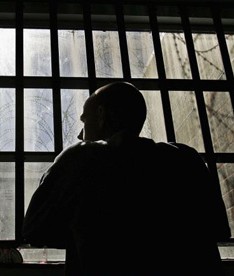
Brought to you by Andrew Tickell
Rhubarb, rhubarb. Another defeat for the United Kingdom in Strasbourg yesterday. In James, Wells and Lee v. the United Kingdom, a chamber of the Court’s Fourth Section held that indeterminate sentences of imprisonment for public protection infringed Article 5 of the Convention. At his first Justice Questions in the House of Commons yesterday, our fresh-minted Conservative Lord Chancellor and Justice Secretary, Chris Grayling, advised MPs that:
“I’m very disappointed with the ECHR decision this morning. I have to say, it is not an area where I welcome the Court, seeking to make rulings. It is something we intend to appeal.”
One wonders which areas Mr Grayling would welcome the Court’s jurisdiction, but all in all, a somewhat tepid response from a man whose appointment was greeted by the Daily Mail with the enthusiastic suggestion that Grayling…
“… unlike his predecessor Ken Clarke, will have no truck with the cardboard judges at the European Court of Human Rights.”
Continue reading →
12 September 2012 by Adam Wagner
 Almost ten years after the death of Rachel Corrie on 16 March 2003, her case still raises troubling questions. How was a 23-year-old protester killed by an Israeli military bulldozer? Did the driver do it deliberately, as the family have claimed? Were the Israel Defence Forces (IDF) responsible in some other way?
Those questions were all in play in a civil negligence claim brought against the Israeli state by Corrie’s family, who claimed $1 in damages. Having exhausted other avenues, the family were looking for answers, not a pay out. The Haifa District Court examined the issues over 15 days of oral testimony, and two weeks ago Judge Oded Gershon released a 73-page ruling (Hebrew) as well as a detailed summary of the Judgment (English).
I was particularly interested in the judgment as a significant proportion of my work recently has involved public inquiries into allegations against the British Armed Forces over events which happened in Iraq in 2003/4. Unfortunately, the reporting of the ruling has been fairly poor. The Guardian published eight articles and a cartoon about the ruling (by comparison, the appointment of a new Justice Secretary generated four). But despite the sheer volume of commentary, I had no sense from reading the articles that the writers had attended the oral hearings, read the judgment (which is long and in Hebrew) or even consider the court’s English summary. The Guardian’s legal section is very good so it is disappointing that the legal interest of the story was largely ignored.
With this in mind, I thought I would post a summary of the judgment and brief discussion of how an equivalent claim would work in the UK.
Continue reading →
12 September 2012 by Adam Wagner
 The Ministry of Justice has published its annual report to the Joint Committee on Human Rights on the Government response to human rights judgments 2011–12. By signing up to the European Convention on Human Rights, the UK has committed to “abide by” judgments of the court. This commitment is monitored by the Council of Europe’s Committee of Ministers.
The report presents a snapshot of the current state of play in relation to the European Court of Human Rights, makes for very interesting reading (trust me!). Here are some tidbits:
- There were 28 judgments involving the UK from 1 August 2011 to 31 July 2012, nine of which the UK lost (UK loses 3 out of 4 cases, anyone?). See the handy table at pages 12-13.
- The UK currently has 24 cases before the Committee of Ministers, which means that they have not been implemented.
- The UK paid out €454,457 [this originally and wrongly said £] in damages for human rights violations (known as ‘just satisfaction’) in 2011, compared to €371,160 in 2010 (p.58). Fear of this figure ending up in the Daily Mail may be the reason that it is on the last page.
11 September 2012 by Adam Wagner
 Three quick, unrelated things.
First, the European Court of Human Rights elected a new President yesterday to replace Sir Nicolas Bratza. Dean Spielman (pictured), from Luxembourg, was elected by secret ballot and will succeed Sir Nicolas on 1 November 2012. He is only 49 so unlike the outspoken Bratza he will not be forced to retire before the end of his 3-year tenure (Bratza is now 67 and served for just under a year). Judge Spielman’s C.V. is here (point of interest: he studied at Cambridge). The Court’s press release here.
Secondly, there is a new human rights blog in town, the New Zealand Human Rights Blog. It looks good, and from the initial posts appears to be taking an interest in UK human rights law too.
Thirdly, the Criminal Bar Association and Law Reform Committee of the Bar Council are putting on an interesting debate next Thursday 20 September, 6-8pm: ‘Protecting free speech: A public interest defence for the media?’. All details are here – you will need to download the form in order to book. The event costs £10 in advance or £15 on the door.
Continue reading →
10 September 2012 by David Hart KC
 Back to basics, then, as the new academic year starts. Which courts decide human rights cases, when, and by what rules?
Well, the easy one is domestic courts. They decide whether a public authority has acted or omitted to act unlawfully under the Human Rights Act.
If the act is a decision about housing or immigration status or prisoners’ rights, the courts can quash it, and so tell the decision-maker either to decide it again or if there is only one lawful answer, tell the decision-maker what decision to take. If it was a past course of conduct (unlawful detention, intrusion into privacy, unacceptable pollution), they may award damages for human rights breaches. If the domestic law is itself unlawful, and cannot be interpreted HR-compliantly, the domestic courts can make a declaration of incompatibility under s.4 of HRA – it does the claimant no good in respect of his claim, though it throws a huge gauntlet down to Parliament to do something about the non-compliant law. And in the criminal courts, the obvious sanction is to dismiss the prosecution for some abuse of process involving the defendant’s human rights.
Continue reading →
7 September 2012 by David Hart KC
 C-619/10, Trade Agency Ltd v. Seramico Investments Ltd, CJEU, 6 September 2012
This case in the EU Court of Justice may sound rather abstruse, but is actually quite important. When someone starts a claim in the English courts for, say, a debt owed, and the defendant does not put in a defence, the claimant can simply ask the court to enter judgment for the sum claimed, and can bring enforcement proceedings based upon that judgment. In this procedure, the court is acting administratively, and typically no judge will be involved in the process. All very simple then.
But that is not what happened in this case. The complication was that the claimant wished to enforce the English judgment in Latvia. It could do this using an EU Regulation about the enforcement of judgments. But the Latvian court was concerned by two aspects of the case, firstly that, according to the debtor, it had not been informed of the commencement of the English proceedings, and secondly that the default judgment gave no reasons. So they asked the EU Court for its guidance. Hence this judgment of today.
Continue reading →



Recent comments