Category: CONVENTION RIGHTS
15 September 2011 by Matthew Flinn
 Voyias v Information Commissioner and the London Borough of Camden EA/2011/0007 – Read Judgment
The First Tier Tribunal has overturned a decision of the Information Commissioner and ordered Camden Council to provide information about empty properties in the borough to a former member of the Advisory Service for Squatters.
When one thinks of the term “human rights”, the first example that springs to mind is likely to be the right to life, or the right not to be tortured or enslaved – fundamental guarantees that protect the basic dignity of our human condition. Yet human rights are also intended to serve the core goal of preserving and enhancing the strength and rigour of democratic and pluralistic societies, and so the European Convention of Human Rights (EHCR) also contains provisions guarding against discrimination, and protecting freedom of religion and expression.
Continue reading →
14 September 2011 by Lucy Series
 Last month the Ministry of Justice published a report of a pilot project that ran last year whereby participating family courts produced and published on Bailii written judgments of specified Children Act 1989 cases. The project had three main aims:
- to increase transparency and improve public understanding of the family justice system by publishing anonymised judgments in all serious children cases;
- to help parties by providing written judgments in all cases, even where a matter was not contested;
- to provide judgments which the children involved could access in later life.
The family courts are often perceived as ‘secretive’ or aloof; Munby LJ has made excellent arguments for greater transparency far more eloquently than I could hope to do in this speech (pdf)
Continue reading →
13 September 2011 by Isabel McArdle
 Lord Justice Jackson spoke in strong terms last week to the Cambridge Law Faculty on the controversial topic of legal aid and legal costs reforms.
The architect of the proposed reforms to legal costs made clear his position on the government’s proposed amendments, set out in the Legal Aid, Sentencing and Punishment of Offenders Bill, which was reviewed by the Committee of the House of Commons today, 13 September (listen to the committee recording here). He was keen to highlight which parts of the reforms reflect he views expressed in his report, and which parts he does not consider to be in the interests of justice. He said, in summary:
Continue reading →
13 September 2011 by Adam Wagner
 The Equality and Human Rights Commission has published Hidden in plain sight, a report into disability-related harassment and how well this is currently being addressed by public authorities.
The report, which finds a “systemic failure by public authorities to recognise the extent and impact of harassment and abuse of disabled people” can be downloaded here, the “easy read” version here and the executive summary here. I have also reposted the Executive Summary via Scribd below. The Inquiry found, amongst other things:
Continue reading →
8 September 2011 by Adam Wagner
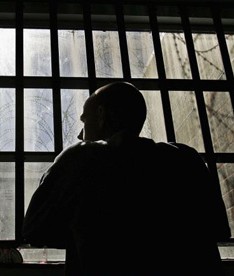 The Ministry of Justice has just released its annual report to the Joint Committee on Human Rights, Responding to human rights judgments.
The report is worth reading. It contains useful summaries of the 17 European Court of Human Rights judgments against the UK in 2010 and the government’s response to them.
But what is really interesting is what it says about prisoner votes, and the government’s 6-year delay in implementing the 2005 decision in Hirst (No.2) v UK.
Continue reading →
8 September 2011 by Adam Wagner
 In a recent speech about the August riots, the Prime Minister bemoaned the “twisting and misrepresenting of human rights”. Unfortunately, this practice is common in the press, sometimes by accident but often by design.
One common accusation against the Human Rights Act is that it prevents the state deporting some foreign criminals. This is sometimes true; for example, the state cannot deport anyone if to do so would put them at a real risk of being tortured. But other law can be “to blame” too for preventing deportation of criminals, as was the case with Learco Chindamo, the killer of head teacher Philip Lawrence. This has not prevented the Daily Telegraph from again using his case as an example of human rights gone wrong.
Continue reading →
7 September 2011 by Adam Wagner
 The Justice Secretary Ken Clarke has announced that the ban on broadcasting in courts is to be lifted. Broadcasting will initially be allowed from the Court of Appeal, and the Government will “look to expand” to the Crown Court later. All changes “will be worked out in close consultation with the judiciary“.
Broadcasting in court is currently prohibited by Section 41 of the Criminal Justice Act 1925 and Section 9 of the Contempt of Court Act 1981. However, the rules do not apply to the Supreme Court, the UK’s highest court of appeal. Since it launched in October 2009, the court has been filming hearings and making the footage available to broadcasters. And, since May of this year, the court has been streaming the footage live on the Sky News website.
Continue reading →
4 September 2011 by Adam Wagner
 Updated | Next week will mark the 10th anniversary of the 11 September 2001 terrorist attacks. Despite the intervening decade, the states threatened by terrorism are still puzzling out the right balance between the powers of security services and the rights of suspected terrorists to due process.
Although terrorism is now mercifully low on the public agenda, the effects of 9/11 are still being felt across the legal system. The United Kingdom is soon to open an independent inquiry into the improper treatment of detainees by security services following the terrorist attacks. As things stand, the UK’s major human rights groups are boycotting the inquiry for fear that the government will be able to suppress evidence.
The intelligence services have now tightened up their policy towards interviewing detainees overseas, but one policy which is still in flux is the control order regime, soon to be succeeded by Terrorism Prevention and Investigation Measures (TPIMs).
Continue reading →
31 August 2011 by Guest Contributor
 As a number of recent cases have made clear, the filming of policing activity in public places is a vital method of holding police to account. But there have been continuing tensions between the police and photographers over filming police activity. In January 2010 there was a protest in Trafalgar Square by photographers against the use of terrorism laws to stop and search photographers. A campaign called “I’m a photographer, not a terrorist” was launched to protect the rights of those taking photographs in public places.
However, although Guidance issued by, for example, the Metropolitan Police has made it clear that
Members of the public and the media do not need a permit to film or photograph in public places and police have no power to stop them filming or photographing incidents or police personnel.
Continue reading →
25 August 2011 by Adam Wagner
 With thanks to the Judicial Press Office, below is the full press release from the President of the Family Division in a case involving a “super injunction”, John Hemming MP, false allegations of pedophilia and some poor press reporting.
I will blog about this once the full rulings are released, but in the meantime see Lucy Reed: Bared Teeth – Grrrrr! | Pink Tape; Inforrm; News: Hemming MP’s “super injunction victim” named as sex abuse fabricator « Inforrm’s Blog, and the Fighting Monsters blog: Hemming and Haigh – The Journey of an Injunction.
Press Release from the president of the Family Division: Re X (a child)
I am today giving two judgments, both of which will be in open court.
The first judgment will put into the public domain matters which, in care proceedings under the Children Act 1989 Parliament has decided are normally confidential to the court and to the parties. The second will explain why I have found a woman called Elizabeth Watson in contempt of court. After giving the second judgment. I will adjourn to hear any mitigation Ms Watson may wish to put forward as to why I should not send her to prison.
Continue reading →
22 August 2011 by Isabel McArdle
 Public Interest Lawyers (PIL), a solicitors’ firm, is planning to bring judicial review proceedings to challenge the Scottish government’s university funding scheme, which allows Scottish universities to charge students from other parts of the UK fees, while students from other parts of the EU and Scotland are not charged fees.
Currently, non-Scottish students from elsewhere in the UK and Northern Ireland have to pay tuition fees in Scotland, set to rise to up to £9,000 annually next year. However, Scottish students and those from other parts of the EU do not have to pay fees at all. Non-British EU students do not have to pay fees in Scotland due to EU law forbidding them from being treated differently to Scottish students.
Continue reading →
22 August 2011 by Adam Wagner
 The Equality and Human Rights Commission (EHRC) has reversed its plans to intervene in two European Court of Human Rights cases about religious discrimination.
Last month the Commission announced that it would intervene in European Court of Human Rights cases on behalf of religious believers who failed to convince the UK courts that they were being discriminated against in the workplace. Two of the proposed interventions – in which the EHRC proposed a “reasonable accommodation” for religion and belief cases (an idea proposed on this blog by Aidan O’Neill QC) – courted controversy, as Alasdair Henderson explained in his post, A leap of faith?
Continue reading →
21 August 2011 by Guest Contributor
 Much controversy has been raised by the sentencing meted out to some of those charged with offences committed during the recent disorder. Many cases have already been sentenced either in the Magistrates’ Court. A lesser number of cases have been dealt with by the Crown Court. (Given the short time between committal to Crown Court and sentence, the latter would be guilty pleas).
In the Magistrates’ Courts, the majority of the cases have been dealt with by professional District Judges (Magistrates’ Courts). The use of “lay benches” has been very much the exception. The reason for that is not entirely clear at this time.
Continue reading →
18 August 2011 by Adam Wagner
 In a 1996 episode of The Simpsons, a bear frightens residents of Springfield by strolling down from the mountains. Homer rallies an unruly mob and convinces the town mayor to create a state of the art Bear Patrol, including branded stealth bombers. All is well until Homer receives his pay cheque, which includes an additional $5 “bear tax”.
Which of the proposed responses to this month’s rioting and looting will be a bear patrol, that is a disproportionate and expensive response prompted by an unruly mob of citizens demanding action?
Alongside the human rights review of every public sector organisation, an early candidate is the plans to create a new discretionary power of possession to enable landlords to take swifter action to evict their most anti-social tenants. The government consultation is open until 7 November; see also this letter from Grant Shapps MP explaining the change .
Continue reading →
16 August 2011 by Guest Contributor
 A year after it was first announced, the Detainee Inquiry on 6 July published its Protocol and terms of reference. On 3 August, JUSTICaE together with 9 other NGOs wrote to the Detainee Inquiry. Among other things, we said that an Inquiry conducted on such terms would ‘plainly … not comply with Article 3 [of the ECHR]’. We also made clear that, were the Inquiry to proceed on this basis, we would not submit any evidence or attend any further meetings with the Inquiry team.
In his interesting article last week (‘Will the Detainee Inquiry be human rights compliant?’, 8 August) Matthew Flinn queried our claim that the Protocol fails to meet the requirements of article 3 ECHR. Notwithstanding the government’s own statement that it doesn’t intend for the Inquiry to comply with article 3, Flinn set out various arguments to suggest that the Protocol might nonetheless comply with article 3 in any event.
Continue reading →



Recent comments