Category: CONVENTION RIGHTS
20 September 2012 by David Hart KC
 The Chagos Refugees Group in Mauritius v. Foreign and Commonwealth Office, First Tier Tribunal, 4 September 2012, read judgment
and Bancoult v. FCO, 25 July 2012, Stanley Burnton LJ, read judgment
The manoevres by which the Chagossians were evicted from their islands in the Indian Ocean, the late 1960s and early 1970s, so to enable the US to operate an air base on Diego Garcia, do not show the UK Foreign Office in its best light. Indeed, after a severe rebuke from the courts in 2000, the FCO accepted that the original law underlying their departure was unlawful, and agreed to investigate their possible resettlement on some of their islands.
The first of these new cases is an environmental information appeal concerning the next phase of the story – how the FCO decided that it was not feasible to resettle the islanders in 2002-2004.
This decision was taken in the modern way – backed by a feasibility study prepared by consultants supporting the stance which the FCO ultimately were to take. And this case concerns the islanders’ attempts to get documents lying behind and around the taking of this decision.
Continue reading →
Like this:
Like Loading...
20 September 2012 by Adam Wagner
 The Crown Prosecution Service (CPS) has decided not to charge Daniel Thomas for posting a homophobic message on Twitter, the social networking site, about the swimmer Tom Daley. The press release, which takes the form of an extended quote from the Director of Public Prosecutions, is fascinating. I have reproduced it in full below.
In short, the CPS has decided not to charge Thomas as he “intended the message to be humorous”, removed it quickly, didn’t intend it to go beyond his followers (“however naive” that was), has expressed remorse and Daley did not find out about the message until after it had been reported in the media.
The DPP has also used the opportunity to announce that he is drafting new guidance for social media prosecutions and also to say that whilst “serious wrongdoing” could be the subject of prosecutions,
The fact that offensive remarks may not warrant a full criminal prosecution does not necessarily mean that no action should be taken. In my view, the time has come for an informed debate about the boundaries of free speech in an age of social media.
Continue reading →
Like this:
Like Loading...
19 September 2012 by Andrew Tickell
Brought to you by Andrew Tickell
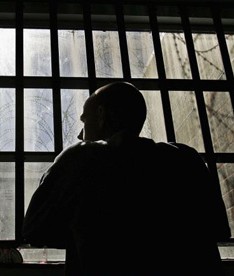
Rhubarb, rhubarb. Another defeat for the United Kingdom in Strasbourg yesterday. In James, Wells and Lee v. the United Kingdom, a chamber of the Court’s Fourth Section held that indeterminate sentences of imprisonment for public protection infringed Article 5 of the Convention. At his first Justice Questions in the House of Commons yesterday, our fresh-minted Conservative Lord Chancellor and Justice Secretary, Chris Grayling, advised MPs that:
“I’m very disappointed with the ECHR decision this morning. I have to say, it is not an area where I welcome the Court, seeking to make rulings. It is something we intend to appeal.”
One wonders which areas Mr Grayling would welcome the Court’s jurisdiction, but all in all, a somewhat tepid response from a man whose appointment was greeted by the Daily Mail with the enthusiastic suggestion that Grayling…
“… unlike his predecessor Ken Clarke, will have no truck with the cardboard judges at the European Court of Human Rights.”
Continue reading →
Like this:
Like Loading...
12 September 2012 by Adam Wagner
 Almost ten years after the death of Rachel Corrie on 16 March 2003, her case still raises troubling questions. How was a 23-year-old protester killed by an Israeli military bulldozer? Did the driver do it deliberately, as the family have claimed? Were the Israel Defence Forces (IDF) responsible in some other way?
Those questions were all in play in a civil negligence claim brought against the Israeli state by Corrie’s family, who claimed $1 in damages. Having exhausted other avenues, the family were looking for answers, not a pay out. The Haifa District Court examined the issues over 15 days of oral testimony, and two weeks ago Judge Oded Gershon released a 73-page ruling (Hebrew) as well as a detailed summary of the Judgment (English).
I was particularly interested in the judgment as a significant proportion of my work recently has involved public inquiries into allegations against the British Armed Forces over events which happened in Iraq in 2003/4. Unfortunately, the reporting of the ruling has been fairly poor. The Guardian published eight articles and a cartoon about the ruling (by comparison, the appointment of a new Justice Secretary generated four). But despite the sheer volume of commentary, I had no sense from reading the articles that the writers had attended the oral hearings, read the judgment (which is long and in Hebrew) or even consider the court’s English summary. The Guardian’s legal section is very good so it is disappointing that the legal interest of the story was largely ignored.
With this in mind, I thought I would post a summary of the judgment and brief discussion of how an equivalent claim would work in the UK.
Continue reading →
Like this:
Like Loading...
12 September 2012 by Adam Wagner
 The Ministry of Justice has published its annual report to the Joint Committee on Human Rights on the Government response to human rights judgments 2011–12. By signing up to the European Convention on Human Rights, the UK has committed to “abide by” judgments of the court. This commitment is monitored by the Council of Europe’s Committee of Ministers.
The report presents a snapshot of the current state of play in relation to the European Court of Human Rights, makes for very interesting reading (trust me!). Here are some tidbits:
- There were 28 judgments involving the UK from 1 August 2011 to 31 July 2012, nine of which the UK lost (UK loses 3 out of 4 cases, anyone?). See the handy table at pages 12-13.
- The UK currently has 24 cases before the Committee of Ministers, which means that they have not been implemented.
- The UK paid out €454,457 [this originally and wrongly said £] in damages for human rights violations (known as ‘just satisfaction’) in 2011, compared to €371,160 in 2010 (p.58). Fear of this figure ending up in the Daily Mail may be the reason that it is on the last page.
Like this:
Like Loading...
10 September 2012 by David Hart KC
 Back to basics, then, as the new academic year starts. Which courts decide human rights cases, when, and by what rules?
Well, the easy one is domestic courts. They decide whether a public authority has acted or omitted to act unlawfully under the Human Rights Act.
If the act is a decision about housing or immigration status or prisoners’ rights, the courts can quash it, and so tell the decision-maker either to decide it again or if there is only one lawful answer, tell the decision-maker what decision to take. If it was a past course of conduct (unlawful detention, intrusion into privacy, unacceptable pollution), they may award damages for human rights breaches. If the domestic law is itself unlawful, and cannot be interpreted HR-compliantly, the domestic courts can make a declaration of incompatibility under s.4 of HRA – it does the claimant no good in respect of his claim, though it throws a huge gauntlet down to Parliament to do something about the non-compliant law. And in the criminal courts, the obvious sanction is to dismiss the prosecution for some abuse of process involving the defendant’s human rights.
Continue reading →
Like this:
Like Loading...
7 September 2012 by David Hart KC
 C-619/10, Trade Agency Ltd v. Seramico Investments Ltd, CJEU, 6 September 2012
This case in the EU Court of Justice may sound rather abstruse, but is actually quite important. When someone starts a claim in the English courts for, say, a debt owed, and the defendant does not put in a defence, the claimant can simply ask the court to enter judgment for the sum claimed, and can bring enforcement proceedings based upon that judgment. In this procedure, the court is acting administratively, and typically no judge will be involved in the process. All very simple then.
But that is not what happened in this case. The complication was that the claimant wished to enforce the English judgment in Latvia. It could do this using an EU Regulation about the enforcement of judgments. But the Latvian court was concerned by two aspects of the case, firstly that, according to the debtor, it had not been informed of the commencement of the English proceedings, and secondly that the default judgment gave no reasons. So they asked the EU Court for its guidance. Hence this judgment of today.
Continue reading →
Like this:
Like Loading...
7 September 2012 by Rosalind English
 We will have to wait some time before Strasbourg hands down its judgment in the religious discrimination cases it heard earlier this week.
Whatever the outcome – which is perhaps predictable – the Court’s ruling will have a significant influence on the place of religion in public life and on how the relationship between religion and the state should be structured to reflect the aims of fairness and mutual respect envisaged in the Convention.
The Equality and Human Rights Commission argues in its intervention submission that Strasbourg – and the UK courts – should move on from their “restrictive” interpretation of Article 9, summed up by Lord Bingham’s oft-cited description of the Court’s position in R (SB) v Governors of Denbigh High School [2006] UKHL 15
The Strasbourg institutions have not been at all ready to find an interference with the right to manifest a religious belief in practice or observance where a person has voluntarily accepted an employment or role which does not accommodate that practice or observance and there are other means open to the person to practise or observe his or her religion without undue hardship or inconvenience.[para 23]
(This is a revised intervention after the EHRC responded to widespread criticism of its proposed argument in support of “reasonable accommodation” of employees’ beliefs – see Alasdair Henderson’s post on this dust-up “Leap of Faith” and our following post on the reversal of the EHRC’s position.)
Continue reading →
Like this:
Like Loading...
3 September 2012 by Rosalind English
Macfarlane and others v United Kingdom (ECHR 329 (2012) – read press release
Tomorrow the Strasbourg Court will hear complaints in four applications that UK law has failed adequately to protect the applicants’ right to manifest their religion, contrary to Articles 9 (freedom of religion) and 14 (prohibition of discrimination). See our posts on these cases here and here, and in the related Preddy case here.
All four applicants are practising Christians who complain that UK law did not sufficiently protect their rights to freedom of religion and freedom from discrimination at work. Ms Eweida, a British Airways employee, and Ms Chaplin, a geriatrics nurse, complain that their employers placed restrictions on their visibly wearing Christian crosses around their necks while at work. Ms Ladele, a Registrar of Births, Deaths and Marriages, and Mr McFarlane, a Relate counsellor, complain about their dismissal for refusing to carry out certain of their duties which they considered would condone homosexuality. Their challenges to their consequent dismissal were rejected by the UK courts on the basis that their employers were entitled to refuse to accommodate views which contradicted their fundamental declared principles – and, all the more so, where these principles were required by law, notably under the Equality Act (Sexual Orientation) Regulations 2007.
The judgment is awaited with considerable anticipation: the National Secular Society and the Equality and Human Rights Commission have both filed intervening submissions under Rule 44 §3 of the Rules of the Court.
Like this:
Like Loading...
24 August 2012 by Guest Contributor
 The interaction between the law and religion or belief is rarely out of the headlines. Debate rages about whether Article 9, the human right to freedom of thought, conscience and religion, receives sufficient – or too much – protection in the courts. There has been a considerable amount of litigation, much of it contentious (see, for example, here, here and here)
A new report for the Equality and Human Rights Commission (EHRC) by researchers at London Metropolitan University, including myself, explores these controversies. It is based largely on interviews and roundtable discussions with around 100 religion or belief groups, human rights and/or equality organisations, employers, public service staff, academics and lawyers. It is concerned as much with differing perceptions and understandings of the law as with the law itself. It also examines the practical application of the law in the workplace and public services.
Continue reading →
Like this:
Like Loading...
22 August 2012 by Guest Contributor
 One of the possibilities being considered by Lord Justice Leveson as he writes the Report for Part 1 of his Inquiry is whether there should be compulsory regulation of the print media. One, widely discussed possibility is a statutory framework which would require any publisher with turnover or readership above a set threshold to join a “regulatory body”: compulsory regulation for large publishers.
The purpose of such a provision would be to deal with the so-called “Desmond problem” – the anomaly of a system of regulation which does not cover all the large newspaper publishers. But an important freedom of expression question arises: is the compulsory regulation of the print media compatible with Article 10 of the European Convention on Human Rights? This is not a question which has ever been considered by the Court of Human Rights and the answer may not be an entirely straightforward.
Continue reading →
Like this:
Like Loading...
20 August 2012 by Rosalind English
 Updated – Tony Nicklinson, one of the two claimants in this case, died on 22 August 2012.
This is Richard Dawkin’s battle cry in response to the recent High Court rejection of the challenge by locked-in sufferers to the murder and manslaughter laws in this country that have condemned them to an unknowable future of suffering.
As explained in my previous posts, Nicklinson, who suffered a catastrophic stroke in 2005, argued for an extension to the common law defence of ‘necessity’ for murder because the alternative – forcing him to stay alive – is worse. His lawyers also submitted that the government is in breach of his Article 8 right to ‘privacy, dignity and autonomy’, a right he cannot exercise independently because of severe disability.
The court rejected the “bold” submission, stating that there was no precedent anywhere in the world and such socially controversial changes were only for Parliament.
But the courts can’t keep ducking away from the problem, because Parliament is never going to address this issue. Why? Because, as Dawkins points out, once again, religion turns out to be the major culprit. Every attempt in the House of Lords “to do something about the right to seek professional (or even amateur) assistance in dying when you are too incapacitated to kill yourself” has crashed and burned, despite huge public support for reform in this area.
Continue reading →
Like this:
Like Loading...
17 August 2012 by David Hart KC
 Amidst the root and branch opposition to socio-economic rights from some quarters, the idea that the Bill of Rights might contain an environmental right seems to have got lost in the smoke of this rather unedifying battle. The July 2012 Consultation on a Bill of Rights summarises the rival contentions well – see below.
I am ducking well away from the underlying question – should there be a Bill of Rights at all? – but support the proposition that, if there is to be such a Bill, it should contain some provision about the environment. Answers on a postcard to the Commission by 30 September, please, whether you agree or disagree with me, but in the interim, here is my penn’orth.
Continue reading →
Like this:
Like Loading...
16 August 2012 by Rosalind English
The Queen(on the application of Tony Nicklinson) v Ministry of Justice [2012] EWHC 2381 (Admin) – read judgment
Lord Justice Toulson, sitting with Mrs Justice Royce and Mrs Justice Macur, has handed down judgment in the case of Tony Nicklinson and that of another “locked-in” syndrome sufferer, “Martin”. On all the issues, they have deferred to parliament to take the necessary steps to address the problems created by the current law of murder and assisted suicide.
Philip Havers QC of 1 Crown Office represented Martin in this case.
Tony Nicklinson sought a declaration of immunity from prosecution for a doctor who would give him a fatal dose of painkillers to end his life in Britain. He also sought a declaration that the current law is incompatible with his right to respect for private life under article 8, contrary to s1 and 6 of the Human Rights Act 1998, in so far as it criminalises voluntary active euthanasia and/or assisted suicide.
Martin’s claim was slightly different as his wife does not want to do anything which will hasten his death. He therefore asked for permission for volunteers to be able to help him get to the Dignitas clinic in Switzerland (under recent guidelines from the Director of Public Prosecutions only family members or close friends who are motivated by compassion are unlikely to be prosecuted for assisting a suicide). In the alternative he sought a declaration that section 2 of the Suicide Act is incompatible with the right to autonomy and private life under Article 8 of the European Convention.
Continue reading →
Like this:
Like Loading...
15 August 2012 by David Hart KC
 The Geneva-based Aarhus Compliance Committee is considering a wide-ranging pair of challenges to the planning system claiming that it does not comply with the Aarhus Convention on Environmental Matters. The Committee (ACC) heard oral submissions on 27 June 2012, and on 12 August received what should be the last of the written submissions of the parties. A decision may emerge before the end of the year, but there is so much interesting material in the papers before the Committee (for which see this and this link) which is worth having a look at.
The challenges raise a whole host of issues – the key ones are:
(i) not all planning committees allow objectors to address them orally before making a planning decision – when they do, they get a bare 3 minutes to say their piece;
(ii) an objector cannot appeal the grant of planning permission; all he can do is seek judicial review if the planning authority err in law, with the potential costs consequences which that involves; compare the developer who has a full appeal on fact and law;
(iii) an objector cannot enforce planning conditions attached to a grant; all he can do is challenge the local authority if it refuses to enforce, again on a point of law;
(iv) the UK does not comply with Article 6 of the Convention in that not all projects likely to have an effect on the environment are properly challengeable;
(v) the UK does not comply with Article 7 of the Convention in respect of public participation in all plans which may relate to the environment.
Continue reading →
Like this:
Like Loading...

 The Chagos Refugees Group in Mauritius v. Foreign and Commonwealth Office, First Tier Tribunal, 4 September 2012, read judgment


Recent comments