We use cookies to enhance your browsing experience. If you continue to use our website we will take this to mean that you agree to our use of cookies. If you want to find out more, please view our cookie policy. Accept and Hide [x]
Thacker & Ors v R. [2021] EWCA Crim 97 (29 January 2021), judgment here
The Court of Appeal held today that a group of activists who broke into Stansted Airport in an act of protest should “not have been prosecuted” for an “extremely serious” terror-related offence under s.1(2)(b) of the Aviation and Maritime Security Act 1990 (“AMSA”).
BACKGROUND
The defendants/appellants in this case were a group of activists who have become known as the “Stansted 15”.
On 27 March 2017, the appellants surrounded a Boeing 767 at Stansted Airport which had been chartered by the Home Office for the purpose of deporting 60 individuals to Ghana, Nigeria, and Sierra Leone.
Equipped with makeshift tripods made from scaffolding pipes and some builder’s foam, the appellants cut through the perimeter fence of the airport and used the tripods a to lock themselves together, surrounding a plane and using the foam to secure the locking mechanisms. By ‘locking on’ to each other, the group prevented the use of the plane.
Máiréad Enright is a Leverhulme Research Fellow and Reader in Feminist Legal Studies at Birmingham Law School. Her current work is on reproductive rights, activist legal consciousness and historical reproductive injustice. She tweets @maireadenright.
See a blog post she authored on the Oxford Human Rights Hub on the Mother and Baby Homes Commission report here.
For more on the work published by Dr Maeve O’Rourke, see here
Latest news: We recorded the interview before it was announced that Northern Ireland would be carrying out their own investigation into Mother and Baby homes (announced on Tuesday 26 January)
Last week’s round-up detailed China’s ongoing oppression of Uyghur Muslims in Xinjiang province. This week, the government narrowly defeated a backbench rebellion in the form of an all-party amendment, strongly endorsed in the Lords, which would have given victims of genocide the ability to obtain a determination in the High Court confirming the existence of genocide in their country. Such a determination would have required Parliament to reconsider all trade deals with the country in question. The amendment aimed to deal with a current impasse whereby international courts cannot make a ruling on genocide because the involved nations, for example, China, veto such matters from consideration, or do not recognise the relevant courts. The Trade Secretary, Greg Hands, had strongly opposed the amendment, suggesting that it fundamentally undermined Parliamentary sovereignty in giving the courts too much power to determine UK trade deals. The government’s failure to act in seeking to prevent serious violations of human rights has been widely criticised. Tobias Ellwood, the chair of the defence select committee, suggested that ‘the UK was suffering from an absence of clarity about what we believe in’. In response to the motion’s defeat, the independent peer Lord Alton, who co-sponsored the motion in the Lords, has stated that the amendment will be re-drafted to make explicit the requirement that Parliament would vote on the revocation of all trade deals with a country where a determination of genocide had been made. The revised amendment will be re-submitted in the Lords as quickly as possible. The US State Department’s declaration that the treatment of Uyghur Muslims in China represents genocide and crimes against humanity on Tuesday, is likely to embolden rebels to maintain their pressure on the UK government for further action.
Following my post on the Weimar District Court judgment, here is news from Belgium. This summary of the ruling is from the journal LeVif.
The police tribunal in Brussels issued a judgment on 12 January acquitting a man summoned for non-wearing of a mask, according to his lawyer, Hélène Alexandris. The judge concluded that the enforced wearing of the mask in public space was unconstitutional. Interior Minister Annelies Verlinden said the public prosecutor has appealed against the decision.
In a landmark judgment on January 11, a district court judge in Weimar declared the prohibition on social contact unlawful as contrary to the German Basic Law (Gründgesetz). Its order at the time had been unconstitutional because the Infection Protection Act was not a sufficient legal basis for such a far-reaching regulation as a contact ban, the ruling said. The order of the contact ban had violated human dignity and had not been proportionate. (Reported in MDR Thüringen on 22 January 2021)
Kontaktverbot verstößt gegen Menschenwürde (Verdict: Contact ban violates human dignity)
In this case a citizen of Weimar had been prosecuted and was to be fined €200 for celebrating his birthday together with seven other people in the courtyard of a house at the end of April 2020, thus violating the contact requirements in force at the time. This only allowed members of two households to be together. The judge’s conclusion was that the Corona Ordinance was unconstitutional and materially objectionable.
This is the first time a judge has dealt in detail with the medical facts, the economic consequences and the effects of the specific policy brought about by the Coronavirus pandemic (thanks to @HowardSteen4 for alerting me to this judgment, and commentaryquoted below).
In Evie Toombes v. Dr. Philip Mitchell [2020] EWHC 3506 the High Court has given renewed consideration to claims for, so called, “wrongful life”. Can a disabled person ever claim damages on the basis that they would not have been born but for the defendant’s negligence? The Court answered that question with a resounding “yes”.
The Issue
Where a disabled child would not have been born but for the Defendant’s negligence, it is well established that their parent has a claim for the reasonable costs associated with the child’s disability . That is a “wrongful birth” claim: see Parkinson [2001] EWCA Civ 530. However, the child cannot bring a claim for personal injury on the basis that, with competent advice, their mother would have chosen a termination. In McKay v. Essex Area Health Authority [1982] 2 All ER 771 the Court of Appeal affirmed the principle that a disabled claimant cannot sue for “wrongful life”. In Toombes the Court reconsidered the scope of that prohibition. Did it apply only to termination cases? Or did it extend to claims that, absent the negligence, a disabled person would never have been conceived?
In The Government of the United States v Julian Assange (2021), the District Judge sitting at Westminster Magistrates’ Court discharged the American extradition request against the founder of WikiLeaks because there is a substantial risk that he would commit suicide. Given Julian Assange’s political notoriety as an avowed whistle-blower, however, the judgment is significant for its dismissal of the defence’s free speech arguments. This article analyses why these human rights submissions were unsuccessful.
The Criminal Charges against Assange
In December 2017, Assange was charged with a conspiracy to commit unlawful computer intrusion contrary to Title 18 of the US Code. Assange is alleged to have conspired with Chelsea Manning to steal classified material. Manning was previously convicted by court martial in July 2013 for violations of the Espionage Act 1917 and other related offences.
Subsequently, in May 2019, a federal grand jury returned a superseding indictment containing eighteen counts alleging further offences related to the obtaining, receiving and disclosure of “National Defense Information” (contrary to Title 18).
The information Assange is alleged to have unlawfully acquired and published relates to the illegal actions of the United States’ military and intelligence agencies during the wars in Afghanistan and Iraq, as well as the abusive treatment of detainees at Guantanamo Bay. An extradition request was submitted to the British government in June 2019.
One of the many outrages perpetrated by Donald Trump in the waning of his Presidency was granting a pardon to four private military contractors for their role in the Nisour Square massacre. Those military contractors had opened fire indiscriminately, killing 14 Iraqi civilians, including two children.
As with many of Trump’s assaults on the Rule of Law, the thought was that this kind of abuse could not happen in the UK. But certainty over our moral high ground will be short-lived if Parliament passes the Overseas Operations (Service Personnel and Veterans) Bill – a Bill whose precise aim is to make it much harder to prosecute British military personnel for abuses (including murder) carried out overseas. The Bill reaches Second Reading this week in the House of Lords.
Hurdles to prosecution under the Bill
The Bill introduces three substantial hurdles to the prosecution of British soldiers if the incident took place overseas more than five years ago. The first is that prosecutions must only be “exceptional circumstances”. The second is that the consent of the Attorney General is required. The third is that, in contemplating prosecutions, prosecutors must place particular weight on a list of exculpatory factors, but with the absence of a list of factors tending in favour of prosecution.
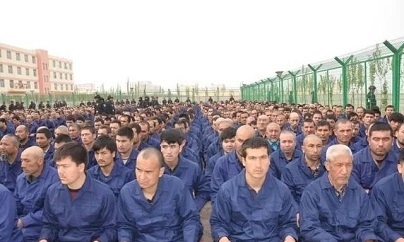
For several years, China has been enacting a policy of repression and brainwashing against over a million Uyghur Muslims in its northwest Xinjiang province. Reports include instances of forced sterilisation. Its hundreds of ‘re-education’ camps have been revealed as places where contact with relatives, the ability to pray and even when to use the toilet are tightly controlled. A leaked document reveals the state’s use of algorithms to score inmates on a ‘behaviour-modification’ points system, which tells guards when to mete out rewards and punishments. Absent from their homes, Uyghur places of worship are secretly bulldozed en masse.
On Tuesday, the UK government announced new rules that seek to prevent UK companies profiting from forced Uyghur labour. Companies will have to demonstrate that their supply chains are free from slavery. Public procurement rules will also attempt to exclude suppliers with links to human rights violations. This new policy appears to implement Key Proposal no. 5 of the newly created China Research Group, a think tank set up by Tory MPs to ‘counter violations of international universal human rights’. The ERG-style group was formed after China’s coronavirus cover-up operation became clear.
Most UK people’s 2020 Christmas eves were cheered by the news that we had some sort of Brexit deal – here, in all its majesty. Given the deadline for no deal, some deal, however thin, was a good deal better than nothing, with the ill-tempered chaos between the UK and a major trading partner which would have followed from the latter.
News in the last few weeks has concentrated on some of the immediate supply chain issues (notably fishing) which affect businesses, and whether those issues are long-term and intrinsic in any non-single-market Brexit (my view), or can be ironed out in time (as Leavers say).
But there are other long term issues such as environmental protection which are potentially affected by the deal. These have not really picked up in the media. One exception is the very helpful briefing by Greener UK (a group of the major UK environmental NGOs) – here.
The prism for any analysis of the deal is that it is a Trade and Cooperation deal, and the environmental commitments, such as they are, are tied into trade implications – to retain a level playing field for that trade.
The other thing to remember is that it is a public international law agreement, full of the terminology of such agreements, well trodden by the EU in terms of external agreements, and more generally. Put the other way, don’t read it like an EU directive, let alone a UK statute.
To a seasoned follower of environmental policy in Europe, its terms are like winding the clock back 40-odd years. The initial environmental directives (notably on water and waste in the mid-1970s) had no express Treaty hook on which to be hung. The hook only arrived with effect from the end of 1992, when the Treaty was amended. So environmental policy measures in those early days were couched essentially in trade terms.
So what does the deal (a.k.a the Trade and Cooperation Agreement or TCA) tell us? Here are my first thoughts.
Whilst many of us would prefer not to dwell on 2020, it was a year that produced many interesting decisions. In Episode 134, Michael Spencer and Jon Metzer talk to Emma-Louise Fenelon about the cases they consider to be 2020’s most significant landmarks.
Selahattin Demirtaş delivering a speech in 2016. Photograph: Ozan Köse/AFP/Getty Images. Source: The Guardian
On 22 December 2020, the European Court of Human Rights (“ECtHR”) published a Grand Chamber decision against Turkey, requiring the immediate release of the pro-Kurdish opposition leader Selahattin Demirtaş from pre-trial detention (Selahattin Demirtaş v Turkey, Application no. 14305/17). The ECtHR said that Mr Demirtaş’ detention went against “the very core of the concept of a democratic society” and was in breach of Articles 5, 10, 18 and Article 3 of Protocol 1 of the European Convention on Human Rights (the “Convention”).
The decision is particularly significant given Mr Demirtaş’ high profile status and the numerous cases against Turkey that the ECtHR is now hearing, following the attempted coup in July 2016 and the government’s subsequent crackdown on civil society. Shortly after publication of the judgment, the ECtHR website was subject to a cyber-attack and rendered temporarily inaccessible. A group of pro-Turkish hackers claimed responsibility for the attack via a Twitter post.
Last week’s round-up looked at the measures and messaging of the UK’s latest lockdown. This week we ask what it means for vulnerable children and victims of domestic abuse. Are sufficient legal safeguards in place?
For vulnerable children, it unfortunately seems not. On Wednesday, a Guardian investigation revealed that thousands of children were sent to unregulated care homes last year, while local authority provisions were stretched throughout many months of restrictions. These homes include supported accommodation facilities for over 16s, which are not subject to any inspections by regulators in England and Wales. The Children’s Commissioner for England Anne Longfield has warned that the children’s care system has been ‘left to slip deeper into crisis, seemingly unable to stop some of the most vulnerable children from falling through the gaps.’
In this two-part article, Ruby Peacock,an aspiring barrister and currently a legal and policy intern at the Legal Resources Centre in Cape Town, examines the history of medical claims brought under Article 3 of the European Convention on Human Rights.
The first part analysed the history of how such cases have been decided, with particular focus on claims based on psychiatric illness.This second part will examine the recent developments in the law and what these may mean for the future.
The author is very grateful to Greg Ó Ceallaigh and Sapan Maini-Thompson for their insights and comments when preparing this article.
Paposhvili v Belgium
By the time Paposhvili v Belgium came to be considered by the Grand Chamber, the applicant had sadly passed away. Before his death, he faced a proposed removal to Georgia. However, he had been suffering from several medical conditions, the most serious of which was chronic lymphocytic leukaemia. Crucially, the applicant accepted that, because his medical conditions was stable, he did not meet the D criteria. Intervening, the Human Rights Centre of Ghent University argued that the case presented a unique opportunity to ‘depart from the excessively restrictive approach adopted by the Court in N’ (at para 165). In a unanimous verdict, the Court seized upon this opportunity.
As outlined in Jonathan Metzer’s article, Paposhvili expanded the circumstances in which a person could resist removal to a third country on Article 3 grounds to include:
In this two-part article, Ruby Peacock,an aspiring barrister and currently a legal and policy intern at the Legal Resources Centre in Cape Town, examines the history of medical claims brought under Article 3 of the European Convention on Human Rights.
The first part analyses the history of how such cases have been decided, with particular focus on claims based on psychiatric illness.The second part will examine the recent developments in the law and what these may mean for the future.
This blog is maintained for information purposes only. It is not intended to be a source of legal advice and must not be relied upon as such. Blog posts reflect the views and opinions of their individual authors, not of chambers as a whole.
Our privacy policy can be found on our ‘subscribe’ page or by clicking here.





Recent comments