We use cookies to enhance your browsing experience. If you continue to use our website we will take this to mean that you agree to our use of cookies. If you want to find out more, please view our cookie policy. Accept and Hide [x]
It has been a quiet week in the courts from a human rights perspective. The Supreme Court gave judgment on a divorce case and a social security fraud, and whilst the Court of Appeal and High Court were more forthcoming in terms of the number of decisions made, family law and commercial cases dominated. Legal buffs may however be interested to note Scales v Motor Insurers’ Bureau [2020] EWHC 1747 (QB), in which the High Court applied Spanish law in a road traffic accident case, whilst celebrity watchers and students revising for their civil litigation exams may appreciate seeing how the court applied the test from Denton to grant Johnny Christopher Depp II relief from sanctions (who knew there was a Johnny Christopher Depp I?) – Depp v News Group Newspapers Ltd & Ors [2020] EWHC 1734 (QB).
A quiet week in the courts did not however extend to a quiet week in the news…
This week the UK government lowered the COVID-19 alert level from level 4 to level 3, with non-essential shops reopening for business on 15 June. July 4 will be “the next big stage” in the government’s plan; it is expected that pubs and restaurants may reopen then. The 2m social distancing rule is under review, and the government have implied that it may be lifted soon.
Meanwhile, the contact tracing app which had been developed by the ‘healthtech’ body NHSX has been scrapped, owing to severe limitations in detecting contacts from iPhones. The government will now move forward instead with a Bluetooth tracing system developed by Google and Apple, looking to incorporate the successful parts of the NHSX app where possible. Whichever system is eventually deployed will face intense scrutiny. Contact tracing apps worldwide are raising human rights concerns, as has been explained by Amnesty International and other organisations.
Black Lives Matter protests continued this week across the cities of the UK, with protesters calling for the removal of statues of figures from UK history associated with the colonial past of the British Empire, such as that of Winston Churchill in Parliament Square. Protesters have also called for the removal of Boris Johnson’s Director of Policy, Munira Mirza. Mirza is a long-standing opponent of the ‘anti-racism’ movement which has gained significant ground during the last few weeks, having been a critic of Blairite ‘multiculturalism’ and the 2017 Lammy Review of BAME groups in the justice system, and having played down allegations of institutional racism such as those raised by the Windrush scandal. She has been asked by the Prime Minister to head a new commission on racial inequalities.
In other news:
The US Supreme Court issued two landmark decisions this week. In Bostock v Clayton County, the court interpreted the word ‘sex’ in Title VII of the Civil Rights Act 1964 as including both sexuality and gender identity, such that it is unlawful for an employer to fire someone merely for being gay or transgender. In Department of Homeland Security v Regents of the University of California et al, the court blocked the Trump administration’s attempt to end Deferred Action for Childhood Arrivals (‘DACA’), a program which protects child immigrants from deportation, on the basis that the administration had failed to provide a ‘reasoned explanation’ for its decision.
UN Human Rights Chief Michelle Bachelet has called for worldwide action on systemic racism. Speaking to the UN Human Rights Council, she said that “behind today’s racial violence, systemic violence and discriminatory policing lies the failure to acknowledge and confront the legacy of the slave trade and colonialism”, and urged countries to “make amends for centuries of violence and discrimination, including through formal apologies, truth-telling policies, and reparations in various forms.”
The US Congress has passed a new law, under which Chinese officials deemed to be responsible for the arbitrary detention and torture of Uighurs will be denied entry to the country and have any assets held in the USA frozen. China’s foreign ministry has strongly criticised the law, stating that the US should ‘immediately correct its mistakes’.
In the courts
There were three noteworthy decisions in the courts this week. These considered, respectively, workers’ rights and coronavirus; criminal procedure and Article 5 ECHR; and Scottish family law and Article 8 ECHR.
R (oao Adiatu & anor) v HM Treasury: this was a judicial review of decisions made by the Treasury in respect of the availability of Statutory Sick Pay (‘SSP’) and the Coronavirus Job Retention Scheme (‘JRS’) during the pandemic. The challenge was brought by Mr Adiatu, a Nigerian Uber driver with leave to remain, together with the Independent Workers’ Union of Great Britain. The Claimants sought a declaration that the Treasury’s decisions were discriminatory under the ECHR and/or EU law and/or in breach of the public sector equality duty (‘PSED’) under s.149 Equality Act 2010. The court rejected this on all counts: the Treasury was within its margin of appreciation under the ECHR, noting the urgency and practical difficulties involved in applying SSP and the JRS during the coronavirus crisis; the means adopted by the Treasury were proportionate; and ministerial submissions prior to the roll-out of the JRS discussing the possible effects on women and BAME people confirmed that sufficient regard had been had by the Treasury to the PSED.
Archer v The Commissioner of Police of the Metropolis: in 2012, aged 15, the Claimant was involved in an incident at a chicken shop in Woolwich where he was stabbed in the back and head by local gang-members. He was arrested on suspicion of violent disorder and possession of an offensive weapon, and subsequently detained pursuant to s.38(1)(b)(ii) Police and Criminal Evidence At 1984 (‘PACE’), which authorises detention where “the custody officer has reasonable grounds for believing that [the arrested juvenile] ought to be detained in his own interests.” He sought a declaration of incompatibility on the basis of Article 5 ECHR, together with damages for unlawful detention under s.8 Human Rights Act 1998. The court held that his detention had not been incompatible with Article 5 ECHR, and so he was not entitled to damages, nor was the impugned section of PACE incompatible with Article 5. In reaching this conclusion, the court followed IA v France, where it had been held that ‘own protection’ could be a ‘relevant and sufficient’ reason for detention. Although the detention was justified by the Claimant’s own protection, it was still ‘with a view to’ bringing him before a court, and therefore was “for the purpose of bringing him before the competent legal authority” under Article 5(1)(c)– even if but for the need to protect the suspect, detention would not have been necessary. Granting the declaration would have risked making it “impracticable for the police to fulfil their duties”.
ABC v Principal Reporter & Anor (Scotland): this appeal concerned the role of siblings in the procedures by which ‘children’s hearings’ in Scotland make compulsory supervision orders (‘CSOs’). The hearings in question are attended by the child in question, together with ‘relevant persons’, who must attend or face criminal sanction; ‘relevant persons’ are understood in the legislative scheme as persons who have had a significant involvement in the child’s upbringing, and therefore will ordinarily not include siblings. The Claimants, ‘ABC’ and ‘XY’, had not been deemed relevant persons in respect of their younger siblings who were made subject to CSOs. They argued that the legislative scheme was incompatible with Article 6 and Article 8, and that siblings should have procedural rights in relation to these hearings, in particular to attend and make representations. The court rejected this argument, noting that concerns about privacy and the dissemination of sensitive information outweighed the rights of siblings in these cases. However, Lady Hale and Lord Hodge emphasised in their judgement that there must always be a ‘bespoke enquiry about the child’s relationship with his or her siblings’ in each case.
Conor Monighan brings us the latest updates in human rights law
In the News:
Anti-racism protests, sparked by the death of George Floyd, continued across the world. This week much of the focus has been on statues commemorating controversial historical figures. In Bristol, campaigners toppled the statue of a 17th century slave trader called Edward Colston.
The move led to a debate about what ought to be done with such statues. The founder of the Scouts, Robert Baden-Powell, was accused of racism, homophobia, and anti-Semitism. Initially it seemed his statue would be put into storage, but following an outcry it has been boarded up instead. A number of other figures have received similar treatment, including Sir Winston Churchill.
In the US, it seems change is coming to policing. The Democratic Party is proposing a police reform bill which, if passed, would become the Justice in Policing Act of 2020. The Bill would ban chokeholds from being used, limit the use of military weapons, and restrict qualified immunity (the legal principle which has prevented many officers from being sued for alleged misconduct). President Trump confirmed that he ‘generally’ supported ending the use of chokeholds.
Protesters in Los Angeles on Saturday. Credit: The Guardian.
The usual purpose of these round ups is to try and avoid repeating the headline news of the previous week whilst instead summarising the key legal developments. There are some weeks, however, in which events tend to put the judgments of the Court of Appeal into the shade.
The death of George Floyd on May 25th not only placed concerns about policing attitudes and deaths in custody onto the front pages, but also shone a light on to wider systemic racism. Protests in response were ongoing as of Sunday, both in the USA and around the world. The use of force by police in the aftermath of demonstrations has been widely reported upon, particularly in the United States, where the extent of force deployed against the British media led to a formal raising of the matter by the British embassy in Washington. Continue reading →
It emerged this week that Dominic Cummings drove 250 miles from London to Durham with his wife and child to be with his parents, while his wife was experiencing symptoms of COVID-19. In so doing, Mr Cummings appears to have flouted the government guidance of which he was one of the architects. Leading Tory MPs have called for the Prime Minister to sack Mr Cummings, but he has refused to do so, saying that Mr Cummings “followed the instincts of every father and parent”, and “has acted legally, responsibly, and with integrity”.
Apparently in response to the incident, a rogue Civil Service employee tweeted from the official Civil Service Twitter account “Arrogant and offensive. Can you imagine having to work with these truth twisters?” The Tweet was swiftly deleted, and a Cabinet Office investigation is under way into how it was released.
The situation in Hong Kong has escalated again this week, as Beijing gears up to enact Article 23 of the Basic Law, Hong Kong’s ‘mini-constitution’ of 1997, and impose national security laws to prohibit “treason, secession, sedition [and] subversion”. Protesters have been out in force in defiance of coronavirus restrictions, and police have repeatedly made use of tear gas, pepper spray, and water cannons. Notably, protesters have started to call for full independence for Hong Kong, which has not previously been one of the pro-democracy movement’s official objectives.
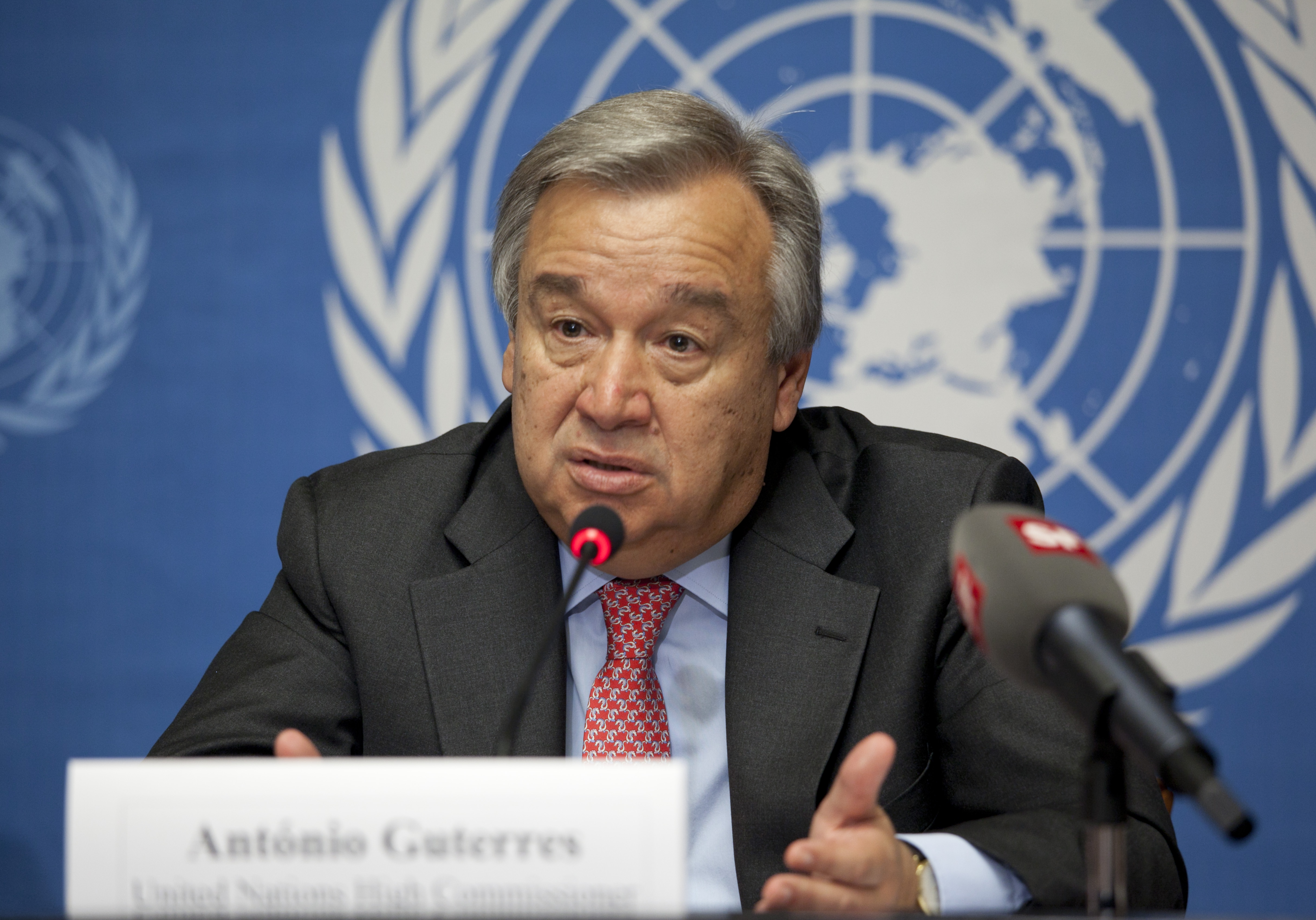
The world is reckoning this week with the human rights consequences of governmental efforts across the world to address the coronavirus pandemic. UN Secretary-General Antonio Gutierres has released a report on how the pandemic is becoming a ‘human rights crisis’. He highlights the disproportionate impact on minority communities, urging that national states of emergency must be proportionate, limited in scope, and alert to the risks of undue censorship and privacy violations. The report is available here.
Within the UK, the Equality and Human Rights Commission has been urging that more reasonable adjustments be made for the disabled and vulnerable in the handling of the pandemic.
In the sphere of criminal justice, the EHRC warns in an interim report that video hearings risk serious discrimination for people with learning disabilities, autism spectrum disorders, and mental health conditions. The report’s recommendations include ensuring disabled defendants have accessible information explaining their right to raise issues to do with participation, ensuring frontline professionals consider identifying people for whom video hearings may be unsuitable, and using registered intermediaries to support disabled defendants in video hearings. The report is available here.
The bandstand on Clapham Common, fenced off while people use the area for daily exercise. Photograph: Guy Bell/REX/Shutterstock. Credit: The Guardian.
Needless to say, the impact of Covid-19 dominated all aspects of life over the past seven days. Given that the week saw the Prime Minister admitted to intensive care with the virus before ultimately being discharged home, this is unlikely to be much of a revelation. The UK Human Rights Blog has published many articles looking in detail at some of the legal challenges posed by Covid-19 and the Government’s response to the pandemic. Of note this week:
Dominic Ruck Keene looks at potential legal challenges to Government policy in respect of coronavirus – here;
Robert Craig considers whether the Coronavirus Regulations might be ultra vires – here;
Darragh Coffey explores the provisions of the Coronavirus Act 2020 – here;
Rosalind English reviews a paper published by the Society of Conservative Lawyers on the consequences of coronavirus for the traditional principle of rule of law – here;
The Royal College of Nurses issued guidance to its members advising them that they could “as a last resort” refuse to treat patients suffering from Covid-19 if they are not given adequate personal protective equipment; and
Police came under increased scrutiny with regards to the exercise of their powers to enforce social distancing measures. The Chief Constable of Northamptonshire had to clarify statements that suggested officers may resort to checking the trolleys of grocery shoppers to determine if items purchased were “essential” or not.
Police officers direct traffic in the wake of new legislation
In the News
In the past week, Covid-19 has once again dominated the news, effectively occluding all other topics. Given that Monday evening saw leaders including Emmanuel Macron, Michel Barnier, Donald Trump and Sir Keir Starmer expressing their hopes for Boris Johnson’s swift recovery after his sudden removal to intensive care, this dominance does not seem disproportionate.
The worsening of the Covid-19 pandemic seemed to relegate all other business to a position of relative insignificance this week. Undoubtedly the human, economic and social cost of the outbreak is already severe, with its impact increasingly felt across the globe. However, perhaps more than any other conceivable event, the progression of the disease casts a spotlight on numerous areas of legal controversy. It is hard to recall a post-war phenomenon which so frequently pits the rights and interests of individuals against those of broader society (more here). Indeed, the potential material for upcoming pupillage interview questions seems virtually inexhaustible, assuming that they too don’t fall victim to social distancing measures.
I will be posting a longer article on Covid-19 later today.
National concern about coronavirus rose further this week, as the tally of UK cases rose to 36. The government has said that it will publish an emergency ‘battle plan’ for tackling the virus, based on existing contingency plans for responding to a pandemic flu outbreak. This will include ministers responsible for coronavirus in each department, as well as a public information campaign run from the Cabinet Office; if the virus spreads further, it could also include banning big events, closing schools, and advising against use of public transport. When questioned yesterday on whether cities will be isolated, as in China, Health Secretary Matt Hancock was emphatic that no tactics are “off the table” in the government’s coronavirus strategy.
The Johnson government is facing major setbacks elsewhere this week.
Demonstrators protest government deportation flights outside Downing Street. Credit: The Guardian.
The last week provided no shortage of legal controversy, and posed the author of this blog considerable difficulty when trying to identify which developments deserved the most prominence. In analysing this avalanche of legal news, however, certain key themes started to develop.
On
Friday, the UK left the EU. In the midst of jubilation, despair, and relief,
questions remain about the human rights implications this decision may have, as
we continue to negotiate the precise terms of our exit. Clause 5 of the European
Union (Withdrawal) Act 2018 already confirmed that the EU Charter of
Fundamental Rights would not be included in ‘retained’ EU legislation after
Brexit. Now, the Conservatives may be able to move forward with their long-term
commitment to repeal the Human Rights Act 1998 and introduce a ‘British Bill of
Rights’. Boris Johnson’s manifesto promise was to ‘update’ the legislation, as
part of a programme of constitutional reform, looking at “the relationship between the government,
parliament and the courts.”
As the coronavirus continues to provoke anxiety,
China has come in for criticism for its handling of the epidemic, in the New York Times and on Human Rights Watch. After concealing new cases in Wuhan in early January, there has been
censorship of online posts about the epidemic, bans on speaking to the media
and journalists, and the government has been interrogating web users accused of
‘spreading rumours’ and ‘publishing and spreading untrue information
online’.
Conor Monighan brings us the latest updates in human rights law
In the News:
ICCSA, the Independent Inquiry into Child Sexual Abuse, published its report into protecting children who live outside the UK.
It described how there has been “extensive” sexual abuse of children by British nationals whilst abroad. Between 2013 – 2017, 361 UK nationals requested consular assistance between 2013 – 2017 for being arrested for child sex offences. The inquiry suggested this was likely to be a small proportion of offenders committing crimes abroad.
The report highlights the case of Gary Glitter, who was able to travel abroad and abuse vulnerable children even after he had been convicted. Glitter was later sentenced again for abusing two girls, aged 10 and 11, in Vietnam.
ICCSA concluded that travel bans should be imposed more frequently to prevent this behaviour. It noted that Australia bans registered sex offenders from travelling overseas. ICCSA’s report also argued that the burden of proof for imposing travel bans should be reduced, saying that the need for evidence is often overstated by courts and the police.
The inquiry described the global exploitation of children as worth an estimated £27.7 billion, with developing countries being particularly at risk.
The full report can be read here. More from the BBC here.
The news has been nothing
if not dramatic this week. US President Donald Trump arranged for the
assassination of Iranian General Qasem Soleimani by drone strike on Friday. At
Soleimani’s state funeral in Tehran, the streets were filled with crowds chanting
‘death to America!’, and a weeping Ayatollah Khamenei promised that a ‘harsh retaliation’
would come to the USA. The media is full of geopolitical speculation: some say
that this amounts to a ‘declaration of war’ by the USA on Iran, and will lead
to World War III, while others worry about the possibility of nuclear
escalation. The BBC has published this relatively deflationary overview of
the risks, as the situation stands.
British-Iranian
dual citizen Nazanin Zaghari-Ratcliffe, who was imprisoned in 2016 for allegedly
‘plotting to topple the Iranian regime’ and ‘spreading propaganda against Iran’,
remains in prison in the country. Her husband has called for an urgent meeting
with UK Prime Minister Boris Johnson. In light of Mr Johnson’s previous mishandling
of the situation as Foreign Secretary, and his refusal to condemn the killing,
saying on Sunday “we will not lament his death”, Richard Ratcliffe may well
consider that he is entitled to a meeting.
International
concern continues, too, over the 19-year-old UK citizen held in Ayia Napa in
Cyprus, who says that she was compelled to withdraw her allegations of gang
rape against a group of Israeli nationals under duress from Cyprus police. She
was convicted in 2019 for ‘wilfully indulging in public mischief’, and is now
pursuing an appeal process which could take up to three years. Dominic Raab
this week urged the Cypriot authorities to ‘do the right thing’ in deciding her
case.
This week sees Baroness Hale sitting for the final time as President of the Supreme Court. Photo credit: The Guardian.
A brief delay to the publication of this article has helpfully afforded this blogger the opportunity to move beyond the political events of last Thursday and instead focus on much more interesting legal matters (more on those later).
However, it would be remiss not to recognise the consequences of last week’s election, which saw the Prime Minister return newly empowered by a sizeable Conservative majority. At the time of writing, proposals were being made to put the legislation required to withdraw from the European Union back to MPs as early as this Friday.
Sneaking in at page 17 of the Conservative manifesto (one page after a commitment to extend the water rebate in the South West) came the party’s offering on law and order. This included commitments to increase the number of police, enhance the use of “fair and proportionate” stop and search, as well as promote longer sentences and the greater use of electronic tags. The manifesto was however silent on some matters which have drawn attention of late, including court closures, legal aid cuts, and previous suggestions from ministers that the Human Rights Act might be amended to protect soldiers from prosecution for acts performed during their time in service. With such a significant majority however, the Government will be in a position to pursue its chosen agenda with enthusiasm, and so these and other mooted at policies, such as reform of the judicial review process, may not be as fanciful as previously thought.
Moving gratefully on from politics, today saw the first day in the case of XX v Whittington Hospital NHS Trust (appealing [2018] EWCA Civ 2832), which also serves as Baroness Hale’s final case as President of the Supreme Court before her replacement on January 11thby Lord Reed. The case provides an interesting example of a scenario in which factual matters combined with absent or inadequate law require the court to consider matters of a deeply public policy nature. Continue reading →
The UK Human Rights Blog is moving to Substack.
From 19th October, all new articles will be published exclusively on our Substack, and no new content will appear on this website.
To stay up to date with our latest articles and insights, please subscribe here: https://substack.com/@ukhumanrightsblog
This blog is maintained for information purposes only. It is not intended to be a source of legal advice and must not be relied upon as such. Blog posts reflect the views and opinions of their individual authors, not of chambers as a whole.
Our privacy policy can be found on our ‘subscribe’ page or by clicking here.




 The bandstand on Clapham Common, fenced off while people use the area for daily exercise. Photograph: Guy Bell/REX/Shutterstock. Credit: The Guardian.


Recent comments