We use cookies to enhance your browsing experience. If you continue to use our website we will take this to mean that you agree to our use of cookies. If you want to find out more, please view our cookie policy. Accept and Hide [x]
UK Human Rights Blog - 1 Crown Office Row
Search Results for: puberty blockers consent/page/40/Freedom of information - right of access) [2015] UKUT 159 (AAC) (30 March 2015)
At first sight, a rather abstruse dispute, but the 63 page judgment of Henshaw J gives rise to a host of important and difficult human rights points. But his central conclusion is that a statute which was not challengeable at the time of its enactment became so, because of the subsequent evolution of the law, principally common law, to the detriment of insurers.
Sounds mildly counter-intuitive? Not, I think, so, when the story has unfolded.
The High Court in Belfast will sit on Monday 9 and 10th November to hear a challenge by a same sex couple now living in Northern Ireland who seek recognition of their English marriage. The current legal dispensation in the Province is that an English same sex marriage is recognised as a civil partnership in Northern Ireland.
The Petition is resisted by the Attorney General and government of Northern Ireland and the (UK) Government Equalities Office (which reports to Nicky Morgan, the Minister for Women and Equalities). It is anticipated that Judgment will be reserved. Continue reading →
In R (on the application of Gina Miller and Ors) v The Secretary of State for the European Union, the High Court, in a masterly exposition of the principles of constitutional law and statutory interpretation, held that the Secretary of State did not have the power under the Crown’s prerogative to give notice under Article 50 and thereby begin the process under which the United Kingdom will leave the European Union.
Sir Oliver Cromwell said in 1644 “We study the glory of God, and the honour and liberty of parliament, for which we unanimously fight, without seeking our own interests… I profess I could never satisfy myself on the justness of this war, but from the authority of the parliament to maintain itself in its rights; and in this cause I hope to prove myself an honest man and single-hearted.” I suspect that Cromwell will be reading the judgment delivered today and chuckling (if he ever would do something so frivolous) with pleasure at the sight of the High Court roundly defending the sovereignty of Parliament. Continue reading →
Following our popular interview with James Badenoch QC on the “doctor knows best” rule of evidence in medical negligence cases, we bring you John Whitting QC, healthcare law specialist at 1 Crown Office Row (@JohnWhittingQC). In Episode 64 of Law Pod UK, John talks to Rosalind English about the realities of clinical encounters and considers to what extent patients are willing, or in some circumstances even able – to take on board multiple options for their treatment.
COVID-19 has changed many things about society, and one of the most significant is the erosion of the taboo surrounding death. After all, we have daily bulletins on death figures. As Dignity in Dying Sarah Wootton says, in her forthcoming book “Last Rights”,
The coronavirus pandemic has thrust death and dying into the mainstream.
This sensitive and compassionate judgment by Hayden J following a remote hearing of the Court of Protection is therefore worth our attention, as we all become more aware of how acutely things slip out of our control, not least of all our health.
The application from the Trust concerned a 34-year-old man (MSP) who has had significant gastrointestinal problems for approximately 10 years, requiring repeated invasive surgery. At the time of the hearing he was unconscious and on life support in ICU. The issue framed in the application was whether the Trust should continue to provide ITU support or withdraw treatment other than palliative care.
Between 2013 and 2020 MST underwent significant abdominal surgery and had a stoma inserted in 2018. The court noted that he “utterly loathed” life with a stoma. He did express his consent to the stoma being inserted at the time, but this consent seemed entirely contrary to his unambiguous rejection of this procedure, expressed bluntly to three consultants with whom he had discussed it. It also appeared entirely inconsistent with everything he had said to his mother, father and step-sister on the point.
Significantly, on 4th February 2020 MSP had written a carefully crafted Advance Directive which he had copied to his parents and to his step-sister. Outside the hospital setting these were the only three people who knew MSP had a stoma. He did not even wish his grandmother to be told. In this Advance Directive he stipulated, among other things, that he would refuse the “formation of a stoma, through an ileostomy, colostomy, urostomy or similar, that is expected to be permanent or with likelihood of reversal of 50% or under”.
Re SB (A patient; capacity to consent to termination) [2013] EWHC 1417 (COP) 21 May 2013 – read judgment
Sidney Chawatama of 1 Crown Office Row represented the husband of the patient in this case. He has nothing to do with the writing of this post.
The patient in this case was a 37 year old highly intelligent graduate who worked in IT. For the past 8 years she presented with symptoms which were diagnosed as those of bi-polar disorder. She had been detained under compulsory or similar powers at various times in Italy, in France and here in England.
These proceedings were issued in the Court of Protection because the mother concerned was “very strongly” requesting a termination and giving her consent to it. The issue related to her capacity. Section 1(2) of the Mental Capacity Act 2005 is very clear and provides as follows: “A person must be assumed to have capacity unless it is established that he lacks capacity.” Accordingly, unless it is established, on a balance of probability, that the mother does not have capacity to make the decision that she undoubtedly has made, her autonomy as an adult to request and consent to the proposed abortion procedure is preserved. Continue reading →
This was a busy week. It saw the beginning of a nationwide vaccine roll-out and protracted negotiations in Brussels to stave off a no-deal Brexit (which remains a ‘high probability’ according to the Prime Minister). It also saw the Government announce the appointment of retired Court of Appeal judge Sir Peter Gross to lead the review of the application of the Human Rights Act 1998 in the UK Courts. This review will look at the relationship between UK courts and the European Court of Human Rights in Strasbourg; the impact of the Human Rights Act on the relationship between judiciary, executive, and Parliament; and the application of the Human Rights Act to actions taken outside the UK.
Moving to Brexit, the House of Lords voted on Monday to approve a Labour amendment to the Government’s Trade Bill. The amendment requires that Ministers undertake a human rights impact assessment for any trade deal, and must revoke an agreement in any case where potential genocide is found in a UK High Court ruling. The measure has been proposed in response to allegations that China is committing genocide against the Uighur Muslims in Xinjiang province.
A new report has argued that the practice of turning back asylum seeker boats at sea is illegal under international law, and does not deter others from making the journey.
Schindler and MacLennan v. Chancellor of the Duchy of Lancaster and Secretary of State for Foreign and Commonwealth Affairs [2016] EWCA Civ 469 20 May 2016 – read judgment
Last month, I posted here on this challenge to the rule stopping long-time expatriates from voting on the Brexit proposals. The case went swiftly to the Court of Appeal, who, today, swiftly dismissed the expats’ appeal.
The challengers said that the 15 year rule on voting was an unjustified restriction of the rights of freedom of movement under EU law, not least because if the UK were to leave the EU, they would end up without rights of abode in their current EU countries.
Chief Constable of Greater Manchester v Calder [2015] EWHC B11 – Read judgment
Adam Wagner represented Scott Calder in this case. He is not the writer of this post.
The Greater Manchester Police (‘GMP’) have been unsuccessful in an attempt to obtain an Injunction to Prevent Gang-Related Violence (‘IPGV’ or ‘Gangbo‘) against Scott Calder. The application was based on police intelligence and the lyrics of Mr Calder’s YouTube Grime Rap videos. On 14 January 2015, Mr Justice Blake dismissed the GMP’s appeal to the High Court, and in doing so laid out guidance on the purpose and ambit of the IPGV legislation, which is currently being substantially amended by Parliament.
The below is based on the Judge’s ex tempore judgment (i.e. given at the hearing). We will post the full judgment when it is available.
Ilias v Hungary (Application no. 47287/15) was the first case in which the ECtHR considered a land border transit zone between two member states of the Council of Europe, where the host state, Hungary, was also a member of the EU and had applied the safe third country rule under the EU asylum regime. The Grand Chamber held that the applicants’ detention did not breach Article 5 (the right to liberty and security of the person).
The applicants, Mr Ilias and Mr Ahmed, were both Bangladeshi nationals who had left Bangladesh at different times and in differing circumstances. They met in Greece and then traveled together to the Former Yugoslav Republic of Macedonia, then to Serbia, and then to Hungary. On 15 September 2015 they arrived in Hungary and entered the border transit zone at Röszke. They submitted asylum requests on the same day. Within several hours their requests were rejected as being inadmissible and they were ordered to be expelled from Hungary back to Serbia as a safe third country. The applicants then spent 23 days in the transit zone whilst they appealed this decision. On 8 October 2015, following a final decision of the Hungarian courts which rejected their applications for asylum and ordered the applicants’ expulsion, Mr Ilias and Mr Ahmed were escorted out of the transit zone and crossed the border back into Serbia.
British Academy of Songwriters, Composers and Authors and others, R(on the application of) v Secretary of State for Business, Innovation and Skills and another [2015] EWHC 1723 (Admin) – read original judgment and [2015] EWHC 2041 (Admin), 17 July 2015 read remedies judgment
On 19 June 2015, Green J ruled that an exception to copyright infringement for private use was unlawful, at common law, because of flaws in the consultation process which had preceded its enactment. See Rosalind English’s post here.
The judge left open for further argument what should be done about this unlawfulness.
The Secretary of State agreed that the offending statutory instrument should be quashed, and that he would re-consider whether a further private copying exception should be introduced.
But the parties disagreed about the date from when it should be quashed. Should it be prospective or retrospective? Or, in the Latin that lawyers still love, ex nunc (from now) or ex tunc (from then)? (Auto-correct so wanted those words to be “ex tune” – which would have been very appropriate, but wrong)
Michael Spencer is a pupil barrister at One Crown Office Row.
The fate of Shamima Begum, the British teenager who joined the Islamic State in Syria (ISIS) and has asked to return home, has divided opinion.
Home Secretary Sajid Javid’s
decision to deprive the 19-year-old mother of her citizenship is apparently
popular: a recent poll
found that 78% support the move.
But others have raised concerns about the propriety of using such a draconian power against a British citizen by birth in circumstances where she may be rendered stateless, also leaving the fate of her child uncertain.
From Bethnal Green schoolgirl to
ISIS bride
Ms Begum was born in the UK to
parents of Bangladeshi heritage. She was
one of three 15-year-old schoolgirls from the Bethnal Green Academy who
travelled to Syria via Turkey in 2015 to join ISIS.
The Metropolitan Police
subsequently apologised to the
families for failing to warn them that the schoolgirls were at risk and
suggested that they would not face criminal charges if they returned to the UK.
After arriving in Raqqa, Syria, Ms
Begum married ISIS fighter Yago Riedijk, a Dutch national. She had three children with him, two of whom
died. Her youngest son, Jarrah, was born
in a Syrian refugee camp in February 2019.
The press caught up with Ms Begum just before she gave birth and she has given a series of incendiary interviews. She claimed that she had been “just been a housewife for the entire four years” and that she had not done anything “dangerous” or made propaganda. However, she also said she had “no regrets” about joining ISIS and suggested that the Manchester Arena bombings were justified because of the bombing of civilians in Syria.
As I am sure will not have escaped you, these are interesting times for human rights. We still await the detailed Conservative proposals for replacing the Human Rights Act with a Bill of Rights, so it is difficult with any certainty what will happen.
I wanted to gather together a few pieces of commentary and media appearances I have done in the past week, so here they are. We will, of course, be following closely what comes next.
Victoria Derbyshire Show, BBC2, 12 May 2015 – I debated Conservative MP Peter Bone on whether we need to reform human rights, and there were interesting Skype interventions too.
BBC’s The Big Questions (iPlayer) on Sunday 10th was about human rights are religion. It was recorded before the Election results. Don’t hold your breath for me to speak – it happens about 30 minutes in.
There has been a huge amount more already. Some illuminating pieces (certainly not comprehensive):
Last week the people of the Republic of Ireland voted in a referendum to amend its constitution to allow marriage by two persons “without distinction as to their sex” by 62 – 38%.
The exuberance of the moment was captured by a tweet from the Irish Minister of State for Equality, Aodhán Ó Ríordáin TD stating, “Ireland hasn’t just said “Yes” Ireland has said “F❤CK YEAAHHHH”
The media was awash with celebratory images. Prominent in these were two Irish Senators who played their part by bringing test cases. Decriminalisation had only come about in Ireland in 1993 after Senator David Norris had challenged the previous discriminatory law in the European Court of Human Rights and won (in 1998) with the assistance of his Counsel, then Senator and subsequently President Mary Robinson.
The recognition of same sex partnerships in Ireland really came to prominence when Senator Katherine Zappone sought recognition of her Canadian marriage (with Ann Louise Gilligan) within the tax system. The High Court ruled that the constitution defined marriage as being between a man and a woman and the stage was set for battle to commence. In the meantime the government had started to take evasive action and defined marriage in the Civil Registration Act 2004 as being between a man and a woman (it was previously undefined). This was the year that the UK Parliament passed the Civil Partnership Act – which covered Northern Ireland. In 1998 the Irish Government in the Belfast Agreement committed to bringing,
measures brought forward would ensure at least an equivalent level of protection of human rights as will pertain in Northern Ireland.
This blog is maintained for information purposes only. It is not intended to be a source of legal advice and must not be relied upon as such. Blog posts reflect the views and opinions of their individual authors, not of chambers as a whole.
Our privacy policy can be found on our ‘subscribe’ page or by clicking here.



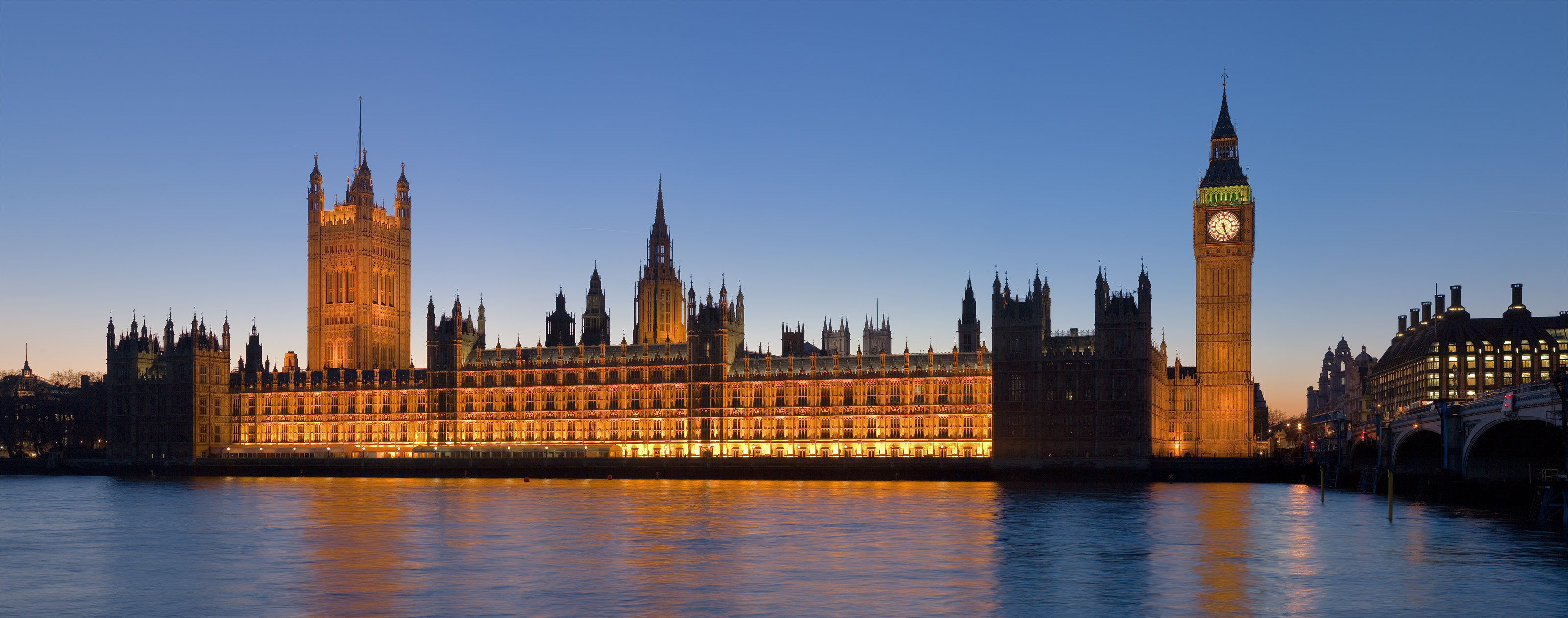


 As I am sure will not have escaped you, these are interesting times for human rights. We still await the detailed Conservative proposals for replacing the Human Rights Act with a Bill of Rights, so it is difficult with any certainty what will happen.


Recent comments