Search Results for: puberty blockers consent
4 February 2019 by Rosalind English
In the news
A cross-party group of MPs is seeking to put an end to indefinite detentionin immigration centres. Led by Harriet Harman MP, the Chair of the Joint Committee on Human Rights, the group are backing an amendment to the Immigration and Social Security Coordination (EU Withdrawal) Bill, which will make it illegal for people to be held for more than 28 days in an immigration detention centre, unless a judge issues a 28-day extension.
The Human Rights group Liberty has published two important reports. The first report highlights the failings of the UK military justice system, including a lack of transparency and a practice of downgrading offences to as to deal with them internally; the report recommends a new independent supervisory body for the Service Police. In connection with the report, Liberty has launched an Armed Forces Human Rights Helpline.
The second Liberty report evaluates the use of ‘predictive mapping’ by the police to identify crime hotspots and to conduct ‘individual risk assessments’. The report concludes that this system threatens privacy and freedom of expression, and encourages discrimination and racial profiling.
A few pending cases are of interest:
Continue reading →Like this:
Like Loading...
1 February 2015 by Martin Downs
 The target of this barb was the case management style of HHJ Dodds. The author, one of three Judges of Appeal empanelled in Re A (Children) [29 January 2015] (we will have to await a full judgment to discover which as – so far – only a Lawtel summary is available).
HHJ Dodds is well known to readers of this blog. His style of case management was also analysed (and found wanting) by the Court of Appeal the following day in Re S-W (children) [2015] EWCA Civ 27 (30 January 2015). The judgments leave one to ponder whether these cases are a product of the stresses that have emerged from the greater expectations now put on the shoulders of judges to case manage litigation or whether, as previously discussed in this blog by David Hart QC here, it is a problem that arises with clever judges who find that they are, by temperament, not inclined to listen patiently to other people (generally considered to be a core part of the job description).
In Re S-W (children), HHJ Dodds made final care orders concerning three children at a hearing designated for case management less than three weeks after the application was made. The Court of Appeal overturned the orders (no party supported the judge’s actions) deeming care proceedings to be inapt for summary judgment in all but the most exceptional of circumstances (e.g. consent). Amongst the enumerated problems were that, the father of one of the children had not been served with notice of the proceedings, the children’s Guardian had not seen the children and there were no final care plans before the court. The judge did not even give a reasoned judgment. The Court of Appeal had to look at the transcript instead. This revealed that the judge had made his settled (and trenchantly expressed) view known within minutes of the hearing commencing. According to the court,
All the parties crumbled under the judge’s caustically expressed views.
Continue reading →
Like this:
Like Loading...
22 May 2015 by Guest Contributor
 Constitutional Futures 2015 – 2025 – a vignette, and comment
January 1, 2025
As the first day of 2025 dawns the people of the Kingdom of England wake looking forward to the arrival of their new passports, issued by the United States of… America. Governor Farage’s message is unusually sober, encouraging, almost apologetic:
While we had hoped to make our future with the Commonwealth, despite our best efforts, and the tireless advocacy of the Royal Family, we must acknowledge that our former friends are content with their lives and more local partners. We thank Her Majesty, and her family, for their service. We wish them well with their continued public service in Scotland, Canada and elsewhere.
While the bargain our NAFTA partners have struck is a bracing one, it is one which I believe we can live with, and indeed thrive under. As the fifty-first state, the first to join since Hawaii in 1959, we rejoin friends older than the New Zealanders, Australians, Canadians; we go back to our shared Mayflower roots.
President Clinton assures me that she expects Baroness Hale to be confirmed to the Supreme Court. I’m sure she will do great work weaving British principles into our new shared constitution.
With representatives in the House, and Senators Cameron and Umuna in the Senate, we can look forward to a prosperous future as a new and vital part of a nation we can claim have been with, in some ways, since it began.
Continue reading →
Like this:
Like Loading...
26 February 2019 by Rosalind English
Ninan v Findlay and others [2019] EWHC 297 (Ch), 21 February 2019
The claimant, Mrs Ninian, is the sole beneficiary of the residue of the estate of her late husband Mr Ninian under his will. Mr Ninian, who suffered from a progressive incurable disease, died on 16 November 2017 with the assistance of Dignitas in Switzerland. Mrs Ninian was with him throughout the trip to Switzerland, his assessment by representatives of Dignitas and the occasion of his suicide.
Shortly before the trip to Dignitas, Mrs Ninian applied for relief against forfeiture under section 2 of the Forfeiture Act 1982 on the basis that steps taken by her may have amounted to encouraging or assisting her husband to commit suicide which brought in play the forfeiture rule.
Continue reading →Like this:
Like Loading...
23 July 2010 by Isabel McArdle
 G v E and others [2010] EWCA Civ 822 – Read judgment
This post was written with the kind help of Jaime Lindsey
The Court of Appeal has held that a person who lacks mental capacity can be detained if the Court of Protection considers that it is in their best interests, without having to meet additional conditions under Article 5 of the European Convention on Human Rights.
This case was a challenge to the decision of Jonathan Baker J in the Court of Protection and raises issues about the relationship between ECHR Article 5 (right to liberty and security) and the Mental Capacity Act 2005 (MCA). It reinforces the point that it is for the Court to decide what is in an incapacitated patient’s best interests, and that Article 5 imposes no further requirements.
Continue reading →
Like this:
Like Loading...
16 March 2015 by acwessely

Photo credit: Guardian
Alex Wessely brings us the latest edition of the Human Rights Round-up
In the news
Planned increases in court fees have been given the green light after successfully clearing the House of Lords. As the Law Gazette reports here a 5% charge will be added to all civil claims valued above £10,000, with an aim to raise £120m per year for the court service. ObiterJ writes that “for many people in need of the law, access to justice will now be a forlorn hope”. Whereas Lord Faulks, a Minister behind the reforms, argued that litigation is “very much an optional activity”, this was disputed by Lord Pannick – “litigation is often a necessity to keep your business alive or to maintain any quality of life”. Joshua Rozenberg, writing in the Guardian, bemoans the lack of attention paid to these significant increases, which shows that “the public has very little interest in what is being done in its name”.
Continue reading →
Like this:
Like Loading...
17 April 2015 by Rosalind English
 Reactiv Media Limited v The Information Commissioner (Privacy & Electronic Communications Regulations (2003) [2015] UKFTT 2014_0213 (GRC) (13 April 2015) – read judgment
Although an individual’s right to privacy is usually thought of in the context of state intrusion in one form or another, in reality the real threat of intrusion in a society such as ours comes from unsolicited marketing calls.
What many people may not be aware of is that if an individual has registered with the Telephone Preference Service, these calls are unlawful and the company responsible may be fined. It is therefore worth making a complaint, even if one instinctively feels that taking such a step will invite more intrusion. This case is a nice illustration of privacy being upheld and the rules enforced against an unscrupulous and persistent offender.
TPS is operated on behalf of the direct marketing industry by the Direct Marketing Association (DPA) and subscribers’ rights not to receive such calls may be enforced under Regulation 21 of the Privacy and Electronic Communications (EC Directive) Regulations 2003.
Continue reading →
Like this:
Like Loading...
3 November 2016 by Dominic Ruck Keene
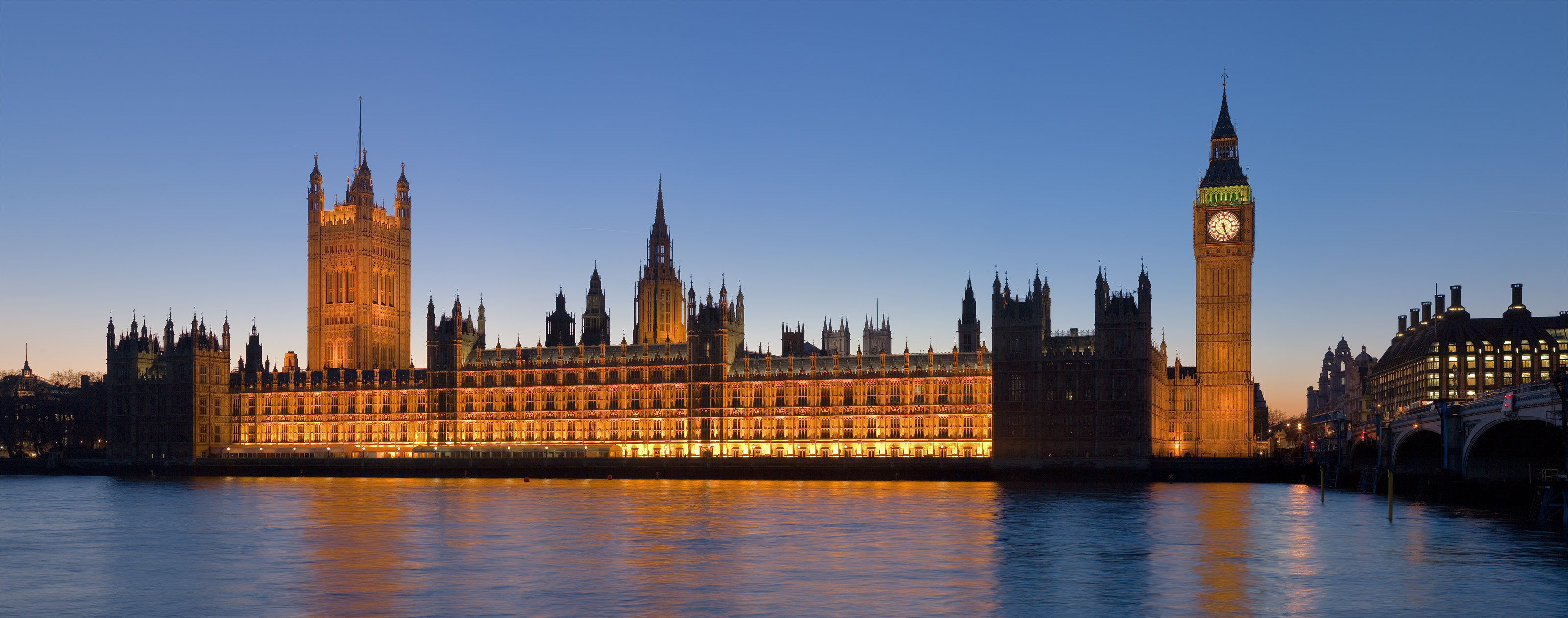
In R (on the application of Gina Miller and Ors) v The Secretary of State for the European Union, the High Court, in a masterly exposition of the principles of constitutional law and statutory interpretation, held that the Secretary of State did not have the power under the Crown’s prerogative to give notice under Article 50 and thereby begin the process under which the United Kingdom will leave the European Union.
Sir Oliver Cromwell said in 1644 “We study the glory of God, and the honour and liberty of parliament, for which we unanimously fight, without seeking our own interests… I profess I could never satisfy myself on the justness of this war, but from the authority of the parliament to maintain itself in its rights; and in this cause I hope to prove myself an honest man and single-hearted.” I suspect that Cromwell will be reading the judgment delivered today and chuckling (if he ever would do something so frivolous) with pleasure at the sight of the High Court roundly defending the sovereignty of Parliament.
Continue reading →
Like this:
Like Loading...
8 February 2011 by Adam Wagner
 I posted last week on the interesting and morally complex case in which a judge in the Court of Protection ruled that a 41-year-old man with a mild learning disability did not have the mental capacity to consent to sex and should be prevented by a local council from doing so.
The
Daily Telegraph and
Daily Mail have picked up on this story. The Mail’s Richard Hartley-Parkinson appears to have based his article solely on the Telegraph’s, in light of this paragraph:
Mr Justice Mostyn said the case threw up issues ‘legally, intellectually and morally’ because sex is ‘one of the most basic human functions’ according to the Daily Telegraph.
Continue reading →
Like this:
Like Loading...
8 August 2016 by David Hart KC
 Many readers will know that I have banged on, long and hard, via this blog about the constant problem we have in the UK trying to ensure that the cost of planning and environmental litigation is not prohibitively expensive for ordinary people. The UK system has been held repeatedly to be in breach of Article 9 of the Aarhus Convention, which says that members of the public should be able to challenge environmental decisions, and the procedures for doing so shall be adequate and effective and “not prohibitively expensive”. For Aarhus beginners, have a look at my bluffers guide – here
So I was delighted to be asked recently to chair the Environmental Law Foundation whose main role is to help out people, for free, with their planning and environmental problems. ELF is going to have its 25th birthday next year, and this short post is an unashamed plug for the job that it does – together with an invitation to contact it (see below) if you have a problem you think they may be able to help with, or if you want to volunteer to assist on someone else’s problem.
Continue reading →
Like this:
Like Loading...
15 January 2010 by Guest Contributor
Like this:
Like Loading...
24 September 2013 by Rosalind English
 R (on the application of R) v Chief Constable [2013] EWHC 2864 (Admin) 24 September 2013 – read judgment
The High Court has ruled that it is not a breach of the right to private life to request DNA samples from those who were convicted of serious offences before it became commonplace to take samples for the production of DNA profiles for the investigation of crime.
Background Facts
The claimant was asked, by reason of his previous convictions, to provide a DNA sample under the Police and Criminal Evidence Act to enable the police compare the his DNA profile with those held by the police in connection with unsolved crime. He refused to give the sample when it was sought initially, so he was sent a letter requiring him to attend at a police station to provide the sample on pain of arrest. He applied for judicial review of this requirement, arguing that it was an unlawful incursion on his right to privacy under Article 8.
Continue reading →
Like this:
Like Loading...
22 May 2017 by David Hart KC
 FB v. Princess Alexandra Hospital NHS Trust [2017] EWCA Civ 334, 12 May 2017, Court of Appeal – read judgment
All the advocates in this case were from 1 Crown Office Row, Elizabeth-Anne Gumbel QC for the claimant/appellant FB, and John Whitting QC and Alasdair Henderson for the hospital. None of them were involved in the writing of this post.
FB fell ill with meningitis when she was just one. The illness was diagnosed too late, and she suffered brain damage. This appeal was against the judge’s dismissal of the claim against the hospital, where she was seen, some time before she was admitted and the infection treated. All agreed that avoiding the time between being seen and being admitted would have led to the brain damage being avoided.
But should the junior doctor have picked up enough about her condition to admit her?
Continue reading →
Like this:
Like Loading...
30 June 2015 by Rosalind English
 Jack Lowe and Dennis Reynolds, Plaintiffs v Atlas Logistics Group Retail Services
The first prosecution under the 2008 US Genetic Information Nondiscrimination Act (GINA) has won $2.25 million jury damages for the individuals involved .
I have posted about genetic discrimination here and here. In the US some of these problems have been foreseen and legislated against: GINA prohibits discrimination against healthy individuals for employment decisions or health insurance purposes on the basis of genetic information alone; it also prevents employers and insurance providers from demanding or using information from genetic tests.
The law does include limited exemptions, however. Forensic laboratories can ask workers for their DNA to check that employees’ genetic material does not contaminate the genetic samples that they analyse.
Continue reading →
Like this:
Like Loading...
30 October 2021 by Anogika Souresh
Re C [2021] EWCA Civ 1527
This is an appeal from Hayden J’s judgment in Re C [2021] EWCOP 25.
The appeal was allowed on the basis that care workers making arrangements to secure the services of a sex worker for C would place the care workers in peril of committing an offence contrary to section 39 of the Sexual Offences Act 2003 (“SOA”).
Background
The issue was whether care workers would commit a criminal offence under section 39 of the SOA if they made practical arrangements for C to visit a sex worker. C had the capacity to consent to sexual relations but not to make the arrangements.
Section 39(1) SOA states that:
A person (A) commits an offence if—
(a) he intentionally causes or incites another person (B) to engage in an activity,
(b) the activity is sexual,
(c) B has a mental disorder,
(d) A knows or could reasonably be expected to know that B has a mental disorder, and
(e) A is involved in B’s care in a way that falls within section 42.
[Emphasis Added]
The central question was whether the care workers would “cause” C to engage in sexual activity by making the arrangements. Hayden J concluded that they would not cause C to engage in sexual activity.
The Secretary of State for Justice appealed on three grounds:
- The Judge misinterpreted section 39 SOA;
- To sanction the use of sex is contrary to public policy (this ground of appeal was raised by way of an opposed amendment);
- The Judge erred in concluding that Articles 8 and 14 of the European Convention on Human Rights (“ECHR”) required his favoured interpretation.
Continue reading →Like this:
Like Loading...



Recent comments