We use cookies to enhance your browsing experience. If you continue to use our website we will take this to mean that you agree to our use of cookies. If you want to find out more, please view our cookie policy. Accept and Hide [x]
UK Human Rights Blog - 1 Crown Office Row
Search Results for: prisoners/page/40/ministers have been procrastinating on the issue, fearing that it will prove unpopular with the electorate.
Rampant spread, fuelled by a combination of a new variant that is around 50-70% more transmissible, plus a lifting of restrictions at the beginning of December, brings us into another national lockdown.
In many ways, Prime Minister Boris Johnson’s first address of 2021 felt unpleasantly like a return to early 2020.
The original “Stay Home” messaging made a comeback. The Prime Minister was deliberately vague about how long lockdown would last. Big Brother Watch criticised the government for “yet again … evading the democratic process” by denying MPs a meaningful vote on the new national restrictions prior to their televised announcement to the nation, or their coming into force. The new guidance differs from the Tier 4 guidance in emphasis, if not substance.
Ever the optimist, the Prime Minister was keen to emphasise “one huge difference” between this lockdown and the first one: the UK is “rolling out the biggest vaccination programme in its history”. He also managed to get in a jab at the UK having delivered more vaccines than the rest of Europe combined.
There were other, more subtle differences, as No. 10 tweaked its messaging in light of past mistakes.
Behind the Times paywall Anthony Lester today declares that “Sniping at Strasbourg will only hinder reform”. In his guest column, he says that Court is suffering unfair criticism from “sections of the British media” and “politicians who accuse it of over-reaching its power”. That may well be the case, but the most searing and authoritative criticism comes not from politicians or the press but from Lord Lester’s own profession – see Jonathan Sumption QC’s recent broadside (and our post) and Lord Hoffmann’s much-discussed analysis (posted here).
If the Court is indeed hobbled by unfair squibs and arrows from a resentful sector of the British populace, as Lord Lester suggests, why is the prisoner votes example the only one he can come up with? That is an important fight, at least from a constitutional angle, but not the only flashpoint; the Court’s tendency to act as fourth instance appeal tribunal particularly on deportation and terrorism cases is arguably far more “dangerous” and certainly of concern to more people than votes for prisoners. Continue reading →
It’s time for the human rights roundup, a regular bulletin of all the law we haven’t quite managed to feature in full blog posts. The full list of links, updated each day, can be found here.
by Graeme Hall
In the news:
Prisoner voting remains in the headlines and given that the European Court of Human Rights has refused the UK government’s request to reconsider Greens and MT v UK, it’s not going to stray far. Benn Quinn, writing in the Guardian, notes that the UK is one of very few signatories to the Convention on Human Rights which has a blanket ban; a point picked up by Adam Wagner in his recent post.
On Thursday, the High Court dismissed a claim for judicial review brought by the Cabinet Office, regarding a notice issued by the Chair of the COVID-19 Inquiry which requested the disclosure of correspondence between former Prime Minister Boris Johnson and his senior advisers. The Cabinet Office argued the Inquiry Chair’s notice was unlawful because it required the disclosure of significant quantities of ‘unambiguously irrelevant’ material. It argued it should be allowed to redact obviously irrelevant detail from the documents, including from Mr Johnson’s WhatsApp messages. The Chair of the Inquiry, Baroness Hallett, maintained that s. 21 of the Inquiries Act 2005 empowered her to request and see unredacted materials which could be relevant to the investigation. The High Court agreed. It held that the disclosure of some irrelevant documents did not render the request for information unlawful. An enquiry of this nature must be able to ‘fish’ for documents; to make informed ‘but speculative requests for documents relevant to lines of inquiry, or documents which lead to new lines of inquiry’. The government has said it will not appeal the decision.
Welcome back to the UK Human Rights Roundup, your weekly dose of human rights news. The full list of links can be found here. You can also find our table of human rights cases here and previous roundups here.
In the news
This week, the debate about extradition rages on following the Strasbourg Court’s decision in the Abu Hamza case,which raises a number of interesting legal and political questions. Also in the news this week, the issue of access to information has arisen in a variety of forms. And the flagship event of the UK’s chairmanship of the Council of Europe is about to begin in Brighton, with the future of the European Court of Human Rights at stake.
Brighton Conference begins
The Brighton Conference on European Court of Human Rights reform, due to take place on 18-20 April, begins on Wednesday. As noted by the ECHR blog, its program is now available online here, although it is of limited interest given that it sheds little light on what will be discussed. Meanwhile, a group of 11 Non Governmental Organisations have released a joint statement welcoming positive reforms of the Court but urging “all delegations to the negotiations to refrain from endorsing measures which would amend the Convention so as to codify, or seek to prioritise, the principles of subsidiarity and the margin of appreciation or to add new admissibility requirements.”
David Miranda v Secretary of State for the Home Department, the Commissioner of Police for the Metropolis and three interveners [2014] EWHC 255 (Admin) – read judgment
The High Court has rejected all the arguments supporting David Miranda’s application for judicial review of his detention at Heathrow Airport in August last year. In a highly readable and pungent judgment, Laws LJ has some robust things to say about the vaunting of journalistic interests over public security in the guise of Article 10, and the ‘mission creep’ of requirements demanded by the courts for state action to be considered “proportionate”.
This is the long-awaited conclusion to the substantive hearing since judicial review proceedings were initiated seven months ago; see our posts on previous stages of this saga here, here and here. It will be remembered that Mr Miranda was detained and questioned by police officers under the Terrorism Act 2000, and various items in his possession, notably encrypted storage devices, were taken from him. Miranda claims that all this was done without any legal authority.
The claim, which was supported by numerous civil liberties interveners, raised three questions:
Did paragraph 2(1) of Schedule 7 to the Terrorism Act 2000 empower the police to stop and question the claimant for the purpose of determining whether he appeared to be “concerned in the commission, preparation or instigation of acts of terrorism”?
Even if it did, was the use of the power proportionate to the legitimate aim?
Is the paragraph 2(1) power repugnant to the right of freedom of expression guaranteed by Article 10 of the ECHR?
Laws LJ, giving judgment for the three judge panel, answered the first two in the affirmative, and said a firm “no” to last.
Factual background
The claimant is a Brazilian citizen and the spouse of Glenn Greenwald, a journalist who at the material time was working for the Guardian newspaper. Some months after an initial contact made in late 2012 Mr Greenwald met Edward Snowden, who provided him with encrypted data which had been stolen from the National Security Agency of the United States. The data included UK intelligence material. Some of it formed the basis of articles in the Guardian on 6 and 7 June 2013 and on later dates. On 12 August 2013 the claimant travelled from Rio de Janeiro to Berlin in order to meet the other journalist involved, Laura Poitras. He was carrying encrypted material derived from the data obtained by Mr Snowden and he was travelling to collect computer drives containing further such material to assist in the journalistic activity of Mr Greenwald. He was stopped at 0805 on Sunday 18 August 2013 at Heathrow on his way back to Rio de Janeiro.
A series of Port Circulation Sheets (PCS) were circulated to counter-terrorism police alerting them that the claimant was “likely to be involved in espionage activity which has the potential to act against the interests of UK national security”, and requesting them to establish the nature of his activity, assess the risk that he posed to UK national security and to mitigate as appropriate. A PCS essentially triggers the powers of the police under certain circumstances to carry out a ports stop against a named individual.
The claimant was detained for approximately 9 hours. According to a statement from the Intelligence, Security and Resilience in the Cabinet Office, the encrypted data contained in the external hard drive taken from the claimant contained approximately 58,000 highly classified UK intelligence documents. Many were classified SECRET or TOP SECRET.
Judicial review proceedings started shortly afterwards, and in November 2013, after various interlocutory hearings, the substantive hearing came before the High Court.
The Court’s Decision: Improper purpose
The Schedule 7 purpose – determining whether [the subject] appears to be a person who “has been concerned in the commission, preparation or instigation of acts of terrorism” – must be the purpose for which the officers execute the stop if it is to be lawful. It doesn’t make the stop unlawful if there is a subsidiary purpose – “killing two birds with one stone” – but the permitted purpose must be the “true and dominant purpose behind the act” (R v Southwark Crown Court ex p. Bowles [1998] AC 641, [1998] UKHL 16].
The fact that the police officers in question had not been given sufficient information about the intelligence did not mean that they had not executed their instructions in good faith:
Given the context – the possible apprehension of terrorism – Parliament must have enacted Schedule 7 in the knowledge that there might be very good reasons why the examining officers … should not be privy to the whole story. (para 21)
The purpose of the stop thus disclosed was to “ascertain the nature of the material which the claimant was carrying and if on examination it proved to be as was feared, to neutralise the effects of its release (or further release) or dissemination”. Moreover, the proper exercise of the Schedule 7 power did not require that the examining officer have any grounds whatever for suspecting that a person was connected with terrorism within Act’s definition. The Schedule 7 purpose was not to determine whether the subject is, but only whether he “appears to be” a terrorist. The Schedule 7 power was created by Parliament in order to provide “a reasonable but limited opportunity for the ascertainment of a possibility: the possibility that a traveller at a port may be involved (“concerned” – s.40(1)(b)), directly or indirectly, in any of a range of activities enumerated in s.1(2)”.
Given the facts stated in the last PCS and the National Security Justification, Laws LJ for the Court concluded that the purpose of the stop – to ascertain the nature of the material which the claimant was carrying and if on examination it proved to be as was feared, to neutralise the effects of its release (or further release) or dissemination – “fell properly within Schedule 7 of the 2000 Act on the latter’s true construction.”
Proportionality
The classic three step proportionality test – was the objective important enough to justify limiting a right, was the measure connected to that objective, and was the measure no more intrusive than other necessary – has been elaborated over the past decade, most recently by Lord Sumption in Bank Mellat v Her Majesty’s Treasury (No 2) 3 WLR 170, [2013] UKSC 39. This adds a fourth question, which is to ask whether, even if the measure in question is not particularly intrusive, did it nevertheless fail to strike a fair balance has been struck between the rights of the individual and the interests of the community? Laws LJ pondered on the implications of such a requirement, and found it not to his liking:
It appears to require the court, in a case where the impugned measure passes muster on points (i) – (iii), to decide whether the measure, though it has a justified purpose and is no more intrusive than necessary, is nevertheless offensive because it fails to strike the right balance between private right and public interest; and the court is the judge of where the balance should lie. I think there is real difficulty in distinguishing this from a political question to be decided by the elected arm of government. If it is properly within the judicial sphere, it must be on the footing that there is a plain case.
Free Speech and the Protection of Journalistic Expression
Laws LJ commenced his consideration of this element of the claim with a brisk dismissal of all the Strasbourg case law on the matter. The idea of free speech has received sufficient emphasis in the law of England –
I do not therefore think it necessary, on this part of the case, to place any reliance on the jurisprudence of the European Court of Human Rights; the common law is a sufficient arena for the debate.
In any event, much of the law on free speech in journalism was of no relevance here since it concerned protection of sources. No such issue arose here. The source was no secret: “Mr Snowden stole the material, and the claimant (however indirectly) got it from Mr Snowden.” (para 48).
Furthermore, the mistaken idea seems to have taken hold that the essential justification of free expression as a fundamental value is the promotion or betterment of democratic government. Freedom of speech may indeed be “the lifeblood of democracy”; but that is not the same thing.
The perception of free expression as a servant of democracy, however, would tend to devalue non-political speech and justify the prohibition or abridgement of speech advocating undemocratic government … This would fuel what is anyway one of exuberant democracy’s weaknesses, namely the intolerance of minorities. Everyone, even democracy’s enemy, must surely be allowed his say provided he advocates no crime nor violates the rights of others. The reason is that free thought, which is a condition of every man’s flourishing, needs free expression; and this is every person’s birthright, in whatever polity he has to live. There are of course undemocratic societies in which free speech is an idle hope. But free speech is not a creature of democracy; if anything, the converse. The critics of democracy may keep democracy on its toes. (para 45)
Turning to the matter in hand, Laws LJ observed that this privileging of political speech over other forms of expression has a distorting effect on the proportionality debate. The claimant, in other words, was seeking a heightened protection for himself, or at least the material he was carrying) on account of his association with the journalist Mr Greenwald. There was no basis for the court to extend such protection:
the application of requirement (iv) in the toll of proportionality – “whether… a fair balance has been struck between the rights of the individual and the interests of the community” – needs at least to be modified. The contrast is not between private right and public interest. The journalist enjoys no heightened protection for his own sake, but only for the sake of his readers or his audience. If there is a balance to be struck, it is between two aspects of the public interest.
The sting of the claimant’s challenge was that the defendants did not believe that the claimant’s possession of the material presented any real danger to national security or risk of loss of life. Whilst acknowledging the limits of evidence not cross-examined, Laws LJ could find “no perceptible foundation” for such a suggestion. The truth of it was that the claimant’s broader argument on proportionality – that the use of Schedule 7 was in any event unjustified – did not in fact depend on the categorisation of the GCHQ documents as journalistic material. The claimant was trying to make out a case that he had been assisting in the conduct of responsible journalism, and the law’s duty to protect that activity meant that interference with it by the summary and unsupervised process of Schedule 7 was disproportionate and unlawful whether or not any intercepted documents strictly fell within the statutory definition of “journalistic material”:
… given the substantial, often insuperable, difficulty a journalist faces in seeking to determine what classified material may be safely published and what may not (paragraph 58 above), the notion of “responsible journalism” throws little light on the proportionality issue.
The claimant’s essential argument rested on three propositions:
Journalists, “like judges”, have a role in a democratic State to scrutinise action by government.
The function of the free press is inhibited by an insistence that anything (in the security field) which the journalist seeks to publish must be stifled because it may be part of the “jigsaw” from which a knowing terrorist may draw harmful inferences.
There is a balance to be struck, again in the security field, between the responsibility of government and the responsibility of journalists.
But nobody had satisfied the court that there was any constitutional basis for any of these propositions, which would confer on the journalists’ profession a constitutional status which it does not possess:
They suggest … that journalists share with government the responsibility of measuring what is required by way of withholding publication for the protection of national security. Journalists have no such constitutional responsibility. They have, of course, a professional responsibility to take care so far as they are able to see that the public interest, including the security of the State and the lives of other people, is not endangered by what they publish. But that is not an adequate safeguard for lives and security, because of the “jigsaw” quality of intelligence information, and because the journalist will have his own take or focus on what serves the public interest, for which he is not answerable to the public through Parliament. The constitutional responsibility for the protection of national security lies with elected government: see, amongst much other authority, Binyam Mohamed[2011] QB 218per Lord Neuberger MR at paragraph 131.
He concluded, therefore, that the Schedule 7 stop was a proportionate measure in the circumstances. Its objective was not only legitimate, but “very pressing”.
In a press freedom case, the fourth requirement in the catalogue of proportionality involves as I have said the striking of a balance between two aspects of the public interest: press freedom itself on one hand, and on the other whatever is sought to justify the interference: here national security. On the facts of this case, the balance is plainly in favour of the latter. (para 73)
For similar reasons the Court rejected the claimant’s and intervenors’ related submission, that the Schedule 7 power is over-broad or arbitrary, and for that reason not “prescribed by law” under Article 10(2).
Sign up to free human rights updates by email, Facebook, Twitter or RSS
In any system of appeals, there is always a tension between giving everyone a fair hearing and concentrating on the appeals which do stand a reasonable prospect of success. The UK, like many countries, has introduced some filters on civil appeals in relatively recent times, enabling unmeritorious appeals to be dismissed at the threshold. In doing so, it gives short (sometimes very short) reasons for refusing permission.
You might have thought that this was a classic area where Strasbourg would be wary about intervening in domestic practice and striking the balance between speed and fairness. Yet the Court was persuaded that the Norwegians got the balance wrong, and found a breach of Article 6(1). We therefore need to read it carefully to see whether the same could be said about our system.
R v Long, Bowers and Cole [2020] EWCA Crim 1729 (16 December 2020) — judgment here
The Court of Appeal held yesterday morning that the sentences of the three men responsible for the manslaughter of PC Harper in 2019 were neither ‘unduly lenient’ nor ‘manifestly excessive’. The Court rejected applications from both the Defendants and the Attorney General (AG), meaning there will be no substantive change to the manslaughter sentences passed at first instance. The Court also refused to grant permission to two of the co-defendants to appeal against their convictions.
BACKGROUND
The case concerned the killing of PC Andrew Harper which in August 2019. PC Harper was killed as he tried to apprehend the three defendants, all part of a group of thieves in the process of stealing a quad bike. As the defendants made off at speed in a car driven by the first Defendant (Henry Long), PC Harper was caught and dragged for more than a mile behind the car.
Long (18 at the time, now 19) alongside co-defendants Albert Bowers (17 now 18) and Jessie Cole (17 now 18), were jointly charged with conspiracy to steal, murder and manslaughter. In the lead-up to trial, all three pleaded guilty to the conspiracy to steal, and Long pleaded guilty to manslaughter. On 24 July 2020, after a 5-week trial at the Central Criminal Court, all three were acquitted of murder, but Bowers and Cole were found to be guilty of manslaughter.
The outcome means that, whilst the jury could be sure that PC Harper died as a consequence of the unlawful acts of the Defendants, they could not be sure that the Defendants actually intended to kill anyone, or to cause anyone really serious harm. In this instance, it means that the jury will have had at least some reasonable doubt as to whether the Defendants knew that they were dragging PC Harper behind them as they drove away.
On 31 July 2020, Long received an extended determinate sentence of 16 years with an extended licence period of 3 years. Bowers and Cole were sentenced to 13 years detention in a Young Offenders Institution. Concurrent sentences were imposed in respect of the conspiracy to steal (32 months for Long, and 38 months for Bowers and Cole).
THE COURT OF APPEAL
There were three applications before the Court of Appeal:
Bowers and Cole applied for leave to appeal against their convictions of the offence of manslaughter;
The Attorney-General (“AG”) applied for leave to refer the sentences arguing that all three were unduly lenient; and
All three defendants sought leave to appeal their respective sentences.
In this article, Prachiti Venkatraman and Ashley Jordana of Global Rights Compliance analyse the case before the International Court of Justice relating to the persecution of the Rohingya people by the Myanmar authorities.
Readers are encouraged to read the previous articles about this topic published on the blog here and here.
The perilous situation of the Rohingya in Myanmar continues – the recent UN policy brief on Covid-19 in South-East Asia highlighted the compounded effects of the nation’s weak healthcare system and an ongoing armed conflict that targets ethnic communities.
On 11 November 2019, The Gambia filed an Application to commence proceedings against Myanmar before the International Court of Justice (‘the Court’). The Application alleged that Myanmar had violated its obligations under the Genocide Convention by committing acts intended to destroy in whole or in part the Rohingya community, as well as attempting and conspiring to commit genocide, inciting genocide, being complicit in its commission, and failing to prevent and punish genocide. To demonstrate the validity of these allegations, The Gambia relied on the actions of the Burmese military (‘the Tatmadaw’) and individuals connected to the State of Myanmar during the ‘clearance operations’ in 2016 and 2017 which led to the mass murder, sexual violence, and destruction of Rohingya villages in Rakhine state.
The EU’s highest court this week held that employers are entitled to ban religious symbols in the workplace, including the Islamic headscarf.
What were the references about?
Two Muslim women, Ms Achbita (Case C‑157/15) and Ms Bougnaoui (Case C‑188/15), claimed to have been victims of discrimination after they were dismissed for refusing to comply with their employers’ stipulations that they not wear the Islamic headscarf.
The Queen (on the application of LF) v HM Senior Coroner for Inner South London [2015] EWHC 2990 (Admin)
Where a coroner has reason to suspect that a person has died in custody or “otherwise in state detention” and that the death was violent, unnatural or by way of unknown cause, the coroner must hold an inquest with a jury (section 7 Coroners and Justice Act 2009 (“CJA”)). The interesting issue in this case was whether and/or in what circumstances a person who has died whilst in intensive care will be regarded as having died “in state detention”, thus triggering a jury inquest. Continue reading →
The Court of Appeal has given its judgment in a conjoined appeal of two of the latest challenges to the bedroom tax/removal of spare room subsidy (delete as you see fit), holding that it was unlawfully discriminatory in its application to:
A female victim of serious domestic violence living in a home significantly adapted (including the provision of a “safe room”) to ensure her safety in the face of threats from her former partner; and
A severely disabled 15 year old boy cared for by his grandmother and her partner, who required a carer to stay in their home two nights per week.
R (o.t.a. Palestine Solidarity Campaign Ltd and Jacqueline Lewis) v. Secretary of State for Communities and Local Government [2017] EWHC 1502 (Admin) 22 June 2017, Sir Ross Cranston – read judgment
Many people like to have a say over the investment policies of their pension funds. They may not want investment in fossil fuels, companies with questionable working practices, arms manufacturers, Israel or indeed any company which supports Israel’s occupation of the West Bank and Gaza Strip – to choose but a few of people’s current choices. And pension funds, left to their own devices, may wish to adopt one or more of these choices to reflect their pensioners’ views.
Hence the significance of this challenge to some statutory guidance which sought to ban some of those pension decisions but to permit others. The context was local government employees (5 million current or former employees). It arose on that ceaseless battleground of government’s direction/intermeddling in local government affairs.
The key bit of the impugned guidance was that those running local authority pensions must not use their policies to
pursue boycotts, divestment and sanctions…against foreign nations and UK defence industries…other than where formal legal sanctions, embargoes and restrictions have been put in place by the Government.”;
or
“pursue policies that are contrary to UK foreign policy or UK defence policy”.
The main issue in this challenge was whether these prohibitions went beyond the SoS’s powers under the relevant pension provisions.
No prizes for guessing why the Palestine Solidarity Campaign (in conjunction with War on Want and the Quakers) supported this challenge. The fact that the domestic arms trade got a special unbannability status would provoke many to go to law.
On Monday 25 July, the Court of Appeal refused permission to appeal against a decision to end 12-year old Archie Battersbee’s life support treatment. The decision was stayed for 48 hours – until 2pm on Wednesday – to allow Archie’s parents to apply to the European Court of Human Rights for interim relief. On Tuesday 2 August, the family’s fresh appeal to the Supreme Court, based on ‘new evidence’ of Archie attempting to independently take breaths, was also refused.
Also on Monday, the London Central Employment Tribunal ruled in favour of Allison Bailey, awarding her £22,000 in her discrimination case. The Tribunal found that the barrister at Garden Court Chambers (GCC) had been victimised and discriminated against by her employer for expressing gender critical beliefs. The claim against Stonewall Equality Ltd was dismissed; the LGBT charity worked with GCC, which had joined its ‘diversity champions’ scheme. Ms Bailey accused Stonewall of ‘trans-extremism’.
Thursday 28 July marked a historic moment for the UK’s legal system; for the first time, filming and public broadcasting was allowed in the Crown Court. Cameras recorded Sarah Munro QC sentencing Ben Oliver, who killed his grand-father in January 2021. Her judgement, handing down a life sentence with a minimum term of ten years and eight months, was accompanied by an informative explanation.
R (ClientEarth) v Secretary of State for Environment, Food & Rural Affairs, Supreme Court, 29 April 2015, judgment here
Bit of a history to this one, with 5 hearings so far. The short version is that in May 2013, the UK Supreme Court (here), faced with the UK’s non-compliance with EU Directive 2008/50 (nitrogen dioxide etc in air), decide to refer various issues to the CJEU in Luxembourg. In 2014, the CJEU said its piece, (C404-13 and my post here), and its views are now considered by the Supreme Court, hence this second SC judgment.
The UK has been in breach of Article 13 of the Air Quality Directive since 1 January 2010, by not complying with pollution limits in specified areas. ClientEarth, an environmental NGO, sought to enforce the Directive in the national courts. Defra admitted breach of Article 13 and the lower courts said that, given that admission, it was for the EU Commission, if it wished, to take infraction proceedings. The Supreme Court’s 2013 judgement disagreed; it granted a declaration that the UK was in breach of Article 13, and posed various questions about the meaning and enforcement of the Directive to the CJEU.
This blog is maintained for information purposes only. It is not intended to be a source of legal advice and must not be relied upon as such. Blog posts reflect the views and opinions of their individual authors, not of chambers as a whole.
Our privacy policy can be found on our ‘subscribe’ page or by clicking here.

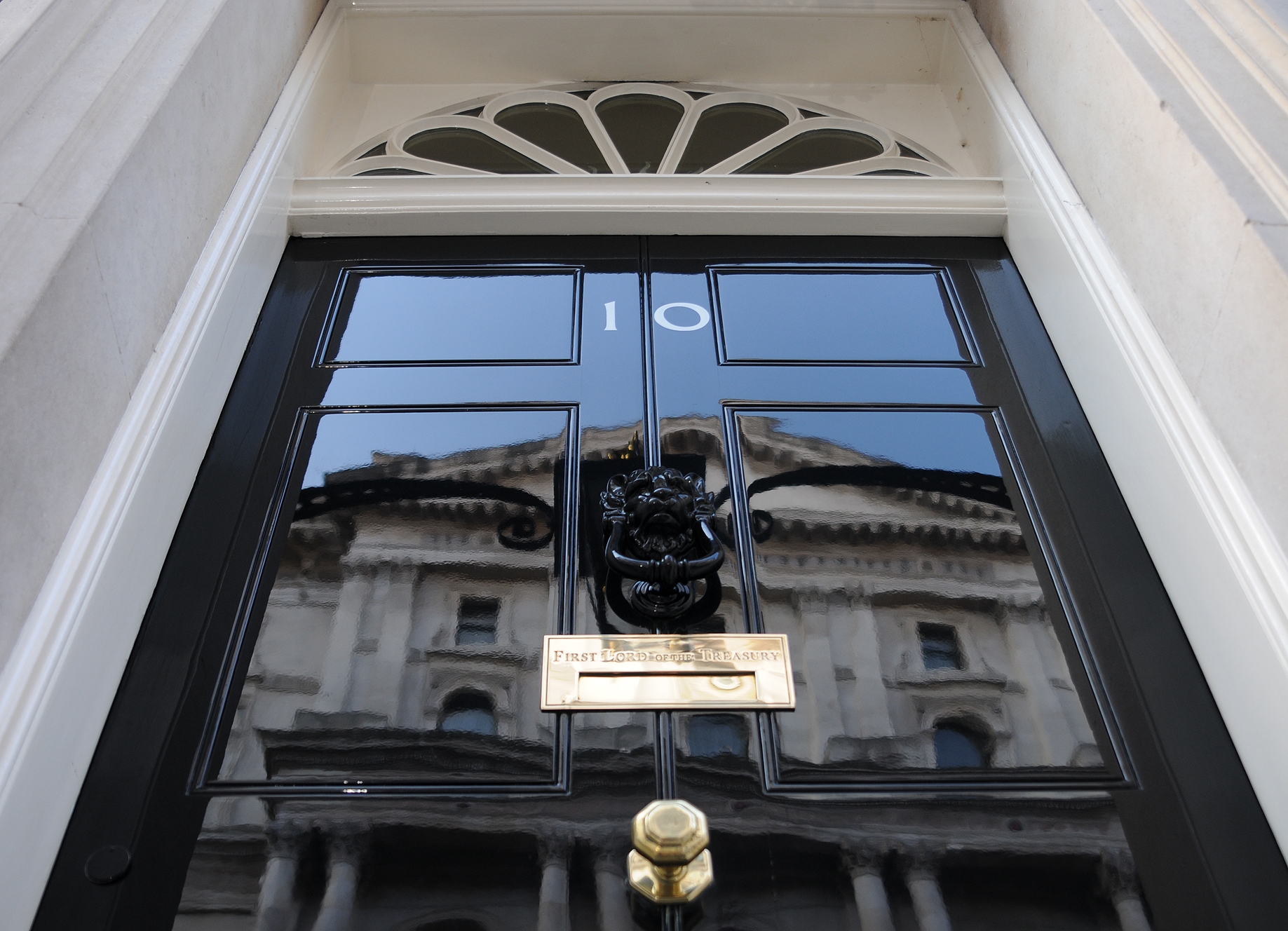


 It’s time for the human rights roundup, a regular bulletin of all the law we haven’t quite managed to feature in full blog posts. The full list of links, updated each day, can be

 Welcome back to the UK Human Rights Roundup, your weekly dose of human rights news. The full list of links can be found


Recent comments