We use cookies to enhance your browsing experience. If you continue to use our website we will take this to mean that you agree to our use of cookies. If you want to find out more, please view our cookie policy. Accept and Hide [x]
Rampant spread, fuelled by a combination of a new variant that is around 50-70% more transmissible, plus a lifting of restrictions at the beginning of December, brings us into another national lockdown.
In many ways, Prime Minister Boris Johnson’s first address of 2021 felt unpleasantly like a return to early 2020.
The original “Stay Home” messaging made a comeback. The Prime Minister was deliberately vague about how long lockdown would last. Big Brother Watch criticised the government for “yet again … evading the democratic process” by denying MPs a meaningful vote on the new national restrictions prior to their televised announcement to the nation, or their coming into force. The new guidance differs from the Tier 4 guidance in emphasis, if not substance.
Ever the optimist, the Prime Minister was keen to emphasise “one huge difference” between this lockdown and the first one: the UK is “rolling out the biggest vaccination programme in its history”. He also managed to get in a jab at the UK having delivered more vaccines than the rest of Europe combined.
There were other, more subtle differences, as No. 10 tweaked its messaging in light of past mistakes.
The Prime Minister is to “get a grip” on people forcing unnecessary delays to Government policy by cracking down on the “massive growth industry” of Judicial Review. David Cameron told business leaders today:
“When this country was at war in the 40s, Whitehall underwent a revolution. … everything was thrown at ‘the overriding purpose’ of beating Hitler. … this country is in the economic equivalent of war today – and we need the same spirit. We need to forget about crossing every ‘t’ and dotting every ‘i’ – and we need to throw everything we’ve got at winning in this global race.”
The detail of the changes is yet to be revealed (update – more detail is now available on the Ministry of Justice website, including the promise of a public consultation), but the PM plans to ” reduce the time limit when people can bring cases; charge more for reviews – so people think twice about time-wasting.”
Clearly some of the PM’s Dunkirk spirit rhetoric is aimed at cheering up business leaders, who need a lot of that at the moment. But putting the rhetoric aside, there is cause for concern here.
After one leaked manifesto and many accusations of plans to bankrupt the UK, we have finally been presented with the official pledges of the main parties. Indeed, the manifestos appeared to herald good news for the European Convention on Human Rights, to which the Conservative Party have thrown a lifeline.
Behind the Times paywall Anthony Lester today declares that “Sniping at Strasbourg will only hinder reform”. In his guest column, he says that Court is suffering unfair criticism from “sections of the British media” and “politicians who accuse it of over-reaching its power”. That may well be the case, but the most searing and authoritative criticism comes not from politicians or the press but from Lord Lester’s own profession – see Jonathan Sumption QC’s recent broadside (and our post) and Lord Hoffmann’s much-discussed analysis (posted here).
If the Court is indeed hobbled by unfair squibs and arrows from a resentful sector of the British populace, as Lord Lester suggests, why is the prisoner votes example the only one he can come up with? That is an important fight, at least from a constitutional angle, but not the only flashpoint; the Court’s tendency to act as fourth instance appeal tribunal particularly on deportation and terrorism cases is arguably far more “dangerous” and certainly of concern to more people than votes for prisoners. Continue reading →
There are those who think that the Strasbourg Court sometimes talks through its fundament. Others are of the view that the sun shines out of it.
This may of course have something to do with the Court’s jurisdictional basis, whose proper name is the Convention for the Protection of Human Rights and Fundamental Freedoms. Be that as it may, over the years the Court has become increasingly inclined to describe so many rules, principles, aspects of people’s relationships with each other and sundry other understandings and agreements of civil society as “fundamental” that the word has ceased to resonate with its original meaning as basic, essential, primary, central, or even foundational.
In Rahmatullah (No 2) v MOD; Mohammed v MOD [2017] UKSC 1, the Supreme Court gave a further important judgment in the litany of cases arising out of the UK’s intervention in Iraq and Afghanistan. The Court held unanimously that the doctrine of Crown act of state defeated claims brought by non UK citizens seeking to sue the Government in the English courts in respect of alleged torts committed abroad.
One in three criminal barristers actively intend to quit the profession, a national survey by the Criminal Bar Association has revealed. A further third is actively considering moving to a new discipline. The survey received 1,717 responses, which the association has stated is ‘well above that of nationally representative surveys which are relied upon by Government’. Only 44% remain committed to a practice of primarily publicly funded work. Further, the Judicial Attitudes Survey has indicated that 35% of Circuit Judges sitting in criminal courts intend to leave in the next five years. The reasons behind the collapse in commitment to the profession are familiar, stemming from longstanding underfunding to the justice system. 92% answered that adequate and fair remuneration was necessary to reverse the trend. The implications for the access to justice for defendants, as well as redress for victims of crime, are clear, as the criminal court backlog continues to reach record highs.
International news
The largest protests in over a decade have erupted in Turkey following the arrest of the mayor of Istanbul and the President’s main political rival, Ekrem Imamoglu. His detention on corruption charges occurred just days before he was expected to be announced as a candidate for the 2028 Presidential Election. President Recep Tayyip Erdogan has denied the allegations of his opponents that the arrest is politically motivated. In defiance of a ban on gatherings, protestors have clashed with police as a primary ballot was held across Turkey to choose the opposition candidate for the Republican People’s Party. Further, social media platform X has released a statement identifying multiple court orders from Turkish authorities to block more than 700 accounts belonging to news organisations, journalists, political figures and students. The statement reads “We believe this decision from the Turkish government is not only unlawful, it hinders millions of Turkish users from news and political discourse in their country” and they “will always defend freedom of speech everywhere we operate”. Imamoglu’s arrest took place a few days after US President Trump and Erdogan’s telephone conversation, which commentators have suggested has likely emboldened the Turkish President’s actions. However, despite domestic outrage, international condemnation have thus far been muted. With the second largest army in NATO, Turkish forces may be an essential component of a European peacekeeping force in Ukraine. The response of European and world leaders remains to be seen.
A somewhat curious additional point arises out of the case of R (Antoniou) – see my earlier post for the main issue – in which the court decided that Article 2 ECHR does not require an independent investigation into deaths in state detention prior to a coroner’s inquest. There was therefore no obligation to ensure that there was an independent investigation into the suicide, or death resulting from self-harm, of a mentally ill person detained under Section 3 of the Mental Health Act 1983. There is such an investigation when a prisoner commits suicide. The Claimant thought this smacked of discrimination against the mentally disabled. The Court disagreed – on the somewhat surprising ground that you can’t be disabled once you’re dead.
Where a prisoner commits suicide, or dies as a result of self-harm, there will be an independent investigation from the outset. Any death in prison or in probation custody is automatically referred immediately to the Prisons and Probation Ombudsman for independent investigation. The Independent Police Complaints Commission performs a similar role for deaths in police, immigration or Customs & Excise detention. There is no equivalent independent investigator of deaths in mental health detention, which are investigated by the hospital where they occurred. The Claimant said this distinction discriminates between people who are mentally disabled and those of sound mind.
Questions have been raised over the state of the British prisons system after the escape of Daniel Khalife. The 21 year-old former soldier who had been convicted for terrorist offences escaped from Wandsworth prison by hiding under a food delivery lorry, reportedly, but was later recaptured by police on a Chiswick towpath. Justice Secretary Alex Chalk has signalled that investigations are being made into the prison’s conditions. Inquiries may be made into the reason for Khalife being held in Wandsworth, a category B-security prison, rather than the high-security prison Belmarsh, where serious terrorist suspects are ordinarily kept. The incident has been used by some to demonstrate that the system has now reached breaking point, with overcrowding and understaffing enabling such incidents.
Google is facing a multi-billion pound lawsuit brought on behalf of UK consumers on claims that its search-engine stifled competition, causing prices to rise. The claim is that Google restricted competition by raising the prices for advertisers, making use of its market dominance. These costs are ultimately passed onto the consumers and are estimated at £7.3bn, at least £100 per member of the 65-million-person class of UK users over the age of 16. Google has commented that it will “vigorously dispute” this “speculative and opportunistic” suit.
The British public owes a lot to Ernest Davies. Few, if any, will have heard of him. A Londoner and scion of a Labour party councillor, he began a career in journalism, spent the war years at the BBC’s north Africa desk and, in the Attlee landslide of 1945, was elected as Member of Parliament for Enfield. After the 1950 General Election, he was appointed Parliamentary Undersecretary of State in the Foreign Commonwealth Office. And at 4 p.m. on 4th November 1950, together with ministers representing ten other European states, he walked into the Salone of the Palazzo Barberini, Rome, and signed the European Convention on Human Rights on behalf of the United Kingdom.
It is intriguing to imagine what Davies would have made of the current debate over the United Kingdom’s participation in the Convention system. Perhaps as a former journalist he would have known all too well that, at least for some sections of the British media, coverage of European affairs isn’t always to be taken at face value or too seriously. He would, no doubt, be surprised at the evolution of the Convention into the system it is today. But I think it would have been surprise mixed with a quiet sense of pride, for he would have known that the text he signed was the product of months of work by British lawyers.
Article 50 of the Treaty on European Union (TEU) is the red button for the nuclear option of withdrawal from the EU, and in its design, it was never really, truly envisioned to be pressed. Without testing, and without precedent, we are left with no idea of the potential fallout of pressing that red button. Compared to the quasi-constitutionism of Article 2 TEU evoking the values ‘common to the Member States’ of ‘pluralism, non-discrimination, tolerance, justice, solidarity and equality between men and women’; or the brutal legalism of Title VII of the Treaty of the Functioning of the European Union (TFEU) on competition, tax and the approximation of laws; Article 50 TEU is anaemic. It is, essentially, a button triggering a countdown clock, which is on a comparable level of advancement to the 1980s floppy disk.
The two-year countdown
Triggering Article 50 TEU will begin a two-year countdown to the end of UK Membership of the Union. Within that two-year period an agreement determining the withdrawal arrangements and the future relationship with the Union must be made. Barring a unanimous decision to extend the period, at the end of two years from the point of notification, the UK will no longer be a Member. The Treaties, and all rights and duties therein, cease to apply.
But now, as the British political establishment play a game of “pass the red button”, we are faced with some confounding, and concerning questions from a rights’ perspective. Likely to be lost in the two-year scramble for a political and trade agreement between the UK and EU, which will attempt at all costs to avoid the fall-back position of the application of WTO trade rules, are the very rights and values held as common between the (ex-)Member State(s). During that two-year period, EU law and (pertinently) EU rights will continue to apply in the UK. Free movement will still be (from a legal perspective) free, and claimants may still rely on their EU rights in the Courts. But then what? What happens when the clock strikes zero? Continue reading →
The Parliamentary Assembly of the Council of Europe (PACE) has voted to reopen its monitoring of Turkey on account of its “serious concerns” regarding respect for human rights, democracy and the rule of law there. This will have come as a blow to Turkey; the country has been involved in “post-monitoring dialogue” with the Assembly since 2004 and had high hopes for its negotiations this year to join the EU.
What prompted this?
In the wake of the failed coup attempt last July there have been growing concerns over human rights abuses in Turkey. The vote was prompted in particular by a report from Ingebjørg Godskesen and Marianne Mikko, who are part of the Monitoring Committee and have been co-rapporteurs for the post-monitoring dialogue with the country. Since the coup, Turkey has declared a state of emergency and made large-scale use of decree laws (which bypass parliamentary procedures). While the Monitoring Committee recognised the ongoing trauma and terrorist threats following the coup, it nevertheless registered concern over the large-scale and disproportionate implementation of such measures.
Last month the Prime Minister promised business leaders that he would “get a grip” on people forcing unnecessary delays to Government policy by cracking down on the “massive growth industry” of Judicial Review (JR), the means by which individuals and organisations can challenge poor decisions by public authorities in the courts. He even, in a new twist on Goodwin’s Law, compared cutting down on court challenges to beating Hitler.
The consultation document is detailed and is worth reading. It certainly does not reflect the bombast of the Prime Minister’s statement that “We need to forget about crossing every ‘t’ and dotting every ‘i’ – and we need to throw everything we’ve got at winning in this global race“. What is proposed is a fairly significant reform of the Judicial Review system, and nothing as dramatic as winning World War II. There are, however, some problems with the Government’s analysis which I will come to later.
On Thursday, the High Court dismissed a claim for judicial review brought by the Cabinet Office, regarding a notice issued by the Chair of the COVID-19 Inquiry which requested the disclosure of correspondence between former Prime Minister Boris Johnson and his senior advisers. The Cabinet Office argued the Inquiry Chair’s notice was unlawful because it required the disclosure of significant quantities of ‘unambiguously irrelevant’ material. It argued it should be allowed to redact obviously irrelevant detail from the documents, including from Mr Johnson’s WhatsApp messages. The Chair of the Inquiry, Baroness Hallett, maintained that s. 21 of the Inquiries Act 2005 empowered her to request and see unredacted materials which could be relevant to the investigation. The High Court agreed. It held that the disclosure of some irrelevant documents did not render the request for information unlawful. An enquiry of this nature must be able to ‘fish’ for documents; to make informed ‘but speculative requests for documents relevant to lines of inquiry, or documents which lead to new lines of inquiry’. The government has said it will not appeal the decision.
In Suresh & Ors v General Medical Council [2025] EWHC 804 (KB), the High Court considered claims brought by the family of a doctor who died by suicide after receiving a letter from the General Medical Council (GMC). That letter stated that his Fitness to Practise was under investigation for allegedly sexually assaulting a 15-year-old patient.
It is important to emphasise that Marcus Pilgerstorfer KC, sitting as a Deputy High Court Judge, recorded at the outset of his judgment that identification evidence provided to the police by the complainant was inconsistent with the perpetrator being Dr Suresh. The Crown Prosecution Service decided that there was insufficient evidence to prosecute. Dr Suresh has never been found to have committed the offence alleged [4].
Dr Suresh’s family brought claims against the GMC in negligence and under the Human Rights Act 1998. The Defendant successfully applied to have both claims struck out and/or summarily dismissed. This article considers the court’s analysis of the human rights claim.
This blog is maintained for information purposes only. It is not intended to be a source of legal advice and must not be relied upon as such. Blog posts reflect the views and opinions of their individual authors, not of chambers as a whole.
Our privacy policy can be found on our ‘subscribe’ page or by clicking here.

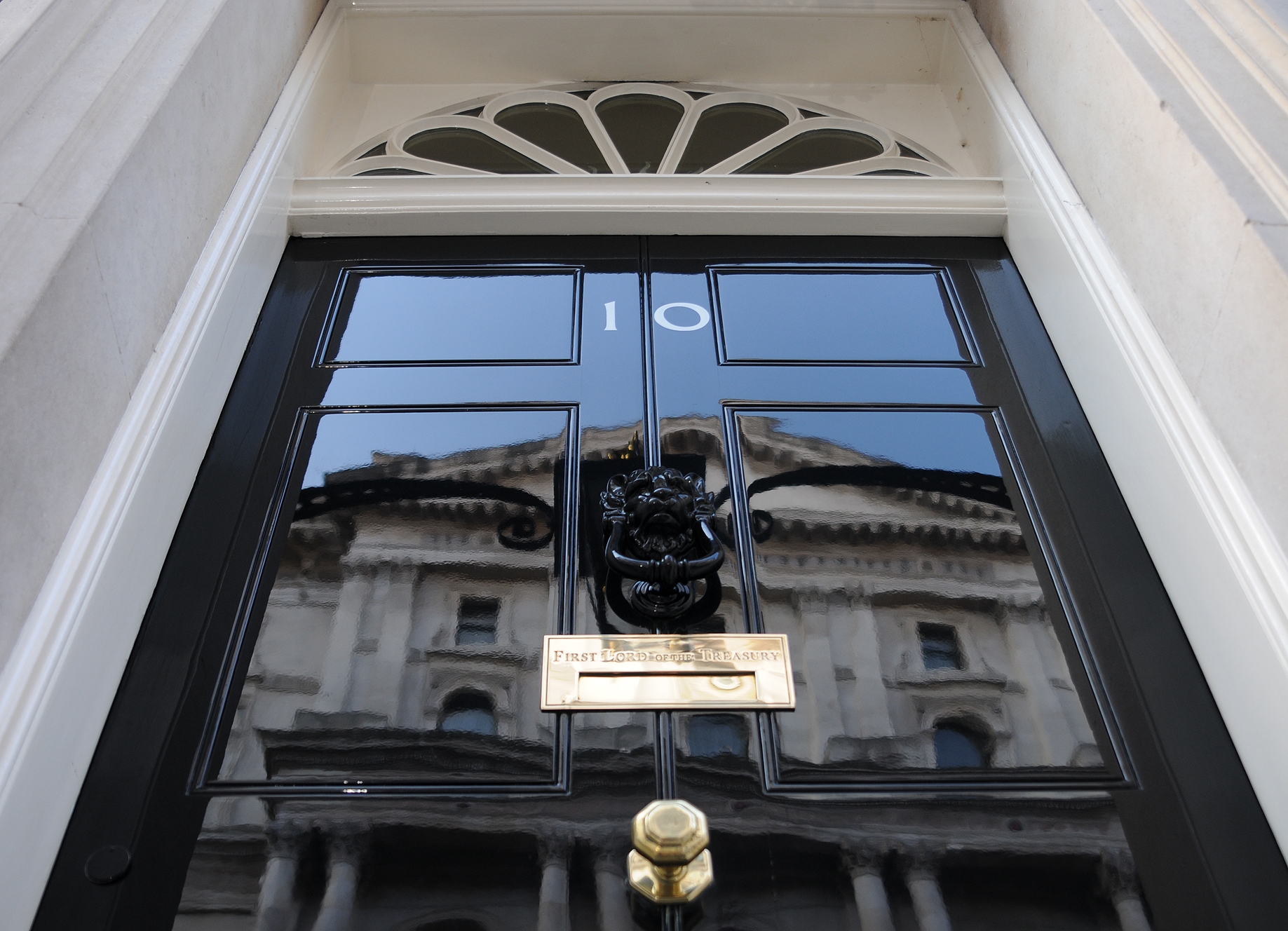

 The Prime Minister is to “get a grip” on people forcing unnecessary delays to Government policy by cracking down on the “massive growth industry” of Judicial Review. David Cameron
 After one leaked manifesto and many accusations of plans to bankrupt the UK, we have finally been presented with the official pledges of the main parties. Indeed, the manifestos appeared to herald good news for the European Convention on Human Rights, to which the Conservative Party have thrown a lifeline.


 The British public owes a lot to
.jpg) Article 50 of the Treaty on European Union (
Article 50 of the Treaty on European Union (


Recent comments