We use cookies to enhance your browsing experience. If you continue to use our website we will take this to mean that you agree to our use of cookies. If you want to find out more, please view our cookie policy. Accept and Hide [x]
UK Human Rights Blog - 1 Crown Office Row
Search Results for: prisoner voting/page/44/ministers have been procrastinating on the issue, fearing that it will prove unpopular with the electorate.
Welcome back to the UK Human Rights Roundup, your regular tasting menu of human rights news. The full list of links can be found here. You can also find our table of human rights cases here and previous roundups here.
With an upcoming anniversary, the role of the Lord Chancellor (and, of course, his reforms) has been under scrutiny. Further, the new Defamation Act is looked at in more detail, civil liberties are abused and war crimes resurface in a number of ways. And, the gay marriage bill continues on its tumultuous journey to the House of Lords.
Today, the Scottish Government have introduced the “paving Bill” to Holyrood which will finally settle the franchise for the independence referendum in 2014. If passed, it will finally extinguish the hopes of expats, diaspora Scots and those living furth of Scotland who wanted to vote in the poll.
Much of the attention has zoomed in on the enfranchisement of 16 and 17 year olds, which ministers hope to affect by establishing a Register of Young Voters alongside the local government register. It is envisaged that this young voters roll will not be published.
Welcome back to the UK Human Rights Roundup, your regular raging winter storm of human rights news and views. The full list of links can be found here. You can find previous roundups here. Links compiled by Adam Wagner, post by Sarina Kidd.
The Government received an unwelcome early christmas present this week, with the Joint Parliamentary Committee reporting that a blanket ban on prisoner enfranchisement had no rational basis. Meanwhile, Britain’s potentially unlawful treatment of detainees with regard to rendition and torture are coming to light with the Gibson Inquiry, and a senior judge has announced that perhaps, after the ‘forced Caesarean’ escalation, there needs to be more transparency in the family courts and Court of Protection.
In a historic decision, a panel of 11 justices of the Supreme Court has held that the decision of the Prime Minister, Boris Johnson, to prorogue Parliament for 5 weeks from 9 September to 14 October 2019 was unlawfulon the basis that it constituted an unjustified frustration of the constitutional principles of Parliamentary sovereignty and accountability.
Giving the summary of the Court’s reasons for the decision, the President of the Supreme Court, Lady Hale, said that
when the Royal Commissioners walked into the House of Lords it was as if they walked in with a blank sheet of paper … Parliament has not been prorogued.
It follows, said Lady Hale, that the Speaker of the House of Commons and the Lord Speaker of the House of Lords “can take immediate steps to enable each House to meet as soon as possible”.
The report is worth reading. It contains useful summaries of the 17 European Court of Human Rights judgments against the UK in 2010 and the government’s response to them.
But what is really interesting is what it says about prisoner votes, and the government’s 6-year delay in implementing the 2005 decision in Hirst (No.2) v UK.
The sequel to this Scottish judicial review decision in Sustainable Shetland, (Lady Clark of Calton, read judgment, and my post) is another unedifying example of executive government ignoring courts when it suits them.
In this case, the judge (a former Law Officer in Scotland) quashed the grant of a wind farm consent, for two reasons, the relevant one being that the wind farmer could not apply for the consent anyway because it had not got the requisite licence which was a pre-condition for such an application. Readers will recall that Scottish Ministers had also resisted the highly controversial planning appeal being heard at public inquiry – or the Scottish equivalent.
If you are an ordinary citizen, and you get an adverse judgment, you can only do one thing – appeal it and wait for the decision on appeal. The Scottish Ministers plainly do not like the decision. They have sought to reverse it by a legislative amendment, which did not find favour in the House of Lords. But, rather less attractively, they are simply ignoring the decision pending that appeal on the basis that it is wrong. Judges, rather than ministers, might be thought to be a reasonable judge of that. But the Scottish Ministers think not.
Widely – and quickly – reported as a “crushing” or an “emphatic” defeat – in a rare turn – the Government was last night defeated in three consecutive votes on its proposals to restrict access to judicial review. With a ‘hat-trick’ of blows, on three crucial issues, votes on amendments tabled by Lords Pannick, Woolf, Carlile and Beecham were decisive. On the proposal to amend the materiality test – the Government lost by 66. On the compulsory disclosure of financial information for all judicial review applicants, and again on the costs rules applicable to interveners, the Government lost by margins on both counts by 33. A fourth amendment to the Government proposals on Protective Costs Orders – which would maintain the ability of the Court to make costs capping orders before permission is granted – was called after the dinner break, and lost.
This is Wessen Jazrawi’s final roundup on the UK Human Rights Blog as she is moving onto pastures new. Thanks to Wessen for her fantastic series of fortnightly roundups – Adam and the UKHRB team.
Welcome back to the UK Human Rights Roundup, your weekly smörgåsbord of human rights news. The full list of links can be found here. You can also find our table of human rights cases here and previous roundups here.
The most significant news of the week has been the decision by the Supreme Court in the case of Yunus Rahmatullah which we consider below. In other news, time is fast running out for the UK government to act on prisoner voting and the European Court displayed the limits of its intervention on domestic violence. Also in today’s roundup is the inaugural list of upcoming UK human rights events – if you would like to add an event to the next roundup, please email.
The Prime Minister announces the lockdown on 23rd March. Image: The Guardian
Emmet Coldrick is a barrister at Quadrant Chambers, London. The opinions expressed in this article are the personal opinions of its author. Legal scrutiny of the provisions discussed in this piece is warranted but should not be taken to question the requirement to obey the regulations.
The first article in this two-part analysis examined whether the Health Protection (Coronavirus, Restrictions) (England) Regulations 2020 fall within the Minister’s powers under section 45C(4)(d) of the Public Health (Control of Disease) Act 1984 to impose “a special restriction or requirement”.It can be found here.
This second article will discuss the proper approach that the court should take where fundamental rights are in issue and argue that the Regulations were in fact ultra vires.
This is the second part of a blog post on this topic. The first part concluded part-way through a discussion of whether the Regulations fall within the Minister’s powers under section 45C(4)(d) of the Public Health (Control of Disease) Act 1984 to impose “a special restriction or requirement”.
Proper approach to interpretation where fundamental rights are in issue
A troubling feature of the section of the judgment in Dolan that deals with the ultra vires issue is that it makes no reference to the gravity of the restrictions on liberty imposed by the Regulations or of the fact that, on the Secretary of State’s case, the Act confers powers to impose still graver restrictions on fundamental rights. Instead, the judgment refers blandly at paragraph 43 to “the adoption of a range of measures”.
It is also regrettable that, while glossing over of the seriousness of the interference with fundamental rights that would be permitted if his interpretation of the Act were correct, the Secretary of State stressed the “threat”, submitting that “… it would be absurd if the provisions were to be read otherwise given the nature of the public health threat …” (judgment para. 36). That approach to the question of the scope of the Secretary of State’s powers is redolent of the kind reasoning that characterises justifications of rule by diktat and is the antithesis of the rule of law. A decree that no one may leave her home without reasonable excuse, or gather with more than one other person in a public place, is the sort of restriction that might be imposed by a totalitarian regime or an invading foreign power.
It is welcome that in his Reasons for granting permission to appeal, Hickinbottom LJ noted that “… not only did/do the challenged Regulations impose possibly the most restrictive regime on the public life of persons and businesses ever – certainly outside times of war – but they potentially raise fundamental issues concerning the proper spheres of democratically-accountable Ministers of the Government and judges”.
In Soltany and Others v SSHD [2020], the High Court dismissed a challenge to the conditions at Brook House Immigration Removal Centre (IRC), which at the material times in 2017 and 2018, was run by G4S.
The claim for judicial review, which was brought by three individuals of Afghan origin, principally contended the night-time lockdown regime, pursuant to which detainees were locked in their rooms overnight from 9pm to 8am, was both “unnecessary and unduly harsh” [2].
Additionally, two of the claimants argued that the combination of the night state, which meant that observant Muslims had to perform some of their daily prayers in their rooms, and the conditions of the rooms (especially the proximity of the toilet) amounted to unlawful religious discrimination.
In a complex judgement extending to over 400 paragraphs, Cavanagh J refused the application on each ground. First, the Court held that Brook House’s overnight lock-down regime and room conditions are compatible with both ECHR Articles 5 and 8. Second, the Defendant did not act contrary to either the common law or Article 5 in failing to give reasons for the allocation of detainees to specific removal centres. Third, there was no religious discrimination under ECHR Article 9, either read alone or together with ECHR Article 14. Nor was there any indirect discrimination contrary to section 19 of the Equality Act 2010.
Prisoners could sue if not allowed to vote in the 2010 general election, according to the Barred from Voting Campaign, organised by the Prison Reform Trust.
The group are seeking to remind the Government of the four year old judgment of the European Court of Human Rights in Hirst v UK, which arose out of the 2002 case of R v Home Secretary ex parte Hirst. The European Court held that Section 4 of the Representation of the People Act which prevents prisoners from voting is in breach of the electoral right under Article 1 of Protocol 3 of the European Convention on Human Rights.
The Government has as yet not addressed the Court’s ruling; according to The Guardian, ministers have been procrastinating on the issue, fearing that it will prove unpopular with the electorate. With the election looming, the Government may well be be vulnerable to a legal challenge.
The Council of Europe, which monitors compliance with European Court of Human Rights judgments, has warned the United Kingdom to stop dragging its feet over the implementation of judgments on politically sensitive issues.
In a draft resolution, the Committee on Legal Affairs and Human Rights, which was unanimously adopted on 17 November 2010, said:
The United Kingdom must put to an end the practice of delaying full implementation of Strasbourg Court judgments with respect to politically sensitive issues, such as prisoners’ voting rights.
Welcome back to the UK Human Rights Roundup, your weekly bulletin of human rights news. The full list of links can be found here. You can also find our table of human rights cases here and previous roundups here.
Commentary on the Leveson report is again dominating the blogosphere this week – and once again, there is some discussion on whether the UK should maintain a relationship with Strasbourg. Gay marriage is also back in the news. However, we also have some “new” news, covering such diverse topics as homosexuality in the Channel Islands, “indie lawyers” and legal aid. A quick reminder: tomorrow (Monday 10 December) is Human Rights Day. We will be hosting a guest post which you can read in the morning.
In recent years direct challenges to the authority of the Court within a handful of member states have also become more explicit and vocal” and “the Convention system crumbles when one member state, and then the next, and then the next, cherry pick which judgments to implement.
So said Nils Muižnieks, the Council of Europe’s Commissioner for Human Rights, last year. This raises the question of whether the Convention system is facing an implementation crisis and what more might be done by the Committee of Ministers, the regional body responsible for supervising the execution of judgments of the European Court of Human Rights.
Last month, the Bingham Centre for the Rule of Law and Leicester Law School convened a public event that asked an expert panel to consider these issues. Speakers included Merris Amos (Queen Mary University London); Dr Ed Bates (Leicester Law School); Eleanor Hourigan (Deputy Permanent Representative, UK Delegation to the Council of Europe); Nuala Mole (The AIRE Centre); and Prof Philip Leach (EHRAC, Middlesex University London and the European Implementation Network). Murray Hunt (Legal Adviser to the UK Joint Committee on Human Rights and incoming Director of the Bingham Centre) chaired the event.
Welcome back to the UK Human Rights Roundup, your regular legal melting pot of human rights news. The full list of links can be found here. You can also find our table of human rights cases here and previous roundups here.
Not the right to life, but the right to die dominates the human rights headlines this week, with separate litigation in Strasbourg and the Strand. Commentary abounds on not just the ECHR’s role in domestic law, but how proposed reforms comply with EU law, particularly on the immigration front. Finally, a wide range of human rights approaches to much of the coalition’s plans for this Parliament.
This blog is maintained for information purposes only. It is not intended to be a source of legal advice and must not be relied upon as such. Blog posts reflect the views and opinions of their individual authors, not of chambers as a whole.
Our privacy policy can be found on our ‘subscribe’ page or by clicking here.

 Welcome back to the UK Human Rights Roundup, your regular tasting menu of human rights news. The full list of links can be found here. You can also find our table of human rights cases here and previous roundups here.
 Today, the Scottish Government have introduced
 Welcome back to the UK Human Rights Roundup, your regular raging winter storm of human rights news and views. The full list of links can be found

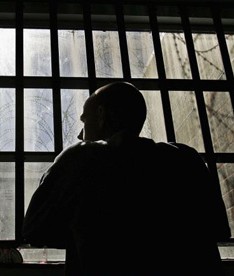 The Ministry of Justice has just released its annual report to the Joint Committee on Human Rights,


 Welcome back to the UK Human Rights Roundup, your weekly bulletin of human rights news. The full list of links can be found


 Welcome back to the UK Human Rights Roundup, your regular legal melting pot of human rights news. The full list of links can be found

Recent comments