We use cookies to enhance your browsing experience. If you continue to use our website we will take this to mean that you agree to our use of cookies. If you want to find out more, please view our cookie policy. Accept and Hide [x]
As we inch towards October, the £100m
government campaign to ‘Get Ready for Brexit’ has been launched. But to all intents
and purposes, the government are jumping the gun. By the time businesses have managed
to get themselves ready for Brexit (again), Boris Johnson will probably have
been required to request an extension to Article 50 under the anti-no deal bill
proposed by Hillary Benn, which today was given royal assent and passed into
law.
Welcome back to the UK Human Rights Roundup, your regular hurtling freight train of human rights news and views. The full list of links can be found here. You can find previous roundups here. Post by Sarina Kidd, edited and links compiled by Adam Wagner.
This week, immigration, in various forms was hotly discussed and some notable cases have been or are soon to be decided in the realm of disability rights. And not everyone is happy about the decision to televise Court of Appeal cases.
S.A.S v France (Application no. 43835/11) – read judgment
The Grand Chamber of the European Court of Human Rights has rejected a challenge to a French law which prohibits the wearing of veils in public. The ruling is, of course, of great political and media interest, but it is also significant from a legal perspective. In a lengthy and detailed judgment, the Court ultimately accepts that, as a matter of principle, a government can legitimately interfere with the rights of individuals in pursuit of social and cultural cohesion.
On 11th April 2011, Law no. 2010-1192 came into force in the French Republic. Subject to certain limited exceptions, the law prohibits anyone from wearing any clothing which conceals their face when in public places, on pain of a 150 euro fine, and/or compulsory citizenship classes. Whilst phrased in general terms, the most obvious effect of the law, and its clear intention, is to ban the niqab (a veil that leaves only the eyes visible) and the burka (a loose garment covering the entire body with a mesh screen over the face).
The issues relating to imprisonment of individuals with mental health problems in the UK has attracted considerable attention, as the number of self-inflicted deaths has risen to the highest number since records began in 1978. With a rate of one prison suicide every three days, the director of the Howard League described the current rate as having reached “epidemic proportions”. The steady rise of deaths in custody has prompted a seriesofinquiries in recent years, and has drawn scrutiny from UN bodies and Special Procedures, and more recently, UN Member States as part of a periodic review of its human rights performance. However, despite this, little progress has been made.
In view of this reality, the Joint Committee on Human Rights launched an inquiry into mental health and deaths in prison in 2016 in order to determine whether a human rights based approach can help to prevent deaths in prison of individuals with mental health conditions i.e. one that satisfies acceptable standards as laid down by national and international human rights law, and recognises the particular position of vulnerability in which detainees are placed. The inquiry specifically looked at why previous recommendations had not been implemented. To this end, the Committee received both oral and written evidence from authors of the various domestic inquiry reports and individuals whose lives have been directly affected by the issue, including relatives of individuals who had committed suicide in prisons.
However, the inquiry was unexpectedly cut short as a result of the decision to call a snap election.
This piece asks whether, in the light of UK proposals for the reform of the ECtHR, and in the wake of the outcry in the UK over the Qatada decision (Othman v UK), the European Court of Human Rights (ECtHR) is taking an approach that looks like one of appeasement of certain signatory states.
Two very recent decisions will be looked at which, it will be argued, contain appeasement elements. Each can be compared with a previous counter-part decision against the same member state which adopts a more activist approach; and each is not immediately obviously reconcilable with the previous decision. Is the Court revisiting the ‘true’ scope of the ECHR in a more deferential spirit?
Quite a lot has happened in the 6 months since my post here on the Transatlantic Trade and Investment Partnership (TTIP). TTIP is a proposed trade agreement between the US and the EU, with negotiations on the substantive issues between the EU and the US underway in Brussels at the moment.
The proposed treaty may have significant effects on EU regulation, but let’s concentrate on whether TTIP should contain specific provisions enabling investors to suegovernments.
The ground for action would be governmental “expropriation” of investments – and that may mean anything from telling a cigarette manufacturer that he must have to change what his packets look like, (with consequential loss of profits), to imposing new environmental standards on a power generating plant.
This mechanism is known as Investor-State Dispute Settlement or ISDS. Our government seems astonishingly sanguine about this, on the basis that it has not yet been sued successfully under existing bilateral treaties with similar provisions. This does not seem to be a very profoundly thought-through position to adopt, if the proposed system has its problems – which it plainly does, when one compares it with traditional claims in the courts. Put simply, why wave it on?
This week the UK government lowered the COVID-19 alert level from level 4 to level 3, with non-essential shops reopening for business on 15 June. July 4 will be “the next big stage” in the government’s plan; it is expected that pubs and restaurants may reopen then. The 2m social distancing rule is under review, and the government have implied that it may be lifted soon.
Meanwhile, the contact tracing app which had been developed by the ‘healthtech’ body NHSX has been scrapped, owing to severe limitations in detecting contacts from iPhones. The government will now move forward instead with a Bluetooth tracing system developed by Google and Apple, looking to incorporate the successful parts of the NHSX app where possible. Whichever system is eventually deployed will face intense scrutiny. Contact tracing apps worldwide are raising human rights concerns, as has been explained by Amnesty International and other organisations.
Black Lives Matter protests continued this week across the cities of the UK, with protesters calling for the removal of statues of figures from UK history associated with the colonial past of the British Empire, such as that of Winston Churchill in Parliament Square. Protesters have also called for the removal of Boris Johnson’s Director of Policy, Munira Mirza. Mirza is a long-standing opponent of the ‘anti-racism’ movement which has gained significant ground during the last few weeks, having been a critic of Blairite ‘multiculturalism’ and the 2017 Lammy Review of BAME groups in the justice system, and having played down allegations of institutional racism such as those raised by the Windrush scandal. She has been asked by the Prime Minister to head a new commission on racial inequalities.
In other news:
The US Supreme Court issued two landmark decisions this week. In Bostock v Clayton County, the court interpreted the word ‘sex’ in Title VII of the Civil Rights Act 1964 as including both sexuality and gender identity, such that it is unlawful for an employer to fire someone merely for being gay or transgender. In Department of Homeland Security v Regents of the University of California et al, the court blocked the Trump administration’s attempt to end Deferred Action for Childhood Arrivals (‘DACA’), a program which protects child immigrants from deportation, on the basis that the administration had failed to provide a ‘reasoned explanation’ for its decision.
UN Human Rights Chief Michelle Bachelet has called for worldwide action on systemic racism. Speaking to the UN Human Rights Council, she said that “behind today’s racial violence, systemic violence and discriminatory policing lies the failure to acknowledge and confront the legacy of the slave trade and colonialism”, and urged countries to “make amends for centuries of violence and discrimination, including through formal apologies, truth-telling policies, and reparations in various forms.”
The US Congress has passed a new law, under which Chinese officials deemed to be responsible for the arbitrary detention and torture of Uighurs will be denied entry to the country and have any assets held in the USA frozen. China’s foreign ministry has strongly criticised the law, stating that the US should ‘immediately correct its mistakes’.
In the courts
There were three noteworthy decisions in the courts this week. These considered, respectively, workers’ rights and coronavirus; criminal procedure and Article 5 ECHR; and Scottish family law and Article 8 ECHR.
R (oao Adiatu & anor) v HM Treasury: this was a judicial review of decisions made by the Treasury in respect of the availability of Statutory Sick Pay (‘SSP’) and the Coronavirus Job Retention Scheme (‘JRS’) during the pandemic. The challenge was brought by Mr Adiatu, a Nigerian Uber driver with leave to remain, together with the Independent Workers’ Union of Great Britain. The Claimants sought a declaration that the Treasury’s decisions were discriminatory under the ECHR and/or EU law and/or in breach of the public sector equality duty (‘PSED’) under s.149 Equality Act 2010. The court rejected this on all counts: the Treasury was within its margin of appreciation under the ECHR, noting the urgency and practical difficulties involved in applying SSP and the JRS during the coronavirus crisis; the means adopted by the Treasury were proportionate; and ministerial submissions prior to the roll-out of the JRS discussing the possible effects on women and BAME people confirmed that sufficient regard had been had by the Treasury to the PSED.
Archer v The Commissioner of Police of the Metropolis: in 2012, aged 15, the Claimant was involved in an incident at a chicken shop in Woolwich where he was stabbed in the back and head by local gang-members. He was arrested on suspicion of violent disorder and possession of an offensive weapon, and subsequently detained pursuant to s.38(1)(b)(ii) Police and Criminal Evidence At 1984 (‘PACE’), which authorises detention where “the custody officer has reasonable grounds for believing that [the arrested juvenile] ought to be detained in his own interests.” He sought a declaration of incompatibility on the basis of Article 5 ECHR, together with damages for unlawful detention under s.8 Human Rights Act 1998. The court held that his detention had not been incompatible with Article 5 ECHR, and so he was not entitled to damages, nor was the impugned section of PACE incompatible with Article 5. In reaching this conclusion, the court followed IA v France, where it had been held that ‘own protection’ could be a ‘relevant and sufficient’ reason for detention. Although the detention was justified by the Claimant’s own protection, it was still ‘with a view to’ bringing him before a court, and therefore was “for the purpose of bringing him before the competent legal authority” under Article 5(1)(c)– even if but for the need to protect the suspect, detention would not have been necessary. Granting the declaration would have risked making it “impracticable for the police to fulfil their duties”.
ABC v Principal Reporter & Anor (Scotland): this appeal concerned the role of siblings in the procedures by which ‘children’s hearings’ in Scotland make compulsory supervision orders (‘CSOs’). The hearings in question are attended by the child in question, together with ‘relevant persons’, who must attend or face criminal sanction; ‘relevant persons’ are understood in the legislative scheme as persons who have had a significant involvement in the child’s upbringing, and therefore will ordinarily not include siblings. The Claimants, ‘ABC’ and ‘XY’, had not been deemed relevant persons in respect of their younger siblings who were made subject to CSOs. They argued that the legislative scheme was incompatible with Article 6 and Article 8, and that siblings should have procedural rights in relation to these hearings, in particular to attend and make representations. The court rejected this argument, noting that concerns about privacy and the dissemination of sensitive information outweighed the rights of siblings in these cases. However, Lady Hale and Lord Hodge emphasised in their judgement that there must always be a ‘bespoke enquiry about the child’s relationship with his or her siblings’ in each case.
Cross-government coordination on an issue that affects trade, international development, foreign affairs, business activity and human rights is remarkable, especially at such a difficult economic time. So the UK’s Action Plan on Business and Human Rights, which is the government’s long-awaited strategy for implementing the 2011 UN Guiding Principles on Business and Human Rights, is to be applauded for this achievement. Yet, while the Plan establishes clear expectations that UK companies should respect human rights, there are no effective legal requirements placed on them to do so.
In issuing this Plan, the Foreign Secretary and the Business Secretary reinforce the business case for respecting human rights, which includes reputational, legal and investment risk issues, and consumer expectation reasons. They also note that protection of human rights is good for business and communities, as “the thread of safeguards running through society that are good for human rights – democratic freedoms, good governance, the rule of law, property rights, civil society – also create fertile conditions for private sector led growth”. Adam Smith thought that this was required over two and a half centuries ago.
This is a short version of an article on the subject to be published by John Edwards, Professor Emeritus of Human Rights at London University
There have been three major conferences over the past two years (at Interlaken, Izmir, and Brighton) to discuss the functioning of the European Court of Human Rights and possibilities for its development and reform. Each provided an opportunity to scrutinise such important components of the Court’s work as the subsidiarity principle, the (quite separate) principle of the margin of appreciation, the prioritisation of Convention articles, admissibility criteria, the idea of “European consensus”, “just satisfaction”, and “significant disadvantage” as well as broader topics such as the future role of the Court and whether a court of individual petition with case law as its only corpus of wisdom is the best way of promoting and protecting human rights in Europe. On each occasion debate was hijacked by the singular topic of reducing the backlog of cases. Wherever one of these components had a bearing on the Court’s overload, discussion was virtually confined to how it could be amended to cut the backlog and bring applications and judgements into balance. Continue reading →
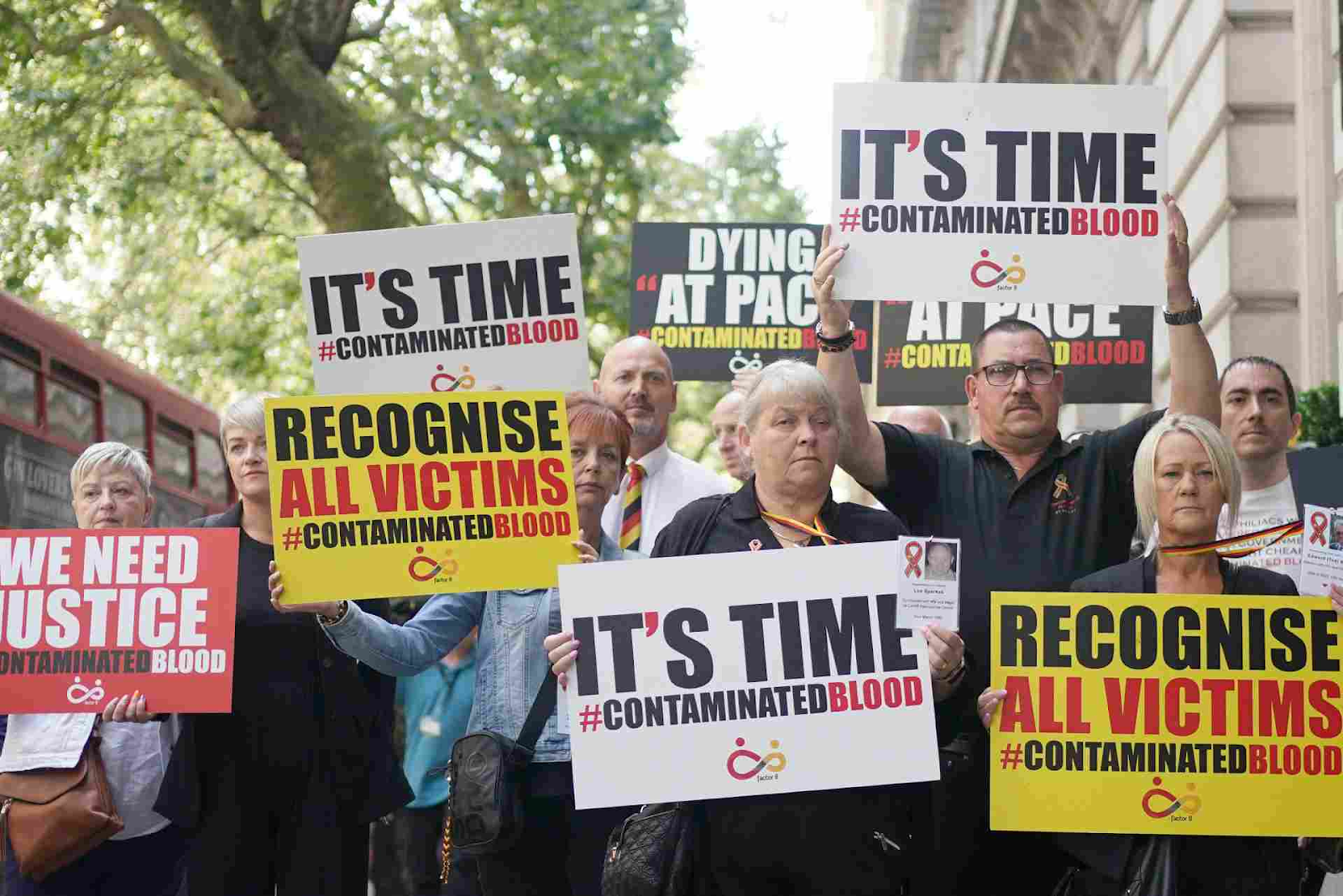
On 20 May, the Infected Blood Inquiry, chaired by Sir Brian Langstaff, published its final report. The inquiry was set up to investigate the circumstances in which people treated by the NHS were given infected blood and blood products, in particular since 1970. The inquiry found that more than 3,000 deaths of NHS patients are attributable to infected blood, blood products and tissue. The report details the many failures which lead to this situation, such as flaws in the licensing regime which allowed for the import of high risk blood products, failing to ensure sufficiently careful donor selection, and treating children at Treloar School (a school for disabled children) with risky commercial blood products for research. The report is strongly critical of the lack of candour shown by the NHS and successive governments. Patients were told they were receiving “the best treatment available” and some documents were deliberately destroyed. The report makes many recommendations to memorialise what happened to the people affected and to ensure lessons are learnt, yet the “principal recommendation” is that “a compensation scheme should be set up now”.
The Post Office (Horizon System) Offences Act received the Royal Assent this week. This is the final stage of the legislative process after the Bill was examined by the House of Lords. The Bill will quash the convictions of hundreds of postmasters and others in England, Wales and Northern Ireland who were charged with fraud, theft and other offences due to the faulty Post Office Horizon IT system. The “Post Office scandal” is also the subject of an inquiry led by Sir Wyn Williams. Paula Vennells, the former CEO of the Post Office Ltd, gave evidence to the inquiry this week. Recordings of the inquiry hearings are available here.
International Criminal Court (ICC) Prosecutor Karim Khan KC made an application for arrest warrants for Yahya Sinwar (Head of the Islamic Resistance Movement “Hamas” in the Gaza strip), Mohammed Diab Ibrahim Al-Masri (Commander-in-Chief of the military wing of Hamas), Ismail Haniyeh (Head of the Hamas Political Bureau), Benjamin Netanyahu (Prime Minister of Israel), and Yoav Gallant (Minister of Defence of Israel). Khan KC submits that the Hamas officials bear criminal responsibility for war crimes and crimes against humanity including extermination, murder, hostage taking, rape and other acts of sexual violence, and torture. He submits that the Israeli officials bear criminal responsibility for war crimes and crimes against humanity including starvation of civilians as a method of warfare, wilful killing or murder, and intentionally directing attacks against a civilian population. Khan KC also published a report by international law experts arguing, amongst other things, that the ICC has jurisdiction over the alleged war crimes in Israel/Palestine. The International Court of Justice (ICJ) has reaffirmed its previous measures and published further provisional measures in relation to South Africa’s case against Israel. One of the most significant measures requires Israel to “immediately halt its military offensive, and any other action in the Rafah Governorate, which may inflict on the Palestinian group in Gaza conditions of life that could bring about its destruction in whole or in part”.
A French court found three Syrian officials guilty of crimes against humanity and sentenced to life imprisonment in absentia. The three men are Ali Mamlouk (former Head of the National Security Bureau), Jamil Hassan (Head of the Air Force Intelligence Directorate) and Abdel Salam Mahmoud (former director of the directorate’s investigations branch). The Syrian officials were charged with complicity in the arrest, torture and deaths of Patrick Dabbagh and Mazzen Dabbagh, both of whom had dual French-Syrian nationality. This case is the first time officials working for the regime led by Bashar al-Assad have been tried and convicted in France.
In the courts
The High Court held that protest regulations, that gave the police the power to intervene in protest where they caused “more than minor” disruption, were ultra vires (i.e. beyond the legal power of the Secretary of State). The regulations were ultra vires because the primary legislation gave the police the power to intervene where there was “serious” disruption. The Secretary of State used a Henry VIII power (i.e. a delegated power which allows them to amend primary legislation using secondary legislation) to define “serious” as “more than minor”. The court held that this was ultra vires because “as a matter of ordinary and natural language ‘more than minor’ is not within the scope of the word ‘serious’”. The regulations were also unlawful because they were introduced after an procedurally unfair and one-sided consultation procedure, in which the Secretary of State consulted law enforcement agencies but failed to consult with the public or any body or organisation who may have opposed the proposed regulations.
Julian Assange has been given permission to appeal his extradition to the USA to face trial for conspiracy to obtain and disclose national defence information, after the US government failed to provide diplomatic assurances requested by the High Court. The court’s ex tempore judgment was reported on by Joshua Rozenberg KC (hon) here.
Updated | Welcome back to the UK Human Rights Roundup, your regular swirling snow flurry of human rights news and views. The full list of links can be found here. You can find previous roundups here. Post by Sarina Kidd, edited and links compiled by Adam Wagner.
This week, there are criticisms over the delay of inquiries both into the mistreatment of terrorism suspects and the Iraq War. Meanwhile, discussion continues over the relevance of the EU Charter of Fundamental Rights for UK law, and a dying asylum seeker on hunger strike will not be released.
Request for help – religion and law
Courting Faith: Religion as an Extralegal Factor in Judicial Decision Making Barristers sought to participate in PhD Research project exploring the relationship between religion and judicial decision making. If you are interested in taking part, please contact Amanda Springall-Rogers at A.Springall-Rogers@uea.ac.uk
The Human Rights Act applies in the UK. That much is clear. Whether it applies outside of UK territory is a whole other question, and one for which we may have a new answer when the Grand Chamber of the European Court of Human Rights gives judgment in the case of Al-Skeini and others v. the United Kingdom & Al-Jedda v. the United Kingdom next week.
The court is to give its long-awaited ruling at 10am (Strasbourg time) on Thursday 7 July. In short, the 7 applicants in the case were killed, allegedly killed or detained (Al-Jedda) by British forces in Iraq between 2003 and 2007. Both of the claims reached the House of Lords in the UK (now the Supreme Court), and in all but one case, which involved a death in a military detention centre, the court found that the Human Rights Act did not apply in Basra at the time, and therefore the UK military had no obligation to observe the requirements under the European Convention on Human Rights, and in particular article 2 (the right to life) and article 5 (right to liberty).
A report published by the Runnymede Trust on Monday found that black people, and especially black children, are subject to disproportionate rates of strip search across all police forces in England and Wales. The report analysed Home Office data and concluded that black children are 6.5 times more likely to be subject to a strip search than white children, and black adults 4.7 times more likely than white adults. The report described how strip searching “can be severely traumatic and humiliating, particularly for children, with long lasting effects such as anxiety, depression and lower educational attainment”. The Home Office recently a conducted a consultation on proposed reforms to police codes of practice which would create additional protections for children subjected to strip searches, noting that “too often… safeguarding and child protection have not been sufficiently prioritised”. The government’s response is due to be published later this year.
It was the seventh anniversary of the Grenfell Tower fire on Friday. Campaigners from the Infected Blood scandal and the COVID-19 Bereaved Families group joined Grenfell United to call for a national body to scrutinise the implementation of recommendations made following inquests and inquiries. Campaigners said that the lack of oversight prevents lessons being learnt that could prevent future deaths, and argued that if recommendations made by a coroner following the 2009 Lakanal House fire had been implemented, the Grenfell Tower fire might have been avoided. The Grenfell Tower Inquiry’s Phase 2 Report will be published on 4 September.
In international news
Lord Sumption warned that Hong Kong is “slowly becoming a totalitarian state” in an opinion piece explaining his decision to resign from the territory’s final court of appeal. Lord Sumption explained that the “oppressive atmosphere” and challenges such as the “illiberal” national security legislation meant he felt it was no longer realistic to hope that he could help sustain the rule of law as an overseas judge. The government of Hong Kong issued a statement refuting Lord Summation’s comments, stating that any claims of political pressure on judges were “totally baseless”.
In the courts
On Tuesday the European Court of Human Rights handed down judgment in Nealon and Hallam v United Kingdom. Nealon and Hallam spent 17 and 7 years in prison respectively before their convictions were quashed by the Court of Appeal. The two were denied compensation for the time they had spent in prison because they could not prove their innocence beyond all reasonable doubt. The pair argued that once their convictions had been overturned, they should be presumed innocent and that the compensation scheme therefore violated their Article 6 rights. The Court found that Article 6 was engaged, but a majority of 12 found that that the UK’s compensation rules did not breach the presumption of innocence in practice. The Court held that requiring an applicant to show beyond all reasonable doubt that they did not commit an offence was not tantamount to a positive finding that they did the commit the offence. Further, the majority commented that it was not the Court’s role to “determine how States should translate into material terms the moral obligation they might owe to persons who had been wrongfully convicted”. A dissenting judgment of five judges noted that the test in the UK was “virtually insurmountable” and revealed a “highly undesirable attitude towards the presumption of innocence”.
Voyias v Information Commissioner and the London Borough of Camden EA/2011/0007 – Read Judgment
The First Tier Tribunal has overturned a decision of the Information Commissioner and ordered Camden Council to provide information about empty properties in the borough to a former member of the Advisory Service for Squatters.
When one thinks of the term “human rights”, the first example that springs to mind is likely to be the right to life, or the right not to be tortured or enslaved – fundamental guarantees that protect the basic dignity of our human condition. Yet human rights are also intended to serve the core goal of preserving and enhancing the strength and rigour of democratic and pluralistic societies, and so the European Convention of Human Rights (EHCR) also contains provisions guarding against discrimination, and protecting freedom of religion and expression.
The Supreme Court has given important guidance as to when eviction from local authority housing amounts to a breach of a tenant’s human rights. It has also confirmed that courts should have the power to consider the proportionality of previously automatic possession orders relating to council properties.
The judgment forms a double act with the recent decision in Manchester City Council (Respondent) v Pinnock (Appellant), a path-breaking ruling in which the Supreme Court held that Article 8 of the European Convention on Human Rights (the right to private and family life) requires that a court, when asked by a local authority to make an order for possession of a person’s home, must have the power to assess the proportionality of making the order (see Nearly Legal’s excellent discussion of that decision).
This blog is maintained for information purposes only. It is not intended to be a source of legal advice and must not be relied upon as such. Blog posts reflect the views and opinions of their individual authors, not of chambers as a whole.
Our privacy policy can be found on our ‘subscribe’ page or by clicking here.



 Welcome back to the UK Human Rights Roundup, your regular hurtling freight train of human rights news and views. The full list of links can be found
 S.A.S v France

 This piece asks whether, in the light of UK proposals for the reform of the ECtHR, and in the wake of the outcry in the UK over the Qatada decision (


 Cross-government coordination on an issue that affects trade, international development, foreign affairs, business activity and human rights is remarkable, especially at such a difficult economic time. So the




 Smith & Ors v Ministry of Defence [2011] EWHC 1676 (QB) –

 Voyias v Information Commissioner and the London Borough of Camden EA/2011/0007 –


Recent comments