Category: Terrorism
16 November 2010 by Adam Wagner

Binyam Mohamed
Updated | It is being widely reported that around 12 men, who accused the government of complicity in their mistreatment in various places including the Guantanamo Bay prison camp, have reached a financial settlement worth millions of pounds with the government.
Update, 16:30: Ken Clarke has announced the settlements to Parliament. The terms are confidential, no admission of culpability has been made and the claimants have not withdrawn their allegations. The alternative to any payments would have been “protracted and extremely expensive” litigation. This could have cost between £30m and £50m. There could have been no inquiry while those cases were under way. However, the Gibson inquiry cannot run in parallel with a criminal inquiry. The criminal investigations have to conclude first.
Continue reading →
Like this:
Like Loading...
10 November 2010 by Rosalind English
 Robert Elwyn Watkins v Philip James Woolas [2010] EWHC 2702 (QB) 5 November 2010- read judgment
Update – read our 3 December 2010 post on his defeat in the administrative court
The Election Court has ruled that the Labour MP for Oldham knowingly and deliberately misled the constituency and as a result his election is void under Section 106 of the Representation of the People Act (1983). Permission for judicial review of the decision has been refused.
The provision of the 1983 Act makes it an offence for anyone to publish “any false statement of fact in relation to the candidate’s personal character or conduct” to prevent them being elected “unless he can show that he had reasonable grounds for believing, and did believe, that statement to be true”.
Continue reading →
Like this:
Like Loading...
10 November 2010 by Catriona Murdoch
 Dr Zakir Naik and The Secretary of State for the Home Department and Entry Clearance Officer, Mumbai India [2010] EWHC 2825 (Admin) – read judgment
As we reported last week, the High Court has approved the exclusion of Dr Zakir Naik, a popular Indian television Islamic preacher, from the UK on the grounds that his presence would not be conducive to the public good.
Despite the High Court finding that the initial decision to exclude Dr Naik was procedurally unfair and that Article 10 ECHR (the right to freedom of expression) was engaged in relation to his supporters, his challenge to the exclusion was rejected. This case focuses the spotlight once more on the somewhat limited territorial reach of the rights and freedoms guaranteed under the Convention, as well as the wide discretion of the Home Office to exclude radicals which it considers have displayed ‘unacceptable behaviours’.
Continue reading →
Like this:
Like Loading...
8 November 2010 by Richard Mumford
 Updated | On 3 November the judge acting as coroner for the 7/7 inquests ruled that she does not have the power to hold secret hearings to hear evidence which, if made public, would pose a threat to national security. Dame Heather Hallett also ruled that although she, as a Court of Appeal Judge, could look at ‘intercept evidence’ governed by the Regulation of Investigatory Powers Act 2000 (“RIPA”), such material could not form part of the evidence at the inquests.
The fundamental problem faced by Hallett LJ, linking the two parts of her ruling, was what to do about intelligence material , the revelation of which “in unredacted form would threaten national security” but which might have a bearing on her findings at the inquests. The problem can be traced back to Hallett LJ’s earlier ruling concerning the issues to be determined at the inquest, in particular the requirement for:
Continue reading →
Like this:
Like Loading...
4 November 2010 by Alasdair Henderson
 The air freight bomb plot that came to light over the weekend was a stark reminder that, while new pressures on human rights may come as a result of the economic crisis and budget cuts, the tension between national security and civil liberties as a result of terrorist threats is still a live issue.
However, whereas the New Labour government came under intense criticism for its anti-terrorism policies, the Coalition’s response to last weekend’s events has (so far) been comparatively restrained. The measures announced yesterday were mainly focused on cargo originating from Yemen and other potentially dangerous parts of the world. The government has also said that it will conduct a review of air freight policies and procedures, and consult with the air freight industry on improving security.
Continue reading →
Like this:
Like Loading...
3 November 2010 by Richard Mumford
 On 1 November 2010 the Terrorist Asset-Freezing etc. Bill received its third reading in the House of Lords. The bill, which started in the Lords, must now be passed by the Commons before receiving Royal Assent.
The Bill represents the coalition government’s response to the Supreme Court’s decision in HM Treasury v Ahmed (incidentally, the first appeal to have been heard in the Supreme Court) concerning the lawfulness of measures enabling the Treasury to freeze the assets of, amongst others, a person whom it has reasonable grounds for suspecting is or may be a person who facilitates the commission of acts of terrorism.
Continue reading →
Like this:
Like Loading...
14 October 2010 by Rosalind English
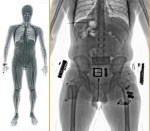 Full body scanners are to become the only security option for people flying out of Manchester Airport, the BBC reports today. The excessive amount of coverage given to the disapproval expressed by civil liberties groups has now been counterbalanced by passengers’ attitudes, since it appears that people actually prefer the scanners to the full body pat down, and have been voting with their feet.
According to Manchester Airport, 95% of travellers prefer the scanners and queuing times have been radically reduced. It takes 2 minutes to undergo a pat down, but a mere 27 seconds to pass through a scanner.
Continue reading →
Like this:
Like Loading...
11 October 2010 by Adam Wagner
 Ex-Guantanamo Bay prisoner Binyam Mohamed failed this weekend to prevent the Daily Mail reporting that he had been granted permanent residency in Britain. The case highlights a growing trend for the courts to enforce open justice in two significant ways, both which rely heavily on protections guaranteed under human rights law.
Interestingly, two crucial aspects of open justice have been reinforced as a result of a case involving Mohamed himself. In fact, the open justice aspects of Mohamed’s case against the security services will probably emerge as amongst the most important legal rulings arising from the ‘war on terror’ era. Unfortunately for him, this may have had the unintended consequence of destroying any chances of maintaining his privacy.
Continue reading →
Like this:
Like Loading...
7 October 2010 by Adam Wagner
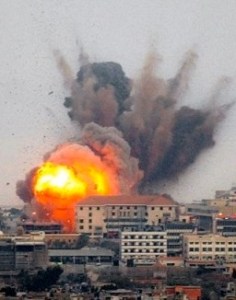 Updated | George Bathurst-Norman, the judge at the centre of the controversial acquittal of five activists against the 2008/9 Gaza war, has been officially reprimanded by the Office for Judicial Complaints.
The news was reported on Joshua Rozenberg’s Standpoint blog. The OJC press release says:
At short notice, the judge assigned to try a politically sensitive trial at Hove Crown Court on 28 and 29 June 2010 was unable to sit. To avoid an adjournment, His Honour Bathurst-Norman agreed to replace to him.
A number of complaints were made about some of the observations he made during the trial and summing up. An investigation found that a number of these observations did not arise directly from the evidence at trial and could be seen as an expression of the judge’s personal views on a political question. This was an error.
Continue reading →
Like this:
Like Loading...
7 October 2010 by Adam Wagner

Ghailani
The New York Times reports that those prosecuting Ahmed Khalfan Ghailani in the first civilian trial of a man held at Guantanamo Bay have suffered a setback: “just as the trial was to begin on Wednesday, Judge Kaplan ruled that he would not allow [a man who was to testify that Ghailani sold weapons to him] to testify. … the government had acknowledged that it had identified and located the witness through interrogation of Mr. Ghailani when he was earlier held in a secret overseas jail run by the Central Intelligence Agency. His lawyers have said he was tortured there.” The judge said:
Continue reading →
Like this:
Like Loading...
6 October 2010 by Matthew Flinn
 CA v Secretary of State for the Home Department [2010] EWHC 2278 (10 September 2010) – Read judgment
The High Court has ruled that a a control order which required the “controlee” to relocate and live at an address in Ipswich, away from his family in Crawley, was unlawful.
In Secretary of State for the Home Department v AP [2010] UKSC 24, the Supreme Court allowed the appeal of a man subject to a control order based on the argument that confinement to a flat 150 miles away from his family amounted to a breach of his human rights under Article 5 of the ECHR (right to liberty). The case of CA provides another example of the court striking down a relocation provision in a control order, and is the latest in a long series of court judgments which have chipped away at the controversial scheme.
Continue reading →
Like this:
Like Loading...
5 October 2010 by Adam Wagner
 Updated Al-Saadoon and Mufdhi v the United Kingdom – 61498/08 [2010] ECHR 282 – Read judgment / court press release
The European Court of Human Rights has declared that a decision in the cases of two Iraqi murder suspects in UK custody in Iraq is now final and will not be reconsidered. The court has effectively prohibited the death penalty under the European Convention on Human Rights, despite Article 2 (the right to life) appearing to expressly allow it.
The judgment is an important restatement of the prohibition against the death penalty which has been agreed to by all Council of Europe states. However, the reasoning of the court in prohibiting it under the European Convention, founded on the men’s “mental suffering caused by the fear of execution amounting to inhuman treatment”, rather than a prohibition against states carrying out the death penalty itself, may generate difficulties in future cases relating to inhuman and degrading treatment.
Continue reading →
Like this:
Like Loading...
29 September 2010 by Adam Wagner
Binyam Mohamed
More documents have emerged calling into question what the UK security services knew about the alleged mistreatment of ‘War on Terror’ detainees. Until this case is resolved, it is unlikely that work will begin on the upcoming torture inquiry.
Various documents have been disclosed in the ongoing case of Al Rawi and Others v The Security Services, in which six men who were detained at various locations, including Guantanamo Bay and Bagram in Afghanistan, allege various forms of mistreatment. They say that the UK government knew or should reasonably have known that the mistreatment was happening. Although the case has not yet reached trial, it has been the subject of a number of high-profile applications for secret documents (see our posts here and here).
Continue reading →
Like this:
Like Loading...
10 September 2010 by Adam Wagner
 Tomorrow is the 9th anniversary of the 11 September 2001 terrorist attacks, and it is worth considering some of the after effects which are still being felt in the UK courts.
Our posts on the human rights law relating to terrorism can be found here. The fact that it is the blog’s largest legal category is a reflection on the difficulties which the court have found in approaching anti-terrorism law. This relates to the previous government’s often controversial anti-terrorism policies, many of which have been successfully challenged in the courts, as well as the effects of the wars in Iraq and Afghanistan. Particular posts of interest are:
Continue reading →
Like this:
Like Loading...
23 August 2010 by Isabel McArdle
 Review: The Ripple Effect: Guantanamo Bay in the United Kingdom Courts” by CRG Murray, International Law Review Online Companion, April 2010 – Read article
A new academic article by C.R.G Murray at Newcastle University analyses the interesting and important line of case-law arising from claims by men detained in Guantanamo Bay. The case-law has involved many issues of a politically sensitive nature and generated much media coverage and pressure on the British Government. The ripple effects from the detentions have led to a series of important judgments.
Murray’s article reviews important case-law arising from detention at Guantanamo Bay and the impact it has had on the decisions reached by the courts. Murray concludes that the case-law demonstrates two major ‘ripple effects’: (1) judicial review has been used to press the British Government into being more active in opposing detentions at Guantanamo Bay; (2) where serious human rights breaches are in issue, the courts have been more willing to disregard historic concepts of comity between courts in different jurisdictions and give their own view of the correct interpretation of law for the benefit of appellate courts in the United States.
Continue reading →
Like this:
Like Loading...



Recent comments