Category: Employment
17 January 2011 by Clare Ciborowska

In its heyday
Lisboa v. Realpubs Ltd & Ors [2011] UKEAT 0224_10_1101 (11 January 2011) – Read judgment
The Employment Appeals Tribunal (EAT) has ruled that a well-known gay pub’s strategy to encourage straight customers led to gay customers being treated less favourably, meaning that the a gay employee was forced to resign.
The policies included seating straight customers at the front of the pub where they would be most visible to passers by. The Claimant was an employee of the well-known London pub the Coleherne. The Coleherne was thought to be the city’s first ‘gay pub’ and had been operating as such for the past forty years, but in September 2008 reopened as a gastro-pub, The Pembroke.
Continue reading →
Like this:
Like Loading...
5 January 2011 by Adam Wagner

Don't get fired
The future of the employment tribunal system is under review by the coalition government, and the players who are to win and lose from the changes are setting out their positions.
Depending on where you stand, the employment tribunal system is either a refuge for greedy lawyers and scurrilous claimants, or an essential bulwark against workplace abuses. In reality, like the rest of the court system, it can be both but is usually something in between. As such, the coalition should consider its options carefully, and listen to both sides of the debate, before making any decisions on reform.
Continue reading →
Like this:
Like Loading...
15 November 2010 by Adam Wagner

Updated x 2 | The lord chancellor Ken Clarke has announced plans for significant cuts to the legal aid system, which provides funding for legal representation to those who otherwise cannot afford it. The plans were largely as expected and will be open to consultation.
Update: The MoJ has published full details of the plans:
- The main documents, including impact assessments are here
- The proposals can be downloaded here
- Views on the consultation can be submitted online here
- A summary of the plans can be found here.
- The consultation on proposals for reform for civl litigation funding (the Jackson review) is here.
The scale of the cuts is expected to be around £350m out of the £2.2bm budget, which is just over 15%. Some of the plans had been leaked with partial accuracy by the Sunday Telegraph.
Update x 2: Read a summary of the reaction to the cuts here and an analysis of the underlying rational here.
Continue reading →
Like this:
Like Loading...
18 October 2010 by Matthew Hill

No victory this time
R (British Gurkha Welfare Society and ors) v Ministry of Defence [2010] EWCA Civ 1098 – read judgment
The Court of Appeal has rejected a fresh attempt, based on Article 14 of the European Convention on Human rights (anti-discrimination), to obtain equal pension rights for Gurkhas who served in the British Army before 1997.
The long-running campaign for Gurkha rights has been highly publicised and successful, but it has not ensured equality of treatment in respect of pensions. The MoD continues to calculate accrued pension rights at a lower rates for Gurkhas than for other soldiers in respect of service performed before 1997, the date on which the majority of Gurkhas ceased to be based in Hong Kong and were instead moved to the UK.
Continue reading →
Like this:
Like Loading...
1 October 2010 by Adam Wagner
 Most of the Equality Act 2010 comes into force today. But whilst 90% of its provisions are now operating, the Act has been controversial and some key aspects may never see the light of day.
The Equality and Human Rights Commission have published a fully featured online guide to the Act, a video, guidance on good practice and an Equality Act starter kit. Afua Hirsch in the Guardian summarises the main provisions here, as does the BBC and the Human Rights in Ireland Blog. The Law Society has produced a practice note for solicitors.
Continue reading →
Like this:
Like Loading...
26 August 2010 by Adam Wagner
 The government is moving away from the wide-ranging public sector equality duty which was due to come into force in April 2011.
The Equalities Office has announced a consultation on the public sector equality duty imposed by the Equality Act 2010. Reading the consultation document, it is clear that the government intends to delegate the equalities duty to the general public, rather than imposing top-down standards from Whitehall:
We do not intend to prescribe how public bodies go about their business, but we will ensure that we put in place the right framework which empowers citizens to scrutinise the data and evidence on how their public services perform.
Continue reading →
Like this:
Like Loading...
23 June 2010 by Rosalind English
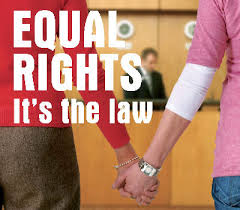 The controversial Equality Act, which was designed to replace a number of anti-discrimination laws, was due to come (partially) into force in October. However the intervening change of government since its enactment in April 2009 appeared to threaten the legislation, particularly after the timetable for the gradual enforcement of its provisions was withdrawn.
Some experts speculated that instead of repealing the Act, the new Government would simply not bring certain parts of it into force, notably the provisions on pay reporting and positive discrimination that were unpopular with the Conservative Party. However the Government Equality Office has now reinstated the original timetable, with the core provisions due to commence in October.
There is still some possibility that some parts of the Act will not become law. Introduced as part of the Labour Party’s 2005 manifesto fulfilment, the Equality Act came under fire for some of its sections dealing with equal pay, positive action and addressing socio-economic disadvantage.
Like this:
Like Loading...
21 June 2010 by Adam Wagner

British Airways Plc v Unite the Union [2010] EWCA Civ 669 (20 May 2010) – Read judgment
Last month Unite won their appeal against an injunction obtained by British Airways in the High Court preventing their members from striking. The judgment has some potentially important implications for human rights, and in particular the right to free assembly.
The strike has already been the most damaging in British Airways’ history and they airline are now preparing for another round of strikes with Unite threatening to ballot its members for a third time.
Today the Confederation of British Industry (CBI) called for a change in the law to make it harder to bring strikes. Amongst other things, they are lobbying for the number of workers who need to agree to a strike before it can take place to be raised to 40%, which they say would “prevent strikes going ahead based on a relatively small turnout of particularly active members.”
Continue reading →
Like this:
Like Loading...
18 June 2010 by Adam Wagner
The Equality Act 2010 may be a quiet addition to the Coalition Government’s repealing agenda as the Government Equality Office (GEO) withdraws the timetable for its implementation.
According to Out-law.com, a spokesperson from the GEO said “An announcement on scheduling for implementation of the Equality Act will be made in due course” and also confirmed that the new Government is not bound by the timetable set by its predecessor.
The Equality Act 2010 was passed into law on in the dying days of the New Labour government despite opposition of from the Pope, who complained that it would run contrary to “natural law” due to its likely effect on Catholic adoption agencies. The Conservatives may have more luck, however, in thwarting the Act’s implementation and in particular three aspects of it which they are opposed to. Some of the main provisions were supposed to come into force in October, but this now appears to have been put on hold. The original timetable can be accessed here.
Continue reading →
Like this:
Like Loading...
10 May 2010 by Rosalind English
 McFarlane v Relate Avon Ltd [2010] EWCA Civ B1 (29 April 2010) – Read judgment or our previous post
Case comment
Lord Carey of Clifton, responding to Lord Justice Laws’ observations in MacFarlane, has called this latest dust-up about religion in the courts a “deeply unedifying clash of rights“. It is indeed a clash of rights, but unedifying it is not. It is precisely when these rights collide that some real, hard thinking is generated, not only about the precise content of these rights, but their historical purpose and their proper function in modern society.
It may be that when the architects of the Convention drafted Article 9, guaranteeing freedom of thought, conscience and religion, they did not foresee that its future role would not be so much the protection of oppressed believers against Soviet-style secularisation but instead a thorn in the flesh of public authority employers seeking enforce their legitimate objectives against non-compliant religious employees.
Continue reading →
Like this:
Like Loading...
29 April 2010 by Adam Wagner
 McFarlane v Relate Avon Ltd [2010] EWCA Civ B1 (29 April 2010) – Read judgment
Gary McFarlane, a Christian relationship counsellor, has lost his application to appeal his Employment Appeal Tribunal decision in the High Court. Mr McFarlane was sacked by a marriage guidance service after he said he would not promote gay sex. He claimed he had been discriminated against on religious grounds.
The case caused a furore as the former Archbishop of Canterbury Lord Carey submitted a witness statement stating that cases such of these should be heard by judges with special religious sensitivity. Lord Justice Laws in the High Court has now rubbished that suggestion. He said:
18. Lord Carey’s observations are misplaced. The judges have never, so far as I know, sought to equate the condemnation by some Christians of homosexuality on religious grounds with homophobia, or to regard that position as “disreputable”. Nor have they likened Christians to bigots. They administer the law in accordance with the judicial oath: without fear or favour, affection or ill-will.
19. It is possible that Lord Carey’s mistaken suggestions arise from a misunderstanding on his part as to the meaning attributed by the law to the idea of discrimination. In cases of indirect discrimination (such as are provided for by paragraph 3(1)(b) of the 2003 Regulations, which is centre stage in the present case) the law forbids discriminatory conduct not by reference to the actor’s motives, but by reference to the outcome of his or her acts or omissions. Acts or omissions may obviously have discriminatory effects – outcomes – as between one group or class of persons and another, whether their motivation is for good or ill; and in various contexts the law allows indirect discrimination where (in a carefully controlled legislative setting) it can be shown to have justifiable effects. Accordingly the proposition that if conduct is accepted as discriminatory it thereby falls to be condemned as disreputable or bigoted is a non sequitur. But it is the premise of Lord Carey’s position.
Read more:
- More posts on religious discrimination
- Judgment in Mcfarlane v Relate Avon Ltd.
- Update 30/4/10 – Lord Carey responds: legal battle against believers is “”a deeply unedifying collision of human rights””
Like this:
Like Loading...
16 April 2010 by Rosalind English
 We posted last week on issues of breach of duty in cases involving child protection, and mentioned the MAGA case as an important decision in extending the duty of care to priests in the Catholic church. The lawyers in the case have now written up the judgment.
Case comment by Elizabeth-Anne Gumbel QC and Justin Levinson
(Barristers for the Claimant, MAGA)
MAGA v The Trustees of the Birmingham Archdiocese of the Roman Catholic Church [2010] EWCA Civ 256, Court of Appeal (Lord Neuberger MR, Lord Justice Longmore and Lady Justice Smith) (read judgment)
This appeal was brought with permission from the trial Judge Mr Justice Jack. The claim arose out of sexual abuse suffered by the Claimant whilst a child living in the area of the Church of Christ the King in Coundon, Coventry. This was a Catholic church under the control of the the Trustees of the Birmingham Archdiocese of the Roman Catholic Church. The priests appointed to work at that church in the 1970s included a senior priest father McTernan and a younger priest Father Clonan. The Claimant was seriously and repeatedly sexually assaulted over a number of months by the younger priest known as Father Clonan. The abuse took place after Father Clonan befriended the Claimant, invited him to the church youth club and then to the Presbytery where Father Clonan and other priests including the senior Priest Father McTernan lived.
Continue reading →
Like this:
Like Loading...
12 April 2010 by Adam Wagner
 The Equality Act 2010 received royal assent on 8 April 2010. The Act aims to consolidate what until now has been a messy jigsaw of 116 pieces of legislation, and further harmonise UK law with the four key EU Equal Treatment Directives.
The Bill passed despite the unusual opposition from the Pope, who complained in February that it would run contrary to “natural law”. His comments were most likely directed at the effect of the new legislation on Catholic adoption agencies, making it more difficult for them to turn down gay couples. We previously posted on this topic in relation to the Catholic Care case, which resulted in a victory for a catholic adoption agency.
The Equality and Human Rights Commission, which has welcomed the passing of the Bill, points out some of the key features:
- Making the law easier to understand and implement by simplifying 116 pieces of equality legislation into a single Act for individuals, public authorities and private organisations.
- Giving people the right not to be treated less favourably by public authorities because of their age, religion or belief, sexual orientation, or transgender status; as well as their disability, gender, or race which were already covered.
- Extending anti-age discrimination rules to include goods, facilities and services, thereby stopping people being unfairly refused insurance or medical treatments based on what age they are, for example.
The key sections of the Act will begin to come into force in October 2010 and will continue to do so until 2012.
Read more
Like this:
Like Loading...
7 April 2010 by Adam Wagner
 Shirley Chaplin, an NHS nurse who was moved to a desk job for wearing a crucifix at work, has lost her employment discrimination claim against the NHS.
The Employment Tribunal judgment is not available at present, but The Times reports:
John Hollow, the tribunal chairman, ruled that the Royal Devon and Exeter Hospital had acted reasonably in trying to reach a compromise. It had argued that the objection to the crucifix, which Mrs Chaplin, from Kenn, near Exeter, had worn for 30 years, was based on health and safety concerns about patients grabbing the necklace, not religion.
According to the Christian Legal Centre (CLC), which strongly supports Ms. Chaplin’s case, the Tribunal held that Mrs Chaplin had not been indirectly discriminated against by the application of the uniform policy because she could not prove she was part of a group affected by the policy.
The Tribunal applied the reasoning in the previous case of Nadia Eweida v British Airways [2009] EWCA Civ 1025. Ms Ewieda’s claim also involved her being banned from wearing a Christian cross at work, in that case at British Airways. The Court of Appeal made clear that in an indirect discrimination cases brought under Reg. 3(1) of the Employment Equality (Religion or Belief) Regulations 2003, it was necessary to show that there had to be evidence of a “group disadvantage”, i.e. that more than one person had been affected by the policy. Ms Eweida could not establish a ‘group’ and as such her case failed.
The CLC claim that “the Tribunal has now decided that a group must be more than two people as well—leaving the law in a ludicrous level of uncertainty”. Ms Chaplin has already said she plans to appeal the decision.
Read more:
Like this:
Like Loading...
18 January 2010 by Elspeth Wrigley
 Grainger PLC v T Nicholson
Employment Appeal Tribunal (Burton J), November 3 2009 – Read judgment
The Employment Appeal Tribunal has found that belief in climate change is capable of constituting a “philosophical belief” within the meaning of the Employment Equality (Religion or Belief) Regulations 2003 (“the 2003 Regulations”).
The decision of 3 November 2009 also provides important guidance for what constitutes a “philosophical belief” under the 2003 Regulations, as well as raising a number of questions regarding the status of ‘beliefs’ in relation to ‘scientific evidence’, a matter which, the EAT’s findings do not entirely resolve.
Continue reading →
Like this:
Like Loading...



Recent comments