Category: CONVENTION RIGHTS
7 April 2010 by Adam Wagner
 Shirley Chaplin, an NHS nurse who was moved to a desk job for wearing a crucifix at work, has lost her employment discrimination claim against the NHS.
The Employment Tribunal judgment is not available at present, but The Times reports:
John Hollow, the tribunal chairman, ruled that the Royal Devon and Exeter Hospital had acted reasonably in trying to reach a compromise. It had argued that the objection to the crucifix, which Mrs Chaplin, from Kenn, near Exeter, had worn for 30 years, was based on health and safety concerns about patients grabbing the necklace, not religion.
According to the Christian Legal Centre (CLC), which strongly supports Ms. Chaplin’s case, the Tribunal held that Mrs Chaplin had not been indirectly discriminated against by the application of the uniform policy because she could not prove she was part of a group affected by the policy.
The Tribunal applied the reasoning in the previous case of Nadia Eweida v British Airways [2009] EWCA Civ 1025. Ms Ewieda’s claim also involved her being banned from wearing a Christian cross at work, in that case at British Airways. The Court of Appeal made clear that in an indirect discrimination cases brought under Reg. 3(1) of the Employment Equality (Religion or Belief) Regulations 2003, it was necessary to show that there had to be evidence of a “group disadvantage”, i.e. that more than one person had been affected by the policy. Ms Eweida could not establish a ‘group’ and as such her case failed.
The CLC claim that “the Tribunal has now decided that a group must be more than two people as well—leaving the law in a ludicrous level of uncertainty”. Ms Chaplin has already said she plans to appeal the decision.
Read more:
Like this:
Like Loading...
6 April 2010 by Guest Contributor

Lord Goldsmith
Sir William Gage, the Chairman of the Baha Mousa Public Inquiry, has refused an application by participants in the Inquiry to compel the Ministry of Defence (MoD) to disclose advice produced by the former Attorney General, Lord Goldsmith.
The MoD claimed legal professional privilege in respect of the Attorney-General’s Advice of 2003 on the application of the European Convention of Human Rights (ECHR) to the British Army’s operations in Iraq during the Iraq war.
The Inquiry, which has been ongoing since July 2009, aims to investigate and report on the circumstances surrounding the death of Baha Mousa by the British Army and the treatment of those detained with him, in particular where responsibility lay for approving the practice of conditioning detainees by any members of the 1st Battalion, The Queen’s Lancashire Regiment in Iraq in 2003.
Read more:
- You can read the Chairman’s full Ruling here.
- Read coverage in The Times
Like this:
Like Loading...
6 April 2010 by Adam Wagner
 We posted last week on Carson and Others v The United Kingdom (read judgment), in which the European Court of Human Rights rejected a claim that UK pensioners living abroad should have their pensions index-linked (i.e., that they be raised in line with inflation).
It turns out that it is not just the UK, or indeed Europe, being affected by the long reach of the ECtHR. Alison Steed in The Daily Telegraph reports that the Australian Government are footing the bill for 170,000 ex-pat British pensioners living there. They have said in response to the judgment:
“The Australian government believes this policy is discriminatory. We have been actively lobbying the UK government on this issue… This policy continues to place an increasing burden on all Australian taxpayers, as the Australian government picks up the tab for around 170,000 UK pensioners who also receive means-tested Australian pensions – estimated at about A$100 million (£60 million) per year in additional social security payments.”
Australia ended its social security agreement with the UK in 2001 in light of this issue, which affects around 500,000 ex-pat UK pensioners living worldwide.
Read more:
- 28 March 2010 post
- The ECtHR judgment
- Our case summary of Carson; Reynolds v Secretary of State for Work and Pensions (May 2005 – House of Lords, 2003 – Court of Appeal)
- Media coverage of the Carson judgment in The Guardian and on the BBC website
Like this:
Like Loading...
2 April 2010 by Rosalind English
AD and OD v United Kingdom (Application No 28680/06), 2 April 2010
Read judgment
 The European Court of Human Rights (ECtHR) has ruled unanimously that a local authority’s failure to conduct a risk assessment, which resulted in a child being placed with foster parents, breached the right to respect for family life under Article 8 of the Convention. It also concluded that the mother should have had available to her a means of claiming that the local authority’s handling of the procedures was responsible for any damage which she suffered and obtaining compensation for that damage. As such redress was not available to her, the Court held that she had suffered a violation of Article 13.
Continue reading →
Like this:
Like Loading...
2 April 2010 by Adam Wagner
 We posted yesterday on Dr Simon Singh’s victory in the Court of Appeal. Unsurprisingly a number of interesting press comments have been published this morning:
- Dr Simon Singh writes in The Guardian that “the battle for libel reform has only just begun.” He warns that “yesterday’s decision was only a ruling on potential defences and the meaning of my article, so I have not won yet. Indeed, the case could continue for another two years and run for four years in total.”
- Francis Gibb writing in The Times says that “The ruling by Lord Judge, Lord Chief Justice; Lord Neuberger of Abbotsbury, Master of the Rolls and Lord Justice Sedley may put an end to the idea that the courts are the first, rather than the last, resort.”
- Ian Burrell, writing in the Guardian says that Dr Singh has “won a victory for freedom of speech in his cause célèbre libel battle with the body that represents Britain’s chiropractors.”
- John Kampfner, the chief executive of Index on Censorship, writes in the Independent that “Once in a while, in these days of antagonism towards the political-legal establishment, something happens that gladdens the heart.”
Like this:
Like Loading...
1 April 2010 by Adam Wagner

British Chiropractic Association v Dr Singh [2010] EWCA Civ 350
(Read judgment)
Dr Simon Singh has won the first battle in the libel action, brought by the British Chiropractic Association (BCA), in the Court of Appeal. Dr Singh was sued by the BCA in respect of an article he wrote in The Guardian in April 2008, in which he said there was not enough evidence to prove that chiropractic treatment is effective against certain childhood conditions including colic and asthma.
Mr Justice Eady ruled against Dr Singh in May 2009 in relation to two important preliminary issues. Dr Singh appealed to the Court of Appeal, and Lord Judge, Lord Neuberger and Lord Justice Sedley were asked to rule on the preliminary points relating to possible defences.
The Court has used the opportunity to mount a robust and somewhat lyrical defence of the right to freedom of expression.
Continue reading →
Like this:
Like Loading...
1 April 2010 by Adam Wagner
 Allen v. The United Kingdom (Application no. 18837/06), Date of judgment: 30 March 2010
(Read judgment)
The European Court of Human Rights (ECtHR) has ruled that, in the circumstances, it was a breach of the applicant Susan Allen’s rights under article 5(4) of the European Convention on Human Rights (ECHR) for a Deputy District Judge to refuse her permission to attend an appeal against the grant of her bail.
In October 2005 Ms Allen was charged with two offences of conspiracy to supply Class A drugs. She was produced at Liverpool City Magistrates’ Court. Following a contested bail application she was granted bail by the Deputy District Judge, and the prosecution subsequently appealed. Her counsel requested that the judge allow her to be present at the appeal. The judge declined the request, reasoning that the applicant could be given a full report of what had happened from her counsel. Moreover, her attendance would be undesirable as one of the applicant’s co-accused had not been present at the hearing of the appeal against the grant of bail to him, and it would therefore be unfair to treat the applicant more favourably.
Continue reading →
Like this:
Like Loading...
31 March 2010 by Angus McCullough KC
 The Parliamentary Joint Committee on Human Rights (‘the Joint Committee’) has released its report on the Annual Renewal of Control Order Legislation 2010, in which it heavily criticised the control order scheme. The scheme, introduced in 2005, allows courts to put terror suspects under restrictions resembling house arrest by placing them under curfews of up to 16 hours a day and, typically, constraints on their movements and communications. There were 12 suspects subject to control orders in December 2009.
Whereas the Joint Committee has previously criticised the scheme, this is the first time that it has recommended for it to be discontinued. The committee said:
We have serious concerns about the control order system. Evidence shows the devastating impact of control orders on the subject of the orders, their families and their communities. In addition detailed information is now available about the cost of control orders which raises questions about whether the cost the system is out of all proportion to the supposed public benefit. We find it hard to believe that the annual cost of surveillance of the small number of individuals subject to control orders would exceed the amount currently being paid to lawyers in the ongoing litigation about control orders. Finally, we believe that because the Government has ignored our previous recommendations for reform, the system gives rise to unnecessary breaches of individuals’ rights to liberty and due process.
Continue reading →
Like this:
Like Loading...
29 March 2010 by Rosalind English
 R (on the application of LG) (Appellant) v Independent Appeal Panel for Tom Hood School (Respondent) & Secretary of State for the Department for Children, Schools and Families (Interested Party) [2010] EWCA Civ 142
(Read judgment here)
CA (Civ Div) (Rix LJ, Wilson LJ, Sir Scott Baker) February 26 2010
An exclusion hearing by a school does not engage the pupil’s Article 6 of the Convention since there is no “civil right” to education recognized as such either by the Convention or by domestic law.
Summary
The appellant pupil (VG) had been involved in a fight at the school. He was accused of having a knife, which he denied. The school permanently excluded VG and he appealed. The panel, in accordance with the Education (Pupil Exclusions and Appeals) (Maintained Schools) (England) Regulations 2002 reg.7A, found on the balance of probabilities that he had carried a knife, and upheld his exclusion. VG appealed against a decision ((2009) EWHC 369 (Admin), (2009) BLGR 691) to refuse his application for judicial review of the decision of the respondent panel to uphold a decision to permanently exclude him from a school. He argued that his right to a fair hearing under Article 6 was engaged, either on the basis that the panel had determined his civil right not to be excluded from the school without good reason, or on the basis that the panel had determined a criminal charge against him, and that right had been infringed by the decision to exclude him having been based on allegations established against him on the balance of probabilities rather than on the criminal standard of proof. He also contended that regulation 7A(c), although purportedly made pursuant to the Education Act 2002 s.52, was ultra vires in that a rule about standard of proof was one of evidence and not procedure as permitted by s.52(3)(d).
Continue reading →
Like this:
Like Loading...
28 March 2010 by Adam Wagner
 Carson and Others v The United Kingdom (Application no. 42184/05)
The European Court of Human Rights has rejected a claim by British pensioners living abroad that their pension payments should be uplifted to take into account inflation. The case was supported by Pension Parity UK, a pressure group. The majority in the Court held that the pensions system was not a breach of ECHR Article 14 (non discrimination), saying at [86]:
Continue reading →
Like this:
Like Loading...
19 March 2010 by Adam Wagner
Catholic Care (Diocese of Leeds) v Charity Commission for England and Wales (Equality and Human Rights Commission intervening) [2010] EWHC 520 (Ch)
The High Court have found that a Roman Catholic adoption agency (Catholic Care) could rely on regulation 18 of the Equality Act (Sexual Orientation) Regulations 2007 in refusing same-sex couples adoption services.
Continue reading →
Like this:
Like Loading...
17 March 2010 by Adam Wagner
 Baroness Deech, the Chair of the Bar Standards Board, has given the second lecture in her series on family law at Gresham College. In this lecture she questions whether the current law of marriage is compatible with human rights law. In particular, homosexual couples cannot legally marry, and hetrosexual couples are disbarred from entering civil partnerships. She said:
“Since [the] acceptance and recognition [of gay rights] has grown, advanced by the Human Rights Act 1998 and the Equality Bill 2010. Gay couples may adopt children (Adoption and Children Act 2002); they have access to fertility services and full parentage of donor conceived children (Human Fertilisation and Embryology Act 2008). Same sex childless couples are deemed to be a “family” for the purpose of succeeding a deceased partner to a tenancy (Fitzpatrick v Sterling Housing Association [1998] Ch.304). This trend culminated in the legislative establishment of civil partnerships in the Civil Partnership Act 2004, creating a union almost identical to, but not marriage.”
Continue reading →
Like this:
Like Loading...
16 March 2010 by Rosalind English
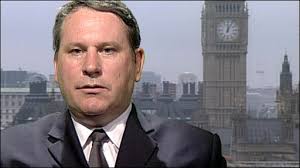
Colonel Richard Kemp, former Commander of British Forces in Afghanistan, has written in the Times that lawyers have no place on the battlefield. He said: “In the heat of battle, a commander can’t worry about the Human Rights Act. It would make war impossible”
- Read the full article here.
- Read our previous post on this topic here
Like this:
Like Loading...
16 March 2010 by Adam Wagner

Private Jason Smith
The case of R (on the application of Smith) (FC) (Respondent) v Secretary of State for Defence (Appellant) and another is being heard today in the Supreme Court.
The Secretary of State is appealing the 2009 decision of the Court of Appeal: See our case comment from the Court of Appeal judgment.
In short, the respondent’s son Smith was a member of the Territorial Army who had been posted to Iraq in June 2003. He had spent eight days in Kuwait for the purpose of acclimatisation. The room he occupied in Iraq did not have air conditioning. In August 2003 temperatures in the shade reached in excess of 50 degrees C, which was the maximum that available thermometers could measure. He reported sick complaining that he could not stand the heat. Some days later he suffered a cardiac arrest.
In this appeal the secretary of state appeals against the decision of the Court of Appeal ([2009] EWCA Civ 441) that the deceased had been within the jurisdiction of the United Kingdom for the purposes of the Article 1 of the European Convention on Human Rights 1950 and the Human Rights Act 1998 and that, consequently, the inquest into his death had to comply with Article 2.
The hearing is expected to last for four days. See coverage in The Times and the The Guardian.

Like this:
Like Loading...
5 March 2010 by Rosalind English
 Norris v United States [2010] UKSC 9
SC (Lord Phillips, Lord Hope, Lord Rodger, Lady Hale, Lord Brown, Lord Mance, Lord Judge, Lord Collins, Lord Kerr) 24 February 2010
In determining whether interference with an individual’s right to a family life was justified to achieve the aim of extradition, the court should not consider whether the circumstances were exceptional but should consider whether the consequences were exceptionally serious
SUMMARY
The appellant had recently retired from his job as CEO of a company that had been involved in price fixing. He had successfully resisted an extradition order sought by the United States on the grounds that price-fixing in the UK was not illegal (Norris v United States (2008) UKHL 16, (2008) 1 AC 920). However, the court held that the other charge against him – obstructing justice – justified extradition and his case was remitted to a district judge. The district judge decided that he should be extradited. His decision was upheld by the divisional court, which concluded that the obstruction of justice charges were very grave and that a high threshold would have to be reached before the appellant’s rights under Article 8 could outweigh the public interest in extradition ((2009) EWHC Admin 995, (2009) Lloyd’s Rep FC 475).
Read judgment here or
Continue reading →
Like this:
Like Loading...

 Shirley Chaplin, an NHS nurse who was moved to a desk job for wearing a crucifix at work, has lost her employment discrimination claim against the NHS.


Recent comments