Category: BLOG POSTS
11 October 2017 by Rosalind English
 Conway, R (On the application of) v The Secretary of State for Justice [2017] EWHC 2447 (Admin) – read judgment
This case concerns the issue of provision of assistance to a person with a serious wasting disease who wishes to commit suicide, so as to be able to exercise control over the time of his death as the disease reaches its final stages. See our previous post on it here and here. It follows a line of cases which have addressed that or similar issues, in particular R (Pretty) v Director of Public Prosecutions [2001] UKHL 61; [2002] 1 AC 800 (“Pretty“), R (Purdy) v Director of Public Prosecutions [2009] UKHL 54; [2010] 1 AC 345 (“Purdy“) and R (Nicklinson) v Ministry of Justice [2014] UKSC 38; [2015] AC 657(“Nicklinson“). Permission to bring this judicial review was granted by the Court of Appeal (McFarlane and Beatson LJJ, see [2017] EWCA Civ 275), having earlier been refused by the Divisional Court (Burnett LJ, Charles and Jay JJ) at [2017] EWHC 640 (Admin
Section 1 of the Suicide Act 1961 abrogated the rule of law whereby it was a crime for a person to commit suicide. In this hearing Mr Conway sought a claim for a declaration of incompatibility pursuant to section 4 of the Human Rights Act 1998 in respect of the prohibition in the criminal law against provision of assistance for a person to commit suicide. That prohibition is contained in section 2 of the Suicide Act 1961.
Continue reading →
Like this:
Like Loading...
1 October 2017 by Rosalind English
 XX v Whittington Hospital NHS Trust 2017 EWHC 2318 (QB) (18 September 2017) [HQ15C04535]
Podcast about this case now downloadable
Commercial surrogacy arrangements are considered to be against public policy in the UK and therefore illegal. Surrogacy in the UK is only legal where there is no intention to make a profit – though reasonable expenses are recoverable. Where legal surrogacy is
carried out the surrogate mother is the legal mother of the child. In this case the claimant had suffered injury due to the hospital’s failure to diagnose her cervical cancer in time. She had to undergo chemotherapy and radiation treatment which, amongst other things, damaged her uterus so she was unable to bear and carry a child. Before the treatment she had her eggs frozen.
The hospital admitted negligence. As part of her damages claim she sought the expenses she would incur for a commercial surrogacy arrangement in California. She wished to go to the US since the position of a woman seeking surrogacy in the UK is made more difficult by the fact that commercial arrangements are illegal. This means that in the UK the surrogate chooses the biological mother, rather than the other way around. The lack of certainty over parental status was also cited as a reason why an arrangement in the US would be preferable.
Continue reading →
Like this:
Like Loading...
1 October 2017 by Rosalind English
 You may remember the podcast discussion between me, Rosalind English, and David Hart QC earlier in the summer about the NHS decision not to fund the drug Kuvan for the amelioration of symptoms of a boy suffering from phenylketonuria (PKU) and severe autism. The podcast concerned a High Court ruling that the health service should review its decision not to fund the drug Kuvan.
As I mentioned in the original report, the judge did warn the boy’s family against being too optimistic, saying
however much one might hope that on the next occasion the panel will decide that the net additional expenditure of treating S with Kuvan would be justified … they could still lawfully decide to refuse funding.
However, the judge’s caution has not been borne out by events. On Friday 29th September it was reported that NHS England has agreed to provide the drug to treat his PKU, which if left unchecked can lead to complications including brain damage.
Listen to Episode 9 of Law Pod UK, available for download on iTunes
Like this:
Like Loading...
29 September 2017 by Rosalind English
 ... and pests are misplaced animals. We are all too familiar with the stories of mayhem caused by urban foxes released into the countryside, and the collapse in property value where Japanese knotweed is found to have invaded. The perpetrators of such damage are rarely identified and brought to account. So it is with a level of glee that the prosecution of two “Buddhist activists” has been reported in the media after they released nearly a thousand alien crustaceans off the coast of Brighton.
“Banker” Ni Li and “estate agent” Zhixong Li bought the live American lobsters and Dungeness crabs from a London fish merchant, hired three boats from Brighton Marina and cast the animals adrift as part of a religious ceremony, fangsheng, which is understood to be the cause of many ecosystem disruptions in Asia.
This short story is so replete with topical issues it is hard to know where to begin.
Continue reading →
Like this:
Like Loading...
24 September 2017 by Sarah Ewart

In the news this month:
The Brexit Bill
The Bill for the withdrawal from the European Union has been dominating the news over the past few weeks. Mark Elliott comments that it is ‘difficult to overstate the importance’ of the bill from a constitutional standpoint, and the House of Lords Constitution Committee has said in an interim report that its political, legal and constitutional significance are ‘unparalleled’. Concern has been voiced in various quarters over the use of ‘Henry VIII’ powers (so named because of the monarch’s disdain for parliamentary restraint) which will allow the executive to bypass parliament to ‘tweak’ legislation, and a concomitant lack of sufficiently robust sunset clauses or checks and balances to the handover of such powers. For more detail, I highly recommend listening to David Hart QC’s conversation with Rosalind English on our new podcast series Law Pod, in which he details the potential consequences of the bill in general and in terms of environmental law in particular; you can read his comments here or have a listen here.
Continue reading →
Like this:
Like Loading...
23 September 2017 by David Hart KC
 ACCC Findings in ACCC/C/2008/32
Last week’s post concerned the judicial review costs system in environmental cases and its compliance with the prohibitively expensive rule Art.9(4) of the Aarhus Convention.
Now for some more Aarhus developments which happened over the summer, this time involving the Aarhus Convention Compliance Committee (ACCC) having a pop at the narrow EU standing rules applicable to challenges to an act or omission by a EU body, and the EU not liking those findings at all.
Continue reading →
Like this:
Like Loading...
18 September 2017 by Adam Wagner
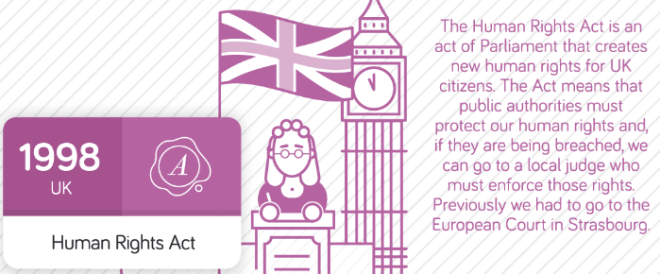
On 2 October it is the 17th birthday of the Human Rights Act – it came into force on 2 October 2000.
Rightsnfo is looking for inspiring stories of how people have used the Human Rights Act to publish as part of a birthday feature:
- Please send your stories to info@rightsinfo.org
- No more than 150 words per story
- Send them by end of Friday 22 September
- Stories welcome from people who have used the Human Rights Act or lawyers who have used it on people’s behalf (please confirm you have your client/ex-client’s authorisation to share the story).
- If you have photos to share then please do so
Looking forward to seeing what people send in!
Like this:
Like Loading...
16 September 2017 by David Hart KC
 RSPB, Friends of the Earth & Client Earth v. Secretary of State for Justice [2017] EWHC 2309 (Admin), 15 September 2017, Dove J – judgment here
In my March 2017 post here, I explained that amendments to the costs rules for public law environmental claims threatened to undo much of the certainty that those rules had achieved since 2013. Between 2013 and February 2017, if you, an individual, had an environmental judicial review, then you could pretty much guarantee that your liability to the other side’s costs would be capped at £5,000 (£10,000 for companies) if you lost, and your recovery of your own costs would be limited to £35,000 if you won. In this way, the rules sought to avoid the cost of such claims becoming prohibitively expensive and thus in breach of Art.9(4) of the Aarhus Convention.
The most worrying element in the February 2017 amendments was a new CPR 45.44 giving the courts a broad discretion to vary those amounts, apparently at any time. This seemed like an open invitation to the defendants to try to do this, aided by the financial information which claimants are now obliged to provide. It was truly regressive, taking us back to the days when you spent many thousands of pounds arguing about a protective costs order which was intended to save money.
In my March post, I explained that the new rules were being challenged by NGOs, and Friday’s judgment is the upshot of this challenge.
It is essentially a success for the NGOs.
Continue reading →
Like this:
Like Loading...
8 September 2017 by Olivia Kaplan
There are a few places remaining for 1 Crown Office Row’s high-level seminar this Monday 11 September. The event is aimed at solicitors and people associated with NGOs. We also have a limited number of student places which will be allocated on a first come first served basis.
Email events@1cor.com to reserve your place.
Details:
11th September 2017, 5 – 8pm
Programme:
5 – 5.50pm Panel Discussion chaired by Mrs Justice Whipple.
Speakers will include: Marina Wheeler QC, Jeremy Hyam QC, Shaheen Rahman QC, Martin Downs and Adam Wagner.
6 – 6.40pm Breakout sessions – Law and Practice
(i) Public Powers and Private Lives in the Information Age – Amelia Walker
(ii) Inquests and Article 2 – Rachel Marcus, Caroline Cross, Peter Skelton
(iii) Unlawful detention – Suzanne Lambert, Alasdair Henderson, David Manknell
6.45pm Concluding Session – Questions and Summing Up.
Chaired by Mrs Justice Whipple
7pm Drinks Reception
Hosted by the speakers and 1COR Members.
Like this:
Like Loading...
3 September 2017 by Rosalind English
 Clinical Genetics is a field of medicine concerned with the probability of an indvidual’s condition having an hereditary basis. The journal Medical Law International has just published an article about the scope of potential duties of care owed by specialists in this field to people with heritable diseases. The authors draw out the features of genomic medicine that open the door to new liabilities; a potential duty owed by clinicians to third party family members, and another legal relationship that may be drawn between researchers and patients.
Background
There is no legislation on the duties involved in genome sequencing in the United Kingdom, and, in the absence of this, any new legal duties on the part of professionals in clinical genomics need to be established within the common law of negligence. Civil lawyers are familiar with the standard framework for establishing whether a duty of care is owed, based on these three consecutive questions:
- Was the damage was reasonably foreseeable
- Was there was sufficient “proximity” between the claimant and the defendant and
- Would it be fair, just and reasonable to impose a duty: see Lord Bridge of Harwich in Caparo Industries plc v Dickman [1990] 2 AC 605, 617-618
These principles are neat enough as they are laid out but only take us as far as the facts of any particular case, particularly the Caparo test outlined in para (3).
This relatively new field of medical endeavour is unusual in that it is concerned with the management of a family rather than one individual. More generally, in the field of genomic medicine, there is a “close interaction between care and research”, resulting in “the real possibility” that genomics researchers will be found to owe a legal duty to disclose findings to participants.
So we have two new possible avenues of liability here; that of clinicians to third parties, and that of researchers to patients.
Continue reading →
Like this:
Like Loading...
1 September 2017 by Rosalind English
 We have just posted a discussion here between 1 Crown Office Row recruit Thomas Beamont and Rosalind English on the reach of Artificial Intelligence into the legal world: click on Episode 10 of our podcast series.
Law Pod UK is freely available for download on iTunes
Related material:
Like this:
Like Loading...
29 August 2017 by Adam Wagner
RightsInfo needs your help on a new campaign to show how protecting human rights is the best way to prevent bigotry, hatred and the rise of the far right.
We’ve all been shocked at the scenes of extremists on the march again. We need your help to fight back against these poisonous ideologies by producing a film for the International Day of Tolerance (16 November 2017), highlighting the discrimination and dehumanisation common to all genocides, and a series of other videos and features.
The crowdfunder launched this morning and we have already reached our first target of £4,000. Now we are working towards the stretch target of £9,000. Can you help?
All details here
Share the campaign on Twitter
Share the campaign on Facebook
Like this:
Like Loading...
21 August 2017 by Rosalind English
 Richard Susskind, IT adviser to the Lord Chief Justice, has spent many years looking into the future of the law. In a fascinating podcast paving the way for his new book The Future of the Professions and the updated Tomorrow’s Lawyers, he discusses with OUP’s George Miller the new world of technological advancements in the day to day management of dispute resolution. We have taken the liberty of summarising the podcast here and posting a link to the interview at the end of this post.
Susskind finds, in comparison with the rest of the English speaking world, that the legal institutions of the UK are in some sort of denial about the march of AI. He maintains that the legal world will change more in twenty years than it has in the past two centuries. If we want to improve access to justice in our society, the answer is in technology. But the law schools have not caught up with this idea.
How do we work out what to do in the face of irreversible and inevitable change in the law? Susskind acknowledges that most people want to pay less for legal services, for something that is less complicated, less combative. It’s not that there’s less legal work to do, there’s more legal work to do, but it’s under cost pressure.
The twenties will be the big decade of change. The age of denial ended in 2016; leaders in law are no longer saying the legal world is going to go back to what it was in 2004-6. But the period from 2016 – 2020 is the area of resourcing, put bluntly, finding cheaper people to do the work by outsourcing, as manufacturing did years ago. Once we’re into the twenties, we’ve arrived in an area Susskind calls the decade of disruption. The challenge to lawyers will be to provide not only one to one services in the traditional way, but to work on systems that one day will replace us. The trusted advisor concept is not fundamental to the legal service. That was limited to the print world. The future of the professions is to imagine other ways in which these problems must be sorted out. When a client has a problem, and they say they want a trusted advisor, what they really want is access to reliable expertise, and this is being worked on in the field of AI. Our technology is becoming more and more capable. Future clients will happily go for that even if they lose the surrounding aura or trappings of a traditional legal advisor.
Continue reading →
Like this:
Like Loading...
20 August 2017 by Thomas Beamont

The mother of a British soldier who was killed in a roadside bomb while on duty in Iraq has received an apology from Defence Secretary Sir Michael Fallon. Sue Smith’s son, Pte Phillip Hewett, died while travelling on patrol in a lightly armoured “snatch” Land Rover in July 2005.
Following a settlement of the case, Sir Michael has written to Ms Smith:
“I would like to express directly to you my deepest sympathies and apologise for the delay, resulting in decisions taken at the time in bringing into service alternative protected vehicles which could have saved lives.”
What did Ms Smith allege?
The circumstances around Pte Hewett’s death have been the subject of litigation for the last 6 years.
Continue reading →
Like this:
Like Loading...
18 August 2017 by Rosalind English
SB, R (on the application of NHS England) [2017] EWHC 2000 – read judgment
The High Court has quashed a decision by NHS England refusing to fund the drug Kuvan for a young boy who has a condition inhibiting his ability to digest protein.
This case involves a number of important issues, such as the allocation of resources under the NHS, the extent to which courts may interfere with healthcare choices, and the role of “rights” in these decisions, including the welfare of the child. David Hart QC discusses these issues in detail with Rosalind English in the latest podcast in our Law Pod UK series; here is a brief summary.
The seven-year-old child has severe autism and phenylketonuria (PKU), an inherited metabolic disorder. The mainstay of PKU treatment is a strict dietary regime which restricts the intake of high protein foods. But because of his autism, SB is unable to understand and therefore abide by these food restrictions. Consequently his doctors sought funding for the drug Kuvan (sapropterin dihydrochloride), which would allow him to get a proportion of vitamins and minerals from ordinary food. If he were to respond to the drug, the levels of protein in his blood would fall below the level at which he risked irreversible brain damage. However, his consultant acknowledged that his overall development outcome would mostly be affected by the severity of his autism rather than his PKU and that Kuvan would not be expected to significantly alter or improve his behaviour.
The funding panel accepted that SB fulfilled the conditions for exceptional need but the lack of long-term prospects for improvement meant that his application did not pass the “clinical effectiveness” test.
Andrews J found that this decision was flawed and remitted it for reconsideration, with the caveat that the funding panel may be entitled to continue to decline treatment on different grounds.
Listen to Episode 9 of Law Pod UK, available for download on iTunes
Like this:
Like Loading...



Recent comments