Category: BLOG POSTS
24 November 2017 by David Hart KC
 We are delighted to announce that Jonathan Metzer has been appointed the new Commissioning Editor of the UK Human Rights Blog.
Jonathan practises across a range of human rights-related areas, including public law, immigration, inquests and public inquiries. He will develop the work of the existing and previous editorial team in ensuring that the Blog remains one of the go-to resources for any reader interested in the latest developments in human rights law.
We thank the outgoing editors Michael Deacon and Hannah Noyce for their excellent work over the last 12 months.
Like this:
Like Loading...
21 November 2017 by Guest Contributor
 Ratzenböck and Seydl v Austria (ECtHR) 26 October 2017 – read judgment
Equal civil partnerships divide opinions. For their proponents, access to such a status, and the legal benefits that follow, allows couples critical of marriage – whether same or different-sex – the ability to express their relationship through (in their view) a more appropriate, modern and egalitarian legal institution. Opponents question such a need in light of the availability of civil marriage, which has over centuries evolved and may not now necessarily be perceived as embodying the patriarchal or heteronormative values that its critics challenge. Calls for allowing different-sex as well as same-sex couples to enter civil partnerships in England and Wales have grown louder recently following the failed Equal Love case (Ferguson v UK), the production of several Private Members Bills and the on-going litigation in Steinfeld and Keidan v Secretary of State for Education, due to be heard by the Supreme Court in Spring 2018. The desire, however, for different-sex civil partnerships is not limited to this jurisdiction, and was recently explored for the first time by the Strasbourg court in Ratzenböck and Seydl v Austria. After exploring the background to this legal challenge, this post will critically analyse the reasoning of the Strasbourg Court and assess its implications for the challenge in Steinfeld.
The key argument this piece puts forward is that states should not maintain asymmetry of access to formal relationship statuses based on sexual orientation: if a state has introduced registered (civil) partnerships it should open them to both different and same-sex couples, an argument that also applies to marriage. The term ‘asymmetry of access’ will be used to cover: offering access to marriage for different-sex couples and no such access to same-sex ones who also cannot access any registered partnership scheme; offering access to marriage to different-sex couples and access to such a scheme to same-sex ones; offering access to either of two formalised relationship statuses to one group of couples, based on gender and sexual orientation, and access to only one such form to the other group.
Continue reading →
Like this:
Like Loading...
17 November 2017 by Rosalind English
 Scotch Whisky Association v Lord Advocate and Another (Scotland) [2017] UKSC 76 – read judgment
The Supreme Court has ruled that the introduction of minimum pricing into the sales of alcohol in Scotland will not constitute a disproportionate measure interfering with the free movement of goods and competition in the EU. The initial legislation that paved the way for minimum pricing was approved by the Scottish parliament five years ago but has been under legal challenge since. The Scottish Parliament had decided to address the health and social consequences arising from the consumption of cheap alcohol by a minimum pricing regime. They did this by inserting in the Scottish licensing legislation an additional condition that an alcohol product must not be sold at a price below a statutorily determined minimum price per unit of alcohol. The minimum price is to be set by secondary legislation. The current proposal is 50 pence per unit of alcohol.
Continue reading →
Like this:
Like Loading...
13 November 2017 by David Hart KC
Gladman Developments v. SoS for Communities and Local Government, Interested Party:CPRE [2017] EWHC 2768 (Admin) 6 November 2017 – read judgment
An interesting example of how our planners must take air pollution concerns far more seriously in the light of the long-running ClientEarth litigation.
The developers wanted to build a total of 470 dwellings and 60 care units in Newington, Kent. Their application went to appeal before a Planning Inspector, and they lost on air quality grounds. They unsuccessfully sought judicial review of his decision.
Continue reading →
Like this:
Like Loading...
13 November 2017 by Rosalind English
 B (Applicant, acting as litigation in person) – and – D (by his litigation friend, the Official Solicitor) (1) The Ministry of Defence (2) [2017] EWCOP 15 Respondents – read judgement
Stem cell therapy has been very much in the news recently, as doctors have saved the life of a seven year old boy with a genetic disorder that caused the top layer of his skin to blister and flake away. After years of struggling with this painful and dangerous disease – antibiotics, bandages and even skin transplants were to no avail – the boy was on the point of death from bacterial infection. The skin contains its own supply of specialised stem cells, which allows the epidermis to be constantly renewed throughout our lives, with cells turning over roughly every month. This also allows scientists to grow grafts in culture, simply by taking a small sample. Specialists in Germany cultured centimetre wide pieces of his skin and engineered this tissue to accept the correct gene through viral transfer. The healthy patch of skin was then grown in the laboratory until enough of it was ready to be grafted back on to the boy’s body. Ultimately the team was able to replace 80% of the child’s skin. He is now understood to be leading a normal life at school, playing soccer and generally not displaying any of the dangerous side effects of gene therapy.
The relevance of this success story to this Court of Protection case will soon become obvious. In this hearing Baker J, deciding the best interests of D, a young man severely brain damaged after being assaulted by another soldier, had to determine whether his strongly held desire to travel to Serbia for stem cell treatment should prevail over the medical opposition to such a step. This was not a case of scarce allocation of public resources as D had the money from his compensation award to spend on this treatment.
Continue reading →
Like this:
Like Loading...
10 November 2017 by Gideon Barth
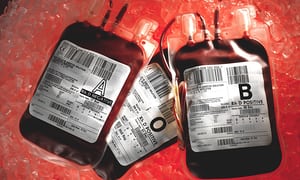 The announcement of a statutory inquiry into the contaminated blood scandal may be a major step towards uncovering the truth for those affected. But an inquiry into historical events has its own unique challenges and potential pitfalls. Before it even commences, can the Government ensure the inquiry retains the confidence of victims, families and the public?
Historical events
As Jim Duffy explains here, the scandal goes back to events of the 1970s and 80s. Around 7,500 patients suffering with haemophilia were treated within the NHS with contaminated blood products from the United States and elsewhere. Many died and many remain terminally ill. Since then, many of the victims and families have been left dissatisfied by the government’s response. Can the inquiry resolve their concerns?
Given the length of time since the events in question, it is no longer enough to narrowly examine the facts of what happened to individual victims. Time is no healer when spent in the dark. Rather, more questions require answers, emotions become fraught, and distrust is entrenched. Wider issues have come to the fore. In particular, as former-MP Andy Burnham stated in Parliament, there is a belief that there has been a “criminal cover-up on an industrial scale”. Earlier inquiries suggest there is a delicate path to tread.
Another £192 million?
Continue reading →
Like this:
Like Loading...
9 November 2017 by Matthew Hill
 Independence and public inquiries – why you need it and how you can lose it
There is a scene in “Yes Minister” in which the beleaguered Jim Hacker is contemplating a public inquiry into the latest failing of his department. He warily suggests to his Permanent Secretary, Sir Humphrey Appleby, that perhaps the judge chairing the inquiry could be leant on to come up with a favourable outcome. Sir Humphrey is outraged at this violation of the separation of powers. Surely the Minister wasn’t serious? After all, wouldn’t it be better to appoint a judge who didn’t need to be leant on in the first place?
Jim Duffy’s recent post on the Contaminated Blood Inquiry – and the importance of an inquiry being independent and being seen to be independent – brought this encounter to mind. The ever more frequent calls for a ‘judge-led inquiry’ must be a source of both pride and concern to the judiciary. Pride as ‘judge-led’ is a synonym for a forensic, thorough and above all independent tribunal to assess the matter in question. We will come to the concern later.
Times have changed since the careers of Hacker and Sir Humphrey. The Inquiries Act 2005 contains provisions intended to secure and display the suitability and impartiality of those charged with conducting a statutory inquiry (see in particular s.8 and 9). When it comes to appointing a judge, the Act provides that the minister must consult with the Lord Chief Justice or another relevant senior member of the judiciary (s.10). Sir Humphrey would be disappointed.
Continue reading →
Like this:
Like Loading...
7 November 2017 by Jim Duffy
Adam Wagner acted for victims of the Blood Contamination scandal in a proposed Judicial Review of the refusal to hold an inquiry. He is not the author of this post
Amid the blizzard of news stories circling Westminster on Friday, it would have been easy to miss an announcement of considerable significance to victims of the contaminated blood scandal and their families.
In a written statement to Parliament, Damian Green confirmed that the inquiry into the scandal – announced by the Prime Minister in July – will take the form of a UK-wide, statutory inquiry.
Not only that, it will no longer be set up by the Department of Health (DoH), but by the Cabinet Office. Campaigners for the victims and their families had boycotted talks with Downing Street, arguing that the DoH would have a conflict of interest, due to the need for the inquiry to investigate the actions of health officials.
However, there was yet more disappointment and frustration over the continued failure to appoint an inquiry chair or to announce terms of reference.
Continue reading →
Like this:
Like Loading...
27 October 2017 by Rosalind English

Detention and the common European Asylum System – Alasdair Henderson and Suzanne Lambert
The highlights of the Public Law Seminar given by members of 1 Crown Office Row are now available for podcast download here or from iTunes under Law Pod UK, Episodes 13, 14 and 15. For ease of reference the following three posts set out the introductions to each of the presentations and the case citations.
For non-Apple devices the podcasts are available via the Audioboom app.
Click on the heading for PDF copies of each of the presentations.
Issues:
- Detention in UK pending transfer to another Member State;
- Detention in another Member State pending transfer to the UK;
- Risk of detention in another state as grounds for resisting transfer.
Continue reading →
Like this:
Like Loading...
27 October 2017 by Rosalind English

Inquests and Article 2 ECHR – Caroline Cross and Suzanne Lambert
The highlights of the Public Law Seminar given by members of 1 Crown Office Row are now available for podcast download here or from iTunes under Law Pod UK, Episodes 13, 14 and 15. For non-Apple devices the podcasts are available via the Audioboom app.
For ease of reference the following three posts set out the introductions to each of the presentations and the case citations. Click on the heading for PDF copies of each of the presentations.
Introduction
Article 2 ECHR has had a profound impact upon coronial law, no more so than in relation to deaths in custody/detention and mental health deaths.
This talk will cover the following topics: mental health inquests; terrorism inquests (and inquiries); and detention inquests. Through these lenses, we will examine a number of developments in coronial law over the past 18 months and draw out relevant themes.
We discuss a number of cases in relation to mental health and detention inquests.
Case references in podcast
P v Cheshire West and Chester Council [2014] UKSC 19
R (on the application of Ferreira) and HM Senior Coroner for Inner London South, King’s College Hospital NHS Foundation Trust, the Intensive Care Society and the Faculty of Intensive Care Medicine and Secretary of State for Health and Secretary of State for Justice [2017] EWCA Civ 31
Austin v UK (2012) 55 EHRR 359
Tyrrell v HM Senior Coroner County Durham and Darlington [2016] EWHC 1892 (Admin)
R (Tainton) v HM Senior Coroner for Preston and West Lancashire [2016] EWHC 1396 (Admin)
R (Hamilton-Jackson) v Assistant Coroner for Mid Kent and Medway [2016] EWHC 1796 (Admin)
R (Scarff and Ors) v Governor HMP Woodhill and Secretary of State for Justice [2017] EWHC 1194 (Admin)
Like this:
Like Loading...
26 October 2017 by Rosalind English
The first episode from the Public Law Seminar given by members of 1 Crown Office Row is now available for podcast download here or from iTunes under Law Pod UK. Look for Episode 13: Tackling radicalisation through the civil courts.
For non-Apple devices the podcasts are available via the Audioboom app.
For ease of reference the following three posts set out the introductions to each of the presentations and the case citations. Click on the heading for PDF copies of each of the presentations.
Introduction
The Civil Courts have now been involved in cases of radicalisation brought before them by local authorities for very nearly three years (we are approaching the third anniversary of the first case). What was then innovative is now reasonably well-established (see President’s Guidance on Radicalization Cases in the Family Courts (8 October 2015) and the judgment of Hayden J in London Borough of Tower Hamlets v B [2016] EWHC 1707.
Concern was stirred originally by the spectre of significant numbers of people travelling to Syria to demonstrate their support for ISIS or the Al Nusra Front. This problem is not novel as 80 years ago Britain and Ireland were similarly fixated with the problem of volunteers departing for Spain to fight on both sides in the Civil War. A portrayal of the indoctrination of school age children to fight in that war even seeped into popular culture courtesy of Muriel Spark’s novel, The Prime of Miss Jean Brodie. The current situation is complicated by the relative ease of international travel, the tactics and targets used by extremists and the fact that the UK has already experienced domestic terrorism inspired by international examples.
The number of UK nationals travelling to Syria may have fallen but reports in 2016 of significant numbers of youths travelling from Kerala to Syria show that the problem has not fallen away and is truly international.
Continue reading →
Like this:
Like Loading...
23 October 2017 by Adam Wagner
 I am speaking at two events in the next couple of weeks, both of which will take a look at a question I have been thinking about quite a bit recently: “where next for human rights?”. Hope to see you there!
–
Saving Human Rights
How communications has become a key front in the battle for human rights in the UK and worldwide
Presented by: Oxford Lawyers Without Borders and Oxford University Amnesty International
This Thursday 26th October, Pembroke College, Oxford, 5pm-6:15pm
–
Is it Time For Social Rights?
I am honoured to be giving the keynote at for the wonderful Advocacy Project at their AGM
Thursday 2 November, 2pm – 4pm, Regent Hall, 275 Oxford Street, London
Like this:
Like Loading...
23 October 2017 by Guest Contributor

“The law of vicarious liability is on the move” proclaimed Lord Phillips in the last judgment he delivered as President of the Supreme Court: Various Claimants v Catholic Child Welfare Society [2012] UKSC 56, (“the Christian Brothers case”). In a judgment recently handed down by the Supreme Court in the case of Armes (Appellant) v Nottinghamshire County Council (Respondent) [2017] UKSC 60, His Lordship has been proved correct.
Continue reading →
Like this:
Like Loading...
22 October 2017 by Rosalind English
 ARB v IVF Hammersmith Ltd [2017] EWHC 2438 – read judgment
The claim for over £1 million taken by a father against an IVF clinic for failing to notice that his signature on the consent form had been forged has been widely reported in the press. In the latest Law Pod UK podcast Rosalind English discusses the case with David Prest. Whilst the McFarlane principle defeated the financial claim, Jay J had some stern words to say about the actions of the mother and the procedures of the clinic.
Episode 12 of Law Pod UK is available for free download from iTunes.
Like this:
Like Loading...
20 October 2017 by David Hart KC
 Benkharbouche & Anor v Foreign & Commonwealth Office [2017] UKSC 62, 18 October 2017 – read judgment
If you work for an embassy in London and are not a UK national, you cannot sue your employing state when you get unfairly dismissed. But if you enter a commercial contract with the same embassy, you can sue them.
This is the conundrum which faced the Supreme Court, who decided that the former result, although laid down by statute, was incompatible with Article 6 of the ECHR.
The SC’s sole judgment was by Lord Sumption, with whom the other justices agreed. It is a tour de force of international (rather than human rights) law, because therein lay the key issue.
Continue reading →
Like this:
Like Loading...



Recent comments