Category: In the news
23 November 2016 by Jonathan Metzer
 Armes v Nottinghamshire County Council [2016] EWHC 2864 (QB) – read judgment
In a nutshell
The right of a claimant to name the people who abused her prevailed over the rights of the perpetrators and others to private and family life.
The claimant, Natasha Armes, applied to set aside an anonymity order granted at the start of a previous trial to protect the identities of witnesses accused of physically and sexually abusing her in foster care.
Mr Justice Males undertook the balancing exercise between the rights to private and family life under Article 8 of the European Convention on Human Rights and the right to freedom of expression under Article 10.
Freedom of expression won the day. Males J lifted the anonymity order, accepting that since most of the allegations had now been proven anonymity was no longer justified.
Continue reading →
Like this:
Like Loading...
21 November 2016 by Thomas Beamont

In the news
The rights of people with disabilities in the UK have come under scrutiny recently by both the Supreme Court and a UN Committee. On 9th November, the Supreme Court handed down judgment in a case concerning the ‘bedroom tax’. This judgment comes days after the UN Committee on Rights of Persons with Disabilities criticised the UK’s treatment of people with disabilities under recent welfare reforms, finding “grave and systematic violations of the rights of persons with disabilities.”
Continue reading →
Like this:
Like Loading...
20 November 2016 by Rosalind English
 JS (Disposal of Body), Re [2016] EWCH (Fam) (10 November 2016) – read judgment
A great deal has been written about this case but few of the headlines reflect the humanity and sensitivity of the decision, which may not be ground breaking nor precedent setting, but reflects how the law should respond to individual wishes if those play out in a way that cannot harm anyone else. Post-mortem cryonics may have a certain morbid ring, but it is a matter of individual choice, provided the resources are there to pay for it. As the judge observed, it was
no surprise that this application is the only one of its kind to have come before the courts in this country, and probably anywhere else. It is an example of the new questions that science poses to the law, perhaps most of all to family law.
Background facts and law
Peter Jackson J was faced with an application from JS, a 14 year old cancer patient whose condition had become untreatable. After researching the diminishing options available to her, JS had come across cryonics, the freezing of a dead body in the hope that resuscitation and a cure may be possible in the distant future. The science ofcryopreservation, the preservation of cells and tissues by freezing, is now a well-known process in certain branches of medicine, for example the preservation of sperm and embryos as part of fertility treatment. But whole body cryopreservation has not been achieved in any mammal species, largely due to the difficulties of reviving brain tissue. As the judge said,
cryonics is cryopreservation taken to its extreme.
Only three organisations in the world provide this service, one in the United States being involved in this case. The cost is about ten times as much as the average funeral. Although JS’s family is not well off, her grandparents had raised the necessary funds. Whatever anyone may think of this procedure, there was no doubt about JS’s intelligence and her capacity to make this decision. She wrote, in response to asking to explain why she wanted “this unusual thing done”:
I’m only 14 years old and I don’t want to die, but I know I am going to. I think being cryo-preserved gives me a chance to be cured and woken up, even in hundreds of years’ time. I don’t want to be buried underground. I want to live and live longer and I think that in the future they might find a cure for my cancer and wake me up. I want to have this chance. This is my wish.”
Continue reading →
Like this:
Like Loading...
17 November 2016 by Guest Contributor

The election of Donald Trump as the next US President has shaken our faith in democracy and is a serious blow to the cause of human rights in the US and around the world. President-elect Trump’s campaign was a repudiation of the political and social progress made under his predecessor. It was an explicit threat to those who are vulnerable – whether because of their religion, race, gender, sex, sexual orientation, or physical abilities. Trump’s election, an ‘American tragedy’, comes at the end of a year in which the values that are said to underpin civic society in the US and Europe have come under significant threat.
When President-elect Trump’s inauguration takes place early next year he will seek to set the tone in the Western hemisphere, and across the globe, for the rest of this decade. It is clear, even before we address specific policies or world-views, that we will miss the grace and poise of President Obama. These are qualities that President-elect Trump revels to reject. We are unlikely to hear an affirmation of rights such as that President Obama made with the alliterative triad of Seneca Falls, Selma, and Stonewall.
What then, for human rights, in the time of Trump?
Continue reading →
Like this:
Like Loading...
17 November 2016 by Dominic Ruck Keene
After the lynch mob of outrage stirred up by the recent Divisional Court ruling on Article 50, it is a brave judge indeed who would say anything in public about the question of whether and how Parliament (i.e. the legislature) needs to approve the notification of the European Council under Article 50 of the UK’s intention to leave the EU.
Baroness Hale was therefore perhaps pushing the envelope of bold courage to make a speech in Malaysia on 7 November and refer to that precise issue before the Supreme Court have heard the case.
Continue reading →
Like this:
Like Loading...
16 November 2016 by Jim Duffy
 Amid a level of scrutiny unprecedented in the Supreme Court’s seven-year history, that is a headline unlikely to make it into tomorrow’s tabloids.
Nevertheless, as Lord Wilson explains in Hesham Ali (Iraq) v Secretary of State for the Home Department [2016] UKSC 60:
“Today is an important day in the life of our court. For it is the first occasion upon which either we or our predecessors in the House of Lords have had occasion to address the interface between the power of the Secretary of State to deport a foreign criminal and the latter’s ability to resist deportation by reference to his right for respect for his family life under article 8 of the ECHR.”
Continue reading →
Like this:
Like Loading...
14 November 2016 by Guest Contributor
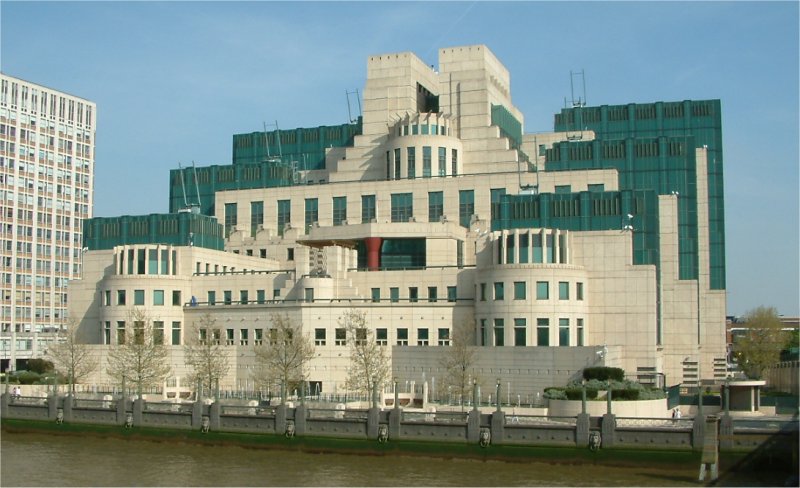 Oversight of the Intelligence Services is a matter of enormous public importance, as counter-terrorism powers are enhanced to combat a pernicious and persistent threat.
A recent Report by the Intelligence Services Commissioner, Sir Mark Waller, assisted by Oliver Sanders of these Chambers, dispels some misconceptions about contact between the intelligence services and Michael Adebolajo, one of 2 men convicted of murdering Fusilier Lee Rigby[1]. It also shines a light on how HMG applies its policy on the treatment of detainees held overseas – in Adebolajo’s case, by a Kenyan partner counter-terrorism unit in 2010. Not all of the Report’s findings make comfortable reading for the Intelligence Services.
HMG’s policy was, and remains, never to assist, condone, encourage, solicit or participate in any form of mistreatment of detainees. The 2010 Consolidated Guidance to Intelligence Officers on the Detention and Interviewing of Detainees Overseas[2], is intended to guide UK personnel who work with overseas agencies where, by definition, they are unlikely to be in total control of the situation in which detainees are held.
Continue reading →
Like this:
Like Loading...
11 November 2016 by Rebecca King
Today, Friday 11th November, sees National Pro Bono Week drawing to a close. At 1 Crown Office Row, our members, at their own and the clerks’ discretion, undertake a number and range of cases without charging or at reduced rates for their work. As legal aid has been cut, this enables our barristers to take on cases that otherwise would not be heard.
Here’s a review of some of the most interesting cases that 1 COR members have taken pro bono over the past year.
Jim Duffy is a member of the Court of Appeal’s pro bono scheme, where barristers represent litigants in person before the Court of Appeal across a broad spectrum of practice areas.
This week Jim has been acting pro bono (instructed by AvMA) for the family of an elderly man whose dementia was apparently “unmasked” by general anaesthetic used during routine surgery. He died six months later following a series of falls in care homes and at hospital.
New tenant Rhoderick Chalmers also undertook instruction from AvMA to represent a family pro bono in Scarborough in September.
Suzanne Lambert, who has a broad civil law practice with experience in both public and private law matters, has done a First Tier Tribunal (Immigration) appeal on behalf of a Bangladeshi single mother who has been in the UK for 10 years and has 2 children. The appeal was brought on procedural and Article 8 grounds. They succeeded and the Home Office is required to reconsider her application for discretionary leave. This was a Bar Pro Bono case.
Suzanne has also taken on a pro bono case before the Privy Council in December. She will be led by James Badenoch QC in relation to an unlawful prosecution claim. The matter relates to the deemed possession of firearms under Trinidad & Tobago legislation.
Rachel Marcus, a barrister specialising in healthcare matters, has been acting on behalf of the family of James Phelan. James was found dead in May 2016 outside the hospital where he been being treated. The 42 year old man had decided to take his own detox from alcohol and was taken to A&E suffering from hallucinations. There was a widely publicised police search and campaign to find him but sadly he was found by the dual carriageway near to the hospital a week later, deceased.
There have been three pre inquest reviews, but no inquest is in sight yet. The family are still waiting for answers from the hospital and the police. Rachel continues to support their inquiries and work towards some resolution for the family.
This shows some of the range and variety of pro bono work taken on by our members.
For pro bono enquiries for our London barristers please email mail@1cor.com.
For pro bono enquiries for our Brighton barristers please email clerks@1cor.com.
Rebecca King
Marketing
Rebecca.king@1cor.com
Like this:
Like Loading...
10 November 2016 by Rosalind English
 The Interim Executive Board of X School v Chief Inspector of Education, Children’s Services and Skills [2016] EWHC 2813 (Admin) – read judgment
The principal issue in this application for judicial review was whether a mixed school unlawfully discriminated against its male and/or female pupils by making “parallel arrangements” for their education in the same building or by applying a regime of “complete segregation” for all lessons, breaks, school clubs and trips. There was no evidence that either girls or boys were treated unequally in terms of the quality of the education they received (in the sense of one sex receiving a lower quality of education than the other).
This case raises a point of general public importance as to the true construction and application of key provisions in the 2010 Equality Act. As the judge observed, it was a point which had not arisen before, and so should be answered on “a first principles basis, applying standard interpretative tools to the language, policy and objects of the statute.”
Continue reading →
Like this:
Like Loading...
9 November 2016 by Fraser Simpson

Photo credit: The Guardian
Beggs, Re Judicial Review, [2016] CSOH 153 – read judgment.
The refusal to allow a Scottish prisoner to purchase a laptop for use in prison has been successfully challenged in the Outer House of the Court of Session. However, the Outer House decision focused on the flawed decision making process as opposed to the substantive conclusion reached by prison authorities.
by Fraser Simpson
Background
In 2001, the petitioner was convicted of murder and sentenced to life imprisonment. Whilst in prison, the petitioner, Mr Beggs, made a number of requests to be allowed to purchase a laptop. Mr Beggs intended for this laptop to be used to prepare responses to his lawyers in connection to a number of civil and criminal court actions in which he was involved. Additionally, Mr Beggs intended for the laptop to be used for educational purposes. However, each request made by Mr Beggs was refused.
This issue had been raised as early as 2002. The Scottish Prison Complaints Commissioner had stated that Mr Beggs “is a highly educated, intelligent man whose literacy is excellent”. The formal recommendations stemming from the Commissioner’s consideration of the matter was that Mr Beggs should be provided with a word processor and a printer to assist with his legal casework. However, no such access was forthcoming. As a result, Mr Beggs raised a first set of judicial review proceedings. Such proceedings were halted prior to the first hearing after the authorities agreed to provide computer facilities and a printer. This arrangement between Mr Beggs and the authorities at HMP Peterhead did not operate smoothly. Mr Beggs was allowed to access a communal laptop provided by the prison. However, another prisoner was often using this laptop. As a result, Mr Beggs made a request for permissions to have his own personal laptop.
Scottish Policy on personal laptops
The Governors and Managers Action Notices 84A of 1998 and 15A of 1999 (“GMA 1998” and “GMA 1999”) are the relevant policy documents covering prisoner ownership of computers/word processors. Under GMA 1998 there was a prohibition on prisoners in closed establishments from owning such devices (which would include laptops). However, GMA 1999 relaxed this position and allowed a prisoner to own a laptop in “exceptional cases” if “compelling reasons” had been shown. Additionally, there was the need to demonstrate that any security concerns could be adequately addressed.
This scheme for ownership of laptops operated separately from the various schemes allowing prisoners to access prison-owned laptops. The relevant protocol was most recently updated in March 2013. It only afforded prisoners access for legal work and required completion of a written application form. Access would not be provided unless the individual could show “real prejudice to his case” if access were restricted. Additionally, resources were limited as prisons only owned a certain number of laptops (which cost £1,000 to purchase). All in all, the scheme for accessing prison owned laptops was very restrictive and of little practical use.
Requests for a laptop
Mr Beggs initial request to the governor of HMP Peterhead was refused. Whilst recognising that “compelling circumstances” under GMA 1999 existed to depart from the general ban of laptops contained in GMA 1998, the governor refused the request due to the fact that the protocol for accessing communal computer equipment adequately met Mr Beggs’ needs.
Mr Beggs made a number of similar requests following this initial refusal. All requests were unsuccessful and often referenced the fact that the ability to access a communal laptop was sufficient.
In March 2014, having been moved to HMP Edinburgh, the petitioner made another request to be allowed a laptop. Again, he emphasised that a laptop was necessary to allow him manage the vast amount of legal documents that had amassed from various legal actions and also to allow him to further his academic interests. The governor of HMP Edinburgh refused this request. This time, Mr Beggs’ request was refused due to a failure to show that “exceptional circumstances” justifying the provision of a laptop existed as required under GMA 1999. The governor also noted that there were other individuals in the prison who were able to manage their cases without utilising a laptop.
It is this decision of March 2014 that the petitioner sought to have judicially reviewed.
Outer House Decision
Lord Malcolm began his decision by considering the relevant policy documents. As discussed above, GMA 1998 and 1999 established a system that required the individual to show “compelling circumstances” to justify departing from the general ban on prisoners in closed establishments owning laptops and that the relevant security concerns could be addressed. Lord Malcolm noted that only one individual had previously applied for a personal laptop, namely the man convicted of the Lockerbie bombings, Abdelbaset Ali Mohmed al-Megrahi. he had been allowed a laptop. Accordingly, it was clear that the relevant security concerns could be addressed.
Further, the existence of prison-owned laptops was irrelevant. The protocol allowing access to communal laptops existed independently of the scheme for personal laptops under GMA 1998 and 1999. The “very restrictive” prison laptop protocol could not be relied upon as a justification for refusing a personal laptop (despite the fact that such reasoning had been adopted by numerous decision makers in response to Mr Beggs’ previous requests prior to March 2014).
In considering the specific refusal reviewed by Mr Beggs, that of March 2014, Lord Malcolm noted that the governor of HMP Edinburgh merely stated that the petitioner’s circumstances were not “exceptional” and therefore there was no need to provide a personal laptop. But Lord Malcolm, whilst not explicitly disagreeing with the conclusion, empathised with Mr Beggs. Due to a number of factors, including the early positive response of the Scottish Prisons Complaints Commissioner, the undertaking agreed in the context of the first judicial review proceedings, and the initial decision of the governor of HMP Peterhead that “compelling circumstances” existed, Mr Beggs could reasonably expect his position to be considered “exceptional”. A decision that all of the above, amongst other considerations, did not amount to “compelling circumstances” should be be afforded “a more considered, detailed, and reasoned response than anything provided [to Mr Beggs] so far”.
As a result, Lord Malcolm reduced the decision of March 2014 and all subsequent decisions.
Comment
Ultimately, this decision of the Outer House relates purely to the decision making process adopted by the prison authorities. It’s easy to have sympathy with Mr Beggs. Despite previous assurances and, at first glance, clear “exceptional circumstances” he was repeatedly refused permission to buy his own personal laptop. These refusals included no reasons which effectively prevented Mr Beggs from being able to assess the height of the hurdle he had to clear in order to be successful.
The result of this judgment is that the governor of HMP Edinburgh will have to consider Mr Begg’s request afresh. In considering the substantive question of whether Mr Begg’s should be allowed a laptop there appears a number of factors in favour of granting permission. First, Mr Beggs has always offered to pay for the laptop himself. Instead of costing the authorities money, this would actually result in less reliance being placed on the limited number of communal laptops provided by the prison. Secondly, there is clearly no insurmountable issues regarding security; Mr al-Megrahi was provided a laptop, and numerous prisoners use communal laptops under the relevant protocol whilst in closed establishments. Finally, it may appear inconsistent to allow prisoners to enjoy Xboxes and PlayStations, which can also potentially access wifi and are explicitly permitted, whilst refusing to allow Mr Beggs to purchase a laptop for legal and educational purposes.
Like this:
Like Loading...
7 November 2016 by Alasdair Henderson
Lee v. Ashers Baking Company Ltd – read judgment here. It is rare indeed for a court judgment to unite newspapers across the political spectrum in criticism, from the Guardian to the Telegraph (taking in veteran human rights campaigner Peter Tatchell on the way), but the so-called ‘gay cake’ case has achieved just that.
The Northern Ireland Court of Appeal upheld the decision of District Judge Brownlie that it was direct discrimination on the grounds of sexual orientation for the owners of Ashers Bakery to refuse to bake a cake saying ‘Support Gay Marriage’ on the basis that such a message conflicted with their deeply-held Christian beliefs about the nature of marriage.
As the Court of Appeal acknowledged, the basic facts of the case “might not suggest that it is a matter of any great moment“. The owners of the bakery, Mr and Mrs McArthur, cancelled the order quickly and politely, providing an immediate refund. The customer, Mr Lee, was able to obtain a suitable replacement cake very easily from another supplier. So why all the fuss? Well, as the Court explained, “those bare facts engage the crucial issue of the manner in which any conflicts between the LGBT community and the faith community in the commercial space should be resolved“. The case is therefore of much greater significance than a single order for cake, raising key questions about the scope of discrimination law and the appropriate level of protection for freedom of conscience in a plural society.
Continue reading →
Like this:
Like Loading...
3 November 2016 by Dominic Ruck Keene
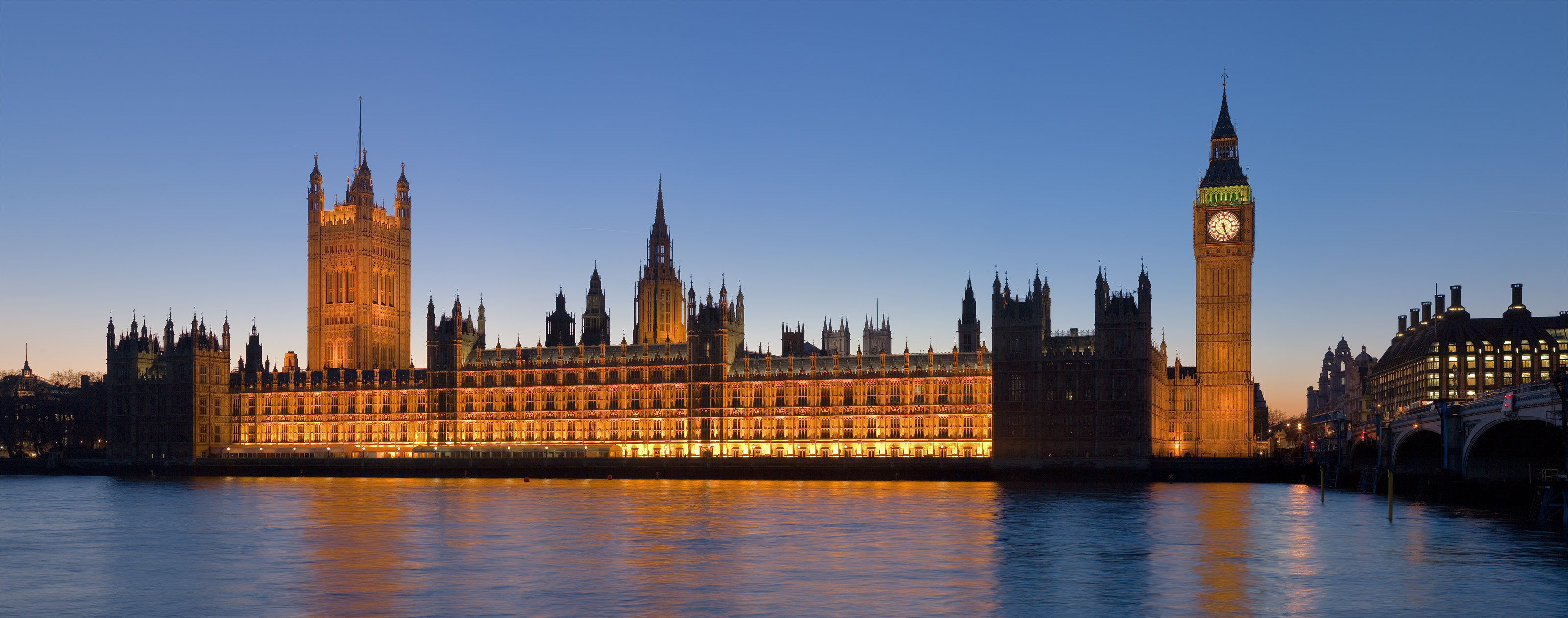
In R (on the application of Gina Miller and Ors) v The Secretary of State for the European Union, the High Court, in a masterly exposition of the principles of constitutional law and statutory interpretation, held that the Secretary of State did not have the power under the Crown’s prerogative to give notice under Article 50 and thereby begin the process under which the United Kingdom will leave the European Union.
Sir Oliver Cromwell said in 1644 “We study the glory of God, and the honour and liberty of parliament, for which we unanimously fight, without seeking our own interests… I profess I could never satisfy myself on the justness of this war, but from the authority of the parliament to maintain itself in its rights; and in this cause I hope to prove myself an honest man and single-hearted.” I suspect that Cromwell will be reading the judgment delivered today and chuckling (if he ever would do something so frivolous) with pleasure at the sight of the High Court roundly defending the sovereignty of Parliament.
Continue reading →
Like this:
Like Loading...
3 November 2016 by Guest Contributor
R (o.t.a. Johnson) v. Secretary of State for the Home Department [2016] UKSC 56
19 October 2016 – read judgment
Summary
In Jamaica in 1985, a baby was born to British father and a Jamaican mother. The child’s parents never married, and at the age of four he moved to the UK with his father. Under the law in force at the time, as an ‘illegitimate’ child, he did not automatically acquire British citizenship. If his mother had been the British parent, if his parents had ever married each other, or if an application had been made while he was a child, he would have become a British citizen. But he did not.
Two decades pass and the Secretary of State attempts to deport that individual, Mr Johnson, following a string of very serious offences. He appeals on the ground that deportation would be unlawful discrimination. If only his parents had been married, he would be a citizen and not be liable for removal.
The Supreme Court agreed. It held that there was no justification for someone in his position being liable to deportation simply through being born out of wedlock, which was an accident of birth over which a child has no control.
The Court also declared that a “good character” requirement for acquiring citizenship which applied only to illegitimate children was unlawfully discriminatory and incompatible with the Convention.
This judgment represents a further step towards equal rights for children born out of wedlock.
Continue reading →
Like this:
Like Loading...
3 November 2016 by David Hart KC
 R (ClientEarth No.2) v Secretary of State for Environment, Food & Rural Affairs, Garnham J, 2 November 2016, judgment here
This is all about nitrogen dioxide in air, an unwanted byproduct of the internal combustion engine. Its effect on UK mortality has been estimated at 23,500 deaths per year.
The long way of telling the story involves circling around 6 hearings, to the Supreme Court, twice, to the CJEU in 2014 (C404-13, my post here), and now to a trenchant judgment from Garnham J.
The short version is this.
The UK has been non-compliant with EU Directive 2008/50 on nitrogen dioxide (et al) over the last 6 years. Art.23 of the Directive requires that the period in which a state is obliged to remedy any non-compliance is to be “as short as possible”.
The UK Air Quality Plan (AQP) produced in 2015 (and responding to the 2nd Supreme Court judgment here) was simply not up to ensuring that urgently required result.
In so concluding, Garnham J started with the construction of Art.23, in response to a Defra argument that it imports an element of discretion and judgment.
Continue reading →
Like this:
Like Loading...
1 November 2016 by Rosalind English
 J (A Minor), Re [2016] EWHC 2430 (Fam) 21 October 2016 – read judgment
These proceedings concerned a care order sought by the local authority in respect of a seven year old boy (J). The judge found that his mother, who had separated from his father within 12 months of J’s birth, had caused her son significant emotional harm by making him live as a girl. The care order sought would allow J to continue to live with his father, in whose care he had flourished.
After the separation J had stayed with his mother. Contact arrangements broke down in 2013, causing the father to apply for a child arrangements order. Contact was consistently opposed by the mother. In 2013 and 2014, various agencies raised concerns with the local authority about the mother’s mental health and the fact that J was presenting as a girl. The mother had claimed that J was “gender variant” and should be allowed to go to school dressed as a girl. Social services were concerned that he was made to wear a pink headband and nail polish. And indeed at a hearing in November 2015, the mother told the court that J was living life entirely as a girl: he dressed like a girl and had been registered with a GP as a girl. She was reported to be considering sending the child to a gender reassignment clinic. As the judge said, when all this was properly analysed it was clear that “flares of concern were being sent from a whole raft of multi disciplinary agencies.
Each was signalling real anxiety in respect of this child’s welfare. Whilst it is, I suppose, conceivable that these referrals were considered individually, it is impossible to draw any inference other than that they were never evaluated collectively.
The local authority, concluded Hayden J, had “consistently failed” to take appropriate intervention where there were strong grounds for believing that a child was at risk of serious emotional harm. It was “striking” that the local authority had moved into wholesale acceptance that J should be regarded as a girl.
Once again, I make no apology for repeating the fact that J was still only 4 years of age.
Continue reading →
Like this:
Like Loading...



Recent comments