Monthly News Archives: September 2011
13 September 2011 by Rosalind English
 R(on the application of Sayed) v Secretary of State for the Home Department; R(on the application of Patel) v Secretary of State for the Home Department [2011] EWCA Civ 1059 – read judgment
The Court of Appeal has confirmed that Article 8 of the Convention need not necessarily be considered when deciding whether to grant an applicant indefinite leave to remain. The Immigration Rules the are the sole test of eligibility, and Article 8 cannot be used to modify them. They should therefore be read according to their natural and ordinary meaning.
In these conjoined appeals the appellants challenged decisions upholding the secretary of state’s refusal to grant them indefinite leave to remain in the United Kingdom. The first appellant, S, had sought indefinite leave to remain in the UK on the basis of long residence. The secretary of state refused his application on the basis that he had failed to show that he had completed 10 years continuous lawful residence in the UK because there had been two gaps in his residency. He was, however, granted leave to remain in the UK for a period of three years to complete a course of study. The second appellant, P, had sought indefinite leave to remain in the UK as the parent of a person, his son, present and settled in the UK under the Immigration Rules para.319. P’s application was refused on the basis that he did not meet the dependency requirements of para.317 of the Rules. In both appeals an issue arose as to whether the Rules should be construed so as to conform with Article 8.
Continue reading →
Like this:
Like Loading...
12 September 2011 by Adam Wagner
 This year’s festival of books and ideas, organised by my fellow blogger Rosalind English, takes place once again from 14 – 16 October in the elegant market town of Burnham Market in North Norfolk, with a great line up of speakers, and subjects ranging from the Tudor Queens to the life of Leo Tolstoy.
Sparks may fly when former brigadier Allan Mallinson challenges historian David Edgerton about his revisionist view of Britain in WWII Britain’s War Machine, and butterflies flutter with Patrick Barkham’s heroic efforts to spot all British species of Papilio in one year. On Saturday evening TV architectural historian takes attendees behind the scenes of the English Country house.
Tickets are a snip at £10 event from the Whitehouse Bookshop, 01328 730270. You can download the programme here or visiting the website here.
Like this:
Like Loading...
11 September 2011 by Adam Wagner
 It is ten years since the terror attacks of 11 September 2001. Like many people, I have been thinking back to where I was on that day.
Bizarrely, given what followed, I spent 11 September 2001 only a few miles away from the United States military base in Guantanamo Bay. I was travelling through Cuba with friends, and we had reached the Eastern tip of the island, the seaside village of Baracoa. We had even visited Guantanamo Bay’s entrance the previous day; it was a tourist attraction which the Lonely Planet guide billed as the place where you could find Cuba’s only MacDonalds.
Continue reading →
Like this:
Like Loading...
11 September 2011 by David Hart KC
 This time, not a post about the Environmental Information Regulations (posts passim), but a celebration of the North Norfolk sea, wind, and saltmarsh, by me and nearly 30 other kayakers on Saturday, in order to raise money for a fantastic website, Law and Your Environment.
Continue reading →
Like this:
Like Loading...
9 September 2011 by Adam Wagner

At odds
Updated | The Commission on a Bill of Rights has published its interim advice to Government on reform of the European Court of Human Rights. It has also published a letter to ministers on reform of the Court.
It is already clear that the Commission has its work cut out because of the strong opposing views of its membership. After the publication of its initial consultation document, one of the Commission’s members, Michael Pinto-Duschinsky instantly said “I strongly regret the terms in which it has been presented.” Now the Commission’s chairman has had to publish a letter alongside its advice so that the views of one member (is it Pinto-Duschinsky again?), that there should be some form of “democratic override” of the court’s decisions, could be incorporated despite them not being agreed to by the other members.
Continue reading →
Like this:
Like Loading...
9 September 2011 by Rosalind English
 When a Convention right arises in circumstances which also engage EU law, which court is the final arbiter of their meaning and application?
This is not as arcane a question as it appears, since in the UK many cases engage points of EU law, so Convention rights, which are part of the “general principles” of Community law, get in under the wire via the European Communities Act 1972. And in July the Council of Europe published the draft agreement for accession of the European Union as a signatory to the European Convention, which either adds another string to the ECHR bow, or a further layer of constitutional obscurity of interest only to international jurists, or both: – time will tell.
Continue reading →
Like this:
Like Loading...
8 September 2011 by Adam Wagner
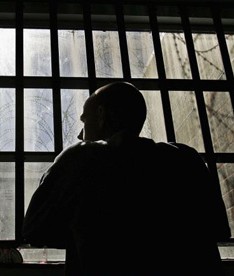 The Ministry of Justice has just released its annual report to the Joint Committee on Human Rights, Responding to human rights judgments.
The report is worth reading. It contains useful summaries of the 17 European Court of Human Rights judgments against the UK in 2010 and the government’s response to them.
But what is really interesting is what it says about prisoner votes, and the government’s 6-year delay in implementing the 2005 decision in Hirst (No.2) v UK.
Continue reading →
Like this:
Like Loading...
8 September 2011 by Rosalind English
 The 1,400 page final report on the inquiry into the death of Baha Mousa has been published today after three years of hearings. The chairman of the inquiry, retired Court of Appeal judge Sir William Gage, has condemned members of the 1st Battalion The Queen’s Lancashire Regiment for their “lack of moral courage” to report abuse and the use of banned interrogation after Mousa died of 93 injuries in British army custody in Basra in 2003.
Mousa was arrested with nine other Iraqi men after 1QLR soldiers found weapons, fake ID cards and military clothing at the hotel where he was working as a receptionist.
Continue reading →
Like this:
Like Loading...
8 September 2011 by Adam Wagner
 In a recent speech about the August riots, the Prime Minister bemoaned the “twisting and misrepresenting of human rights”. Unfortunately, this practice is common in the press, sometimes by accident but often by design.
One common accusation against the Human Rights Act is that it prevents the state deporting some foreign criminals. This is sometimes true; for example, the state cannot deport anyone if to do so would put them at a real risk of being tortured. But other law can be “to blame” too for preventing deportation of criminals, as was the case with Learco Chindamo, the killer of head teacher Philip Lawrence. This has not prevented the Daily Telegraph from again using his case as an example of human rights gone wrong.
Continue reading →
Like this:
Like Loading...
7 September 2011 by Adam Wagner
 The Justice Secretary Ken Clarke has announced that the ban on broadcasting in courts is to be lifted. Broadcasting will initially be allowed from the Court of Appeal, and the Government will “look to expand” to the Crown Court later. All changes “will be worked out in close consultation with the judiciary“.
Broadcasting in court is currently prohibited by Section 41 of the Criminal Justice Act 1925 and Section 9 of the Contempt of Court Act 1981. However, the rules do not apply to the Supreme Court, the UK’s highest court of appeal. Since it launched in October 2009, the court has been filming hearings and making the footage available to broadcasters. And, since May of this year, the court has been streaming the footage live on the Sky News website.
Continue reading →
Like this:
Like Loading...
5 September 2011 by Adam Wagner
 Two welcome additions to the legal blogosophere have just launched, both of which will be of interest to readers of this blog.
RightsNI (Twitter: @RightsNI) is a great looking human rights blog from Northern Ireland. It joins another fantastic blog from across the Irish Sea, the Human Rights in Ireland Blog. Rights NI already has a wide range of contributors including academics and human rights NGO workers. Recent posts include:
A little closer to home for the UK Human Rights Blog is
EUtopia Law (Twitter:
@Eutopialaw), produced by members of Matrix barristers’ chambers who also produce the fantastic
UK Supreme Court Blog. The first and so far only post (fair enough; they launched yesterday) is something we have certainly touched upon on this blog:
Like this:
Like Loading...
5 September 2011 by Graeme Hall
 Welcome back to the human rights roundup, a regular bulletin of all the law we haven’t quite managed to feature in full blog posts. The full list of links can be found here. You can also find our table of human rights cases here and previous roundups here.
by Graeme Hall
In the news
Monstering of the innocent?
Once again the Press finds itself in the spotlight, this time over the reporting of former suspect Rebecca Leighton and the deaths at Stepping Hill Hospital. Obiter J sets out the charges against Leighton and also the tests which prosecutors must meet for charges to remain in place. Describing the test as “quite remarkable” given the gravity of the charges, as well as noting the “immense damage” which has undoubtedly been done to Leighton’s reputation, Obiter J predicts a complex human rights challenge to the police’s conduct and calls for Parliament to take a closer look at the existing powers for charging people.
Continue reading →
Like this:
Like Loading...
4 September 2011 by Adam Wagner
 Updated | Next week will mark the 10th anniversary of the 11 September 2001 terrorist attacks. Despite the intervening decade, the states threatened by terrorism are still puzzling out the right balance between the powers of security services and the rights of suspected terrorists to due process.
Although terrorism is now mercifully low on the public agenda, the effects of 9/11 are still being felt across the legal system. The United Kingdom is soon to open an independent inquiry into the improper treatment of detainees by security services following the terrorist attacks. As things stand, the UK’s major human rights groups are boycotting the inquiry for fear that the government will be able to suppress evidence.
The intelligence services have now tightened up their policy towards interviewing detainees overseas, but one policy which is still in flux is the control order regime, soon to be succeeded by Terrorism Prevention and Investigation Measures (TPIMs).
Continue reading →
Like this:
Like Loading...
1 September 2011 by Rosalind English
 As of today, government or private institutions tasked with keeping people in custody will be accountable in criminal law if it can be shown that a “gross duty of care” has led to the death of a detainee.
In 2008 the Corporate Manslaughter and Corporate Homicide Act 2007 came into force, creating a new offence of corporate manslaughter. An offence is made out under this Act where a corporation’s activities cause a person’s death and the failure was because of a breach that falls far below what can reasonably be expected of the organisation in the circumstances.
Continue reading →
Like this:
Like Loading...

 R(on the application of Sayed) v Secretary of State for the Home Department; R(on the application of Patel) v Secretary of State for the Home Department [2011] EWCA Civ 1059 – read judgment


Recent comments