Monthly News Archives: April 2012
30 April 2012 by Isabel McArdle
 The Foreign and Commonwealth Office has launched the Human Rights and Democracy- The 2011 Foreign & Commonwealth Office Report, which aims to provide “a comprehensive look at the human rights work of the Foreign & Commonwealth Office (FCO) around the world in 2011“. The report makes for essential reading for anyone with an interest in human rights at the global level.
The report contains a section devoted to the Arab Spring, which it describes as being “about citizens demanding their legitimate human rights and dignity” and having “no single cause“. The report also comments on the role of human rights protection in safeguarding Britain’s national security and promoting Britain’s prosperity.
Continue reading →
30 April 2012 by Wessen Jazrawi
 Welcome back to the UK Human Rights Roundup, your weekly buffet of human rights news. The full list of links can be found here. You can also find our table of human rights cases here and previous roundups here.
In the news
A mixed bag this week: Theresa May remained in the news over Abu Qatada, a number of people blogged on the Brighton Declaration, and the issue of cameras and tweeting in court was high on the agenda. Closer to home, a team from 1 Crown Office Row is walking the London Legal Walk to raise funds for the London Legal Support Trust, the Free Representation Unit and the Bar Pro Bono Unit, so if you like the UKHRB, please sponsor them here.
by Wessen Jazrawi
Continue reading →
26 April 2012 by Matthew Flinn
 Raed Mahajna v Secretary of State for the Home Department IA/21/21631/2011 – read judgment
1 Crown Office Row’s Neil Sheldon appeared for the Secretary of State in this case. He is not the writer of this post.
Late last year I posted about the case of Mr Mahajna, a national of Israel (but of Palestinian origin), who appealed against a deportation order issued by the Home Secretary under section 3(5) of the Immigration Act 1971 on the basis that his presence in the United Kingdom was not conducive to public good. To recap:
- The Government has a list of “Unacceptable Behaviours” which forms the basis of its policy on excluding non-nationals under that provision. This includes actions expressing views which are likely to foster hatred and lead to inter-community violence in the UK (this policy was recent the focus of judicial consideration in the Court of Appeal in the case of R (Naik) v Secretary of State for the Home Department [2011] EWCA Civ 1546).
- The Home Secretary relied on five pieces of evidence which were said to fall within the scope of the list of unacceptable behaviours and justify her conclusion that Mr Mahajna’s presence was not conducive to the public good.
- The First-Tier Tribunal (FTT) examined those pieces of evidence. It concluded that the Home Secretary was entitled to conclude that they constituted examples of unacceptable behaviour and fell within the scope of the exclusion policy.
- Although the order to deport Mr Mahajna constituted an interference with his right to freedom of expression under Article 10 of the European Convention of Human Rights (ECHR) because he was unable to carry out a number of public speaking engagements in the UK, the views of the Home Secretary as to what was in the public interest were entitled to significant weight in assessing whether or not that interference was proportionate.
- The FTT ultimately concluded that the interference was proportionate, and the deportation order was upheld.
Continue reading →
25 April 2012 by Rachit Buch
Royal Brompton and Harefield NHS Foundation Trust, R (on the application of) v Joint Committee of Primary Care Trusts & Anor [2012] EWCA Civ 472 – Read judgment.
Marina Wheeler of 1 Crown Office Row appeared for the successful Appellant in this case. She is not the author of this post
When is reorganisation of healthcare services unlawful? When can consultation, rather than a final decision, successfully be challenged? These were the questions dealt with by the Court of Appeal in relation to the reconfiguration of paediatric heart surgery services. The Bristol Royal Infirmary scandal had left these services in need of change; the Court of Appeal found that there was nothing unlawful in the consultation process resulting in the Royal Brompton failing to be chosen as one of the two specialist centres in London.
Following the failures in Bristol that were subject to a public inquiry in 1998, there have been a number of reports on paediatric heart surgical care. This is an extremely specialised area of medicine. The recent trend has been for such specialist areas (another example is major trauma care) to become concentrated in fewer hospitals: the principle being that when professionals come into contact with such work more regularly they become better at it; spreading such cases wide and thin results in poor outcomes.
Continue reading →
24 April 2012 by David Hart KC

In his thought-provoking Guardian post Climate change is a human rights issue – and that’s how we can solve it, Olivier De Schutter, UN Special Rapporteur on the right to food, makes a case for human rights playing a radical new part in our response to climate change.
His argument involves a number of propositions:
(i) global climate talks have reached an impasse;
- yes, indeed, and from today’s perspective, there is no obvious way through that impasse;
(ii) carbon emissions cannot possibly be stalled or reversed until our politicians recognise that continued economic growth is inconsistent with a long-term climate change strategy;
- many would agree that we can spend a bit of time deck-chair re-arranging or limiting increases in emissions, but the time will come when the world economies have to stop growing;
(iii) if that direction is not going to come from our politicians, then
those political processes are clearly not fit for purpose.
Does this mean that democracy has failed, and must be sacrificed for authoritarian solutions? The solution may in fact be the polar opposite. A system where failing governance procedures are forced to think long-term does not necessarily require anti-democratic “climate tzars”. Instead, this revolution can be hyper-democratic and guided by human rights.
Climate change represents an enormous threat to a whole host of human rights: the right to food, the right to water and sanitation, the right to development. There is therefore huge scope for human rights courts and non-judicial human rights bodies to treat climate change as the immediate threat to human rights that it is. Such bodies could therefore take government policy to task when it is too short-sighted, too unambitious, or too narrowly focused on its own constituents at the expense of those elsewhere. Fossil fuel mining, deforestation, the disturbance of carbon sinks, and the degradation of the oceans are developments that can be blocked on human rights grounds.
Whoa, slow down!
Continue reading →
24 April 2012 by Rosalind English
 London Christian Radio Ltd and Anor v Radio Advertising Clearance Centre (RACC) and Secretary of State for Culture – read judgment
The High Court has upheld the refusal of the broadcasting regulator to clear an advertisement for transmission on the grounds that it offended the prohibition on political advertising.
This restriction, said Silber J, was a necessary one for the purposes of Article 10(2) of the European Convention. The purpose of the ban on political advertising was to protect the public from the potential mischief of partial political advertising, and the views of the advertiser, as to whether an advertisement was political, were irrelevant.
Continue reading →
23 April 2012 by Karwan Eskerie
 R (on the application of HA (Nigeria)) v Secretary of State for the Home Department [2012] EWHC 979 (Admin) – Read judgment
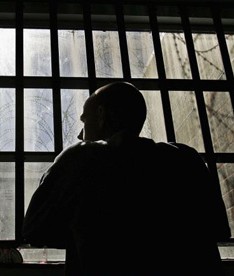
The detention of a mentally ill person in an Immigration Removal Centre (IRC) amounted to inhuman and degrading treatment and false imprisonment, and was irrational, the High Court has ruled.
Mr Justice Singh heard a judicial review application by a Nigerian National against decisions to continue to detain him under the UK Borders Act 2007 and the conditions of that detention. From August 2009, HA, an overstaying visitor and asylum seeker, was detained at various IRCs following his release from prison for a drug-related offence which triggered the automatic deportation provisions of the 2007 Act. His behaviour during detention became increasingly disturbed and strange. In January 2010, he was seen by a psychiatrist who recommended HA’s transfer to a mental hospital for assessment and treatment.
Continue reading →
22 April 2012 by Sam Murrant
 Welcome back to the UK Human Rights Roundup, your weekly bulletin of human rights news. The full list of links can be found here. You can also find our table of human rights cases here and previous roundups here.
In the news
This week saw the final Brighton Declaration, containing the Council of Europe states’ proposals for reform of the European Court of Human Rights, published, in extremely important news for the future of the Court. Other hot topics this week include perennial gems such as the deportation of terrorist suspects, the right to liberty, fears over the democratic legitimacy of judicial “lawmaking” and cameras in court.
Continue reading →
22 April 2012 by hrupdateadmin
 The Brighton Declaration is the latest Declaration (see previously the Interlaken and Izmir Declarations) on the future (and reform) of the European Court of Human Rights made on behalf of the 47 member States to the Council of Europe, the parent organisation for the ECHR. Brighton was the venue, the United Kingdom having taken up the six month Chairmanship of the Committee of Ministers of the Council of Europe late last year.
The workload problem
So what was agreed? A nine page, highly influential Declaration, building on Interlaken and Izmir, which is primarily concerned with trying to make the Court system sustainable, since it is overwhelmed by the number of applications reaching it. Over 150,000 applications are currently pending before the Court.
Continue reading →
20 April 2012 by Wessen Jazrawi
 Who should decide questions of human rights, Parliament or the courts? Is there a democratic deficit in human rights? If so, how do we go about addressing it? These are just some of the many questions asked at the conference hosted by the Arts and Humanities Council on Redressing the Democratic Deficit in Human Rights.
This conference took place on 17 and 18 April and was timed to coincide with the Brighton Conference. It was also timed to coincide with the launch of “Parliament and Human Rights”, research undertaken by Paul Yowell and Hayley Hooper, both of Oxford, and Murray Hunt, legal advisor to the Joint Committee on Human Rights (“JCHR”).
The conference featured a variety of eminent speakers and some lively debate took place over the two days. David Feldman, first legal advisor to the JCHR, kicked off events yesterday with the quote (I paraphrase): “there is nothing so dangerous in Parliament as when everyone agrees”, indicating that this is what took place following 9/11, and it was due to this that the JCHR’s mission became clear.
by Wessen Jazrawi
Continue reading →
20 April 2012 by Guest Contributor
 The Abu Qatada deadline debacle has once again thrust the European Court of Human Rights – and in particular, its relationship with the UK – into unwanted controversy just as European representatives gathered in Brighton to debate the Court’s future. This new fracas over the deportation of Abu Qatada has acted as a lightning rod for well-rehearsed criticisms of the Strasbourg Court – that it is a ‘meddling pseudo-judiciary’ and the enforcer of a villains’ charter.
A new report for the Equality and Human Rights Commission by researchers at London Metropolitan University and LSE, including myself, addresses these critiques as part of a broad analysis of the relationship between the UK and Strasbourg.
Among those interviewed for the report were the President of the European Court, Sir Nicolas Bratza; the outgoing Council of Europe Commissioner for Human Rights, Thomas Hammarberg; and, in the UK, Baroness Hale, Sir John Laws and Jack Straw, along with two members of the Commission on a Bill of Rights, Lord Lester QC and Anthony Speaight QC. The report also conducts a thematic analysis of case law, as well as examining wider literature and the voluminous statistics produced by the Court.
Continue reading →
19 April 2012 by Guest Contributor
 The BBC reported yesterday that there’s “doubt” about the deportation of Abu Qatada, following his arrest on Tuesday and now his appeal to the European Court of Human Rights – which the Home Secretary Theresa May says is out of time. So: is she right? Is the appeal out of time? How has the Home Office got into this apparent mess? And what if any difference does this appeal make?
The European Court’s judgment in Abu Qatada’s case was dated January 17th 2012. Of that there’s no doubt; and it’s irrelevant whether the government or anyone else was given notice of the judgment before, or received it later.
Continue reading →
18 April 2012 by David Hart KC
 Dudgeon Offshore Wind v. Secretary of State for Communities and Local Government et al, HHJ Waksman QC, hearing 23 March 2012, read judgment
Running a hearing can be difficult enough when you are sitting as a judge and are faced with parties in a civil case. At least then you have an agenda set by the legal documents (or pleadings) and your primary role as judge is to decide whether the points made by one or other side are good or bad. Sometimes you may be sorely tempted to suggest better ones, but usually you do not run parties’ cases for them. And if you do, it is obviously fair for you to tell both parties what is going through your mind. After all, there may be very good reasons why a party has not taken a point apparently advantageous to them. Anyway, you must give the other side the opportunity to deal with the point.
All the more difficult in an inquiry, of which a planning inquiry is a good example. Here you are not just the judge. Your job is to inquire into whatever you think is necessary to decide whether to let a scheme proceed. Much of the time, it is a bit like a civil case, with the local planning authority trying to uphold its grounds for refusal, and the developer trying to show why the grounds do not stack up. But then in many planning appeals you have the third or fourth dimension, a group or groups of (usually) objectors who are saying that there are additional grounds for refusing the scheme. Sometimes, these issues come out all tidily before the inquiry starts, because the objectors have asked to participate in the formal procedures (Rule 6 parties in the jargon). On other occasions, it all just comes out as the inquiry proceeds.
This case is a good example of the latter.
Continue reading →
18 April 2012 by Adam Wagner
 In its short two-year life, the UK Human Rights Blog has forged a prominent role at the forefront of comment and opinion on all aspects of Human Rights law, and as I blogged recently, we have now surpassed 1,000,000 hits.
To celebrate this success we are holding a seminar on the evening of Wednesday 25 April 2012. I will be analysing the impact of the Brighton Conference on the future of the European Court of Human Rights and there will be presentations from other 1 Crown Office Row barristers providing an update on Immigration Law and assessing whether the Strasbourg Courts have gone too far in relation to Article 8.
CPD has been applied for and debate, drinks and snacks will of course follow.
There are still a few places remaining to attend this event. If you are currently practising within the field of human rights law and would like to attend please contact Charlotte Barrow, Marketing Executive at 1 Crown Office Row on charlotte.barrow@1cor.com stating your name and organisation. Places will be allocated on a first-come-first-served basis.
18 April 2012 by Adam Wagner
 As the last hurrah of its Chairmanship of the Council of Europe, beginning today the United Kingdom is hosting the High Level Conference on the Future of the European Court of Human Rights in Brighton. As delegates settle into their Eurostar seats on the way over, here are a few useful tips:
1. If you have forgotten sun cream, don’t worry! The weather forecast is terrible.
2. All of the important documents are on the Conference website, including the Conference Programme and the declarations from the last two such conferences: Izmir (2011) and Interlaken (2010). There is also a CoE press release. In case you need to refresh yourself on the CoE itself, the BBC has this useful profile.
3. The most important document is the draft Declaration which you are being asked to approve. The document has been the subject of frantic negotiations and you will no doubt receive an up to date version. In the meantime, here is a slightly out-of-date version which even has useful track changes to show what has changed since the UK’s first draft. The somewhat ugly buzz-word for the Conference will be subsidiarity.
Continue reading →



Recent comments