We use cookies to enhance your browsing experience. If you continue to use our website we will take this to mean that you agree to our use of cookies. If you want to find out more, please view our cookie policy. Accept and Hide [x]
Riots continued throughout the UK last week, sparked by the attack and murder of 3 children in Southport on July 29th. The riots have been linked to a widely circulated online rumour falsely identifying the perpetrator as a Muslim asylum seeker. UK Chief Executive for Amnesty International, Sacha Deshmukh, has stated the riots to be caused at root by “racism, Islamophobia and xenophobia”. Prime Minister Keir Starmer has called the rioting an “assault on the rule of law and the execution of justice” and made clear that those involved will not “be allowed to hide behind the legitimate right to protest”. The Crown Prosecution Service revealed on Friday via a post on X (formerly Twitter) that 159 individuals have been charged in connection with the “violent disorder” across the country, with a total of 741 arrests having been made. The news follows Justice Minister Heidi Alexander’s announcement that the process of opening 500 prison places for those involved in the riots is underway.
On Friday, the UK Government announced fresh sanctions against Belarus in response to ongoing human rights violations in the country. The sanctions have been announced on the four-year anniversary of the “deeply flawed” 2020 presidential elections in Belarus; elections which Foreign Secretary David Lammy stated have resulted in “over 40,000 citizens arrested on trumped up political charges, civil society and independent media trampled and a regime with no regard for democracy or human rights”. The Viasna Human Rights Center, a Belarusian NGO, claims that as of August 11, Belarus holds 1385 political prisoners including journalists and human rights activists. The new sanctions raise the total number against Belarus to over 200 individuals and entities. The announcement also revealed a funding package of £2.5 million to support human rights and civil liberties in Belarus.
In Other News
Unrest continues in Venezuela following the contested re-election of President Nicolas Maduro on July 28th. US Secretary of State Anthony Blinken has published a statement arguing that there is “overwhelming evidence” that the opposition leader, Edmundo Gonzalez Urrutia, was the true victor. The statement cites the fact that the opposition have published over 80 percent of the tally sheets from polling stations across Venezuela showing Urrutia to have won by an “insurmountable margin”, further corroborated by exit polls. The announcement of Maduro’s re-election sparked protests across the country which have continued into this week. In a press conference on Tuesday, Maduro announced that over 2229 individuals had been arrested in connection with the protests, calling those involved “terrorists”. In a press conference last week, a spokesperson for UN High Commissioner for Human Rights Volker Turk expressed concern over the “numerous cases of arbitrary detention”, including that of peaceful protestors, human rights defenders, children, and journalists. Amnesty International sent an open letter on Friday to the Prosecutor of the International Criminal Court calling for his “resolute and immediate action” against the crimes being committed under international law by Venezuelan authorities. Amnesty argue in the letter that the ongoing “tragedy is a consequence of the impunity for serious human rights violations and crimes against humanity that Maduro’s government has been committing for years.”
Reports have surfaced that in only two days last week, Iranian authorities executed a minimum of 29 individuals. The UN Office of the High Commissioner have verified that a further 38 people were executed in Iran over the course of July, raising the total for 2024 thus far to 345. The Office raised concerns in particular about the “lack of due process and fair trial standards”, with several executions occurring with “neither the prisoner’s family nor legal counsel being informed”. NGO Iran Human Rights has reported that 26 men were executed in a group hanging outside Ghezelhesar Prison – an execution the scale of which has been unparalleled since 2009. Amnesty have revealed that at least one of the prisoners executed in the spree was imprisoned in connection with the Woman Life Freedom protests that erupted following the murder of Mahsa Amini in 2022.
The Bulgarian Parliament passed an anti-LGBT amendment last Wednesday to the country’s education laws, banning the “propaganda, promotion, or incitement in any way, directly or indirectly, in the education system of ideas and views related to non-traditional sexual orientation and/or gender identity other than the biological one.” The amendment was passed by an overwhelming majority with 159 votes in favour and only 22 against. LGBT rights group Forbidden Colours have stated they believe the move represents Bulgaria “adopting tactics from Russia’s anti-human rights playbook”, a development they call “deeply troubling”. The organisation have also raised questions about the swiftness with which the amendment occurred, both readings occurring on a single day – raising “serious concerns about the legislative process and the intent behind such haste”. A spokesperson for the EU Commission told POLITICO last Thursday that while the EU is aware of the amendment, they were unable to comment. The spokesperson however reiterated that the Commission “remains steadfast in its commitment to tackling discrimination, inequalities and challenges faced by LGBTIQ individuals.”
In the Courts
Last Wednesday, the UK Supreme Court rejected Shamima Begum’s permission to further appeal the removal of her British citizenship. Ms Begum appealed on four grounds: trafficking, invoking Article 4 ECHR; deprivation of the right to make representations; a failure to ensure good community relations, required per s.149 of the Equality Act; and de facto statelessness. Permission to appeal was refused on all four grounds, concluding that “the grounds of appeal do not raise an arguable point of law”. In response to the ruling, Maya Foa, director of human rights NGO Reprieve, has stated that “exiling British nationals like Ms Begum is about politics, not the law”. The decision signifies the exhaustion of Ms Begum’s legal remedies in the UK. However, Ms Begum’s lawyers told the BBC that they intend to take the case to the European Court of Human Rights in Strasbourg.
The Dublin High Court found last week that the Irish Government’s treatment of asylum seekers breaches the EU Charter of Fundamental Human Rights. Mr Justice Barry O’Donnell stated in judgment that in failing to support the accommodation needs of applicants for asylum, “the State has breached the rights of those persons as provided for in Article 1 of the Charter of Fundamental Rights of the European Union” – the right to human dignity. It was held that central to respecting the human rights of asylum seekers is the maintenance of “an adequate standard of living which guarantees their subsistence and protects their physical and mental health where they do not have the means to provide for themselves”.The judgment has been welcomed by the UN Refugee Agency, who have now called on the Irish Government to take “immediate action”. The Court did, however, decline to grant the mandatory orders sought by the applicants, the Irish Human Rights and Equality Commission, on the basis that it was not satisfied that there was evidence the Government would ignore its obligations.
US federal judge Mark Walker ruled last Thursday in Claire v Florida DMS that Florida’s ban on transgender healthcare access for state employees violates their civil rights. Florida has had a categorical ban on coverage of healthcare for “gender reassignment or modification services or supplies” of state employees for decades, which has now been found to be in violation of Title VII of the Civil Rights Act of 1964 as a form of unlawful discrimination on grounds of sex since it denies transgender employees coverage for medically necessary treatment for gender dysphoria. Quoting a judgment from 2020, Judge Walker reiterated that “discrimination based on homosexuality or transgender status necessarily entails discrimination based on sex” as “the first cannot happen without the second”. The American Civil Liberties Union (ACLU) praised the judgment in a press release, with Staff Attorney Samantha Past stating that “discrimination has no place” in Florida. The ACLU “are hopeful that this decision will encourage a commitment from the state to treating members of the transgender community with the respect they deserve”.
The King’s Speech on Wednesday opened the first session of the new parliament, announcing 40 bills – the highest number announced in a King’s Speech since 2005. The bills announced included several relating to human rights, such as a Victims Bill, Mental Health Bill, and two draft bills – one on Race and Disability, predominantly concerning the right to equal pay, and another on Conversion Practices, seeking to ban conversion therapy. Several bills make provisions to combat violence against women and girls. A spokesperson for the Equality and Human Rights Commission responded to the announcements, welcoming the ‘positive developments for equality and human rights’, emphasising that the watchdog ‘stands ready to provide government and Parliament with advice as the detail of all the proposed legislation is developed’. In contrast, the organisation Human Rights Watch have suggested that the new Government’s vision ‘falls short’ in key areas, calling for ‘bolder action’ to secure better living standards for British citizens.
Last Tuesday, the United Nations Convention on the Rights of the Child (Incorporation) (Scotland) Act came into force, making Scotland the first UK country to incorporate the children’s rights charter into national law. While the UK Supreme Court ruled in 2021 that certain provisions of the original bill passed by the Scottish Parliament exceeded its legislative competence, subsequent amendments to the bill enabled a revised version to pass last December. Now that the Act is in force, all Scottish public authorities are under a direct legal duty to consider and promote children’s rights in policy decisions. The Act also improves children’s ability to enforce their rights in the courts. An announcement by the Cabinet Secretary for Social Justice reads: “The Act is a landmark piece of legislation that incorporates the UNCRC into Scots law, empowers our children and young people to claim their rights and will help to make Scotland the best place in the world to grow up”.
Following the new Government’s statement that the Rwanda Plan is ‘dead and buried’, £84 million of funding has been announced to ‘address the reasons for illegal migration’. The funding package will support projects in Africa and the Middle East in an attempt to ‘tackle illegal migration at source’. The announcement acknowledges the roots of illegal migration in conflict, climate change, and more, emphasising that the funding will be utilised to build resilience against such events. Initiatives are targeted towards skill-building, education, and employment. The funding will also support refugees hosted in countries within their home region with the aim of allowing their return home when conditions improve, as well as supporting reintegration of refugees in their home nations. Foreign Secretary David Lammy said: “Our package of up to £84 million will improve education, boost employment and build resilience to conflict and climate change across the Middle East and North Africa – to help bring down migration figures whilst improving lives for the world’s most vulnerable people.”
In Other News
As the Paris Olympics approach, the conversation regarding France’s hijab ban has resurfaced. Though originally announced in September 2023, the ban, prohibiting France’s athletes from sporting any form of religious headwear, has received fresh criticism in the form of a report published last week by Amnesty International. While Amélie Oudéa-Castéra – France’s Minister for Sport – stated that the ban has been imposed in line with the country’s principle of secularism, Amnesty have claimed the ban makes a ‘mockery’ of claims by the International Olympic Committee that Paris 2024 is the ‘first gender-equal Olympics’. The human rights organisation noted that the official Olympic Charter states that “the practice of sport is a human right. Every individual must have access to the practice of sport, without discrimination of any kind in respect of internationally recognised human rights within the remit of the Olympic Movement”, a sentiment they claim is in manifest contradiction with the hijab ban. “Amnesty International believes that when the world will be watching its athletes compete for medals and exercising their right to practice sport without discrimination, it should also cast a critical eye on the Olympics host country, which does not apply Olympic values to everyone”.
In the Courts
On Friday, the International Court of Justice published its Advisory Opinion in respect of the Legal Consequences arising from the Policies and Practices of Israel in the Occupied Palestinian Territory. The Court made several seminal conclusions, finding that:
Israel’s presence in the Occupied Territories is unlawful;
That Israel is under an obligation to therefore end its unlawful presence as soon as is possible;
That Israel is obliged cease all settlement activities and evacuate all settlers;
That Israel is obliged to make reparations for any damage eventuating from its unlawful presence;
And that all other States, alongside international organisations, are obliged not to assist the ongoing presence of Israel in the Occupied Territories, nor recognise it as legal.
The Court recalled its 2004 Advisory Opinion on the Legal Consequences of the Construction of a Wall in the Occupied Palestinian Territory, which found that Israeli settlements were established and maintained in breach of Israel’s international legal obligations. The Court expressed grave concerns that in the years since, the Israeli settlement policy has continued to expand. The Court noted that a variety of Israeli legislation and administrative measures relating to its occupation treated Palestinians differently without justification or legitimate aim. This finding led the Court to conclude that the Israeli regime in the Occupied Palestinian Territories constituted ‘systemic discrimination based on, inter alia, race, religion or ethnic origin’ in violation of a variety of international conventions. Vital to the Court’s determination was the finding of the ‘prolonged deprivation of the Palestinian people of their right to self-determination’, a right the Court viewed as ‘fundamental’. However, Judges Tomka, Abraham, and Aurescu issued a joint opinion stating that they could see ‘no legal connection whatsoever’ between the Palestinian right to self-determination over the territories and the extension of the illegality of Israel’s occupation. Judge Sebutinde’s dissenting opinion was the subject of discussion by legal commentator Joshua Rozenberg, who has expressed the view that litigation ‘will not bring peace to the Middle East’.
The European Court of Human Rights ruled on Thursday that the failure of Latvian authorities to bring charges for a homophobic hate crime constituted a breach of ECHR Articles 3 (prohibition of inhuman or degrading treatment) and 8 (right to respect for private and family life) in conjunction with Article 14 (prohibition of discrimination). Given that the assailant had admitted to police the use of homophobic slurs and personal homophobic beliefs that ‘clearly’ motivated the attack, the Court found that the proceedings brought against him, culminating only in a ‘manifestly lenient fine’, breached Mr Hanov’s human rights. The Court expressed the view that the actions of the Latvian authorities ‘fostered a sense of impunity for hate-motivated offences. […] Failure to address such incidents can normalise hostility towards LGBTI individuals, perpetuate a culture of intolerance and discrimination and encourage further acts of a similar nature’.
Since coming into power in the recent general election, PM Keir Starmer has announced that the Rwanda asylum scheme is “dead and buried”. The announcement was made as three claimants, known only as SM, SY and YXY, were challenging their imminent removal to Rwanda on a flight scheduled for 24 July. On 09 July, the High Court held a case management hearing in which barristers acting for the government confirmed that no removal flights to Rwanda were planned and the three individuals’ asylum claims would be processed in the UK. However, the barristers did not confirm the government’s wider position on the Rwanda policy, and the impact on asylum seekers whose claims were classified as inadmissible for processing in the UK under the Rwanda policy. The UN High Commissioner for Refugees has sent a list of recommendations to the new government. These include repealing the Illegal Migration Act 2023, resisting the “externalisation” of asylum processing to third countries, and streamlining the asylum process to tackle the backlog of asylum claims.
Despite media speculation and the urging of leading lawyers, the new government has not announced whether or not it will continue the UK government’s intervention in the International Criminal Court (ICC)’s decision regarding arrest warrants against Israeli PM Benjamin Netanyahu and Minister of Defence Yoav Gallant. The UK government seeks to argue that the ICC does not have jurisdiction over Israeli individuals because the Oslo Accords state that Palestine does not have criminal jurisdiction over Israeli individuals and so cannot delegate criminal jurisdiction over Israeli individuals to the ICC. The UK government does not recognise the State of Palestine. The ICC has given the UK government until 26 July to provide their full submissions.
In international news
Amnesty International has published a report analysing what it argues is a decline in protest rights in 21 European countries. The report argues that many European countries have been cracking down on protest rights through “the passing of repressive laws, establishment of onerous procedural obligations, imposition of arbitrary or discriminatory restrictions, racist policing and the use of unnecessary or excessive force against peaceful protestors, arbitrary interferences including the arrest, prosecution and imprisonment of protesters, as well as increasing use of invasive surveillance technology”. Amnesty International comments that those most impacted by these measures are groups already facing discrimination in society due to, among other things, race, religion or immigration status.
In the courts
The High Court has allowed University of Birmingham and University of Nottingham to evict Palestine solidarity protesters who had set up camps on university campuses. The court held that the protesters have no real prospect of establishing discrimination on the grounds of their beliefs, a breach of the public sector equality duty, a breach of section 43 Education (No.2) Act 1986 (which ensures freedom of speech in universities), or European Convention on Human Rights (ECHR) rights. The court held that there were many other ways in which the students could have chosen to protest and so the severity of the impact on their rights by removing the encampment “does not (by a significant margin) come anywhere close to outweighing the importance of the objective of the University being able to regain possession of its own land”. The court therefore gave the universities a summary possession order, which allows them to evict the protest camps without a full trial.
In W.W. v Poland, the European Court of Human Rights (ECtHR) held that the refusal to allow a transgender person to continue hormone therapy in prison amounted to a violation of her Article 8 right to a private life. Ms W.W. is a trans woman who was undergoing a gender reassignment procedure since 2019 while detained in prison. When she was transferred to a different prison in 2020, the head of the prison’s medical unit refused to allow her to continue hormone therapy without additional medical tests and failed to organise prompt appointments with specialist doctors. The ECtHR held that the freedom to define one’s gender identity is “one of the most basic essentials of self-determination” and the prison official’s requirement that Ms W.W. should undergo further consultations, after she had already started a beneficial course of treatment, was disproportionate in the circumstances. In the UK, the advocacy group TransActual is currently challenging the emergency ban on the use of puberty blockers as medication for trans children, arguing that the ban was based on the Secretary of State’s personal view rather than expert or medical evidence.
The impact of the Supreme Court’s decision in R (Finch) v Surrey County Council & Ors is already being felt. In ongoing litigation regarding the approval of a coal mine in Whitehaven, Cumbria, the Secretary of State for Housing, Communities and Local Government conceded the legal challenges. The Secretary of State admitted that an error was made as the downstream emissions caused by the inevitable burning of the extracted coal were not factored into the Environmental Impact Assessment. However, litigation may continue as the other defendant in the case, West Cumbria Mining, does not agree with the Secretary of State’s position.
An investigation by Liberty Investigates and Metro found that a number of UK universities have been providing intelligence on pro-Palestine student protesters to the police. The investigation described “varying degrees of cooperation and intelligence sharing” in correspondence between universities and police forces. A manager at Queen Mary University of London wrote to the police that “[w]e are monitoring closely the plans of the students in the encampment and will provide you with the details when they are known”. Universities named in the investigation said they were committed to protecting and encouraging free speech.
Student protesters are also facing challenges in the courts, with multiple universities seeking possession orders in order to evict pro-Palestine encampments from campus grounds. The University of Birmingham sought a possession order on Thursday. The defendant student argued that granting the University possession would be unlawful because it would discriminate against her protected philosophical beliefs and interfere with her rights to freedom of speech and freedom of assembly. The University argued that the occupation is not a mere expression of opinion, but is designed to interfere with the University’s activities, citing over £250,000 of costs incurred as a consequence of the encampment. Judgment has been reserved until a later date.
In other news, The Undercover Policing Inquiry started ‘Tranche 2’ hearings on Monday, entering a phase of the inquiry which covers the conduct and management of the Special Demonstration Squad between 1983 and 1992. The Metropolitan Police Service acknowledged wrongdoing during this period in its opening statement. The MPS described the fact that at least nine undercover officers engaged in “deceitful sexual relationships” during their deployments as “completely unacceptable” and apologised “for these failings and for the wider culture of sexism and misogyny which allowed them to happen”. The MPS also acknowledged that there was “unnecessary reporting” on groups which “did not present any risk of serious public disorder and were not engaged in any criminal or subversive activity”, including groups which were campaigning for police accountability.
In international news
On Tuesday the President of Sierra Leone, Julius Maada Bio, signed the Prohibition of Child Marriage Act into law, banning marriage with a child under 18. In 2021 UNICEF reported that 30% of women and girls in Sierra Leone married in childhood. Sierra Leone’s First Lady Fatima Bio, who was a victim of child marriage and championed the bill, described how child marriage “destroys [children] before they even know who they are”. She said there was no excuse not to comply with the law. The law has been welcomed by human rights campaigners as a historic step forward for the rights of the child inthe country.
In the courts
The US Supreme Court ruled by a 6-3 majority on Monday that a president has immunity from criminal prosecution for “official acts” when carrying out their constitutional powers. They remain liable for private conduct. Justice Roberts delivered the majority judgment, writing that the President must be able to “execute the duties of his office fearlessly and fairly” without the threat of prosecution. In a strong dissenting judgment Justice Sotomayor wrote that the president “is now a king above the law”. US President Joe Biden described the decision as setting a “dangerous precedent” which undermined the rule of law.
The Supreme Court of Kansas ruled on Friday that a state law banning the most common second-trimester abortion procedure violated the state’s constitution. Delivering the decision for the majority, Justice Eric Rosen wrote that the court stood by its 2019 decision that “the Kansas Constitution Bill of Rights protects a fundamental right to personal autonomy, which includes a pregnant person’s right to terminate a pregnancy”. Several nearby states including Texas, Oklahoma and Missouri banned abortion following the US Supreme Court’s decision to overturn the historic ruling in Roe v Wade, removing a right to abortion under the US Constitution. Kansas has become a destination where women living in those states can travel to obtain an abortion.
On Thursday, representatives from Liberty, Amnesty International, Human Rights Watch, and Inclusion London addressed journalists at a briefing in Westminster to call for politicians and the public to stay alert to human rights issues over the election campaign period. Warnings were given about the diminution in worker’s and migrant’s rights, among others, in recent years. Calls were made by multiple representatives for closer scrutiny of the potential implications of challenges to human rights frameworks such as the HRA and ECHR. “Human rights in the UK have too long been cast in political debate as an obstacle”, said Sacha Deshmukh, Chief Executive of Amnesty International. “In reality, they can provide solutions to the problems we face here, at home, and on the global stage”.
Several anti-racism campaigning groups, led by Action for Race Equality, published a manifesto last Friday in anticipation of Windrush Day calling for immediate reform to the Windrush Generation documentation scheme, claiming that the ongoing backlog is worsening the ‘unconscionable’ trauma inflicted upon the Windrush Generation. Government figures suggest over 50,000 individuals remain eligible for the scheme. Saturday saw the sixth annual celebration of Windrush Day, marking 76 years since the arrival of the HMT Empire Windrush in 1948 which carried hundreds of passengers arriving to the UK from the Caribbean. The Windrush Generation had been invited to Britain in an attempt to help rebuild the post-war economy. In April 2018, the ‘Windrush scandal’ begun when it emerged that the Home Office had kept no formal records of Commonwealth individuals living in the UK with indefinite leave to remain granted under the Immigration Act 1971. This had resulted in those affected being unable to prove their legal migration status, thus unable to access healthcare, housing, employment and more. Many were deported or threatened with deportation. Windrush Day celebrates the legacy of these individuals in the UK and the contributions they have made to British society. The event was marked on Saturday with exhibitions, block parties, and other festivities.
In Other News
Last Wednesday, the UN Office for Human Rights published a thematic report finding that Israeli airstrikes in Gaza might have ‘systematically violated’ several of the ‘fundamental principles of international humanitarian law on the conduct of hostilities’. ‘When committed intentionally’, the report states, ‘such violations may amount to war crimes’. Six events were investigated as emblematic incidents of attack since October 7th. The events were assessed across the principles of distinction, proportionality, and precautions in attack, finding breaches of all. ‘The scale of human death and destruction wrought by Israel’s bombing of Gaza since 7 October has been immense’, the report states. The report calls for immediate, thorough, and transparent investigations into all allegations of violations of international human rights law, noting that the time already elapsed since several of the incidents assessed ‘calls into serious question the compliance of [Israeli Government] processes with international obligations to ensure prompt and effective accountability’. Israeli representatives have condemned the report. Israel’s mission to the UN have stated they believe “the only objective of this thematic report is to lambast and single-out Israel, while further shielding Hamas terrorists in Gaza”.
Last Tuesday, Thailand’s Senate passed a marriage equality bill by an overwhelming majority during an ad-hoc parliamentary session, the bill garnering the approval of 130 out of 152 members. The country will become the first in Southeast Asia to recognise same-sex marriage and the third Asian jurisdiction after Taiwan and Nepal. The bill will become effective following royal assent and 120 days after publication in the Government Gazette. The bill will amend Thailand’s Civil and Commercial Code to replace gendered words like ‘man’ and ‘woman’ with gender neutral alternatives such as ‘individual’. Mookdapa Yangyuenpradorn, representative for the human rights organisation Fortify Rights, has called the bill’s passage a “triumph for justice and human rights”. She added that “marriage equality is fundamental to human dignity, and it is essential that Thailand protects these rights without delay or discrimination.”
In the Courts
The Namibia High Court has held that the common law offences of sodomy and unnatural sexual offences are unconstitutional as they amount to unjustified discrimination against the LGBT community. As such, the impugned laws have been declared invalid. In June 2022, Namibian LGBT+ activist Friedel Dausab launched a legal challenge to the constitutionality of Namibia’s anti-homosexuality laws. The laws criminalise same-sex sexual activity – the campaign sought to see the laws held unconstitutional and to overturn the convictions made under them. In May 2023, the Namibian Supreme Court recognised same-sex marriages lawfully entered abroad, after which the parliament passed bills restricting marriage to those of opposite sex. Support or promotion of same-sex unions was criminalised with up to 6 years imprisonment. Dausab has celebrated the judgment, stating: “I feel elated. I’m so happy. This really is a landmark judgment, not just for me, but for our democracy.”
A report published by the Runnymede Trust on Monday found that black people, and especially black children, are subject to disproportionate rates of strip search across all police forces in England and Wales. The report analysed Home Office data and concluded that black children are 6.5 times more likely to be subject to a strip search than white children, and black adults 4.7 times more likely than white adults. The report described how strip searching “can be severely traumatic and humiliating, particularly for children, with long lasting effects such as anxiety, depression and lower educational attainment”. The Home Office recently a conducted a consultation on proposed reforms to police codes of practice which would create additional protections for children subjected to strip searches, noting that “too often… safeguarding and child protection have not been sufficiently prioritised”. The government’s response is due to be published later this year.
It was the seventh anniversary of the Grenfell Tower fire on Friday. Campaigners from the Infected Blood scandal and the COVID-19 Bereaved Families group joined Grenfell United to call for a national body to scrutinise the implementation of recommendations made following inquests and inquiries. Campaigners said that the lack of oversight prevents lessons being learnt that could prevent future deaths, and argued that if recommendations made by a coroner following the 2009 Lakanal House fire had been implemented, the Grenfell Tower fire might have been avoided. The Grenfell Tower Inquiry’s Phase 2 Report will be published on 4 September.
In international news
Lord Sumption warned that Hong Kong is “slowly becoming a totalitarian state” in an opinion piece explaining his decision to resign from the territory’s final court of appeal. Lord Sumption explained that the “oppressive atmosphere” and challenges such as the “illiberal” national security legislation meant he felt it was no longer realistic to hope that he could help sustain the rule of law as an overseas judge. The government of Hong Kong issued a statement refuting Lord Summation’s comments, stating that any claims of political pressure on judges were “totally baseless”.
In the courts
On Tuesday the European Court of Human Rights handed down judgment in Nealon and Hallam v United Kingdom. Nealon and Hallam spent 17 and 7 years in prison respectively before their convictions were quashed by the Court of Appeal. The two were denied compensation for the time they had spent in prison because they could not prove their innocence beyond all reasonable doubt. The pair argued that once their convictions had been overturned, they should be presumed innocent and that the compensation scheme therefore violated their Article 6 rights. The Court found that Article 6 was engaged, but a majority of 12 found that that the UK’s compensation rules did not breach the presumption of innocence in practice. The Court held that requiring an applicant to show beyond all reasonable doubt that they did not commit an offence was not tantamount to a positive finding that they did the commit the offence. Further, the majority commented that it was not the Court’s role to “determine how States should translate into material terms the moral obligation they might owe to persons who had been wrongfully convicted”. A dissenting judgment of five judges noted that the test in the UK was “virtually insurmountable” and revealed a “highly undesirable attitude towards the presumption of innocence”.
A group of UN experts has expressed concern regarding deception and exploitation faced by migrants coming to work in the UK. The Seasonal Worker Scheme, put in place to cover labour shortages in the UK, has been criticised for creating conditions where deception, exorbitant recruitment fees, debt bondage, undignified living conditions and potential deportation are widespread. This is due to some recruitment agencies charging illegal recruitment fees, sometimes thousands of pounds, so migrants are frequently in debt even before they arrive in the UK. Once in the UK, they may find that there is no work for them, fewer hours than promised, or they may be forced to work in exploitative conditions. As the migrants’ visas do not allow them to change employers within the UK, many remain working under such conditions due to the threat of being removed from the UK. The Bureau of Investigative Journalism has published recent investigations on the hostile and humiliating working conditions faced by agricultural labourers and care workers, arguing that in some cases their treatment amounts to modern slavery.
In international news
President Biden has imposed strict new measures allowing officials at the Southern Border of the USA to turn away asylum-seekers. The Presidential proclamation states that when border crossings exceed the threshold specified by the President (currently 2,500), asylum seekers who cross the border without permission will be barred from applying for asylum until border crossings drop below a seven-day average of 1,500. The American Civil Liberties Union (ACLU) has announced that they are launching a legal challenge against the new measures.
Ambassador Ammar Hijazi, representing Palestine, has sought to intervene in the case between South Africa and Israel at the International Court of Justice (ICJ). He argues that Palestine has the right to intervene under Article 62 of the Statute of the ICJ, which provides that a state may apply to intervene in a matter if it considers that it has a legal interest in the case. He also argues that the Palestinians whom he represents are permitted to intervene under Article 63, which provides that every state notified of a pending convention concerning them is permitted to intervene in proceedings. The United Kingdom does not recognise Palestine as a state.
The US House of Representatives has passed a Republican bill, with support from some Democrats, sanctioning the International Criminal Court (ICC), after ICC Prosecutor Karim Khan KC applied for arrest warrants for, among others, Israeli officials PM Benjamin Netanyahu and Yoav Gallant. The Illegitimate Court Counteraction Act sanctions any foreign individual who directly or indirectly aids the International Criminal Court in investigating, arresting, detaining or prosecuting “protected persons”, that is US officials or the officials of US allies, in particular Israel. The sanctions laid out in the bill are property blocking (i.e. blocking and prohibiting all transactions in all property and interests in property), imposing inadmissibility for visas to the USA and revoking current visas to the USA.
In the courts
The High Court has held that the Home Secretary acted unlawfully in failing to provide immigrants with documentary proof that they are legally in the UK under “section 3C leave”. Section 3C of the Immigration Act 1971 provides that where an immigrant with leave to remain in the UK makes an immigration application before the expiry of their leave, they may lawfully remain in the UK until the Home Office finishes processing their application. Processing for some immigration applications can take months or even up to a year. During this time immigrants lawfully in the UK can have difficulty accessing employment, housing or medical care due to the “compliant environment” policies. The High Court held that the Home Secretary’s failure to provide digital evidence of section 3C leave was irrational: “The underlying purpose of the legislative framework is that there should be a hostile and unwelcoming environment for those who are unlawfully present and so who are undocumented. The corollary of this is that those who are lawfully here should not face the hostile environment. That can only happen if they are documented”. The court also held that the Home Secretary breached his duties to promote the welfare and best interests of children impacted by section 3C leave.
The High Court has reiterated once again that duties under the Children Act 2004 apply to all children in the UK, no matter their immigration status, and Kent County Council cannot derogate from these duties with regard to unaccompanied asylum seeking children. Kent County Council is struggling to accommodate the many unaccompanied children arriving in the UK after travelling across the English Channel. Until last year the unaccompanied children were accommodated in hotels, until the High Court found that this practice was unlawful. Kent County Council issued what it called “section 11 notices” stating that it cannot safely accommodate the children. The court held that there was no statutory basis for using section 11 of the Children Act 2004 to “attenuate” duties to accommodate children under the act; instead section 11 “imposes an obligation to make arrangements for ensuring that Kent CC’s functions are discharged having regard to the need to safeguard and promote the welfare of children”.
The High Court in Belfast struck down sections 12 to 16 of the Justice (Sexual Offences and Trafficking Victims) Act (Northern Ireland) 2022 on Friday. The law granted automatic anonymity to people who are suspected of sexual offences where an allegation has been made to the police or the police have taken any step to investigate the offence, prohibiting reporting which might lead to the identification of such an individual. The prohibition only applied pre-charge, but continued for the duration of the suspect’s life and 25 years thereafter. The court found that the law was incompatible with Article 10 of the European Convention on Human Rights and did not strike a fair balance in public interest journalism cases, observing that “[p]ublic interest journalism serves a vital role in any democratic society”.
In other UK news, three prisoners were taken to hospital on Friday after disorder at HMP Parc, a prison in Bridgend, Wales, which is run by the private security firm G4S. 10 prisoners have died at the prison in the last 3 months. Families of those who have died at the prison had held a demonstration outside the prison earlier the same week. Deborah Coles, the director of INQUEST, said that “[t]he level of death and disorder at prisons like this one shows a complete failure of accountability on the part of government and a loss of control by ministers”.
In international news
An investigation by the Guardian and the Israeli-based magazines +972 and Local Call has alleged that Israel has deployed its intelligence agencies to surveil, pressure, and allegedly threaten senior ICC staff over the last decade. Israeli intelligence allegedly captured the communications of ICC officials, intercepting phone calls, messages, emails and documents. Yossi Cohen, the former head of Israel’s foreign intelligence agency, allegedly threatened Fatou Bensouda, a former ICC prosecutor, in an attempt to pressure her to abandon a war crimes investigation relating to Israel’s activities in the occupied Palestinian territories. The Guardianreported that Cohen’s activities were “authorised at a high level and justified on the basis that the court posed a threat of prosecutions against military personnel”. Cohen is alleged to have told Bensouda “[y]ou don’t want to be getting into things that could compromise your security or that of your family”. A spokesperson for Israel’s prime minister’s office said in response to the investigation: “The questions forwarded to us are replete with many false and unfounded allegations meant to hurt the state of Israel.”
On Wednesday the European Commission announced that it considers that there is no longer a clear risk of a serious breach of the rule of law in Poland, and that it would therefore close the Article 7 procedure against Poland which had been triggered in 2017. Article 7 of the Treaty of the European Union allows the EU to suspend certain rights from a member state. The Commission stated that Poland has introduced legislative and non-legislative measures to address concerns regarding the independence of the judiciary, and that it will continue to monitor the implementation of those measures. Human Rights Watch criticised the move as premature.
In the courts
On Thursday the High Court of the Hong Kong Special Administrative Region delivered its verdict for 16 of the 47 activists and former politicians known as the ‘NSL 47’. The 47 were charged with conspiracy to subvert state power under the new National Security Law, which was passed in March this year. 14 were convicted, with two being acquitted and the remaining 31 pleading guilty. The charges arose from the activists’ participation in an unofficial primary election in July 2020 to pick opposition candidates for the 2020 legislative elections, which were then postponed. The UK said the case showed how authorities have used the controversial National Security Law to “stifle opposition and criminalise political dissent”. A spokesperson for Beijing’s Office for Safeguarding National Security defended the prosecution, saying the OSNS supported the Hong Kong judiciary’s decision to “punish acts and activities endangering national security according to the law, with no tolerance for any interference by external forces in the rule of law in Hong Kong.”
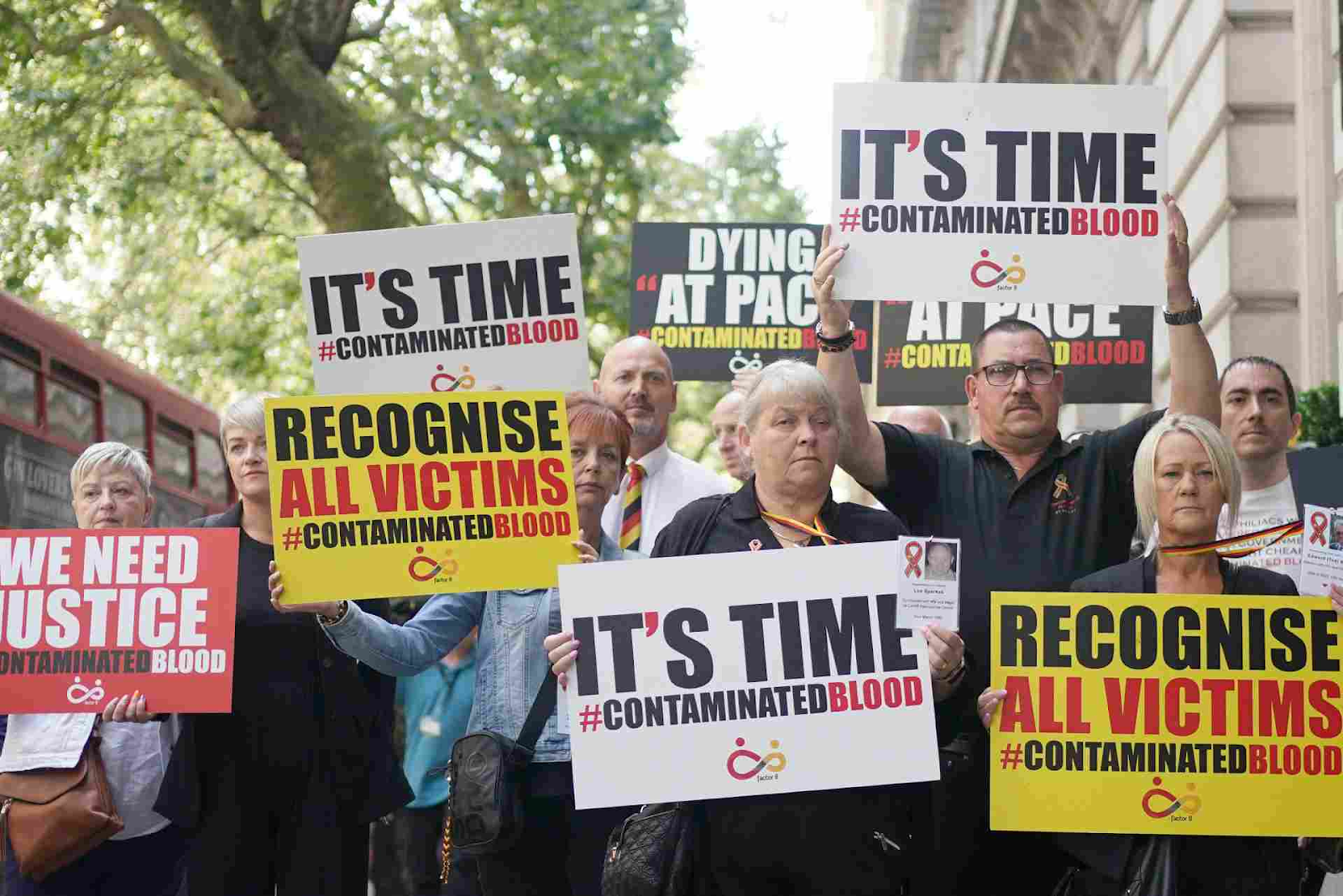
On 20 May, the Infected Blood Inquiry, chaired by Sir Brian Langstaff, published its final report. The inquiry was set up to investigate the circumstances in which people treated by the NHS were given infected blood and blood products, in particular since 1970. The inquiry found that more than 3,000 deaths of NHS patients are attributable to infected blood, blood products and tissue. The report details the many failures which lead to this situation, such as flaws in the licensing regime which allowed for the import of high risk blood products, failing to ensure sufficiently careful donor selection, and treating children at Treloar School (a school for disabled children) with risky commercial blood products for research. The report is strongly critical of the lack of candour shown by the NHS and successive governments. Patients were told they were receiving “the best treatment available” and some documents were deliberately destroyed. The report makes many recommendations to memorialise what happened to the people affected and to ensure lessons are learnt, yet the “principal recommendation” is that “a compensation scheme should be set up now”.
The Post Office (Horizon System) Offences Act received the Royal Assent this week. This is the final stage of the legislative process after the Bill was examined by the House of Lords. The Bill will quash the convictions of hundreds of postmasters and others in England, Wales and Northern Ireland who were charged with fraud, theft and other offences due to the faulty Post Office Horizon IT system. The “Post Office scandal” is also the subject of an inquiry led by Sir Wyn Williams. Paula Vennells, the former CEO of the Post Office Ltd, gave evidence to the inquiry this week. Recordings of the inquiry hearings are available here.
International Criminal Court (ICC) Prosecutor Karim Khan KC made an application for arrest warrants for Yahya Sinwar (Head of the Islamic Resistance Movement “Hamas” in the Gaza strip), Mohammed Diab Ibrahim Al-Masri (Commander-in-Chief of the military wing of Hamas), Ismail Haniyeh (Head of the Hamas Political Bureau), Benjamin Netanyahu (Prime Minister of Israel), and Yoav Gallant (Minister of Defence of Israel). Khan KC submits that the Hamas officials bear criminal responsibility for war crimes and crimes against humanity including extermination, murder, hostage taking, rape and other acts of sexual violence, and torture. He submits that the Israeli officials bear criminal responsibility for war crimes and crimes against humanity including starvation of civilians as a method of warfare, wilful killing or murder, and intentionally directing attacks against a civilian population. Khan KC also published a report by international law experts arguing, amongst other things, that the ICC has jurisdiction over the alleged war crimes in Israel/Palestine. The International Court of Justice (ICJ) has reaffirmed its previous measures and published further provisional measures in relation to South Africa’s case against Israel. One of the most significant measures requires Israel to “immediately halt its military offensive, and any other action in the Rafah Governorate, which may inflict on the Palestinian group in Gaza conditions of life that could bring about its destruction in whole or in part”.
A French court found three Syrian officials guilty of crimes against humanity and sentenced to life imprisonment in absentia. The three men are Ali Mamlouk (former Head of the National Security Bureau), Jamil Hassan (Head of the Air Force Intelligence Directorate) and Abdel Salam Mahmoud (former director of the directorate’s investigations branch). The Syrian officials were charged with complicity in the arrest, torture and deaths of Patrick Dabbagh and Mazzen Dabbagh, both of whom had dual French-Syrian nationality. This case is the first time officials working for the regime led by Bashar al-Assad have been tried and convicted in France.
In the courts
The High Court held that protest regulations, that gave the police the power to intervene in protest where they caused “more than minor” disruption, were ultra vires (i.e. beyond the legal power of the Secretary of State). The regulations were ultra vires because the primary legislation gave the police the power to intervene where there was “serious” disruption. The Secretary of State used a Henry VIII power (i.e. a delegated power which allows them to amend primary legislation using secondary legislation) to define “serious” as “more than minor”. The court held that this was ultra vires because “as a matter of ordinary and natural language ‘more than minor’ is not within the scope of the word ‘serious’”. The regulations were also unlawful because they were introduced after an procedurally unfair and one-sided consultation procedure, in which the Secretary of State consulted law enforcement agencies but failed to consult with the public or any body or organisation who may have opposed the proposed regulations.
Julian Assange has been given permission to appeal his extradition to the USA to face trial for conspiracy to obtain and disclose national defence information, after the US government failed to provide diplomatic assurances requested by the High Court. The court’s ex tempore judgment was reported on by Joshua Rozenberg KC (hon) here.
This week Israel began military operations in Rafah, a town at the south of the Gaza strip where 1.4 million displaced Palestinians are sheltering. Israeli PM Benjamin Netanyahu stated that the military offence was necessary to secure the return of Israeli hostages and eliminate Hamas: “military pressure on Hamas is an essential condition for the return of our hostages”. The announcement was met with a mixed response from the US, a key Israeli ally. At the beginning of the week Lloyd Austin, the US defence secretary, stated that the Biden administration paused the supply of weapons to Israel. Later in the week the US state department released a declassified report (available here), which stated that Israel is likely to have violated international law but confirmed that the supply of weapons would continue. South Africa is once again seeking provisional measures from the International Court of Justice, arguing that the Rafah offensive “gives rise to new facts that are causing irreparable harm to the rights of the Palestinian people in Gaza”. In a separate development, the UN General Assembly voted to enhance the status of the Palestinian delegation within the UN, and to urge the Security Council to give “favourable consideration” to full Palestinian membership.
Human Rights Watch has published a report about the conflict in Sudan, alleging that the Rapid Support Forces (RSF) and related militias are carrying out ethnic cleansing in West Darfur. The report details the RSF’s attacks in El Geneina, the capital of West Dafur between April and November 2023. Human Rights Watch alleges that the attacks constituted a campaign of ethnic cleansing against the Massalit and other non-Arab populations in the area, and included serious abuses including torture, rape and looting. The report cites a UN panel of experts which estimated that approximately 10,000 to 15,000 people were killed in El Geneina in 2023. A UNHCR explainer about the origins of the conflict is available here.
The Ministry of Justice has introduced a pilot scheme providing free counselling and 24/7 support for jurors following difficult cases. The pilot will run for ten months in 15 courts; jurors will be provided six free counselling sessions alongside a 24/7 telephone helpline with support advice and information. The current jury trial rules which allow for majority verdicts have come under scrutiny this week as research by Appeal, the miscarriage of justice charity, has shown that at least 56 miscarriages of justice in England and Wales occurred where the jury was split. The charity has published a report calling for a requirement of jury unanimity for criminal convictions and a repeal of s.8 of the Contempt of Court Act 1981, which guarantees the confidentiality of jury deliberations, so that the fairness of jury trials can be more closely studied.
The government has accepted a proposal put forward by Lord Reed, President of the UK Supreme Court and the Judicial Committee of the Privy Council (JCPC) to enable overseas judges to sit on the JCPC. Lord Reed commented that the change would “enhance the quality of the Privy Council’s decision-making” by providing “the benefit of the opinion of a judge with direct experience of local conditions”.
Israeli PM Benjamin Netanyahu reaffirmed Israel’s rejection of Hamas’ offer for the return of all hostages in return for the end of the war in Gaza on Sunday, claiming such a deal would ‘leave Hamas intact’ and render ‘the next October 7th only a matter of time’. The main conflict at the peace negotiations underway in Cairo appears to remain whether a ceasefire would be temporary, allowing Israel’s recovery of hostages, or permanent, as Hamas insists it must be. The US State Department also announced this week that they have found five Israeli military units committed gross violations of human rights before October 7th. Israel claims corrective action has been taken against four of these units but has declined to give any details. A spokesperson for the Secretary of State declined to confirm whether the US would therefore impose sanctions in line with the Leahy Law, which prohibits the US from allocating funds to foreign forces in the light of evidence of gross human rights violations. Netanyahu has said that ‘to impose a sanction on a unit in the IDF [would be] the height of absurdity and a moral low’ at a time when Israeli soldiers ‘are fighting the monsters of terror’. Meanwhile, the International Court of Justice ruled in a 15-1 vote last week against imposing emergency measures to prevent military exports from Germany to Israel in a case brought by Nicaragua earlier this year. However, the Court also declined to throw out Nicaragua’s case in its entirety, taking the opportunity to ‘remind all states of their international obligations relating to the transfer of arms to parties to an armed conflict, in order to avoid the risk that such arms might be used’ to violate international law.
The debate about single-sex spaces has come back into the news this week after ministers have announced plans for transgender patients in hospital to be treated in separate wards. The Government argues that there is a legitimate basis for the segregation and that the measures are proportionate, thus preventing the policy from breaching the Equality Act 2010 or the ECHR. The proposals have received cross-party support; Sir Keir Starmer supported the proposition in an interview on ITV’s Good Morning Britain, stating that his views on gender ‘start with biology’. The plans were announced amongst other changes proposed to the NHS Constitution, including the right for patients to insist on having their care carried out by a doctor of their biological sex. Kemi Badenoch, Minister for Women and Equalities, has made a call for evidence of organisations who are ‘wrongly stating that people have a legal right to access single-sex spaces according to their self-identified gender’. The information will be used to ensure the Government’s ‘policymaking continues to tackle any confusion’ so that ‘single-sex spaces can be maintained’. Matthew Taylor, chief executive of the NHS Confederation, pleaded following the announcement that the NHS not be ‘dragged into a pre-election culture war’. Ministers should rather be ‘bringing forward detailed plans to improve NHS funding, tackle the decrepit state of many health facilities and get waiting times for A&E care and planned surgery back to the levels that existed when the constitution was first published in 2012.’
In the Courts
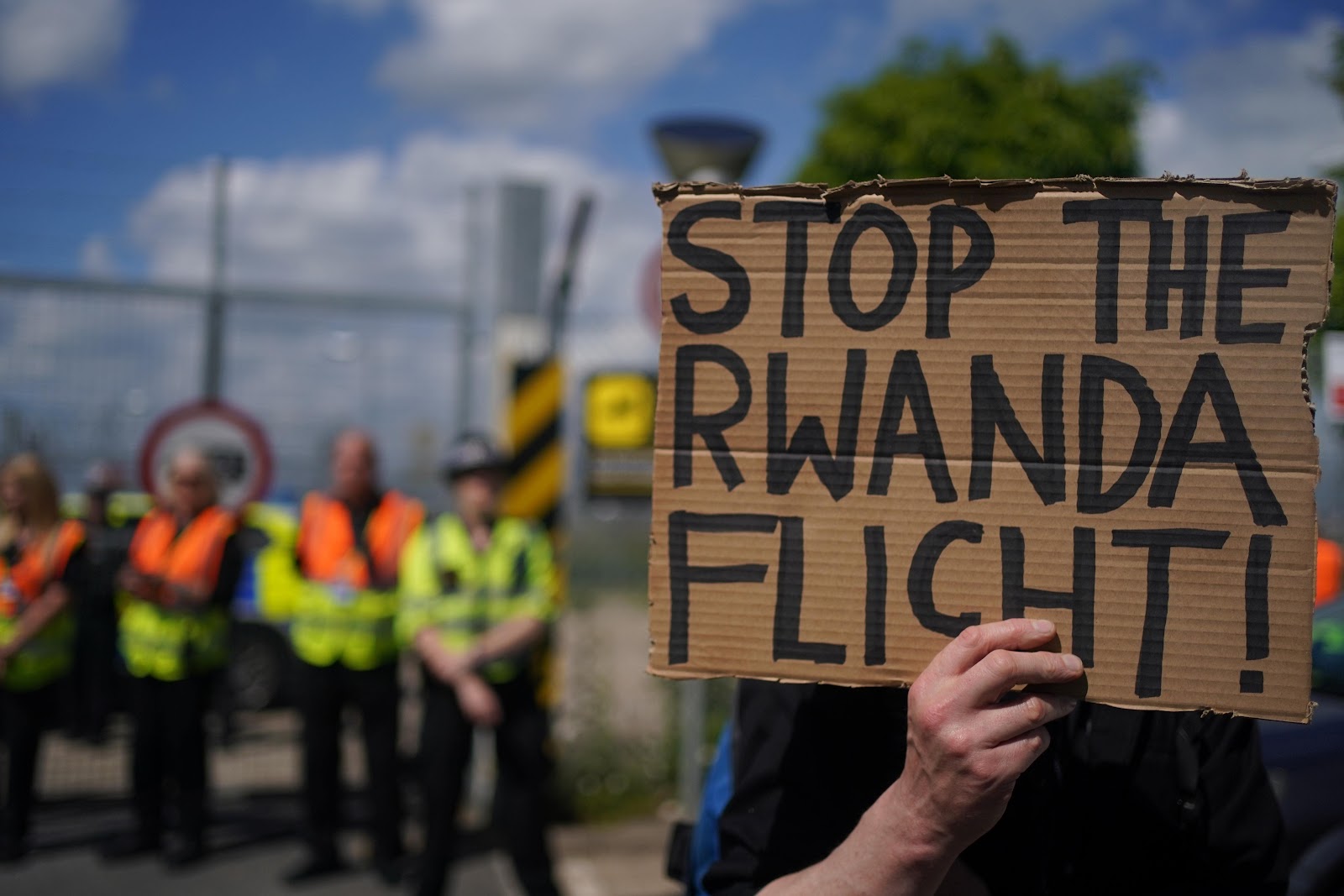
Several groups have announced legal challenges to the UK’s Rwanda Migrant Scheme in the wake of the passing of the Safety of Rwanda Bill in April. Asylum Aid announced last Friday their intent to challenge the legality of a Home Office policy document published last week on the grounds that it ‘fundamentally misunderstands the Act’. The policy requires caseworkers to consider Rwanda safe even in the face of compelling evidence that Rwanda would not be safe for the individual – ignoring Section 4 of the Act which provides a limited right to appeal against removal on the grounds that Rwanda would not be safe given the asylum seeker’s individual circumstances. The FDA Trade Union has also commenced proceedings on the grounds that the policy creates a conflict for civil servants between their obligations under the Civil Service Code and following the instructions of ministers. The Civil Service Code imposes a legal obligation upon civil servants to ‘uphold the rule of law’, which may not be possible if given instructions by a minister to ignore a Rule 39 Order from the ECHR – a breach of international law. Dave Penman, General Secretary for the FDA, has emphasised that the legal action is not a political decision nor about the policy itself, but about protecting civil servants and ‘the integrity of the Civil Service Code’. The case is to be heard the first week of June. In the meantime, detentions have begun for the first migrants set for removal to Rwanda, with more to come over the next few weeks. It has been suggested detentions have begun so far in advance – over nine weeks before the departures of the first flights – in anticipation of legal challenges. Earlier this week, a bus intended to remove asylum seekers from a South London hotel for transfer to the Bibby Stockholm barge had to leave empty after protestors surrounded the vehicle in a successful attempt to disrupt the removal. 45 protesters were arrested in total following the clash with over 100 Metropolitan police officers.
The Supreme Court has ruled unanimously that the lack of protection given to workers on strike constitutes a breach of their human rights. The right to strike is protected under Article 11 ECHR, which ensures freedom of assembly and association. However, UK domestic law provides workers with no protections against detriments short of dismissal for exercising that right. While s146 of the Trade Union and Labour Relations (Consolidation) Act 1992 protected workers from detriment for engaging in trade union activities, strike action has not been considered to qualify – a situation which the Supreme Court said ‘nullifies the right to take lawful strike action’. The Court found that the current legal position fell short of a fair balance between the interests of employers and Article 11 rights, and consequently has declared the relevant statute incompatible with human rights. A significant victory for worker’s rights, the Claimant, Fiona Mercer, has said: ‘I am delighted at today’s outcome. Although it won’t change the way I was treated, it means irresponsible employers will now think twice before behaving badly towards their unhappy staff.’ It remains to be seen whether legislation will now be amended to protect the rights of striking workers against detriment. While the government are under no legal duty to respond, Professor Alan Bogg, who was part of the Claimant’s legal team, has suggested not to do so would be ‘constitutionally surprising’.
The Court of Appeal in Northern Ireland has ruled it is not a breach of human rights for schools to exclusively teach about Christianity in religious education classes. The Court upheld a previous finding that the curriculum is not taught in an ‘objective, critical, and pluralistic manner’ and stated that the finding was ‘capable of constituting evidence supporting an inference that the forbidden line (of indoctrination) had been crossed’. However, this did not breach Article 2 Protocol 1 of the ECHR – the right to education – as parents are granted an unfettered statutory right to withdraw their children from religious education and collective worship. The law in Northern Ireland demands that state-funded schools organise ‘collective worship’ in at least one assembly per day; while parents can withdraw their children from this activity, pupils are not granted the right to withdraw themselves. The Court recognised the ongoing review into teaching in Northern Ireland, suggesting that policymakers may soon implement a ‘refresh to the Northern Ireland curriculum that will inevitably include consideration of religious instruction to take into account the complexion and changing needs of our society’. The Claimant intends to appeal to the Supreme Court.
At the conclusion of the inquest into the death of Scott Rider, the coroner described Rider’s treatment in prison as “inhumane and indefensible”. Rider died by suicide in June 2022 after serving 17 years of an “imprisonment for public protection” (IPP) sentence, a form of indeterminate prison sentence. A few weeks before his death Rider told a member of prison staff that he felt as though his sentence had ruined his life and there was no hope of release. IPP sentences were abolished in 2012, but the abolition did not apply retrospectively to those who had already received the sentence. As of 31 December 2022 there were 2,892 prisoners serving IPP sentences. The coroner sent a Prevention of Future Deaths Report to the prisons minister, writing that “if action is not taken to review all prisoners sentenced to IPP then there is a risk of further deaths occurring”.
The purpose of inquest proceedings also came under scrutiny this week, with the outgoing Chief Coroner, HHJ Thomas Teague KC, describing “a long-latent tension” at the heart of what the coronial service is trying to achieve in his Annual Report published on Thursday. He criticised the pressure on coroners to expand the scope of their investigations and expressed his view that “an inquest should remain a hearing that is narrowly focused on establishing a person’s immediate cause of a death, as opposed to in effect becoming a surrogate public inquiry”.
Finally, the Safety of Rwanda (Asylum and Immigration Act) 2024 was passed into law on Thursday. The Act requires decision makers to “conclusively treat the Republic of Rwanda as a safe country”, where a “safe country” means a country to which a person may be removed without violating the UK’s obligations under international law. Speaking on 22 April, Prime Minister Rishi Sunak said that he anticipated that first flight removing people to Rwanda would leave in 10-12 weeks, stating that “these flights will go come what may” and that “no foreign court will stop us from getting flights off”.
In international news
Major campus protests have broken out across the US regarding the ongoing conflict in Gaza, with students calling for their universities to divest from companies with ties to Israel. Hundreds of arrests have been made over the last week. At New York University 120 people who had erected an encampment were arrested and all but four were charged with trespass. Hundreds more arrests were made at Emerson University, Yale University, Columbia University, the University of South California and the University of Texas. At the University of Texas, the state Governor called in troopers with the Texas Department of Public Safety, who wore riot gear and were seen using their bikes to push protesters back.
In the Courts
The High Court dismissed the Solicitor General’s claim against Ms Trudi Warner in a judgment handed down on Monday. On 27 March 2023 Warner had stood outside a court where members of an environmental protest group were due to be tried with a placard that read “JURORS YOU HAVE AN ABSOLUTE RIGHT TO ACQUIT A DEFENDANT ACCORDING TO YOUR CONSCIENCE”. The Solicitor General alleged that Warner’s conduct was intended to interfere with the administration of justice and amounted to contempt of court. Mr Justice Saini held that it was “fanciful” to suggest that Warner’s behaviour could be considered to fall within the category of contempt. The content of the placard “accurately informed potential prospective jurors about one of their legal powers… It is not unlawful to accurately communicate the bare principle of law to potential jurors in a public forum”.
Exemption for allies of the UK overseas, such as Afghan service veterans
Ensuring that Rwanda is only considered a safe country when the arrangements provided for in the Rwanda Treaty are fully implemented and adhered to in practice.
The Bill is going back to the House of Commons this week and may soon come into law despite the disputes between the Commons and the Lords.
In international news
The US Supreme Court has announced that it will not hear the case of Mckesson v Doe. This was an appeal against a lower court decision which held that a protest organiser could be held liable in tort and face steep financial consequences if a single participant at a mass protest commits an illegal act. The case arises out of a Baton Rouge protest following a police shooting. DeRay Mckesson, one of the organisers of the protest, was sued by a police officer, identified only as John Doe, who was seriously injured when a participant in the protest threw a rock at him. The Supreme Court’s decision not to hear the case means that the lower court’s decision remains good law in Louisiana, Mississippi and Texas, and has been criticised for having a stifling effect on protest rights.
In the courts
The High Court held that Michaela Community Schools Trust’s decision to ban ritual prayer practices was lawful. The challenge was brought by a Muslim student at the school who wished to be permitted to pray for five minutes during the lunchtime break. The court rejected arguments that the ban was a breach of Article 9 of the European Convention on Human Rights (freedom of thought, conscience, and religion) and indirect religious discrimination against the school’s Muslim students. The High Court held that there was no interference with the claimant’s Article 9 rights as the claimant impliedly consented when she enrolled at the school, which is a secular school, that she would be subject to restrictions on her ability to manifest her religion and she would be able to “make up” for missed prayers when she got home (Qada prayers). Alternatively, the prayer ban was a proportionate means of promoting social cohesion at the school and preventing students from being pressured into participating in the prayers.
This week multiple UN institutions responded to the deteriorating humanitarian conditions in Gaza. The UN Security Council passed a resolution, with the USA abstaining, demanding “an immediate ceasefire for the month of Ramadan…leading to a lasting sustainable ceasefire” and the release of all Israeli hostages taken by Hamas during the 07 October attack. The UN Special Rapporteur on the situation of human rights in the occupied Palestinian Territory has released a report critical of Israel’s military operation in Gaza, which argues that “there are reasonable grounds to believe that the threshold indicating Israel’s commission of genocide is met”.
Meanwhile, South Africa’s case against Israel at the International Court of Justice (ICJ) continues. The ICJ has imposed further provisional measures in response to the “famine setting in”. The ICJ’s order requires Israel to cooperate with the UN to ensure “the unhindered provision at scale” of humanitarian assistance including food, water, medical supplies etc. Micheál Martin TD, the Minister for Foreign Affairs and Minister for Defence for the Republic of Ireland, has announced that Ireland will intervene in South Africa’s case at the ICJ.
This week the US Supreme Court heard what may be the most significant case regarding reproductive rights since Dobbs v Jackson Women’s Health Organisation, which overturned Roe v Wade. The case is about whether the abortion medication Mifepristone was correctly approved by the Food and Drug Administration. It was brought by several individual doctors and doctors’ groups opposed to abortion. The arguments this week focused on whether these individuals and groups had standing to sue, i.e. that they have a close enough connection to the issue to bring the case.
On Tuesday the government published its response to the public inquiry into Brook House Immigration Removal Centre. The inquiry was a response to a 2017 investigative documentary, which included footage of staff abusing detained people. The inquiry’s report was published on 19 September 2023. In its response the government described the documentary footage as “utterly shocking”, but emphasised the fact that “[d]etention is and will remain a fundamental element of the immigration system”. The government rejected the report’s key recommendation that it should set a time limit on detention. The response sought to highlight changes that have been made across the immigration detention estate since the events of 2017, such as the improved ratio of custodial staff to detained persons and the introduction of accredited training and a code of conduct for staff. The government stated that a “comprehensive review” into complaints and whistle blowing processes is being undertaken.
In other news, a memorandum disclosed to the Afghanistan Inquiry shows that in 2011 a UK Special Forces commander raised concerns that “there is in effect an unofficial policy… to kill wherever possible fighting aged males on target, regardless of the immediate threat they pose to our troops. In some instances this has involved the deliberate killing [of] individuals after they have been restrained… and the subsequent fabrication of evidence to suggest a lawful killing in self-defence”. The inquiry is investigating alleged unlawful conduct by UK Special Forces in Afghanistan between 2010 and 2013 and the adequacy of the Ministry of Defence’s response to concerns that were raised at the time. Johnny Mercer MP, the Minister for Defence People and Veterans, has stated in his witness statement that he was shown a copy of the memorandum but not allowed to keep it. Mercer been ordered to disclose the names of those who told him about alleged war crimes to the inquiry.
In international news
The Hong Kong government passed new national security legislation known as ‘Article 23’. The new law increases prison sentences for national security related offences, including a maximum jail sentence of 10 years for sedition where an ‘external force’ is involved. Any speech which is critical of the government could potentially come under the scope of sedition, and Hong Kong’s justice minister has since stated that a person might commit an offence if they share criticism of the legislation online. The legislation gives the police the power to detain someone for 16 days without charge and to prohibit the person from consulting with a lawyer for 48 hours. UK Foreign Secretary David Cameron previously stated that the legislative proposals would “have a negative impact on the people of Hong Kong in the exercise of their rights and freedoms”. The EU has expressed concerns over the legislation’s ‘sweeping provisions and broad defintions’ and described the increased penalties, which have extraterritorial reach, as “deeply worrying”.
In the courts
The Court of Appeal ruled that an individual’s views on climate change do not form part of the ‘circumstances’ of criminal damage which is committed as part of a protest. Previously, climate protesters had successfully relied on the defence that they honestly believed the owner of the property would have consented to the damage if they had known of the damage “and its circumstances”. The Court emphasised that the “circumstances must belong to the damage, not to the defendant”, and that there “must be a sufficient connection between the damage and its circumstances”. The case under consideration involved a climate protester (“C”) who had caused damage to the offices of various charities and political parties. The court held that “what C had to say about the facts of or effects of climate change could not amount to the circumstances of the damage” and that such evidence would be inadmissible in relation to the consent defence.
This blog is maintained for information purposes only. It is not intended to be a source of legal advice and must not be relied upon as such. Blog posts reflect the views and opinions of their individual authors, not of chambers as a whole.
Our privacy policy can be found on our ‘subscribe’ page or by clicking here.







Recent comments