We use cookies to enhance your browsing experience. If you continue to use our website we will take this to mean that you agree to our use of cookies. If you want to find out more, please view our cookie policy. Accept and Hide [x]
Failures of the criminal justice system were once again under the spotlight this week.
On Wednesday, business minister Paul Scully announced a statutory inquiry into the sub-postmaster scandal, following widespread outrage at one of the greatest miscarriages of justice un UK legal history. After the Court of Appeal quashed the convictions of 39 former sub-postmasters last month, hundreds more have been invited to appeal their own convictions for theft and fraudulent accounting, which may have been based on faulty evidence from the Post Office’s ‘Horizon’ digital accounting system.
The full public inquiry may include an investigation of the role played by Post Office lawyers in possible failures to disclose important evidence discrediting the accuracy of the Horizon system. The Solicitors Regulation Authority had already confirmed last month that it was monitoring the case, after the judgment levelled criticism at a culture among the prosecution counsel of ‘seeking to avoid legal obligations when fulfilment of those obligations would be inconvenient and/or costly.’
The inquiry will be led by Sir Wyn Williams, President of Welsh Tribunals, and is expected to submit its findings in autumn 2022.
Meanwhile, a stand-off emerged between the Home Secretary and an independent panel set up to investigate the murder of private investigator Daniel Morgan in 1987, for which no one has been convicted.
In the Queen’s Speech last week, the government presented its legislative programme for the next session of parliament, including a number of bills with important human rights implications. The speech was of particular interest because of the extent to which Brexit and COVID-19 have dominated the prime minister’s time in office so far.
Last Tuesday’s to-do list includes an enormous 31 bills, listed in full here and set out in greater detail here. Two bills with key implications are addressed below.
Campaigners have warned that a loophole allowing children aged 16 or 17 to get married with their parents’ consent is enabling forced child marriages to take place across England. Current laws against forced marriage to do not specifically protect children, and there are no laws in the UK to prevent religious or customary child marriages. The organisation Girls Not Brides UK, who sent a letter to the Prime Minister warning of the impact of this loophole last week, have suggested that child marriages disproportionately affect girls, and often lead to fewer educational and employment opportunities and a higher risk of domestic violence. The government’s Forced Marriage Unit, which collects data on cases of forced marriage, shows that more than a quarter of cases involve children. The Conservative MP Pauline Latham is currently promoting a bill in Parliament aimed at criminalising child marriage completely.
People aged 42 and over are now able to book their Covid-19 vaccines, joining the more than 33.8 million people in the UK who have received their first dose. The news comes as the Joint Committee on Human Rights called for a review of all fixed penalty notices (FPNs) for lockdown breaches and called the system “muddled, discriminatory and unfair”. The committee chair, Harriet Harman MP, said the “lack of legal clarity” meant an unfair system which “disproportionately hits the less well-off and criminalises the poor over the better off”. The report highlighted concerns about FPN validity, an inadequate review and appeals process, the size of penalties and the criminalisation of those unable to pay. A CPS review found that 27% of coronavirus-related prosecutions that reached open court in February were incorrectly charged. The lack of an adequate means to seek review of an FPN, other than through criminal prosecution, significantly increases the risk that human rights breaches will not be remedied, according to the committee. The importance of ECHR Articles 7 and 8 (no punishment without law and right to family and private life, respectively) was highlighted in particular.
The Upper Tribunal (Immigration and Asylum Chamber) has found that Priti Patel breached her procedural obligations under Article 2 of the ECHR in respect of deaths in immigration detention.
The application for judicial review arose following the death of Oscar Lucky Okwurime on 12 September 2019 in his cell at IRC Harmondsworth. Mr Okwurime had tried but failed to secure healthcare at the centre. He was not provided with his obligatory ‘Rule 34’ GP appointment within 24 hours of his arrival.
Priti Patel was subject to a legal requirement to assist the coronial inquest by identifying and securing evidence from potential witnesses. Instead, she elected to continue with her plans to remove a number of potential witnesses, including the Applicant, Mr Lawal, a close friend of Mr Okwurime.
Later, the Area Coroner for West London required Mr Lawal to attend the inquest on the basis that he was “an important witness of fact.” The jury later found that “multiple failures to adhere to healthcare policy” and “neglect” contributed to Mr Okwurime’s death from coronary heart disease.
The court found that Patel acted unlawfully in deciding to remove the Applicant in that she failed to take to take reasonable steps to secure the applicant’s evidence concerning the death of Oscar Okwurime. Aditionally, the absence of a policy directing caseworkers on how to exercise immigration powers in a case concerning a witness to a death in custody was unlawful. This was contrary to her Article 2 procedural obligations.
A Home Office spokesperson has said that, in light of the judgment, its processes were being refreshed and a checklist was being introduced to ensure all potential witnesses are identified.
The decision comes as Patel faces criticism for “serious mistakes” and “fundamental failures of leadership and planning” by the Home Office in managing former military sites as makeshift accommodation for asylum seekers. The Home Office is also being sued by a female asylum seeker who claims that staff at her asylum accommodation refused to call an ambulance for three hours after she told them she was pregnant, in pain and bleeding. When she was eventually taken to a nearby hospital, she learned that her baby had died.
In Other News:
Helena Kennedy QC, a leading human rights barrister and author of Eve Was Framed, has been included on the list of those sanctioned by the Chinese government for criticism of the human rights abuses against Uighur Muslims in Xinjiang province. Together with David Alton, a crossbencher, she helmed an ultimately unsuccessful attempt to persuade the UK government to create a procedure that would have enabled the English high court to make a determination on whether the evidence reached the threshold for genocide. China has imposed sanctions on 10 other UK organisations and individuals, including the former leader of the Conservative party Iain Duncan Smith, over what it called the spreading of “lies and disinformation” about human rights abuses in Xinjiang.
The investigatory powers tribunal (IPT), which examines allegations that the state has misused its surveillance powers, has heard from an environmental activist who was deceived into a long-term sexual relationship by an undercover Metropolitan police officer that his managers knew about the deception and allowed it to continue. A judge-led public inquiry into the activities of undercover officers is ongoing; Phillipa Kaufmann QC, who represents women deceived into sexual relationships, has called the practice “endemic”.
In the Courts:
Hamilton & Ors v Post Office Ltd [2021] EWCA Crim 577: the Court of Appeal quashed the convictions of thirty nine men and women employed by the Post Office as sub-postmasters, sub-postmistresses, managers or counter assistants; three other former employees’ appeals failed and were dismissed. All the appellants were prosecuted by their employer and convicted of crimes of dishonesty. The reliability of the computerised accounting system, “Horizon”, in use in branch post offices during the relevant period, was essential to the prosecutions. Despite repeated assertions by the Post Office that the system was robust and reliable, it has become clear that it was critically undermined by bugs and glitches which cause it to incorrectly record shortfalls. The court called the convictions “an affront to the public conscience.” A public inquiry chaired by Sir Wyn Williams, President of Welsh Tribunals, is currently trying to establish an account of the implementations and failings of the system.
Howard, R (On the Application Of) v Secretary of State for the Home Department [2021] EWHC 1023 (Admin): the High Court ruled that the Home Office’s handling of a Windrush citizenship application was irrational and unlawful. Hubert Howard was repeatedly denied British citizenship over the course of a decade, despite having lived in the UK since he arrived from Jamaica at the age of three in 1960, on the grounds that a number of minor convictions prevented him from meeting a “good character” requirement, which is an eligibility criteria for citizenship.
Elkundi & Ors, R (On the Application Of) v Birmingham City Council [2021] EWHC 1024 (Admin): the High Court has ruled that Birmingham City Council has been operating an unlawful system for the performance of its main housing duty under the Housing Act 1996. The Council had been operating on the basis that an applicant owed the main housing duty may be left in unsuitable accommodation while the Council takes a reasonable time to secure permanent suitable accommodation. Steyn J held that this was unlawful; the main housing duty is an “immediate, unqualified and non-deferrable” duty to secure suitable accommodation. Putting applicants on a waiting list was not a lawful means of performing that duty.
On the UKHRB:
Caroline Cross covers a recent case in which the boundaries of causation in mesothelioma deaths were tested and clarified.
Martin Forde QC summarises the High Court’s decision (set out briefly above) that the Home Office’s handling of a Windrush citizenship application was unlawful
The rights of immigrants and asylum seekers have been at the forefront of the news this week, with the Home Secretary coming under fire both in the courts and in the political arena. On Wednesday, a landmark court ruling held Ms Patel accountable for failures properly to investigate deaths among asylum seekers at detention centres. The case concerned two Nigerian nationals, one of whom was found dead in Harmondsworth immigration centre in 2019. His friend, Mr Lawal, was a key witness in the investigation of the death, but the Home Office sought to deport him before he could give evidence. The court held that the Home Secretary’s initial policy, which sought to remove Mr Lawal, its replacement, applied from August 2020, and the current policy, were unlawful and breached human rights because they failed to ensure that those who had relevant information would be able to give evidence before removal proceedings were commenced, thus frustrating inquiries into immigration centre deaths. Days later it was reported that this may be a widespread problem, with suggestions that scores of people had been prevented from giving key evidence to police investigations as a result of early deportation. While Ms Patel was warned that this practice must be curbed by a coroner in August, it is suggested that her response did little to address the problem.
On Wednesday, Amnesty International released its 2020/21 report on the state of the world’s human rights. Amnesty’s UK director, Kate Allen, also called for an inquiry into the government’s handling of the pandemic and said “the government is now shamefully trying to strip away our right to lawfully challenge its decisions, no matter how poor they are.” The report highlighted human rights concerns related to the government’s response to COVID-19, including health, immigration, domestic abuse and housing. There were also concerns around police conduct around racial discrimination and excessive use of force against protesters; during the first national lockdown in May, 10,000 of 43,644 recorded stop and searches conducted against young black men. Several legal developments were criticised for falling short of human rights standards, including the Immigration Act, the Gender Recognition Act, the Domestic Abuse Bill, the Counter-Terrorism and Sentencing Bill, the Overseas Operations (Service Personnel and Veterans) Bill, which would create a “presumption against prosecution” for members of the British Army accused of overseas crimes, including torture, committed more than five years earlier.
On Friday, former Home Secretary Lord Blunkett raised his issues with the Police, Crime, Sentencing and Courts Bill, an enormous piece of legislation that reforms much existing legislation and common law offences. Lord Blunkett pointed to the difficulties the police could face in interpreting the new law, and the sensitive nature of the relationship between the police and protestors. The Bill is currently at the Committee Stage of Parliamentary procedure. Particular attention has been drawn to s.59 of the Bill, which purportedly codifies the common law offence of public nuisance, following the recommendations of the Law Commission’s 2015 report, Simplification of Criminal Law: Public Nuisance and Outraging Public Decency. This section would create an offence of ‘intentionally or recklessly causing public nuisance’, defined as where a person’s act or omission causes serious harm to the public or a section of the public. Subsection (2) states that this offence can be constituted where ‘a person’ suffers ‘serious distress, serious annoyance, serious inconvenience or serious loss of amenity’. On indictment, a defendant is liable to imprisonment for a term up to ten years. While the Law Commission’s recommendation that the fault element should be intention or recklessness as opposed to ‘knew or should have known’ was adopted, the significant maximum term is a new addition.
The duty to expeditiously return under the Hague Convention vs the principle of non-refoulment in asylum law
In the News:
Last week, the Supreme Court considered an interesting interplay between two competing obligations of the state: on the one hand, the duty expeditiously to return a wrongfully removed or retained child to his home jurisdiction under the Convention on the Civil Aspects of International Child Abduction (“the 1980 Hague Convention”); on the other, the principle that refugees should not be refouled, meaning expelled or returned to a country where they have a well-founded fear of persecution.
The parties to G (Appellant) v G (Respondent) [2021] UKSC 9are the divorced parents of an eight-year-old girl (“G”). G was born in South Africa, and was habitually resident until G’s mother wrongfully removed her to England, in breach of G’s father’s custody rights. G’s mother fled South Africa when, after separating from G’s father and coming out as a lesbian, her family subjected her to death threats and violence. On her arrival in England, she applied for asylum and listed G as a dependant on her asylum application.
G’s father applied for an order under the 1980 Hague Convention for G’s return to South Africa. At first instance, Lieven J held the application should be stayed pending the determination of G’s mother’s asylum claim. The Court of Appeal considered that the High Court was not barred from determining the father’s application or making an order for expeditious return
Women’s rights and gender equality issues have been at the forefront of the news this week. The appalling murder of Sarah Everard, abducted when walking home in London, has elicited a huge social media response. In particular, it has highlighted the problematic phenomenon of victim-blaming directed at women, with advice focusing on teaching woman how to avoid being sexually harassed, rather than educating men about how to be better allies in calling out the misogynistic behaviour that enables harassment. These events coincided with statistics published by the World Health Organisation on Tuesday, which found that one in three women have been physically or sexually assaulted by their male partner across the world, and a survey conducted by UN Women UK published on Wednesday, which showed that 97% of women between the ages of 18 and 24 had been sexually harassed. The latter study also revealed that the majority of women don’t report these incidents because they don’t have confidence that the abuse will be dealt with effectively by the police or the legal system. On Tuesday the government unveiled the new Police, Crime, Sentencing and Courts Bill which, among other changes, has amended the sentencing laws for sexual offenders, enabling them to be put behind bars for longer. The government stated the new legislation was aimed at ‘restoring confidence in the criminal justice system’. However, given current statistics indicating a diminished number of successful rape prosecutions in the last year, it seems unlikely that the mere possibility of tougher sentences for sexual offenders once convicted is going to improve women’s confidence in the justice system. In fact, the new Bill has been substantially criticised by equality and civil liberties campaigners because it will increase the powers of the police to shut down public protest. Under the new law, the Home Secretary would be able to label particular protests as a ‘serious disruption’, enabling the police to then impose stringent conditions on the demonstration. The first detailed discussion of the Bill in Parliament today comes after accusations that the police were ‘too heavy-handed’ in dealing with demonstrators at the Sarah Everard vigil on Saturday evening. However, the Conservative majority in the Commons will almost certainly ensure that the Bill passes.
On Monday the Ministerial and other Maternity Allowances Act 2021 came into force, allowing the Attorney General, Suella Braverman QC, to be the first minister to take maternity leave. The Act grants cabinet ministers six months’ maternity leave whilst retaining their government post, whereas in the past MPs would have to resign to take time off to give birth. The Act is not without its critics, including those saying it should apply to MPs outside the Cabinet, and include provisions for paternity, adoption and shared parental leave. There was also heated debate in the Lords on the gender-neutral phrasing of the original Bill, with the Lords voting to replace ‘person’ with ‘mother’ in the final Act, despite its potential exclusion of trans and non-binary people.
A new offence of non-fatal strangulation has been included in the Domestic Abuse Bill following a campaign by the Centre for Women’s Justice, other organisations and the Victims’ and Domestic Abuse Commissioners. The Bill is passing through the House of Lords and now includes the offence of intentionally strangling another person or otherwise affecting their ability to breathe. Currently perpetrators are usually charged with common assault, with a maximum of just six months in jail. The Bill also includes amendments strengthening the laws on ‘revenge porn’, making it an offence to threaten to share intimate images of a person with the intention to cause distress, and extends the coercive control offence to situations where perpetrators and victims do not live together. The Victims’ and Domestic Abuse Commissioners welcomed the amendments but urged the Government to go further in creating a defence for people who commit offences due to domestic abuse.
On Friday the Women and Equalities Committee published the Government’s response to its report on the impact of coronavirus on BAME people, in relation to inequalities in health, employment, universal credit, housing, and the no recourse to public funds policy. The Committee’s inquiry found that comorbidities in BAME people place them at risk of experiencing coronavirus more severely and with graver health outcomes. Specific risks to BAME people include difficulty in accessing Government guidance, the disproportionate impact on BAME people of zero-hour contracts and being denied furlough, difficulties in applying for Universal Credit, and overcrowded housing due to housing inequality.
The Department of Health and Social Care on Friday published new guidance for care homes and visitors, to take effect on 8 March. This is not a change in the law, as visits to care homes have never been unlawful, but the new guidance sets out the government’s advice on safe visiting practices. This is that:
The UK has seen an increasingly falling rate in arrests and prosecutions for cannabis possession over recent years, as police forces no longer see the point in enforcement. The Liberal Democrats have campaigned for its legalisation since 2016, and the first medically-prescribed cannabis was permitted in the UK in 2018. However, crucial NHS cannabis-based medicines for epilepsy remained prohibitively difficult to access for another year, with the majority of self-reported ‘medicinal’ users still turning to the black market. With growing numbers of US states, alongside Canada and South Africa decriminalising recreational use over the past three years, some UK MPs believe that cannabis legalisation will occur in the UK within five to ten years.
A number of legal developments put free speech under the spotlight this week.
First, media commentators disputed the significance of the Duchess of Sussex’s successful privacy claim against Associated Newspaper Limited, covered in last week’s round-up. A leader in The Times issued the grave warning that ‘Mr Justice Warby’s judgment creates a precedent that will have a chilling effect on the media,’ not least ‘given that what was at stake…were issues that affect society as whole’. Some media lawyers took a dim view of such alarm, suggesting there was little to be surprised at in Warby J’s carefully reasoned conclusion that no legitimate public interest was to be found in publishing the intimate contents of a daughter’s letter to her father.
Then came Education Secretary Gavin Williamson’s announcement of a proposed free speech law targeting universities, designed to reverse ‘the chilling effect on campuses of unacceptable silencing and censoring’. Its reception was mixed to say the least. The scheme would impose a statutory free speech duty on universities and student unions, enabling ‘no-platformed’ academics, students and visiting speakers to sue for compensation. Potential infringements would be investigated by a mandated ‘free speech champion’, empowered to recommend various forms of redress. While many academics welcomed the basic principles behind the proposal, others complained that it fomented “phantom fears” of a “cancel culture” crisis.
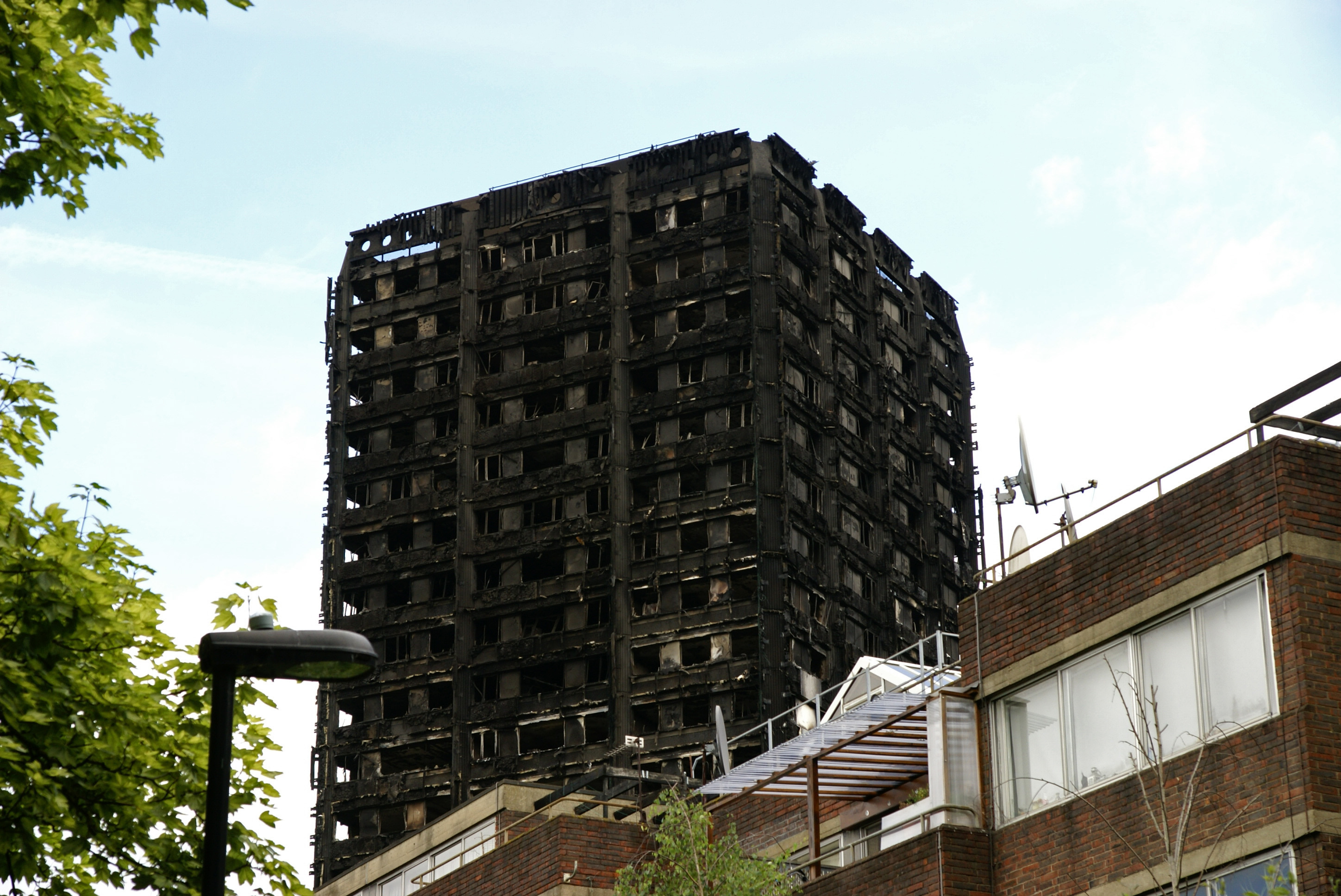
Having been temporarily suspended in early January as a result of an increase in COVID-19 cases, the Grenfell Tower Inquiry hearings resumed on 8 February 2021. The fire killed 72 people.
The hearings are being conducted remotely using a Zoom-based video platform, which the Inquiry describes as “a temporary measure to be used only for as long as absolutely necessary”.
The Inquiry conducted Phase 1 of the investigation, which focused on the events of the night of 14 June 2017, on 12 December 2018. Phase 2 is currently underway, which examines the causes of these events, including how Grenfell Tower came to be in a condition which allowed the fire to spread in the way identified by Phase 1.
The week began with the first Opposition Day of 2021, with Labour choosing to put council tax and employment rights centre of the Parliamentary stage. This followed an admission last week by Business Secretary Kwasi Kwarteng that the government was reviewing certain workers’ rights which had been saved post-Brexit as retained EU employment law. Responding to allegations that the government planned to scrap the 48-hour maximum work week and change the rules around rest breaks and holiday pay calculation, he tweeted ‘[w]e are not going to lower the standards of workers’ rights’. During the Opposition Day Debate Mr Kwarteng confirmed the review was no longer happening and that the government would not row back on the 48-hour work week, annual leave entitlement or rest breaks at work.
This blog is maintained for information purposes only. It is not intended to be a source of legal advice and must not be relied upon as such. Blog posts reflect the views and opinions of their individual authors, not of chambers as a whole.
Our privacy policy can be found on our ‘subscribe’ page or by clicking here.





Recent comments