We use cookies to enhance your browsing experience. If you continue to use our website we will take this to mean that you agree to our use of cookies. If you want to find out more, please view our cookie policy. Accept and Hide [x]
Coventry City Council v X, Y and Z (Care Proceedings: Costs: Identification of Local Authority) [2010] EWHC B22 (Fam) – Read judgment
Coventry City Council has been ordered to pay £100,000 in costs and has been severely criticised by the High Court for child protection failures. What is particularly interesting about the case is the unusual decision of the High Court to disclose the name of the offending council at the request of the BBC.
Judge Bellamy decided the main case in February, ruling that the council, which had accused the children’s parents of faking their illnesses, had “fallen below acceptable standards”. The council had attempted to withdraw care orders for three children at the last moment after it admitted to not having enough evidence to back up its claims. The judge was so unimpressed with the council’s conduct of the case that he ordered them to pay the parents’ costs of £100,000.
This is not a post about the conflict between the provisions of the Illegal Migration Bill and the European Convention on Human Rights (an issue which has already attracted a considerable amount of critical academic commentary – see here and here). Instead, it is a post about the Bill’s potential conflict with the EU Charter of Fundamental Rights (‘CFR’) and the UK’s commitments under the EU-UK Withdrawal Agreement, whether (and why) such a conflict matters in domestic law and how (if at all) that conflict could be resolved.
This might appear to be a quixotic line of discussion. We have been told, after all, that Brexit is done and that the CFR has been excised from the UK’s domestic legal systems (section 5(4) of the European Union (Withdrawal) Act 2018) and that other aspects of EU rights and equality law can be overwritten at will by Westminster. But, as we explore, this is not necessarily the case. Article 2 of the Northern Ireland Protocol (or Windsor Framework under the recent rebrand), the measure’s rights and equality provision, moreover, has important implications for legislative developments that the UK is seeking to pursue on a UK-wide basis.
PHG, linked with Cambridge University, provides independent advice and evaluations of biomedical and digital innovations in healthcare. PHG has recently published a series of reports exploring the interpretability of machine learning in this context. The one I will focus on in this post is the report considering the requirements of the GDPR for machine learning in healthcare and medical research by way of transparency, interpretability, or explanation. Links to the other reports are given at the end of this post.
Just a brief summary of machine learning in healthcare (for the detail, go to PHG’s report Machine Learning Landscape).
Machine learning typically denotes “methods that only have task-specific intelligence and lack the broad powers of cognition feared when ‘AI’ is mentioned”. Artificial intelligence (AI) can be defined as “the science and engineering of making computers behave in ways that, until recently, we thought required human intelligence.” We are only beginning to realise the scope of intelligence that is silicone-based, rather than meat-based, in the reductionist words of neurscientist and author Sam Harris. It is important too to grasp the difference between types of programming. As this report puts it,
Machine learningas a programming paradigm differs from classical programming in that machine learning systems are trained rather than explicitly programmed. Classical programming combines rules and data to provide answers. Machine learning combines data and answers to provide the rules
The report overall gives a balanced view of the Human Rights Practices in the UK, with some criticism but also some praise. It touches upon many of the issues reported in the UK Human Rights Blog but also misses some important topics that have emerged since the last annual country report.
The Prime Minister has announced his support for gay marriage in religious institutions. Having already said, memorably, that “I don’t support gay marriage in spite of being a conservative. I support gay marriage because I am a conservative”, he has now gone a step further and argued that gay couples should be able to marry on religious premises. But, he also made clear, “if there is any church or any synagogue or any mosque that doesn’t want to have a gay marriage it will not, absolutely must not, be forced to hold it“.
The announcement is important in the context of a legal debate which has been taking place since the Government signalled that marriage law reform was on its agenda: namely, whether religious institutions would be forced, as a result of equalities and human rights legislation, to carry out gay marriage ceremonies whether or not they wanted to. In June, when the Government was consulting over the “equal civil marriage” plans, Church of England sounded the alarm that “it must be very doubtful whether limiting same-sex couples to non-religious forms and ceremonies could withstand a challenge under the European Convention on Human Rights”
What is really interesting about the Prime Minister’s announcement is that the Government is now going beyond its original proposals as set out in the June consultation. At that point, the Government was careful to state that the proposals related only to civil (that is, non-religious) marriage and, indeed said:
The Prime Minister has said that he is “uneasy” about the development of a privacy law by judges based on the European Convention when this should be a matter for parliament. In our contribution to the continuing debate on this issue we are re-posting this [update – three part!] discussion on the history and future of privacy law from Inforrm’s Blog.
Introduction
The “law of privacy” has been developed by the English Courts over the past decade. It is a common law development based on case law going back to the mid nineteenth century. But the pace of development has accelerated over recent years. The decisive factor has been the Human Rights Act 1998. In this area the Act has had “horizontal effect” – it operates in cases between two private parties. The action for breach of confidence has been transformed – almost beyond recognition.
Welcome back to the UK Human Rights Roundup, your weekly booster shot of human rights news. The full list of links can be found here. You can also find our table of human rights cases here and previous roundups here.
In the news
Now that the Games are ending along with the August legal vacation, human rights news is back in force – it’s been a big week for commentary. Our top stories this week: gay rights, religious freedom and what the new Cabinet roster may mean for our justice system.
Cusack v. London Borough of Harrow [2013] UKSC, 19 June 2013 read judgment
This is the tale of how a solicitor from Harrow ended up litigating about his off-street parking in the Supreme Court – and reached for Article 1 of Protocol 1 (A1P1) of ECHR, by way of a second string to his bow. Not his choice, as he had won in the Court of Appeal on other grounds. But his failure on the point reminds us that in the majority of cases A1P1 is a difficult argument to bring home.
Mr Cusack had been parking his car in front of his premises since the late 1960s. He got temporary planning permission for his offices in 1973, but hung on when this expired and got established planning rights in 1976.
JSC BTA Bank v. Ablyazov et al 8 August 2014, Popplewell J, read judgment
What you say to your lawyers is truly confidential; no-one, not even a regulator or prosecutor can see it. This is protected by the right to privacy under Article 8, and the right to a fair trial under Article 6 (which includes the right to access to lawyers).
Well, that is the general rule. And this case reminds us that there is an exception to this – when the relationship between client and lawyer is affected by “iniquity”.
As we will see, Mr Ablyazov fell foul of this exception, and papers which he sent to his various solicitors have been ordered to be produced. As we will also see, he appears to be a very bad boy indeed. It is however more difficult to draw the line between his sort of case and that in which a defendant says he has a defence, though in the end is disbelieved by the court.
And one interesting aspect of this judgement is Popplewell J’s clear explanation of this difference – a fine line indeed.
How the lockdown was reportedby the newspapersin March. Image: The Guardian
Emmet Coldrick is a barrister at Quadrant Chambers, London. The opinions expressed in this article are the personal opinions of its author. Legal scrutiny of the provisions discussed in this piece is warranted but should not be taken to question the requirement to obey the regulations.
This first article will examine whether the Health Protection (Coronavirus, Restrictions) (England) Regulations 2020 fall within the Minister’s powers under section 45C(4)(d) of the Public Health (Control of Disease) Act 1984 to impose “a special restriction or requirement”.The second article will discuss the proper approach that the court should take where fundamental rights are in issue and argue that the Regulations were in fact ultra vires.
The Health Protection (Coronavirus, Restrictions) (England) Regulations 2020 (“the Regulations”) contained the most draconian restrictions on the liberty of the general population ever imposed in England. They purported to create several new criminal offences (see reg. 9), including an offence of contravening a regulation that “… no person may leave the place where they are living without reasonable excuse” (see reg. 6) and an offence of contravening, without reasonable excuse, a regulation that (subject to limited exceptions) “no person may participate in a gathering in a public place of more than two people” (see reg. 7).
These extraordinary new laws were made without prior debate in Parliament. The published text of the Regulations records that they were made and came into force at 1.00 p.m. on 26th March 2020 and were laid before Parliament only thereafter.
On any view, a power to make – by the stroke of a minister’s pen – such new laws would be an awesome one. The Secretary of State claims that he had the power to make the Regulations under Part 2A of the Public Health (Control of Disease) Act 1984 (“the 1984 Act”). That has been challenged by Mr Simon Dolan, who has brought judicial review proceedings contending that the Regulations were ultra vires.
Mr Dolan’s challenge is pending in the Court of Appeal. It was dismissed as unarguable by Lewis J at first instance (Dolan v Secretary of State for Health[2020] EWHC 1786 (Admin) (6th July 2020). But the Act presents difficulties in interpretation that were not grappled with in the judgment. I make a case below that the Regulations are ultra vires and that Mr Dolan’s appeal should be allowed.
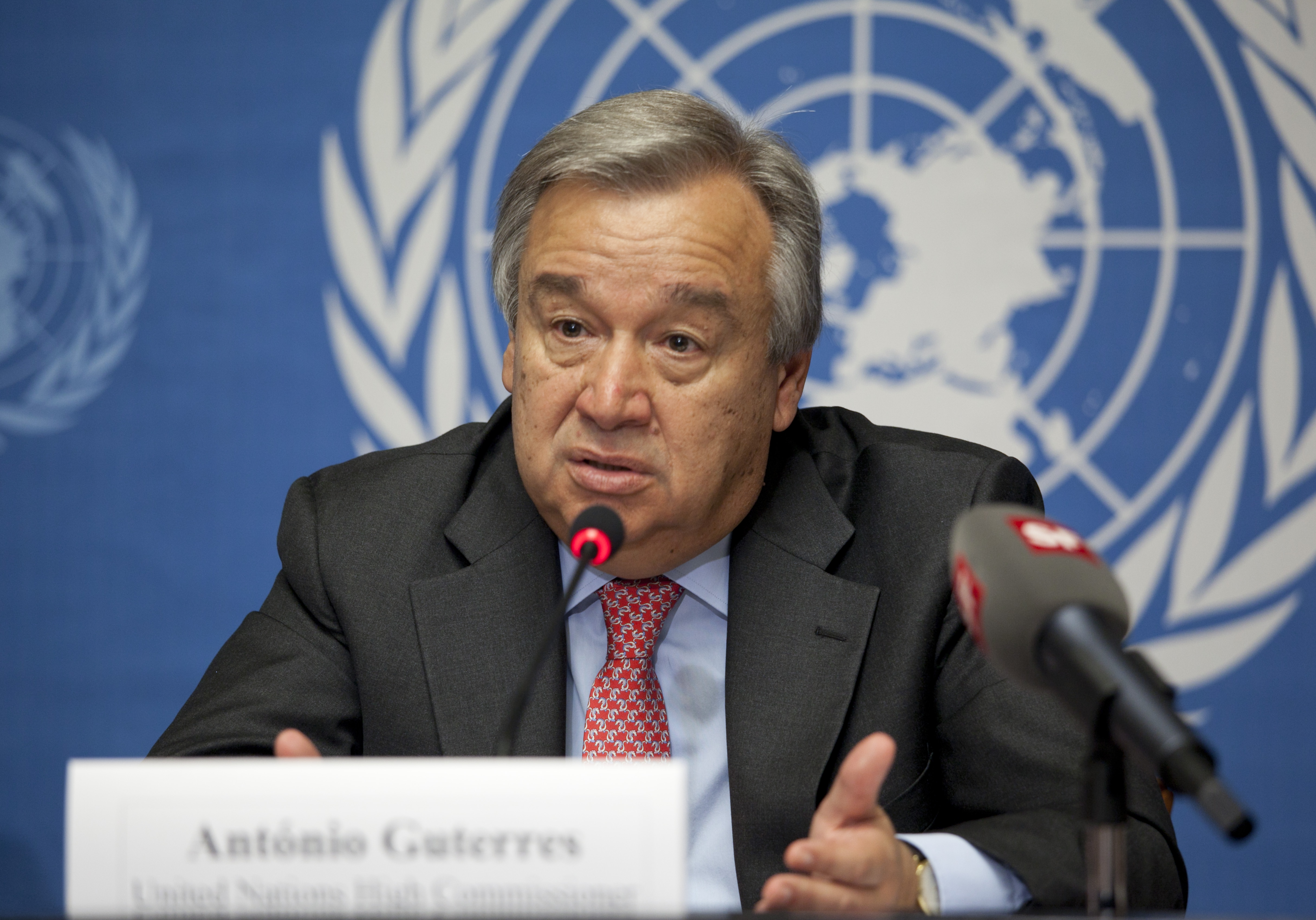
The world is reckoning this week with the human rights consequences of governmental efforts across the world to address the coronavirus pandemic. UN Secretary-General Antonio Gutierres has released a report on how the pandemic is becoming a ‘human rights crisis’. He highlights the disproportionate impact on minority communities, urging that national states of emergency must be proportionate, limited in scope, and alert to the risks of undue censorship and privacy violations. The report is available here.
Within the UK, the Equality and Human Rights Commission has been urging that more reasonable adjustments be made for the disabled and vulnerable in the handling of the pandemic.
In the sphere of criminal justice, the EHRC warns in an interim report that video hearings risk serious discrimination for people with learning disabilities, autism spectrum disorders, and mental health conditions. The report’s recommendations include ensuring disabled defendants have accessible information explaining their right to raise issues to do with participation, ensuring frontline professionals consider identifying people for whom video hearings may be unsuitable, and using registered intermediaries to support disabled defendants in video hearings. The report is available here.
It will come to the surprise of many that the common law offence of blasphemy in the UK was only abolished in 2008. It has no place in a secular society such as ours. However attempts have been made to use the Public Order Act 1986 to introduce blasphemy by the back door, by criminalising religious hatred offences.
This legislation excludes “antipathy, dislike, ridicule, insult or abuse of particular religiions’ from its religious hatred provisions.
Laura Profumo brings you the latest human rights happenings.
In the News:
In a critical, though arguably overdue, decision, the Court of Appeal has suspended the fast-track immigration appeals system. The process, under which rejected asylum seekers are detained and given only seven days to appeal, was held “structurally unfair” by the High Court, before being halted altogether by last week’s appeal. The ruling was welcomed by the appellant charity, Detention Action, as meaning “asylum seekers can no longer be detained…simply for claiming asylum”. Previously, the fast-track deadlines could be imposed on any asylum seeker from any country, if the Home Office considered their case could be decided quickly. This marks the third time courts have found the system to be unlawful, yet the suspension will now stay in force until a government appeal is mounted. The decision deals a major blow to a system which is “inefficient, bureaucratic, demeaning and dehumanising”, writes immigration expert Colin Yeo. Whilst there is “no doubt” a replacement fast track will soon be found, in the meantime “let us savour the respite” from such crude expediency.
In other news, the spotlight remains on America, in the euphoric wake of the Supreme Court’s ruling in Obergefell v Hodges. The final paragraph of Justice Kennedy’s judgment, in its stirring clarity, is set to make legal history. Yet not everyone is “enveloped in a warm and fuzzy feeling”, writes UKHRB’s own Jim Duffy. Justice Scalia, the firebrand conservative, “pulled no punches” in his dissent, citing the majority opinion as “egotistic” and a “threat to American democracy”. Scalia’s arrival in London last week further stoked the Obergefell debate. Speaking at a Federalist Society event, Scalia held his colleagues had wrongly used the due process clause to distill a substantive, rather than procedural, right. Defending his position as a constitutional originalist, Scalia maintained the meaning of the Constitution as fixed, rather than the “wonderfully seductive judicial theory” of living constitutions, in which “we can have all sorts of new things, like same sex marriage”. When asked about the proposed Bill of Rights, the Justice’s response was particularly biting: “You can’t do any worse than the situation you’re in now”. Continue reading →
Even in times of emergency, … and even when the merits of the Government response are not widely contested, the rule of law matters.
Thus commenced a lengthy judgment by the New Zealand High Court, Wellington Registry, ruling that the first nine days of New Zealand lockdown were unlawful. The three judge panel found that
While there is no question that the requirement was a necessary, reasonable and proportionate response to the Covid-19 crisis at the time, the requirement was not prescribed by law and was therefore contrary to section 5 of the New Zealand Bill of Rights Act.
There are those who think that the Strasbourg Court sometimes talks through its fundament. Others are of the view that the sun shines out of it.
This may of course have something to do with the Court’s jurisdictional basis, whose proper name is the Convention for the Protection of Human Rights and Fundamental Freedoms. Be that as it may, over the years the Court has become increasingly inclined to describe so many rules, principles, aspects of people’s relationships with each other and sundry other understandings and agreements of civil society as “fundamental” that the word has ceased to resonate with its original meaning as basic, essential, primary, central, or even foundational.
This blog is maintained for information purposes only. It is not intended to be a source of legal advice and must not be relied upon as such. Blog posts reflect the views and opinions of their individual authors, not of chambers as a whole.
Our privacy policy can be found on our ‘subscribe’ page or by clicking here.

 Coventry City Council v X, Y and Z (Care Proceedings: Costs: Identification of Local Authority) [2010] EWHC B22 (Fam) – Read judgment


 The Prime Minister
 The Prime Minister
 Welcome back to the UK Human Rights Roundup, your weekly booster shot of human rights news. The full list of links can be found




Recent comments