Search Results for: puberty blockers consent/page/14/Freedom of information - right of access) [2015] UKUT 159 (AAC) (30 March 2015)/page/110/apple-touch-icon.png


Expecting business to respect human rights without incentives or Sanctions – Robert McCorquodale

4 September 2013 by

William HagueCross-government coordination on an issue that affects trade, international development, foreign affairs, business activity and human rights is remarkable, especially at such a difficult economic time. So the UK’s Action Plan on Business and Human Rights, which is the government’s long-awaited strategy for implementing the 2011 UN Guiding Principles on Business and Human Rights, is to be applauded for this achievement. Yet, while the Plan establishes clear expectations that UK companies should respect human rights, there are no effective legal requirements placed on them to do so.

In issuing this Plan, the Foreign Secretary and the Business Secretary reinforce the business case for respecting human rights, which includes reputational, legal and investment risk issues, and consumer expectation reasons. They also note that protection of human rights is good for business and communities, as “the thread of safeguards running through society that are good for human rights – democratic freedoms, good governance, the rule of law, property rights, civil society – also create fertile conditions for private sector led growth”. Adam Smith thought that this was required over two and a half centuries ago.

Continue reading →

The Weekly Round-up: Assisted dying bill, automated immigration decisions, and Daily Mail wins at the ECtHR

18 November 2024 by

In UK news

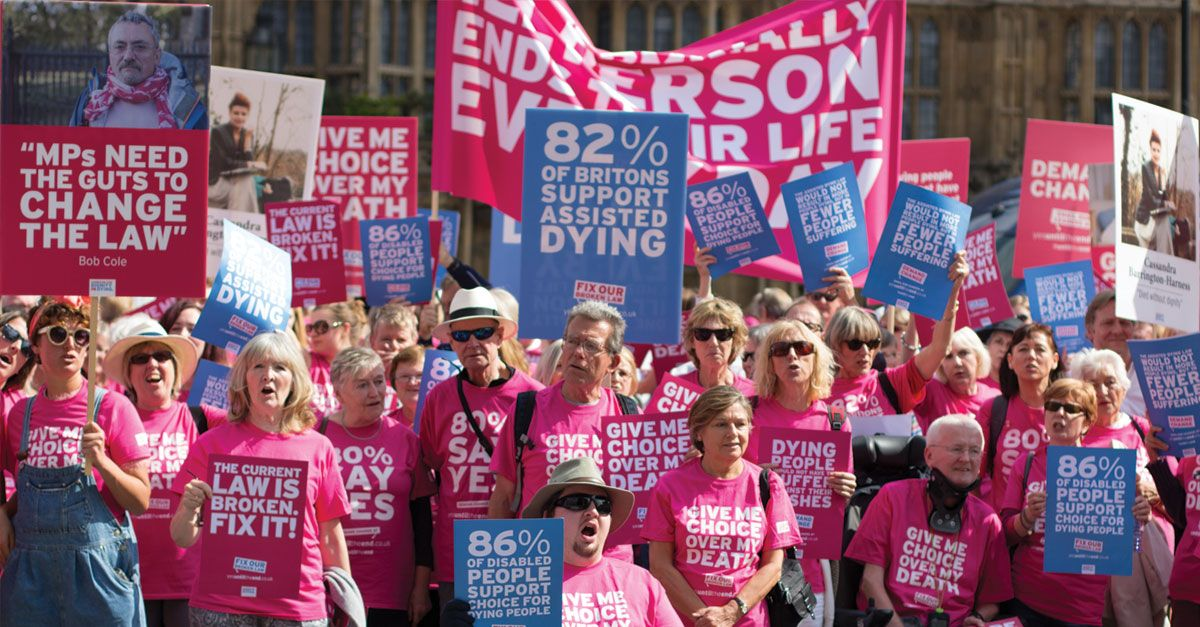
This week the Terminally Ill Adults (End of Life) Bill was published, with the second reading vote scheduled for 29 November 2024. The bill would allow terminally ill adults, who have capacity, to request to be provided with assistance to end their own life (clause 1). “Terminally ill” is defined in the bill to mean that the requestor has an inevitable progressive illness that cannot be reversed by treatment and as a result their death can reasonably be expected within six months (clause 2). The requestor would be assessed by two doctors (see clauses 7 and 8) and their request would be subject to approval from a High Court judge (clause 12). The bill confirms that medical workers who object to assisted dying will have no obligation to provide assistance (clause 23). The bill also creates offences of dishonesty, coercion or pressure in relation to requesting assistance (clause 26) and falsification or destruction of documentation regarding requests of assistance (clause 27). The controversial bill has stirred debate regarding the proper balance between bodily autonomy and safeguarding vulnerable people. On this blog, there has been a debate on whether the bill would place the UK in breach of article 2 ECHR (available here and here). There is also discussion of “slippery slopes” ie. whether once the bill has passed assisted dying could be made available to a wider range of requestors and the potential dangers (available here and here). 

Investigations by the NGO Privacy International have uncovered the use of automated decision-making in the Home Office. The algorithm called “Identity and Prioritise Immigration Cases” (IPIC) identifies and recommends migrants for particular immigration decisions or enforcement actions. Home Office documents describe IPIC as a triage tool that can “assess the removability and level of harm posed by immigration offenders, automate the identification and prioritisation of cases, and provide information on the length of time a barrier to removal has been in place”. The use of automated decision-making within government is controversial. On one hand it can increase efficiency. On the other, rights groups criticise the lack of transparency around the use of automated decision-making within government and the difficulty in seeking redress when things go wrong. The Data (Use and Access) Bill, currently going through Parliament, will generally allow automated decision-making provided that affected individuals can make representations and have meaningful human intervention when an automated decision is challenged.


Continue reading →

Azelle Rodney Inquiry lawyers can see surveillance film footage

16 October 2012 by

R (on the application of the Metropolitan Police Service) v the Chairman of the Inquiry into the Death of Azelle Rodney and Interested Parties [2012] EWHA 2783 (Admin) – read judgment

The public inquiry into the death of Azelle Rodney, which commenced in 2010, was still under way when it was interrupted by the present dispute. It concerned the issue whether police surveillance footage taken from the air, showing Azelle Rodney’s movements in the two hours before his death, should be disclosed to the legal team representing his mother at the Inquiry.

The Chairman of the Inquiry decided to permit disclosure and the Metropolitan Police Service (MPS) took these proceedings to challenge the decision.

The footage was shot during a 2005 drug heist operation involving Mr Rodney, 25, who was shot six times at point-blank range after a car chase. One of the issues of importance to the deceased’s mother (Ms Alexander, the First Interested Party)  was whether there had been a better opportunity to stop the car and its occupants at any time before the hard-stop which resulted in Mr Rodney’s death. This issue involved consideration by the Inquiry of the management of the surveillance/stop operation by senior officers. The officer in charge of the operation is due to give his evidence and to be questioned by Ms Alexander’s counsel. 
Continue reading →

Slaves, animals and Lord Mansfield

16 February 2015 by

tumblr_my6p9rVBx11ssmm02o7_r1_500A fascinating riff has been playing around the London Review of Books since Stephen Sedley (erstwhile Sedley LJ) reviewed a biography of the 18th century judge Lord Mansfield – here – part 3, but the excellent letters of response are open access.

Mansfield is perhaps best known by commercial lawyers for injecting into the hitherto archaic English commercial law some element of rationality. But he also ended up trying cases involving the ownership of slaves, and had therefore to decide how ownership fitted in with things like habeas corpus. 

But first a bit of historical background about our man, and some indications of the differing times in which he lived – much of it thanks to Sedley’s review.

Continue reading →

Welcome to the UKHRB

This blog is run by 1 Crown Office Row barristers' chambers. Subscribe for free updates here. The blog's editorial team is:

Commissioning Editor:
Jasper Gold

Assistant Editor:
Allyna Ng

Editors:
Rosalind English
Angus McCullough KC
David Hart KC
Martin Downs

Jim Duffy
Jonathan Metzer

Free email updates


Enter your email address to subscribe to this blog for free and receive weekly notifications of new posts by email.

Subscribe

Categories


Disclaimer


This blog is maintained for information purposes only. It is not intended to be a source of legal advice and must not be relied upon as such. Blog posts reflect the views and opinions of their individual authors, not of chambers as a whole.

Our privacy policy can be found on our ‘subscribe’ page or by clicking here.

Tags


A2P1 Aarhus Abortion Abu Qatada Abuse Access to justice administrative court adoption ALBA Allison Bailey Al Qaeda animal rights anonymity appeal Appeals Arrest Art 2 Article 1 Article 1 Protocol 1 Article 2 article 3 article 3 protocol 1 Article 4 article 5 Article 6 Article 7 Article 8 Article 9 article 10 Article 11 article 13 Article 14 Artificial Intelligence Asbestos Assisted Dying assisted suicide assumption of responsibility asylum Attorney General Australia autism benefits Best Interest Bill of Rights biotechnology blogging Bloody Sunday brexit Bribery Business care orders Caster Semenya Catholicism Chagos Islanders charities Children children's rights children act China christianity citizenship civil liberties campaigners climate change clinical negligence Closed Material Proceedings Closed proceedings Coercion common law confidentiality consent conservation constitution contempt contempt of court Control orders Copyright coronavirus Coroners costs court of appeal Court of Arbitration for Sport Court of Protection covid crime Criminal Law Cybersecurity Damages Dartmoor data protection death penalty defamation deportation deprivation of liberty Detention diplomatic immunity disability discipline disclosure Discrimination disease divorce DNA domestic violence DPA drug policy DSD Regulations duty of candour duty of care ECHR ECtHR Education election Employment Employment Law Employment Tribunal enforcement Environment environmental rights Equality Act Ethiopia EU EU Charter of Fundamental Rights EU costs EU law European Court of Justice euthanasia evidence extradition extraordinary rendition Extraterritoriality Fair Trials Family family law Fertility FGM Finance findings of fact football foreign criminals foreign office Foster France freedom of assembly Freedom of Expression freedom of information freedom of speech Free Speech Gambling Gay marriage Gaza gender Gender Recognition Act genetics Germany gmc Google government Grenfell Hate Speech Health healthcare high court HIV home office Housing HRLA human rights Human Rights Act human rights news Huntington's Disease immigration immunity India Indonesia information injunction injunctions inquest Inquests international law internet interview Inuit Iran Iraq Ireland Islam Israel Italy IVF Jalla v Shell Japan Japanese Knotweed Journalism Judaism judicial review jury jury trial JUSTICE Justice and Security Bill Land Reform Law Pod UK legal aid legal ethics legality Leveson Inquiry LGBTQ Rights liability Libel Liberty Libya Lithuania local authorities marriage Maya Forstater mental capacity Mental Health mental health act military Ministry of Justice Mirror Principle modern slavery monitoring murder music Muslim nationality national security NHS Northern Ireland NRPF nuclear challenges nuisance Obituary open justice Osman v UK ouster clauses PACE parental responsibility parental rights Parliament parliamentary expenses scandal Parole patents Pensions Personal Data Personal Injury Piracy Plagiarism planning Poland Police Politics pollution press Prisoners Prisons privacy Private Property Procedural Fairness procedural safeguards Professional Discipline Property proportionality proscription Protection of Freedoms Bill Protest Protocols Public/Private public access public authorities public inquiries public law reasons regulatory Regulatory Proceedings rehabilitation Reith Lectures Religion Religious Freedom RightsInfo Right to assembly right to die Right to Education right to family life Right to life Right to Privacy Right to Roam right to swim riots Roma Romania Round Up Royals Russia S.31(2A) sanctions Saudi Arabia school Schools Scotland secrecy secret justice Section 55 separation of powers Sex sexual offence sexual orientation Sikhism Smoking social media Social Work South Africa Spain special advocates Sports Sports Law Standing statelessness Statutory Interpretation stop and search Strasbourg Strategic litigation suicide Supreme Court Supreme Court of Canada surrogacy surveillance Syria Tax technology Terrorism tort Torture Transgender travel travellers treaty tribunals TTIP Turkey UK UK Constitutional Law Blog Ukraine UK Supreme Court Ullah unduly harsh united nations unlawful detention USA US Supreme Court vicarious liability voting Wales war War Crimes Wars Welfare Western Sahara Whistleblowing Wikileaks Wild Camping wind farms WINDRUSH WomenInLaw World Athletics YearInReview Zimbabwe

Tags


A2P1 Aarhus Abortion Abu Qatada Abuse Access to justice administrative court adoption ALBA Allison Bailey Al Qaeda animal rights anonymity appeal Appeals Arrest Art 2 Article 1 Article 1 Protocol 1 Article 2 article 3 article 3 protocol 1 Article 4 article 5 Article 6 Article 7 Article 8 Article 9 article 10 Article 11 article 13 Article 14 Artificial Intelligence Asbestos Assisted Dying assisted suicide assumption of responsibility asylum Attorney General Australia autism benefits Best Interest Bill of Rights biotechnology blogging Bloody Sunday brexit Bribery Business care orders Caster Semenya Catholicism Chagos Islanders charities Children children's rights children act China christianity citizenship civil liberties campaigners climate change clinical negligence Closed Material Proceedings Closed proceedings Coercion common law confidentiality consent conservation constitution contempt contempt of court Control orders Copyright coronavirus Coroners costs court of appeal Court of Arbitration for Sport Court of Protection covid crime Criminal Law Cybersecurity Damages Dartmoor data protection death penalty defamation deportation deprivation of liberty Detention diplomatic immunity disability discipline disclosure Discrimination disease divorce DNA domestic violence DPA drug policy DSD Regulations duty of candour duty of care ECHR ECtHR Education election Employment Employment Law Employment Tribunal enforcement Environment environmental rights Equality Act Ethiopia EU EU Charter of Fundamental Rights EU costs EU law European Court of Justice euthanasia evidence extradition extraordinary rendition Extraterritoriality Fair Trials Family family law Fertility FGM Finance findings of fact football foreign criminals foreign office Foster France freedom of assembly Freedom of Expression freedom of information freedom of speech Free Speech Gambling Gay marriage Gaza gender Gender Recognition Act genetics Germany gmc Google government Grenfell Hate Speech Health healthcare high court HIV home office Housing HRLA human rights Human Rights Act human rights news Huntington's Disease immigration immunity India Indonesia information injunction injunctions inquest Inquests international law internet interview Inuit Iran Iraq Ireland Islam Israel Italy IVF Jalla v Shell Japan Japanese Knotweed Journalism Judaism judicial review jury jury trial JUSTICE Justice and Security Bill Land Reform Law Pod UK legal aid legal ethics legality Leveson Inquiry LGBTQ Rights liability Libel Liberty Libya Lithuania local authorities marriage Maya Forstater mental capacity Mental Health mental health act military Ministry of Justice Mirror Principle modern slavery monitoring murder music Muslim nationality national security NHS Northern Ireland NRPF nuclear challenges nuisance Obituary open justice Osman v UK ouster clauses PACE parental responsibility parental rights Parliament parliamentary expenses scandal Parole patents Pensions Personal Data Personal Injury Piracy Plagiarism planning Poland Police Politics pollution press Prisoners Prisons privacy Private Property Procedural Fairness procedural safeguards Professional Discipline Property proportionality proscription Protection of Freedoms Bill Protest Protocols Public/Private public access public authorities public inquiries public law reasons regulatory Regulatory Proceedings rehabilitation Reith Lectures Religion Religious Freedom RightsInfo Right to assembly right to die Right to Education right to family life Right to life Right to Privacy Right to Roam right to swim riots Roma Romania Round Up Royals Russia S.31(2A) sanctions Saudi Arabia school Schools Scotland secrecy secret justice Section 55 separation of powers Sex sexual offence sexual orientation Sikhism Smoking social media Social Work South Africa Spain special advocates Sports Sports Law Standing statelessness Statutory Interpretation stop and search Strasbourg Strategic litigation suicide Supreme Court Supreme Court of Canada surrogacy surveillance Syria Tax technology Terrorism tort Torture Transgender travel travellers treaty tribunals TTIP Turkey UK UK Constitutional Law Blog Ukraine UK Supreme Court Ullah unduly harsh united nations unlawful detention USA US Supreme Court vicarious liability voting Wales war War Crimes Wars Welfare Western Sahara Whistleblowing Wikileaks Wild Camping wind farms WINDRUSH WomenInLaw World Athletics YearInReview Zimbabwe