Search Results for: prisoners/page/25/[2001] EWCA Civ 1546
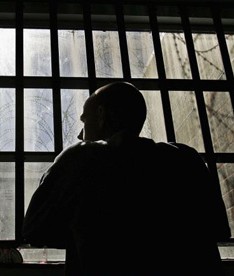
24 October 2014 by Guest Contributor

Photo credit: Guardian.co.uk
The Conservative Party’s proposals to introduce a British Bill of Rights and Responsibilities that would weaken the UK’s obligations under the European Convention on Human Rights (ECHR) – and the legal chaos that would ensue if it was ever enacted – have been hotly debated. The proposal makes clear that if the Council of Europe was to reject the UK’s unilateral move, as it would be bound to, the UK ‘would be left with no alternative but to withdraw’ from the Convention.
The policy is highly isolationist. The brief section on the ‘international implications’ of the plan does not pause to consider the impact of withdrawal on the other 46 states on the Council of Europe or the Convention system as a whole. Nor does it address the implications for the UK’s ability to promote human rights and the rule of law in countries with significantly worse human rights records.
This is despite the evident risk of contagion to newer Council of Europe states. The Council of Europe Commissioner for Human Rights, Nils Muižnieks, has argued that if the UK persists in its disrespect for the Strasbourg Court, exemplified by its protracted non-compliance with the judgment on prisoners’ voting rights, this would
… send a strong signal to other member states, some of which would probably follow the UK’s lead and also claim that compliance with certain judgments is not possible, necessary or expedient. That would probably be the beginning of the end of the ECHR system.
Continue reading →
Like this:
Like Loading...
19 September 2012 by Andrew Tickell
Brought to you by Andrew Tickell
Rhubarb, rhubarb. Another defeat for the United Kingdom in Strasbourg yesterday. In James, Wells and Lee v. the United Kingdom, a chamber of the Court’s Fourth Section held that indeterminate sentences of imprisonment for public protection infringed Article 5 of the Convention. At his first Justice Questions in the House of Commons yesterday, our fresh-minted Conservative Lord Chancellor and Justice Secretary, Chris Grayling, advised MPs that:
“I’m very disappointed with the ECHR decision this morning. I have to say, it is not an area where I welcome the Court, seeking to make rulings. It is something we intend to appeal.”
One wonders which areas Mr Grayling would welcome the Court’s jurisdiction, but all in all, a somewhat tepid response from a man whose appointment was greeted by the Daily Mail with the enthusiastic suggestion that Grayling…
“… unlike his predecessor Ken Clarke, will have no truck with the cardboard judges at the European Court of Human Rights.”
Continue reading →
Like this:
Like Loading...
13 January 2020 by Conor Monighan
Conor Monighan brings us the latest updates in human rights law

In the News:
ICCSA, the Independent Inquiry into Child Sexual Abuse, published its report into protecting children who live outside the UK.
It described how there has been “extensive” sexual abuse of children by British nationals whilst abroad. Between 2013 – 2017, 361 UK nationals requested consular assistance between 2013 – 2017 for being arrested for child sex offences. The inquiry suggested this was likely to be a small proportion of offenders committing crimes abroad.
The report highlights the case of Gary Glitter, who was able to travel abroad and abuse vulnerable children even after he had been convicted. Glitter was later sentenced again for abusing two girls, aged 10 and 11, in Vietnam.
ICCSA concluded that travel bans should be imposed more frequently to prevent this behaviour. It noted that Australia bans registered sex offenders from travelling overseas. ICCSA’s report also argued that the burden of proof for imposing travel bans should be reduced, saying that the need for evidence is often overstated by courts and the police.
The inquiry described the global exploitation of children as worth an estimated £27.7 billion, with developing countries being particularly at risk.
The full report can be read here. More from the BBC here.
Continue reading →
Like this:
Like Loading...
6 May 2016 by Guest Contributor

Photo credit: Guardian
By Marina Wheeler QC
In a speech about Brexit last week, the Home Secretary shared what she called her “hard-headed analysis”: membership of an unreformed EU makes us safer, but – beware the non-sequitur – we must withdraw from the European Convention on Human Rights, which does not.
It is surely time for some clearer Government thinking about these questions. If politicians could put politics to one side, they might recognise that the Convention and the Strasbourg court are not enemies of our sovereignty, but there are aspects of EU law as applied by the Court of Justice in Luxembourg which are.
Continue reading →
Like this:
Like Loading...
24 January 2012 by Adam Wagner
 Updated | In the 1939 film Mr. Smith Goes to Washington, James Stewart plays a local Boy Rangers leader who becomes a US Senator and, against all odds, triumphs agains the corrupt bureaucrats in Washington. Tomorrow, according to The Sun, “battling” Prime Minister David Cameron will be travelling to Strasbourg in, it would seem, similar style to “tell Euro judges to stop meddling in British justice”.
Meanwhile, back in London, the British president of the European Court of Human Rights launched a preemptive strike on Mr Cameron’s speech in today’s Independent, arguing that the criticism from “senior British politicians” relating to the court’s interference is “simply not borne out by the facts“.
Bratza is right that the us-vs-them narrative is partly the result of mischievous human rights reporting by the press. Recent examples are the Daily Mail’s extravagant claim that the UK loses 3 out of 4 cases in Strasbourg, resting on a partial reading of the court’s statistics, and the Telegraph’s seemingly endless run of articles based on low-level immigration decisions, the latest being: Bigamist wins ‘family life’ human rights case. In that case, the original tribunal knew nothing about his alleged other marriages, so it is hard to see what it shows about human rights defences to deportation decisions, except that a claimant possibly lied in court, was found out and will probably now be deported.
Continue reading →
Like this:
Like Loading...
18 April 2016 by Charlotte Bellamy
 In the News
Last week marked the beginning of the ten-week run-in to the EU referendum. With it came the Government’s obligation to publish a statutory report informing the electorate of precisely what rights and obligations arise for the UK as a result of EU membership – and this report appeared on Thursday.
Continue reading →
Like this:
Like Loading...
21 March 2011 by Guest Contributor

The European Convention
On 8 March 1951, sixty years ago this month, the UK ratified the European Convention on Human Rights (ECHR). Two things are often said about what was expected of the Convention back in 1951.
First, it was only ever intended to establish a system that would protect against the types of severe human rights violations witnessed during the War. Consequently (and secondly), the Convention system was never intended to become what it has today, its Court now sometimes acting like a type of Supreme Court for Europe in the field of human rights.
Both points are relevant to current day debates about the legitimate role of the Strasbourg Court. To what extent then are they accurate?
Continue reading →
Like this:
Like Loading...
10 December 2010 by Adam Wagner
 Seal v United Kingdom (Application no. 50330/07) – Read judgment
The European Court of Human Rights has rejected the claim of a man detained by the police for 9 days under mental health law. Despite legislation deliberately making it difficult to sue authorities carrying out mental health functions, the court ruled that the law did not unduly restrict access to the courts.
Although Mr Seal ultimately lost, his claim – and in particular a strong dissenting judgment by Baroness Hale in the House of Lords – highlights the tricky line the state must tread in relation to people with mental health problems in relation to their access to justice.
Continue reading →
Like this:
Like Loading...
20 April 2010 by Adam Wagner
 The case of The Queen on the application of Evans v Secretary Of State For Defence is continuing today in the Royal Courts of Justice in London, before Lord Justice Richards and Mr Justice Cranston.
Maya Evans, an activist, is brining a judicial review against the Ministry of Defence in respect of the British Army’s detainee transfer policy in Afghanistan. It is alleged that British forces knew of the torture risks when handing over prisoners to the Afghan security services.
This is the latest in a series of cases where the Government have been criticised in the courts for defence policies in Iraq and Afghanistan. In 2007, the House of Lords (the old Supreme Court) in Al-Skeini effectively opened the door to such claims by foreign nationals by holding that the Human Rights Act applies outside of the UK.
The most notable recent example is the Binyam Mohamed case, where the Court of Appeal heavily criticised the security services. Similar issues in relation to secret evidence appear to have arisen in Evans, with The Guardian reporting:
So concerned is the Ministry of Defence about the challenge to the practice, that it is insisting that evidence it had passed to her lawyers must now be suppressed.
As a result, skeleton argument from her lawyers – a document consisting of an outline of the case – includes a number of passages blacked out at the insistence of the MoD.
Following one long excised passage, the document revealed in court today reads: “The lessons from these shocking events is … investigation by the NDS [Afghanistan’s National Directorate of Security] is obviously incapable of providing any satisfaction of the UK’s human rights obligations.”
Read more:
- Our posts on the Binyam Mohamed litigation can be found here, here, and here
- Our case comment on R (Mazin Mumaa Galteth Al Skeini and others) v Secretary of State for Defence
Like this:
Like Loading...
3 August 2015 by acwessely
 In the news:
President Obama made a historic trip to Kenya this week, and called upon African states to abandon anti-gay discrimination (watch the full speech here). In a speech welcomed by Human Rights Campaign, he urged Kenyan President Uhuru Kenyatta to stop treating people differently based on their sexuality, comparing the effects of this to racial segregation in early 20th century America.
Continue reading →
Like this:
Like Loading...
25 January 2024 by Marina Wheeler QC
Background
Graham Phillips, the Claimant, is a British national and video blogger who posts content from the Donbass dressed in Russian military fatigues. He says he is a journalist who provides a “counterbalance” to widespread western misunderstanding of the true situation in Ukraine but the Administrative Court disagrees. On 12 January 2024, it handed down judgment in R (Phillips) v Secretary of State for Foreign, Commonwealth and Development Affairs [2024] EWHC 32 (Admin), in which it upheld the Government’s view that the Claimant is a propagandist for Russia who is lawfully subject to a sanctions regime which allows the state to freeze his assets.
Continue reading →Like this:
Like Loading...
12 December 2011 by Guest Contributor
 The European court of human rights is considering a challenge by the UK supreme court to its ban on hearsay evidence. On Thursday, the grand chamber of the European court of human rights will deliver a judgment that could mark a turning point in the UK’s relationship with the Strasbourg court.
On the face of it, the issue looks simple enough. One clue to its importance, though, is that we have had to wait more than 18 months for the court’s final appeal chamber to come up with a ruling. Perhaps the judges have found it a difficult decision to reach.
Traditionally, the English courts have not permitted hearsay evidence: a witness was not allowed to give evidence of what he heard someone say to him. That was because it was difficult for the jury to assess the value of an absent witness’s evidence. But English law now permits a number of exceptions in the interests of justice. These are not reflected in the wording of the human rights convention.
What the Strasbourg judges have been asked to decide is whether two defendants in unrelated cases received fair trials in the crown court. They were both convicted even though their lawyers had not been able to cross-examine witnesses who had given written evidence against them.
Continue reading →
Like this:
Like Loading...
31 August 2010 by Adam Wagner
 The Foreign Secretary William Hague has sought in today’s Daily Telegraph to re-emphasise the “centrality of human rights in the core values” of UK foreign policy. On the face of it, this is a laudable aim. But does it really mean anything? And may it in fact amount to an unrealisable promise?
The editorial evokes Mr Hague’s early commitment to put human rights at the “irreducible core” of UK foreign policy. This pledge has been questioned recently due to the potential reduction in scope of the Foreign Office’s annual human rights report. Mr Hague addresses this directly, although with little new detail:
Continue reading →
Like this:
Like Loading...
6 August 2021 by Robert Kellar QC
In Hughes v Rattan [2021] EWHC 2032 (QB), the High Court was asked to answer the following question. Was the owner of a dental practice liable for the dental negligence of a self-employed dentist engaged to work in the practice? The claim arose from NHS care provided by three different associate dentists. The preliminary issue was whether the practice owner was liable by reason of: a) a non-delegable duty of care; or b) vicarious liability. The Court answered: “yes” and “yes”.
Non-Delegable Duty of Care
The Judge analysed the issue of non-delegable duty by reference to the principles affirmed by Lord Sumption in Woodland v. Swimming Teachers Association and others [2013] UKSC 66.
(1) The claimant is a patient or a child, or for some other reason is especially vulnerable or dependent on the protection of the defendant against the risk of injury. Other examples are likely to be prisoners and residents in care homes.
(2) There is an antecedent relationship between the claimant and the defendant, independent of the negligent act or omission itself, (i) which places the claimant in the actual custody, charge or care of the defendant, and (ii) from which it is possible to impute to the defendant the assumption of a positive duty to protect the claimant from harm, and not just a duty to refrain from conduct which will foreseeably damage the claimant. It is a characteristic of such relationships that they involve an element of control over the claimant, which varies in intensity from one situation to another, but is clearly very substantial in the case of schoolchildren.
(3) The claimant has no control over how the defendant chooses to preform those obligations i.e. whether personally or through employees or through third parties.
(4) The defendant has delegated to a third party some function which is an integral part of the positive duty which he has assumed towards the claimant; and the third party is exercising, for the purpose of the function thus delegated to him, the defendant’s custody or care of the claimant and the element of control that goes with it.
(5) The third party has been negligent not in some collateral respect but in the performance of the very function assumed by the defendant and delegated by the defendant to him.
Continue reading →Like this:
Like Loading...
9 January 2012 by Rachit Buch

Mr Abdullah Manuwar and Secretary of State for the Home Department IA26/543/2010 – Read decision
We have posted on this blog previously on some of the poor reporting of human rights cases. Alarm bells were ringing as the Sunday Telegraph reported student Abdullah Munawar’s appeal on human rights grounds against a refusal to grant him leave to stay in the UK, citing his playing cricket as a reason he had a private life under Article 8 of the ECHR.
However, considering the judgment, the Telegraph article makes a valid point on the limits provided by human rights on immigration decisions, and shows that not all journalism critical of the Human Rights Act is inaccurate.
Continue reading →
Like this:
Like Loading...



Recent comments