Search Results for: prisoners/page/19/ministers have been procrastinating on the issue, fearing that it will prove unpopular with the electorate.
12 July 2011 by Adam Wagner
 2011 may be remembered as the year of Article 8. The public may not realise it, but the two major news stories of this year have had at their core the 8th article of the European Convention on Human Rights, the right to privacy and family life. And without this controversial law, the phone-hacking scandal may never have been exposed.
First came the super-injunctions scandal, in which the public, egged on by the popular press, became enraged at sportsmen using expensive privacy injunctions to keep details of their alleged bad behaviour out of the news. That scandal has now been replaced by a much bigger one, relating to illegal phone hacking. The affair has already led to the demise of the News of the World.
As the human rights organisation Liberty have pointed out, the newspaper was never a fan of New Labour’s Human Rights Act. Amongst other things, it fought an expensive and partially successful privacy battle against Max Mosley over claims that he slept with prostitutes in a “sick Nazi orgy“. It has always been suspected that the tabloid press’s almost universal antipathy towards the 1998 Act, which in theory at least should be popular as it protects citizens against nasty state intrusion, was inspired by the fear that the privacy rights it bolstered, despite the competing right to freedom of expression, would prevent them doing their jobs. And now, with some irony, it is a tabloid newspaper and not a public authority which may represent the 1998 Act’s most high-profile scalp.
Continue reading →
Like this:
Like Loading...
23 June 2010 by Rosalind English
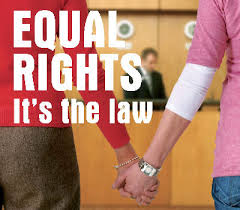 The controversial Equality Act, which was designed to replace a number of anti-discrimination laws, was due to come (partially) into force in October. However the intervening change of government since its enactment in April 2009 appeared to threaten the legislation, particularly after the timetable for the gradual enforcement of its provisions was withdrawn.
Some experts speculated that instead of repealing the Act, the new Government would simply not bring certain parts of it into force, notably the provisions on pay reporting and positive discrimination that were unpopular with the Conservative Party. However the Government Equality Office has now reinstated the original timetable, with the core provisions due to commence in October.
There is still some possibility that some parts of the Act will not become law. Introduced as part of the Labour Party’s 2005 manifesto fulfilment, the Equality Act came under fire for some of its sections dealing with equal pay, positive action and addressing socio-economic disadvantage.
Like this:
Like Loading...
27 July 2012 by Isabel McArdle
 Paul Chambers v DPP [2012] EWHC 2157 – Read judgment
The famous ‘Twitter joke’ conviction of Paul Chambers has been overturned on appeal, bringing welcome clarity to what is and what is not an offence of this type. On discovering a week before he was due to take a flight that the airport was closed due to adverse weather conditions, he tweeted that “I am blowing the airport sky high!!” unless the situation was resolved by the time of his flight. He was convicted of sending a message of a “menacing character”, but has had the conviction quashed on appeal, on the basis that, as it was a joke, it was not of a menacing character.
“I had decided to resort to terrorism”
Mr Chambers was intending to fly out of Robin Hood Airport on 15 January 2010 to meet a romantic partner he met on Twitter. On 6 January, via Twitter, he became aware that severe weather was causing problems at the airport, and engaged in a conversation on Twitter where he made the following comments:
“…I was thinking that if it does [close due to adverse weather] then I had
decided to resort to terrorism”
Continue reading →
Like this:
Like Loading...
26 April 2010 by Adam Wagner

The UK Supreme Court Blog has posted on United States v Stevens, a US Supreme Court decision on animal cruelty videos, involving “freedom of expression in the extreme”. The decision provides for an interesting comparison with the approach to freedom of expression in the UK courts.
If the Human Rights Act 1998 is replaced by a Bill of Rights, the Bill’s drafters are likely to look at other legal systems in order to see how best to recalibrate the balance of the various protections. The drafters of the European Convention on Human Rights themselves had the US Bill of Rights, which has been in force since 1791, as inspiration.
Similar but different
Arguably, the US Bill of Rights places a stronger emphasis on freedom of expression than our domestic law. Freedom of expression under Article 10 of the European Convention is subject to a number of qualifications. There is a long list, including the interests of national security, territorial integrity, public safety, the prevention of disorder or crime, the protection of health or morals, and the protection of the reputation or rights of others.
Section 12 of the Human Rights Act 1998 shifts the balance slightly, by stating that a court must pay “particular regard” to cases involving the public interest in disclosure of material which has journalistic, literary or artistic merit.
By contrast, despite the US Bill of Rights’ 219 years on the statute books, there remains only a very limited list of forms of expression which are not
Continue reading →
Like this:
Like Loading...
21 May 2010 by Adam Wagner
 The full Coalition agreement is now available, and has made things a little clearer on the new government’s plans for the Human Rights Act. But will the promised review of the 1998 Act be anything more than a time-wasting exercise born of irresolvable disagreements between the partners on fundamental rights, and will the changes last?
“The Coalition: our programme for government” is available to download here. The civil liberties section is largely the same as in the draft agreement published last week, but with an added section on the recently announced Commission to
investigate the creation of a British Bill of Rights that incorporates and builds on all our obligations under the European Convention on Human Rights, ensures that these rights continue to be enshrined in British law, and protects and extends British liberties. We will seek to promote a better understanding of the true scope of these obligations and liberties.
We posted earlier in the week on three possible outcomes arising from the Commission; first, full repeal of the 1998 Act, second, repeal and replacement with a Bill of Rights or, third, create in effect a “Human Rights Act Plus”, which would bolster the 1998 Act whilst maintaining the UK obligations under the European Convention. As predicted, it appears that the third option has been selected, but under the Bill of Rights banner.
Continue reading →
Like this:
Like Loading...
20 July 2013 by David Hart KC
 “Transforming the right to property” is the title of an interesting and controversial recent post (17 July 2013) on the Strasbourg Observers blog by Laurens Lavrysen. He declares his position up front:
“Reading Strasbourg case-law on a systematic basis, I always feel uncomfortable when I see the Court’s expansive protection in the field of Article 1 Protocol 1. Basically, that is because I don’t really like the idea of a human right to property for a number of reasons.”
These reasons can be summarised as (i) the right assumes the current distribution of wealth, and thus protects that status quo; (ii) the right can amount itself to a violation of other human rights – slavery being the most egregious example, though Lavrysen asserts more controversially the fact that intellectual property rights may restrict access to medicines affecting the right to health (iii) the right does not distinguish between the types of property its protects
thereby principally placing the poor man’s means of subsistence on the same footing as the millionaire’s yacht.
Continue reading →
Like this:
Like Loading...
17 October 2025 by Rosalind English
Rex v Hamit Coskun (Judgement on appeal), Southwark Crown Court
Hearing on 9th and 10th October 2025
It will come to the surprise of many that the common law offence of blasphemy in the UK was only abolished in 2008. It has no place in a secular society such as ours. However attempts have been made to use the Public Order Act 1986 to introduce blasphemy by the back door, by criminalising religious hatred offences.
This legislation excludes “antipathy, dislike, ridicule, insult or abuse of particular religiions’ from its religious hatred provisions.
Continue reading →Like this:
Like Loading...
11 September 2011 by Adam Wagner
 It is ten years since the terror attacks of 11 September 2001. Like many people, I have been thinking back to where I was on that day.
Bizarrely, given what followed, I spent 11 September 2001 only a few miles away from the United States military base in Guantanamo Bay. I was travelling through Cuba with friends, and we had reached the Eastern tip of the island, the seaside village of Baracoa. We had even visited Guantanamo Bay’s entrance the previous day; it was a tourist attraction which the Lonely Planet guide billed as the place where you could find Cuba’s only MacDonalds.
Continue reading →
Like this:
Like Loading...
26 October 2010 by Isabel McArdle
 Anam v Secretary of State for the Home Department [2010] EWCA Civ 1140 – Read judgment
This appeal raises interesting questions about the approach the courts should take when considering whether detention pending deportation is legal in a case involving an ex-convict with serious psychiatric illness. A failure to implement a Home Office policy on the subject did not automatically make the decision to detain unlawful. However, the Court of Appeal was not unanimous on what the correct test for legality was.
This was an appeal against a deportation decision by the Secretary of State for the Home Department. The Appellant had a long criminal record and in 2007 was sentenced to 4 years in prison for robbery. Later that year, the deportation decision was made. However, the Appellant also had a history of serious psychiatric illness.
Continue reading →
Like this:
Like Loading...
5 November 2015 by Guest Contributor
 On behalf of Professor Van Bueren and the Human Rights Collegium at the School of Law, Queen Mary University of London (QMUL) is featuring a theatre play and expert discussion on child refugees to honour the life of Lisa Jardine (pictured).
The Human Rights Collegium is hosting this event with the theatre group Ice and Fire to raise awareness about the situation of child refugees in the current refugee crisis. This multimedia initiative, featuring a theatre performance followed by discussion and Q&A, offers an opportunity to reflect upon the journeys of children in flight, from the moment they start their journey to the point they reach their destination in Europe and the UK, tracing their experiences of the asylum process and their life after status recognition and/or as failed applicants.
Details:
Tuesday 17 November 2015, 6:30-9pm
Arts Two Lecture Theatre
Queen Mary University of London
Mile End Road, E1 4NS
To register for this event, please visit the QMUL Department of Law Eventbrite page.
Like this:
Like Loading...
19 October 2011 by Adam Wagner
 A review of the UK’s extradition laws by a former Court of Appeal judge has found that existing arrangements between the UK and USA are balanced but the Home Secretary’s discretion to intervene in human rights cases should be removed.
The review by Sir Scott Baker was commissioned shortly after the Coalition Government came to power, fulfilling the pledge in its programme for government to ”review the operation of the Extradition Act – and the US/UK extradition treaty – to make sure it is even-handed”. In my September 2010 post I said that the review marked a victory for campaigners against certain extradition agreements, most notably the supporters of alleged Pentagon hacker Gary McKinnon (pictured).
Continue reading →
Like this:
Like Loading...
2 February 2011 by Adam Wagner
 Updated | The Human Rights Lawyers’ Association, of which I am a committee member, is recruiting a part-time administrator.
Full details of the post, which is for up to 10 hours per week and offers remuneration of £10,000 inclusive of VAT, can be found after the page break.
Continue reading →
Like this:
Like Loading...
8 January 2013 by Adam Wagner
 With apologies for the boring title, here are three quick things.
First, the Government’s consultation on Judicial Review changes ends on 24 January 2013, so you have just over two weeks to respond. As with some previous consultations, I will be collating responses on the blog so please feel free to email them to me. My most recent thoughts are here: Quicker, costlier and less appealing: plans for Judicial Review reform revealed
Secondly, the European Court of Human Rights is to rule next Tuesday 15 January on four key cases involving discrimination and religious rights. The full background is here: Religious freedom in UK to be considered by Strasbourg Court and you can watch the entire hearing here. We will, of course, be covering the judgment in full.
Thirdly, in November 1 Crown Office Row hosted a mock trial on the topic of public inquiries and inquests at which a number of 1COR barristers, including me, spoke. The podcast of the event is now online and you find it here and also below the page break. You can also download the handout, which includes a number of very useful skeleton arguments for the mock trial, here.
Continue reading →
Like this:
Like Loading...
18 July 2017 by Martin Downs
 EU Equality law had its moment in the sun in the week after London Pride with the UK Supreme Court Judgment in the case of Walker v Innospec – albeit that the front page treatment in The Metro was not exactly the same as that in The Telegraph.
Many commentators had feared that the ECJ decision in David Parris v Trinity College Dublin would be a problem but Professor Rob Wintemute argued in this Blog earlier this year that it could be distinguished – and he was proved right. He also had quite a big walk on role in Supreme Court Judgment (see below).
Continue reading →
Like this:
Like Loading...
22 February 2021 by Hugo Murphy
A number of legal developments put free speech under the spotlight this week.
First, media commentators disputed the significance of the Duchess of Sussex’s successful privacy claim against Associated Newspaper Limited, covered in last week’s round-up. A leader in The Times issued the grave warning that ‘Mr Justice Warby’s judgment creates a precedent that will have a chilling effect on the media,’ not least ‘given that what was at stake…were issues that affect society as whole’. Some media lawyers took a dim view of such alarm, suggesting there was little to be surprised at in Warby J’s carefully reasoned conclusion that no legitimate public interest was to be found in publishing the intimate contents of a daughter’s letter to her father.
Then came Education Secretary Gavin Williamson’s announcement of a proposed free speech law targeting universities, designed to reverse ‘the chilling effect on campuses of unacceptable silencing and censoring’. Its reception was mixed to say the least. The scheme would impose a statutory free speech duty on universities and student unions, enabling ‘no-platformed’ academics, students and visiting speakers to sue for compensation. Potential infringements would be investigated by a mandated ‘free speech champion’, empowered to recommend various forms of redress. While many academics welcomed the basic principles behind the proposal, others complained that it fomented “phantom fears” of a “cancel culture” crisis.
Continue reading →Like this:
Like Loading...



Recent comments