Search Results for: prisoner voting/page/50/ministers have been procrastinating on the issue, fearing that it will prove unpopular with the electorate.
23 September 2010 by Rosalind English
 Updated x 2 | Kay and Others v United Kingdom (European Court of Human Rights, 21st September) – Read judgment
The European Court of Human Rights has ruled that the UK violated the human rights of short-term tenants of council property whose leases had been terminated. The decision will not, however, prove much help to evicted tenants in similar situations in the future, although it should encourage courts to take their personal circumstances into account when deciding if they should be evicted.
The applicants were occupiers of housing units owned by Lambeth borough council under leases which had been provided by a charitable housing trust. Lambeth brought possession proceedings after the leases were terminated in 1999. The applicants complained that these proceedings breached their right to respect for private and home life under Article 8 (the right to a family life). They were unsuccessful before the domestic courts but the Strasbourg Court found a violation of Article 8, insofar as the applicants had been prevented from raising it as a defence.
Continue reading →
Like this:
Like Loading...
27 January 2012 by Rosalind English

The Queen on the Application of Medical Justice v Secretary of State for the Home Department [2011] EWCA Civ 1710 – read judgment
People who make unsuccessful claims to enter or remain in the United Kingdom cannot be removed without being given sufficient time for a lawyer to prepare a proper challenge to their claim. The government has failed in its appeal against the Administrative Court’s finding that government policy unlawfully provided for expedited removal procedures in certain pressing circumstances – for example where there was a risk that the person concerned, if given advanced notification of his removal, might attempt to frustrate those measures of removal. The policy was quashed because it interfered with people’s right of access to a lawyer.
The Home Secretary is responsible for granting or refusing leave to remain in the United Kingdom for those who do not have the right of abode in this country in accordance with the Immigration Rules. It is an important aspect of maintaining immigration control that a credible enforcement process is in force and that those with no right to remain in the United Kingdom are removed from the jurisdiction while not infringing the accepted rights of those about to be removed.
Continue reading →
Like this:
Like Loading...
3 June 2011 by Lucy Series
 I watched Panorama’s exposé of institutional abuse of adults with learning disabilities at Winterbourne View Hospital with mounting horror. What legal mechanisms were available to prevent abuses like this, or bring justice to victims?
There can be little doubt that the acts of the carers towards the patients were inhuman and degrading, a violation of their Article 3 rights. It is highly questionable whether the establishment fulfilled their rights to privacy and dignity under Article 8, the right to private and family life.
Continue reading →
Like this:
Like Loading...
29 June 2012 by David Hart KC
 Coalition for Responsible Regulation v. EPA US Federal Court of Appeals, DC, 26 June 2012, read judgment
This week, two big decisions which will have come as a relief to the President. The US Supreme Court did not strike down his healthcare law (judgment here), and, to the subject of this post, neither did the Federal Courts of Appeal in Washington declare invalid key greenhouse gas rules set by the Environmental Protection Agency. This saga is a perfect illustration of how closely law and politics get intertwined in the US.
As I pointed out in my previous post, Massachusetts v. EPA (549 U.S. 497 (2007)). told the EPA that it had a duty to regulate greenhouse gas (GHG) emissions because they were “any air pollutant” within the meaning of the Clean Air Act – as two prior general counsels had repeatedly told it. The EPA (under the previous administration) needed to be taken to the Supreme Court before responding. Thereafter, the EPA, with a new head appointed after Obama’s election, reached an Endangerment Finding, to the effect that GHGs may “reasonably be anticipated to endanger public health or welfare”. In the pellucid prose of this Court,
Next, it issued the Tailpipe Rule, which set emission standards for cars and light trucks. Finally, EPA determined that the CAA requires major stationary sources of greenhouse gases to obtain construction and operating permits. But because immediate regulation of all such sources would result in overwhelming permitting burdens on permitting authorities and sources, EPA issued the Timing and Tailoring Rules, in which it determined that only the largest stationary sources would initially be subject to permitting requirements.
Industry and a whole host of states (no prizes for guessing which fossil fuel producing states were in support) sought to challenge these rules.
Continue reading →
Like this:
Like Loading...
13 April 2010 by Adam Wagner
 The conviction of the “Heathrow heist four” at the Old Bailey has raised serious concerns that the historic right to trial by jury may be slipping away.
For the first time in 350 years, the four men were convicted in the Crown Court by way of a trial without a jury. On March 31st each received long prison sentences for their part in the robbery.
Henry Porter, writing in The Guardian, has severely criticised the reforms which allowed the trial to proceed with no jury. He says:
A profound change has occurred in Britain where it is now possible for counsels and a judge to decide the fate of defendants without the involvement of 12 ordinary citizens – the fundamental guarantee against arbitrary state punishment represented so well by the use of the star chamber under King Charles I.
The right to trial by jury has been steadily eroded in recent years. Civil courts now operate almost entirely without juries, as do some lower-level criminal courts such as Magistrates’ courts, which are only able to impose custodial sentences up to a maximum length of one year.
Continue reading →
Like this:
Like Loading...
13 November 2012 by Jim Duffy
 Othman (Abu Qatada) -v- Secretary of State for the Home Department (appeal allowed) [2012] UKSIAC 15/2005_2 – read judgment
Angus McCullough QC appeared for Abu Qatada as his Special Advocate in these proceedings before SIAC. He is not the author of this post.
Earlier today, Abu Qatada was released from Long Lartin prison following his successful appeal before the Special Immigration Appeal’s Commission (SIAC). Qatada was challenging the decision to deport him to Jordan, where he faces a retrial for alleged terrorism offences.
For most of the last decade, Abu Qatada has been detained pending deportation to his home country. At his two original trials, he was convicted in absentia and sentenced to full life imprisonment with 15 years’ hard labour.
In his latest challenge to his deportation, SIAC concluded, as the European Court of Human Rights had in May 2012, that due to the real risk of a flagrantly unfair trial in Jordan, Qatada could not be deported there.
Continue reading →
Like this:
Like Loading...
3 November 2016 by Dominic Ruck Keene
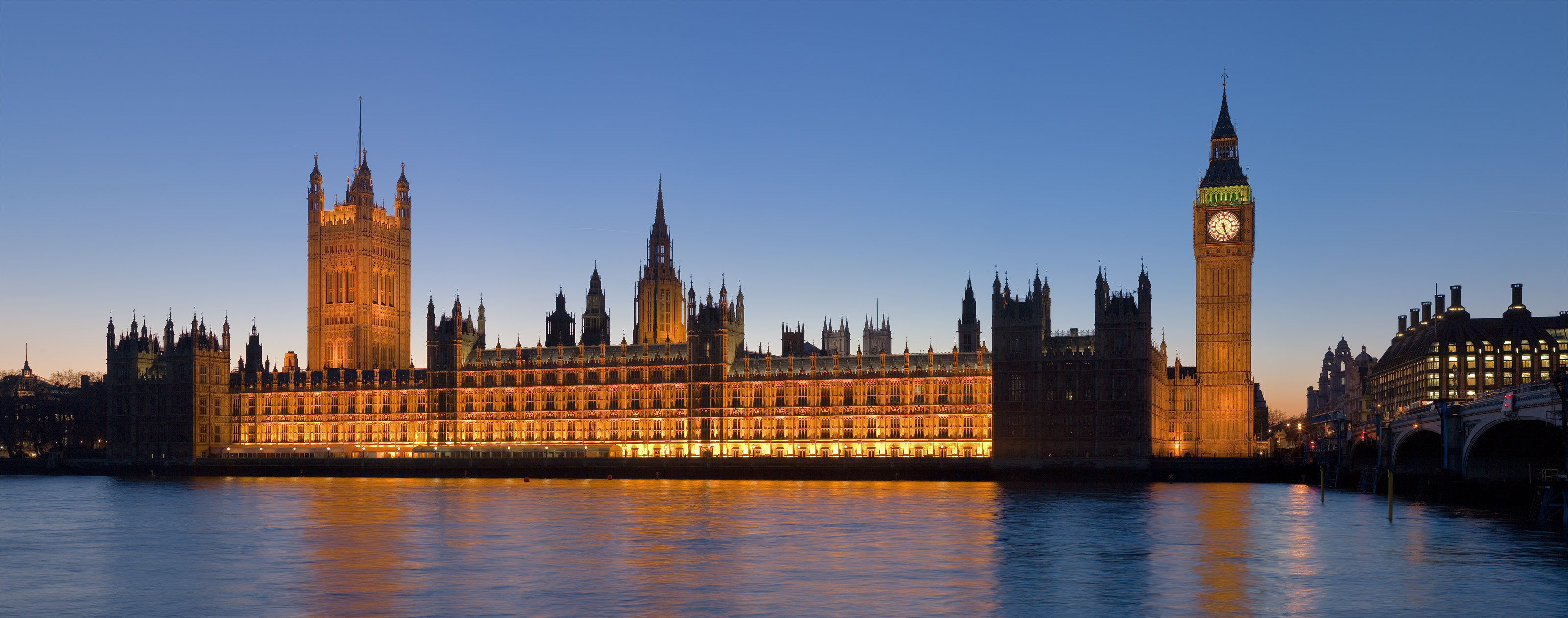
In R (on the application of Gina Miller and Ors) v The Secretary of State for the European Union, the High Court, in a masterly exposition of the principles of constitutional law and statutory interpretation, held that the Secretary of State did not have the power under the Crown’s prerogative to give notice under Article 50 and thereby begin the process under which the United Kingdom will leave the European Union.
Sir Oliver Cromwell said in 1644 “We study the glory of God, and the honour and liberty of parliament, for which we unanimously fight, without seeking our own interests… I profess I could never satisfy myself on the justness of this war, but from the authority of the parliament to maintain itself in its rights; and in this cause I hope to prove myself an honest man and single-hearted.” I suspect that Cromwell will be reading the judgment delivered today and chuckling (if he ever would do something so frivolous) with pleasure at the sight of the High Court roundly defending the sovereignty of Parliament.
Continue reading →
Like this:
Like Loading...
22 March 2012 by David Hart KC
 Cases T-439/10 and T-440/10, Fulmen & Mahmoudian v. Council of the European Union, read judgment
Fulmen, as many of you will know, means thunderbolt in Latin. So it must have seemed when this Iranian company had its assets frozen. This case is a good example of how general principles of European law were applied to annul measures taken against these Iranian applicants. The measures were part of EU policy to apply pressure on Iran to end nuclear proliferation. Fulmen was said to have supplied electrical equipment on the Qom/Fordoo nuclear site and Mr Mahmoudian is a director of Fulmen. Hence they were both listed in Council Decision 2010/413/CFSP. The upshot was that all of their assets were frozen by the EU.
Continue reading →
Like this:
Like Loading...
5 February 2019 by Jeremy Hyam QC
Esegbona v Kings College Hospital [2019] EWHC 77 (QB)
Twenty years on from Bournewood, the case that prompted the introduction of DoLS, and as the Mental Capacity Amendment Bill tolls the death knell for DoLS and introduces as their replacement Liberty Protection Safeguards, the High Court (HHJ Coe QC sitting as a High Court Judge) has given a sharp reminder of the human and financial cost of what happens when a hospital fails properly to discharge its obligations under the Mental Capacity Act and as a result, falsely imprisons (in a hospital) a patient.
Continue reading →
Like this:
Like Loading...
20 January 2017 by Dominic Ruck Keene
 This blog is the first covering the series of three important judgments given on Tuesday by the Supreme Court on issues arising out of the War on Terror and the United Kingdom’s interventions in Iraq and Afghanistan. Belhaj and another v Straw and others) and Rahmatullah (No 1) v Ministry of Defence and another [2017] UKSC 3 involved the alleged complicity of United Kingdom officials in allegedly tortious acts of the UK or other states overseas. The torts alleged include unlawful detention and rendition, torture or cruel and inhuman treatment and assault.
The Supreme Court unanimously dismissed the Government’s appeals and ruled that the doctrine of state immunity was no bar to the claims, and that the Government and the various officials sued had not, on the assumed facts, shown any entitlement to rely on the doctrine of foreign act of state so as to defeat the claims brought against them.
Continue reading →
Like this:
Like Loading...
12 February 2012 by Sam Murrant
 Welcome back to the human rights roundup, your recommended weekly intake of human rights news. The full list of links can be found here. You can also find our table of human rights cases here and previous roundups here.
In the news
Abu Qatada released on bail
Abu Qatada was released on “very restrictive” bail conditions this Monday in a decision by the Special Immigration Appeals Commission on the basis of both British legal precedent and Strasbourg human rights case-law. This also follows from the recent ruling by the European Court of Human Rights that he should not be returned to his native Jordan, where torture-derived evidence may be used against him in trial.
Continue reading →
Like this:
Like Loading...
22 May 2015 by David Hart KC
 Gulati v. MGN Ltd [2015] EWHC 1482 (Ch), Mann J – judgment here
For some years in the early and mid 2000s, a routine form of news-gathering in the Mirror Group was phone hacking – listening to voicemails left for celebrities by their friends, and then dishing up revelations in their papers. And this judgment amounts to a comprehensive pay-back time for the years of distress and upset sustained by those celebrities, as the ins and outs of their private lives were played out for the Mirror Group’s profit. The damages awarded well exceeded those previously payable, as justified in the tour de force of a judgment by Mann J.
Warning – the judgment, compelling though it is, runs to 712 paragraphs. It concerns the assessment of damages in eight cases. The Mirror Group belatedly admitted liability and apologised, not before denying any wrongdoing to the Leveson inquiry. Other claims rest in the wings pending this trial. But with awards between £72,500 and £260,250, the bar has been set high by Mann J.
The claimants (with one exception) were the classic subjects of tabloid columns, namely EastEnders and Corrie stars (or those unfortunate to be married to them), the sometime air hostess girlfriend of Rio Ferdinand, Jude Law’s former wife, Sadie Frost, and, inevitably, Gazza. Seven sued because the hacking led to repeated articles about them. The eighth, Alan Yentob, Creative Director of the BBC, was hacked because of the information derived from the famous people who had left voicemails for him.
Continue reading →
Like this:
Like Loading...
12 December 2012 by Rosalind English
 This week David Cameron announced plans to introduce whole genome mapping for cancer patients and those with rare diseases within the NHS.
Single gene testing is already available across the NHS ranging from diagnosing cancers to assessing patients’ risk of suffering side effects from treatment, but this initiative will mean that the UK will be the first country in the world to introduce the technology within a mainstream health system, with up to 100,000 patients over three to five years having their whole genome – their personal DNA code –sequenced. According to Chief Medical Officer Professor Dame Sally Davies
The genome profile will give doctors a new, advanced understanding of a patient’s genetic make-up, condition and treatment needs, ensuring they have access to the right drugs and personalised care far quicker than ever before.
What will this mean for medical confidentiality? The official announcement ends with the following declaration:
1. Genome sequencing is entirely voluntary. Patients will be able to opt out of having their genome sequenced without affecting their NHS care.
2. Whole genome sequence data will be completely anonymised apart from when it is used for an individuals own care.
3. A number of ways to store this data will be investigated. The privacy and confidentiality of NHS patients will be paramount in this decision.
Continue reading →
Like this:
Like Loading...
7 October 2021 by Natasha Isaac
R (Cornerstone) v Ofsted [2021] EWCA Civ 1390
In this claim for judicial review, the issue was whether it was lawful for the claimant independent fostering agency (Cornerstone) only to accept heterosexual evangelical Christians as potential carers under the Equality Act 2010 (EA 2010) and the European Convention on Human Rights (the Convention).
Ofsted wrote a draft report in which they considered this policy to be unlawful when reviewed in the context of the EA 2010 and the Human Rights Act 1998 (HRA 1998) and in a report issued in draft on 12 June 2019 Ofsted assessed the effectiveness of Cornerstone’s leaders and managers as ‘Inadequate’.
The High Court dismissed Cornerstone’s claim, including holding that whilst its policy was not unlawfully discriminatory on the grounds of religious belief, it was unlawfully discriminatory on the grounds of sexual orientation.
The Court of Appeal dismissed Cornerstone’s appeal.
Background law and facts
Cornerstone are a small Independent Fostering Agency (IFA) founded in 1999 based in the North East of England, which at the time of Ofsted’s inspection in 2019 had 14 approved fostering households and cared for 18 children. They claim to provide high quality adoption and fostering services according to Christian principles for children who are hard to place.
The wording of the policy, which potential carers were required to sign up to, under scrutiny appears at paragraph 10 of their Code of Practice under which
There is an expectation on all Cornerstone carers to: […] Set a high standard in personal morality which recognises that God’s gift of sexual intercourse is to be enjoyed exclusively within Christian marriage; abstain from all sexual sins including immodesty, the viewing of pornography, fornication adultery, cohabitation, homosexual behaviour and wilful violation of your birth sex. [21]
Cornerstone argued that its policy in its entirety was essential to the continuation of its work, both because of the funding it receives and because of the shared faith and values of its carers which led to a community of fellowship and worship.
The Charity Commission Review in 2010
Notably the Charity Commission had also reviewed Cornerstone’s work in 2010 after the judgment in Catholic Care ((Diocese of Leeds) v Charity Commission for England and Wales [2010] EWHC 520 (Ch)) noting that the implications from that judgment were that an organisation that discriminates in a way that is not justified is not likely to be established for the public benefit and as such will not be a charity.
Cornerstone’s response to the Charity Commission was, amongst other things, that it did not discriminate on the grounds of sexual orientation but sexual behaviour. The Charity Commission accepted this but without reason. The Charity Commission also accepted that Cornerstone’s provision of services fell within paragraph 2 of Schedule 23 to the EA 2010 which permits the restriction of services because of the purpose of the organisation and/or to avoid causing offence on the grounds of religion or belief.
The Court of Appeal held that the distinction between sexual behaviour and sexual orientation was a nullity because sexual behaviour was a manifestation of sexual orientation. Additionally, the Court found that, as per the judgment in the High Court, Parliament had allowed discrimination on religious grounds except in respect of acts done on behalf of a public authority pursuant to contract which are discriminatory on the grounds of sexual orientation.
Continue reading →Like this:
Like Loading...
10 November 2014 by Rosalind English
 In his lecture to the Administrative Law Bar Association earlier this month, Lord Sumption surveys the concept of “anxious scrutiny” – a judicial method which he characterises as a forerunner to the principle of proportionality. The term was actually coined by Lord Bridge in Bugdaycay (1986), and was meant to apply where the rights engaged in a case were sufficiently fundamental, and stretched the traditional “Wednesbury” test to public authority decisions or actions which were not, on the face of it, irrational. (The citation given in the PDF of the speech incidentally is incorrect). The same way of thinking had been arrived at in the US courts a few years earlier, with their “hard look” doctrine, but to Lord Sumption there was something peculiarly English about the “crab-like” way in which our courts approached and eventually acknowledged this doctrine, hitherto alien to the judicial toolbox.
But if we apply anxious scrutiny to the doctrine itself, Sumption suggests, it raises more questions than it answers.
Continue reading →
Like this:
Like Loading...

 Updated x 2 | Kay and Others v United Kingdom (European Court of Human Rights, 21st September) – Read judgment


Recent comments