Search Results for: prisoner voting/page/46/ministers have been procrastinating on the issue, fearing that it will prove unpopular with the electorate.
9 January 2023 by Lucy Stock
In the news:
- President Putin has ordered his troops in Ukraine to cease fire for 36 hours over Orthodox Christmas and has urged Ukrainian forces to do the same. However, the move was rejected by Kyiv, and the US state department, as a “cynical trap” and propaganda move. Putin announced the truce, to begin at noon 6 January 2023, after a call by Patriarch Kirill, leader of the Russian Orthodox Church.
- Ministers announced legislation that looks to enforce “minimum service levels” in six sectors, including the health service, rail, education, fire and border security. Unions that refuse to do so will face injunctions and could be sued for damages. Employers will be able to sue unions, and dismiss union members who are told to work under the minimum service requirement but refuse to do so. Prime minister Rishi Sunak, however, vetoed more far-reaching measures that would have increased the threshold for strike ballots, doubled the notice for industrial action from two weeks to a month, and banned ambulance workers from striking.
- The British Medical Association have informed the government that junior doctors will strike for 72 hours in March if the action is supported in a ballot opening next week. Doctors would not provide emergency care during the strike. The union, which has 45,000 junior doctor members, wants their real-terms pay restored to 2008 levels: a 26.1 per cent increase. The scale of the strike proposed by the BMA is larger than those to be held by nurses and ambulance staff, and will inflame tensions between the unions and the government. The Royal College of Nursing strikes are for 12 hours at a time, and the ambulance unions are holding 24-hour strikes.
Continue reading →Like this:
Like Loading...
31 May 2012 by David Hart KC
 Assange v. The Swedish Prosecution Authority [2012] UKSC 22, read judgment
Today, the Supreme Court held that Julian Assange should be extradited to Sweden for alleged rape. This is subject to further submissions on one point (concerning the Vienna Convention on Treaties), well covered by Joshua Rozenberg in his post on the lively proceedings when the judgment was handed down.
The whole of the appeal turned on one technical point, simple to state, but it took the Court 266 paragraphs to answer. Was the European Arrest Warrant which triggered the extradition request signed by a”judicial authority,” given that it was signed by a prosecutor? Most English lawyers, unburdened with the detail, would say – no, a prosecutor is not a judicial authority, indeed he or she is the opposite of that, a party. But, according to the Supreme Court, they are wrong, and so are the ministers who told Parliament that a judicial authority has to be some sort of judge or court.
Continue reading →
Like this:
Like Loading...
22 October 2012 by Sam Murrant
 Welcome back to the UK Human Rights Roundup, your weekly bulletin of human rights news. The full list of links can be found here. You can also find our table of human rights cases here and previous roundups here.
In the news
This week, free speech and social media has again created a lot of online commentary, with UKHRB founder Adam Wagner chairing a panel discussion on the subject. Also hitting the blogosphere this week: the government’s proposal to opt out of 130 EU criminal law measures; the progress of the Azelle Rodney Inquiry; comments on the Gary McKinnon case and Prince Charles’ letters to government ministers.
Continue reading →
Like this:
Like Loading...
17 November 2017 by Rosalind English
 Scotch Whisky Association v Lord Advocate and Another (Scotland) [2017] UKSC 76 – read judgment
The Supreme Court has ruled that the introduction of minimum pricing into the sales of alcohol in Scotland will not constitute a disproportionate measure interfering with the free movement of goods and competition in the EU. The initial legislation that paved the way for minimum pricing was approved by the Scottish parliament five years ago but has been under legal challenge since. The Scottish Parliament had decided to address the health and social consequences arising from the consumption of cheap alcohol by a minimum pricing regime. They did this by inserting in the Scottish licensing legislation an additional condition that an alcohol product must not be sold at a price below a statutorily determined minimum price per unit of alcohol. The minimum price is to be set by secondary legislation. The current proposal is 50 pence per unit of alcohol.
Continue reading →
Like this:
Like Loading...
29 July 2016 by David Scott
The Christian Institute and others (Appellants) v The Lord Advocate (Respondent) (Scotland) [2016] UKSC 51 – read judgment here
The Supreme Court has today unanimously struck down the Scottish Parliaments’s Named Persons scheme as insufficiently precise for the purposes of Article 8, overturning two previous decisions at the Court of Session (see our previous coverage here).
by David Scott
Continue reading →
Like this:
Like Loading...
18 January 2013 by Jim Duffy
 Rocknroll v News Group Newspapers Ltd [2013] EWHC 24 (Ch) – Read judgment
Earlier this month, Rocknroll came to the Chancery Division. Mr Justice Briggs set out his reasons yesterday for granting Kate Winslet’s new husband an interim injunction prohibiting a national newspaper from printing semi-naked photographs of him taken at a party in July 2010 and later posted on Facebook.
In Edward Rocknroll v. News Group Newspapers Ltd, the Judge decided that the Claimant was likely to succeed at a full trial in establishing that his right to respect for his family life (protected by article 8 of the European Convention on Human Rights) and his copyright over the photographs should prevail over The Sun’s right to freedom of expression (protected by article 10 ECHR). As such, the photographs cannot be published nor their contents described pending a full trial.
Continue reading →
Like this:
Like Loading...
14 October 2024 by Catherine Churchill
In UK News
Last week, the Government published the new Employment Rights Bill – a bill Deputy PM Angela Raynor has said seeks to “turn the page on an economy riven with insecurity, ravaged by dire productivity and blighted by low pay”. Among the measures included are steps towards ending “exploitative” zero-hour contracts, the introduction of a statutory probation period for new hires, and the removal of the two-year qualifying period for claims to unfair dismissal. The bill places significant emphasis on flexible working as the future of employment, stating that it will be “default for all, unless the employer can prove it is unreasonable”. With various aspects of the bill strengthening protections to women in the workplace, Jemima Olchawski, CEO of the Fawcett Society, has called the bill “a win for women”. However, the bill is not without its critics. Sharon Graham, the general secretary of Unite union, claimed in a post on X (formerly Twitter) that the bill has “more holes than Swiss cheese”, leaving loopholes for employers to evade the provisions on zero-hour contracts and fire & rehire. Whistleblowing charity Protect have also expressed regret that the bill does not go far enough to strengthen protections for whistleblowers.
The Tory leadership race continued last week as the candidates were whittled down to a final two: Kemi Badenoch and Robert Jenrick, both considered to be on the right of the party. Membership of the ECHR has become an increasingly central issue in the race. While Jenrick has promised to leave the ECHR immediately if ever elected PM – calling the issue one of “leave or remain” – Badenoch told Sky News she believes that focusing on the ECHR “shuts down the conversation we need to have with the entire country” about migration. Both candidates have been the subject of criticism for comments made during the party conference. Jenrick, in support of his campaign to leave the ECHR, has controversially claimed that special forces are opting to kill instead of catch terrorists as otherwise the “European Court will set them free”. The charity Action on Armed Violence have stated that Jenrick’s comments “do a disservice to the serious allegations at hand” in the inquiry into SAS killings in Afghanistan, which must be “allowed to proceed without political interference”. Badenoch has come under fire for comments insinuating that maternity pay is “excessive” and that “about 5 to 10%” of civil servants are so bad that they “should be in prison”. She has backtracked on both fronts, claiming her comments were “misrepresented”.
In Other News
A UN report published last Thursday – three days after the one-year anniversary of the October 7th attacks – contains findings that “Israel has perpetrated a concerted policy to destroy Gaza’s healthcare system”, committing war crimes in doing so. The report further states that Israeli security forces have “deliberately killed, detained and tortured medical personnel”, with children having “borne the brunt” of the health system’s “collapse”. It was further found that the “institutionalised mistreatment” of Palestinian detainees had taken place under direct orders from Itamar Ben-Gvir, Israeli National Security Minister. On Friday, in a statement from its mission in Geneva, Israel took strong objection to the report, calling its conclusions “outrageous” and a “blatant attempt to delegitimise the very existence of the State of Israel and obstruct its right to protect its population, while covering up the crimes of terrorist organisations”. Israeli representatives have accused the commission behind the report, the UN Independent International Commission of Inquiry on the Occupied Palestinian Territories, of creating an “alternate reality” and refused to cooperate with the investigations preceding the report’s compilation.
On Wednesday, the United Nations Human Rights Council in their 57th session adopted a resolution on Afghanistan in response to the escalating crisis in the country, extending the mandate of the UN Special Rapporteur on Afghanistan. The report resulting from resolution 54/1 to carry out a “stocktaking” of accountability options on Afghanistan was also presented at the session. The report detailed a variety of recommendations to Afghan de facto authorities, including the establishment of a moratorium on executions and the implementation of victim-centred transitional justice measures. While Amnesty International celebrated that the stocktaking marked the “first time in recent years that the UN is debating how to address serious accountability gaps”, the measure was nevertheless “inadequate” in the face of the crimes under international law being committed in Afghanistan. Amnesty also criticised the resolution adopted this week, claiming the council have “shied away from sufficiently supporting justice for the people of Afghanistan who have placed their hopes in the international community” by failing to establish an independent international accountability mechanism.
In the Courts
Last week, the European Court of Justice ruled that European Member States are obligated to recognise legal gender identity changes conducted in other Member States. The Court held that Romania’s refusal to recognise the applicant’s UK Gender Recognition Certificate constituted a violation of his right to move and reside freely within the Member States of the European Union. In a press release accompanying the ruling, the CJEU stated that “gender, like a first name, is a fundamental element of personal identity; […] a divergence between identities resulting from such a refusal of recognition creates difficulties for a person in proving his or her identity in daily life as well as serious professional, administrative and private inconvenience”. The applicant’s legal counsel, human rights lawyer Iustina Ionescu, told charity Transgender Europe that the “verdict has shown that trans people are equal citizens of the European Union”.
The European Court of Human Rights has ruled that Cyprus’ immediate return to Lebanon of Syrian asylum seekers intercepted at sea constituted a violation of their human rights – in particular, the prohibition of inhuman or degrading treatment. There had also been a violation of Article 4 of Protocol No. 4 (prohibition of the collective expulsion of aliens). Cyprus had failed to consider the risk of lack of access to asylum in Lebanon, the risk of refoulement, and the individual situations of the asylum seekers. The Court paid significant attention to a Human Rights Watch report published in September 2020 which revealed systematic mistreatment of asylum seekers by Cypriot authorities. The report had been referenced in the applicants’ arguments and was not challenged by counsel for the Government. Cypriot Government spokesman Konstantinos Letymbiotis has stressed that the events concerned occurred in 2020, under the previous administration, and has denied the allegation that the government has been carrying out further refugee pushbacks since the ruling.
Like this:
Like Loading...
31 January 2012 by Alasdair Henderson
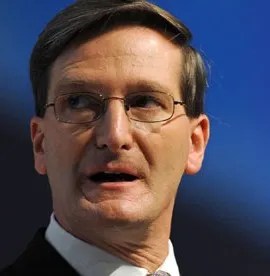 The Prime Minister’s speech at the Council of Europe (see our coverage here) has attracted significant press attention over the past week – ranging from flag-waving, sabre-rattling support to criticism from Sir Nicholas Bratza (the British President of the Court).
Hot on the heels of Cameron’s address on Wednesday, the Attorney-General Dominic Grieve gave a speech on Thursday which set out in further detail the Government’s plans for reform of the European Court of Human Rights and the incorporation of human rights into UK law.
The full text of the Attorney-General’s speech is not yet available (although a similar speech he gave last year and his own speech to the Council of Europe can be found here). However, it was interesting to compare his comments with those of David Cameron just a day before.
Continue reading →
Like this:
Like Loading...
19 November 2012 by Daniel Isenberg
 This is the first post by the blog’s new rounder-uppper Daniel Isenberg, who joins Sam Murrant. Welcome, Daniel!
Welcome back to the UK Human Rights Roundup, your weekly bulletin of human rights news. The full list of links can be found here. You can also find our table of human rights cases here and previous roundups here.
This week’s human rights news was dominated by the man who has become the Home Secretary’s bête noire, Abu Qatada. Elsewhere the UK’s relationship with the Strasbourg Court was addressed by Jack Straw and the Court’s recently-retired President, whilst the Court, itself, criticised the UK’s policy on criminal records data retention. Meanwhile, in speeches two Court of Appeal judges have made expressed views on human rights and the principle of proportionality.
Continue reading →
Like this:
Like Loading...
26 June 2013 by Adam Wagner
 Updated | Remember Inhuman Rights, The Sun’s garbled reporting of this Court of Appeal decision on Criminal Record Bureau checks? In February, I wrote this: No, The Sun, the Human Rights Act is not the EU. My complaint was about the headline, which screamed “Now EU could let fiends like him prey on your children“. This was obvious nonsense, since the judgment had nothing to do with the EU.
Well, I am delighted to report that following my post, the European Commission, which represents the interests of the European Union, complained to the Press Complaints Commission and the complaint has now been upheld. There was a “clear failure to take appropriate care over the accuracy of the coverage and a breach of the Editor’s Code, which was particularly significant at a time when the roles of both the EU and the Convention were a matter of major public debate“.
The newspaper has now published a correction. The full Adjudication can be found here. This is the main bit:
Continue reading →
Like this:
Like Loading...
15 July 2014 by Guest Contributor
PLP v Secretary of State for Justice [2014] EWHC 2365 – Read judgment / summary
 As the House of Lords is scheduled to vote on the Government’s proposals for a residence test for access to legal aid, Angela Patrick, Director of Human Rights Policy at JUSTICE considers today’s judgment of the Divisional Court in PLP v Secretary of State for Justice.
While we are all following the exciting live feeds on both the reshuffle and the progress of emergency legislation on surveillance, the freshly appointed Attorney General, Jeremy Wright MP, may want to cast his eyes to BAILLI.
The Administrative Court may this morning have handed him one of his first “to-do” list items. In – PLP v Secretary of State for Justice – a rare three judge Divisional Court has held that the Government’s proposal to introduce a residence test for legal aid – where all applicants will have to prove 12 months continuous lawful residence in the UK – is both ultra vires and discriminatory.
Continue reading →
Like this:
Like Loading...
12 April 2012 by Rachit Buch
 Free speech is under attack. Or so it seems. The last few weeks have been abuzz with stories to do with free speech: a Supreme Court ruling on the Reynolds defence to libel; contempt of court proceedings against an MP for comments made in a book and the latest in a growing line of criminal trials for Twitter offences. The diversity of media at the heart of these stories – print news, traditional books and online ‘micro-blogging’ – indicates the difficulty of the task for the legal system.
Flood v Times: how does this affect calls for libel reform?
On 21 March, the Supreme Court affirmed the Times newspaper’s reliance on the Reynolds defence to libel – often referred to as Reynolds privilege or the responsible journalism defence – to a claim by a detective sergeant in the Metropolitan Police.
Continue reading →
Like this:
Like Loading...
1 March 2012 by Adam Wagner
 Yesterday I spoke at Justice Wide Open, an excellent conference organised by Judith Townend. I mounted my usual open justice hobby horses (to coin a topical phrase) on how to make the justice system more accessible to the public, including a moan about human rights reporting. Someone told me during the break that according to her research, when newspapers put a positive slant on a human rights story, they tend to use the code word “civil liberties”. And, as if to prove the point, on the very same morning the Daily Mail put its considerable weight behind a crucial but until now sub-public-radar “civil liberties” and open justice issue, the Justice and Security Green Paper.
As readers of this blog will be aware, the Government proposes in the Green Paper to introduce “closed material procedures” into civil proceedings. For an explanation of why this amounts to “a departure from the foundational principle of natural justice“, look no further than the Special Advocates’ response to the consultation and my co-editor Angus McCullough QC’s post, A Special Advocate’s comment. But although the proposals have been getting lawyers and The Guardian hot and bothered, the sound of tumbleweed has been the loudest response. Until now, that is.
Continue reading →
Like this:
Like Loading...
17 March 2014 by Guest Contributor
 Within the past week the EU Commission has laid down its plans for protecting the rule of law across Europe and, importantly, for punishing member states that fail to meet rule of law standards. At first glance this appears to be a landmark in the EU’s regulation of the rule of law, fundamental rights and democracy, but is it the solution it claims to be?
Between political persuasion and ‘the nuclear option’
In an effort to prevent more proactively systemic breaches of the rule of law and human rights, the EU Commission has published a Communication on its new Framework to strengthen the Rule of Law. The Framework was largely the product of a consultation which was kick-started by President Barroso when he indicated his desire to develop a monitoring mechanism which would offer a middle ground between “political persuasion” and what he called the “nuclear option” of Article 7 TEU.
Continue reading →
Like this:
Like Loading...
10 February 2013 by David Hart KC
 The Children’s Rights Alliance for England (CRAE) v Secretary of State for Justice, G4S and Serco plc, 6 February 2013 – read judgment
The Court of Appeal dismissed this claim by a children’s NGO for an order that the Secretary of State provide information to certain children to the effect that the SoS and his contractors had unlawfully used bodily restraint upon them whilst they were “trainees” in Secure Training Centres. The facts and Foskett J’s judgment under appeal was fully analysed by Rosalind English in her post, so I shall concentrate on the two points of wider interest:
1. is there a duty on the state to tell someone of their legal rights against the state?
2. should domestic human rights case law ever go wider than its Strasbourg equivalent?
Continue reading →
Like this:
Like Loading...



Recent comments