We use cookies to enhance your browsing experience. If you continue to use our website we will take this to mean that you agree to our use of cookies. If you want to find out more, please view our cookie policy. Accept and Hide [x]
UK Human Rights Blog - 1 Crown Office Row
Search Results for: prisoner voting/page/45/ministers have been procrastinating on the issue, fearing that it will prove unpopular with the electorate.
Russia’s state prison service released a public statement on Friday reporting that opposition leader and vocal Kremlin critic Alexei Navalny has died in prison. Russian authorities are reportedly refusing to release the body, raising questions about the manner of his death. Navalny was sentenced in 2023 to 19 years imprisonment on a plethora of extremism charges, which he was serving in the Polar Wolf penal colony in the Arctic Circle. Lord Cameron, Foreign Secretary, said to broadcasters at the Munich Security Conference that ‘we should hold Putin accountable for this. And no one should be in any doubt about the dreadful nature of Putin’s regime in Russia after what has just happened’, while UK Security Minister Tom Tugendhat, in a post on X (formerly Twitter), has directly accused Vladimir Putin of murdering Navalny in order to silence him. Multiple judgments have been previously issued by the European Court of Human Rights finding that Navalny’s rights to fair trial, liberty and security, and freedoms of expression and association had been violated by Russian authorities.
The entanglement of law and ethics is always perilous when it involves the threat of prohibition. When Shenzhen scientists announced two years ago that they had edited the genes of twin human babies whilst still in vitro, voices of disapproval reverberated around the globe. Whilst it seems that gene modification of potential human life fills us with fear and loathing nothing has stood in the way of the race to refine this technology. Efforts to predict and restrict genetic engineering seem quaint and outmoded, from the UNESCO 1997 Declaration on the Human Genome and Human Rights, to the Council of Europe’s Convention in the same year to restrict the modification of the genome to therapeutic purposes only. These agreements, as well as the 2015 call by UNESCO for a moratorium on germline modification, are well past their sell by dates.
Why should we bother with the European Convention on Human Rights? Many of those that would never contemplate leaving the ECHR still question whether we should abide by controversial decisions such as those on prisoners’ voting rights or deportation. UCL’s Professor Richard Bellamy attempted to answer this question at the Statute Law Society’s talk on Monday evening. He said that the UK should abide by the ECHR, which gains its legitimacy by being the best way for democratic states regulate their relationships and protect their citizens’ rights.
The talk was entitled ‘The Democratic Legitimacy of International Human Rights Conventions’ (IHRCs). Although perhaps not in such terms, this is a topic that exercises many every week: from those questioning who exactly decides which human rights are the ones that count, to those asking why ‘unelected judges’ in Europe can tell a democracy how to govern itself. Professor Bellamy started by noting that mature democracies are generally less keen on IHRCs; at the post-war inception of the ECHR, he said it was Germany and Italy showing most enthusiasm. Even now, many ‘democratising’ countries show less opposition to Europe’s human rights structures.
Welcome back to the human rights roundup. Our full list of links can be found here. You can also find our table of human rights cases here and previous roundups here.
by Melinda Padron
In the news
The Government’s Green Paper on secret evidence
In my previous roundup, I mentioned that the government had published a Green Paper which proposed the extension of “closed material procedures”. Last week, the blogger Obiter J wrote a three-part detailed piece about the Green Paper and its proposals, which you can read here and here. In our blog, Adam Wagner pondered whether more trials should be held in secret, whilst Angus McCullough QC expanded on Adam’s piece, offering his comment from the perspective of an experienced Special Advocate.
Welcome back to the UK Human Rights Roundup, your regular Wimbledon Tennis Championship of human rights news and views. The full list of links can be found here. You can also find our table of human rights cases here and previous roundups here. Links compiled by Adam Wagner, post by Sarina Kidd.
This week, Chris Grayling made a concession, the closed material procedure for evidence in civil trials came into effect, and to Theresa May’s delight, Abu Qatada finally left the country.
Bratza will succeed Frenchman John Paul Costa on 4 November 2011 after being elected in a secret ballot by the court’s 47 judges, and has been elected for a term of 3 years. He may use the opportunity to improve relations with the UK government which are tense following the Council’s warning that the UK must comply with a 2005 ruling against the UK’s indiscriminate ban on prisoners voting. The Prime Minister said in November that the thought of giving prisoners the vote makes him feel “physically ill“. The deadline for UK compliance is 11 October 2011.
With Covid-19 having driven jury-trials to a grinding halt, it is no overstatement to suggest that justice itself has been suspended.
To remedy this situation, the Lord Chief Justice, Lord Burnett, last week told the BBC that it will be necessary to consider “radical measures” to enable jury trials to continue. To satisfy social distancing requirements in courtrooms, he said he would support reducing the number of jurors from twelve to seven. The historical precedent for this proposal is the Administration of Justice (Emergency Provisions) Act 1939 which similarly reduced the size of juries to accommodate for the pressures of national conscription during the Second World War.
Whilst this proposal is compelling on its practical merits, it could pose significant risks to a defendant’s right to a fair trial, with a reduced jury potentially affecting the procedural fairness of a trial.
The Court of Appeal has turned down an appeal against an application seeking judicial review of May’s triggering of Article 50 under the power granted to her by the European Union (Notification of Withdrawal) Act 2017. The applicants sought a declaration that this was unlawful because it was
based upon the result of a referendum that was itself unlawful as a result of corrupt and illegal practices, notably offences of overspending committed by those involved in the campaign to leave the EU
On 10 December 2018, Ouseley J refused permission to proceed with the judicial review on the basis of both delay and want of merit, and ordered the Applicants to pay the Respondent’s costs. This was a hearing for permission to appeal against that order. Permission was refused.
Twaite, Re Appeal against conviction [2010] EWCA Crim 2973 – Read judgment
In an interesting decision on fair trial rights under article 6 of the European Convention, the Court of Appeal been ruled that a court martial conviction by majority neither not inherently unsafe or in breach of human rights.
Mr Twaite had been accused fraud while serving in the armed forces. He and his fiancée had been given particular military accommodation on the basis that they were getting married on 28 August 2008. In a form which Mr Twaite submitted he had allegedly been dishonest by stating that he was getting married on that date. In fact he did not marry until a year later.
The Bar Standards Board (BSB) have dropped their plans to require barristers to “act in a way that advances equality, diversity and inclusion”. The proposed rewrite of Core Duty 8 would have placed barristers under a positive duty – something that had sparked widespread controversy about the BSB imposing its views of “social justice” on practitioners through “social engineering“. Notably, the rewrite was heavily criticised by former chair of the Bar Council who warned against the unintended detrimental consequences of “radical change”. Barbara Mills KC, current chair of the Bar Council has emphasised the continued commitment of the Bar Council to “equality, diversity and inclusion at the Bar”, but explained the concerns the Bar Council had about the positive duty “tak[ing] us backwards” due to the “lack [of] clarity needed for barristers to comply”. Although, director-general of the BSB, Mark Neale had promised that the proposed rewrite was “very genuine”, the BSB have now come out as saying that they will instead adopt a different strategy drawing on “all [their] regulatory tools” to advance equality of opportunity at the Bar.
The Conservative Party’s proposals to introduce a British Bill of Rights and Responsibilities that would weaken the UK’s obligations under the European Convention on Human Rights (ECHR) – and the legal chaos that would ensue if it was ever enacted – have been hotly debated. The proposal makes clear that if the Council of Europe was to reject the UK’s unilateral move, as it would be bound to, the UK ‘would be left with no alternative but to withdraw’ from the Convention.
The policy is highly isolationist. The brief section on the ‘international implications’ of the plan does not pause to consider the impact of withdrawal on the other 46 states on the Council of Europe or the Convention system as a whole. Nor does it address the implications for the UK’s ability to promote human rights and the rule of law in countries with significantly worse human rights records.
This is despite the evident risk of contagion to newer Council of Europe states. The Council of Europe Commissioner for Human Rights, Nils Muižnieks, has argued that if the UK persists in its disrespect for the Strasbourg Court, exemplified by its protracted non-compliance with the judgment on prisoners’ voting rights, this would
… send a strong signal to other member states, some of which would probably follow the UK’s lead and also claim that compliance with certain judgments is not possible, necessary or expedient. That would probably be the beginning of the end of the ECHR system.
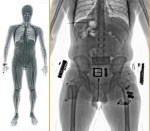
Full body scanners are to become the only security option for people flying out of Manchester Airport, the BBC reports today. The excessive amount of coverage given to the disapproval expressed by civil liberties groups has now been counterbalanced by passengers’ attitudes, since it appears that people actually prefer the scanners to the full body pat down, and have been voting with their feet.
According to Manchester Airport, 95% of travellers prefer the scanners and queuing times have been radically reduced. It takes 2 minutes to undergo a pat down, but a mere 27 seconds to pass through a scanner. Continue reading →
Updated | In the 1939 film Mr. Smith Goes to Washington, James Stewart plays a local Boy Rangers leader who becomes a US Senator and, against all odds, triumphs agains the corrupt bureaucrats in Washington. Tomorrow, according to The Sun, “battling” Prime Minister David Cameron will be travelling to Strasbourg in, it would seem, similar style to “tell Euro judges to stop meddling in British justice”.
Meanwhile, back in London, the British president of the European Court of Human Rights launched a preemptive strike on Mr Cameron’s speech in today’s Independent, arguing that the criticism from “senior British politicians” relating to the court’s interference is “simply not borne out by the facts“.
The criminal justice system is “close to breaking point”, according to a report released by the House of Commons Public Accounts Committee (PAC) last week, Efficiency in the Criminal Justice System. The report finds that the criminal justice system is “bedevilled by long standing poor performance” including delays and inefficiencies, where costs are shunted from one part of the system to another.
Last year there was a backlog of 51,830 cases awaiting a hearing at the Crown Court. The average wait between a case leaving the Magistrates’ Court and reaching the Crown Court is 134 days, compared with 99 days two years ago. The “disjointed” nature of the system – which is administered by different parts of government with different budgets – results in decisions taken by one part increasing inefficiencies in another area. The service received by victims and witnesses is not good enough, and there are “unacceptable variations” in the length of time victims have to wait for access to justice in different areas of the country.
The report unequivocally concludes that the Ministry of Justice has been “too slow” to recognise that the system is under stress and to do anything about it. The MoJ has exhausted the scope to cut costs without pushing the system beyond breaking point – since 2010-11, the criminal justice system has suffered a massive 26% cut. Even if courts sit on all days in their allowance, there are still not enough judges to hear all the cases. Since the criminal bar has reduced in size as a result of reductions in legal aid spending, the CPS struggle to find counsel to prosecute cases.
Though the MoJ have developed an “ambitious” reform programme which aims to address the inefficiencies in the system, partly through digitising paper records and enabling flexible digital working, the PAC were told it would take four years to see the benefits. Court users should “not have to wait this long to see real change”, they say, noting that “Government does not have a good track record of delivering projects that involve significant changes to IT”. They recommend that the MoJ do more in the meantime by better sharing the small practical improvements introduced by hard-working staff in individual courts.
The Bar Council have said in response to the report that while it sends an “important message” to the Government, the proposed digitisation reforms are not enough to address the challenges faced by the system. The “precious asset” of Justice should be ring-fenced from cuts.
Other News
The Supreme Court last week upheld the decision of the Court of Appeal in finding that British expatriates of more than 15 years are not eligible to vote in the EU referendum on 23 June. Harry Shindler, 95, who has resided in Italy for 35 years, and Jacquelyn MacLennan, 54, who has lived in Belgium since 1987, had argued unsuccessfully that the 15-year rule contained in Section 2 of the EU Referendum Act 2015 was an unjustified restriction on their freedom of movement, in that it penalised them for exercising their right to move and reside in another Member State. Lady Hale, Deputy President of the Supreme Court, emphasised that the relevant question was not whether the voting exclusion was justifiable as a proportionate means of achieving a legitimate aim, but rather whether European Law applied at all, since only if it did was there any possibility of attacking an Act of Parliament. Assuming for the sake of argument that it did apply, the Supreme Court decided that it was not arguable that there was an interference with the right of free movement, for the reasons given by the Court of Appeal and Divisional Court. See David Hart QC’s previous post on the Court of Appeal decision here.
An inquest has found that police unlawfully detained a 22-year-old man with mental health issues who was later found hanged. Logan Peters had been held in an unauthorised headlock and illegally strip-searched by police who stopped him on suspicion of criminal damage at a takeaway. The inquest heard that whilst in his cell Mr Peters had battered the walls with his head and tried to strangle himself, but was considered “attention-seeking” rather than suicidal. There was no plan put in place for his care following his release. The panel concluded there were “errors, omissions, failures” in the way Mr Peters was seized on the street, finding that it was “extremely likely” that the events and the “unreasonable, disproportionate and unnecessary force used… had a negative impact on Logan’s physical and psychological well-being”. This follows several high profile failings by police to look after people with mental health issues whilst in custody, such as the death Sarah Reed at Holloway prison earlier this year and Sheldon Woodford at HMP Winchester in 2015.
In the Courts
IC v Romania – the inadequacy of the investigation into a young girl’s allegation of rape was a violation of Article 3 (prohibition of inhuman or degrading treatment). A 14-year old girl with an intellectual disability had alleged that whilst at a wake she had been grabbed by three teenage boys who took her to a man, MC, waiting in the garden of a deserted building, who then raped her. Two other men were also present. During the police investigation the six men involved claimed the girl had consented to the intercourse. The prosecutor accepted this explanation, indicting MC only for sexual intercourse with a minor. The Court held that the authorities had put undue emphasis on the lack of proof that the girl had shown resistance during the incident. The prosecutors had based their conclusions on the statements given by the alleged rapists along with the fact that the girl’s body did not show any signs of violence and she had not called for help. The Romanian authorities had failed to give particular attention to IC’s intellectual disability, in light of which her ‘consent’ to the acts should have been analysed.
Biao v Denmark – The Court held in this case that Danish legislation on family reunion is discriminatory, finding a violation of Article 14 in conjunction with Article 8 (right to respect for private and family life). The applicant was a naturalised Danish citizen of Togolese origin who complained that he and his Ghanaian wife could not settle in Denmark. The Danish authorities had refused to grant them family reunion on the basis that they did not fulfil the “attachment” requirement that they did not have stronger ties with another country – Ghana, in this case. They complained that an amendment to the legislation which lifted the “attachment requirement” for those who had held Danish citizenship for at least 28 years resulted in difference in treatment between those born Danish nationals and those who had acquired Danish citizenship later in life. The Court held that this rule favoured Danish nationals of Danish ethnic origin, and placed those who had acquired Danish citizenship later in life at a disadvantage.
London has just experienced its largest ever celebration of Pride – arranged for the weekend after the 50th anniversary of the Stonewall Riots so as to allow thousands of British people to fly out to New York to participate in the official commemoration. This is a striking example of the influence of a particularly American method of effecting social change adopted with much success in the UK – albeit there has not been much by way of rioting here.
It is probably a myth that the Stonewall riots were fuelled by mourners drinking to relieve their grief after Judy Garland’s death in London and funeral in New York City – but possibly the closest the UK came to watching similar scenes was 25 years later and was connected to the death of the artist and Outrage supporter, Derek Jarman. Peter Tatchell arranged a candlelit vigil outside the Houses of Parliament on 21st February 1994 to mark the death of the great film maker. The other purpose of this gathering was to enable a demonstration to take place right outside the Palace of Westminster just as the Commons were voting on establishing an equal age of consent. When Parliament voted for a compromise of 18 years of age, the 5,000 or so demonstrators invaded the grounds of the Palace and Police and Commons staff struggled to close the great doors of Parliament to keep them out.
This blog is maintained for information purposes only. It is not intended to be a source of legal advice and must not be relied upon as such. Blog posts reflect the views and opinions of their individual authors, not of chambers as a whole.
Our privacy policy can be found on our ‘subscribe’ page or by clicking here.



 Why should we bother with the European Convention on Human Rights? Many of those that would never contemplate leaving the ECHR still question whether we should abide by controversial decisions such as those on prisoners’ voting rights or deportation. UCL’s Professor Richard Bellamy attempted to answer this question at the Statute Law Society’s
 Welcome back to the human rights roundup. Our full list of links can be found
 Welcome back to the UK Human Rights Roundup, your regular Wimbledon Tennis Championship of human rights news and views. The full list of links can be found
 Sir Nicolas Bratza, the only UK judge at the European




Recent comments