Search Results for: prisoner voting/page/44/ministers have been procrastinating on the issue, fearing that it will prove unpopular with the electorate.
25 November 2012 by Daniel Isenberg
 Welcome back to the UK Human Rights Roundup, your weekly bulletin of human rights news. The full list of links can be found here. You can also find our table of human rights cases here and previous roundups here.
The government was on the defensive this week on a number of fronts. It suffered significant defeats in the House of Lords over its proposals for secret civil trials under the Justice and Security Bill. Prime Minister David Cameron has also received a barrage of criticism over his calls for tightening the criteria for judicial review applications. Meanwhile, the prisoner voting saga continues, with Justice Secretary Chris Grayling (on the eve of the deadline) giving Parliament (or, more accurately, a Parliamentary committee) three options on the issue. Meanwhile, a new criminal offence of stalking has been introduced.
by Daniel Isenberg
Continue reading →
Like this:
Like Loading...
12 February 2014 by Rosalind English
 Litvinenko, R (On the application of) v Secretary of State for the Home Department [2014] EWHC 194 (Admin)- read judgement
Neil Garnham QC and Neil Sheldon of 1 Crown Office Row represented the Secretary of State in these proceedings. They had nothing to do with the writing of this post.
This was an application by the widow of Alexander Litvinenko for judicial review of the refusal by the Secretary of State for the Home Department to order the setting up of a statutory inquiry into his death in London in November 2006. The Secretary of State had been asked to set up such an inquiry by Sir Robert Owen, the judge appointed to conduct the inquest into Mr Litvinenko’s death as Assistant Coroner.
Factual and Legal Background
Mr Litvinenko was taken ill on 1 November 2006 and died in University College Hospital on 23 November. There appears to be no doubt that the cause of death was radiation poisoning as a result of the ingestion of a radioactive substance, polonium 210. An “extremely thorough” investigation into the death was carried out by the Metropolitan Police Service with the assistance of the Atomic Weapons Establishment, Public Health England, the Health and Safety Executive, the Forensic Science Service and other external experts.
Continue reading →
Like this:
Like Loading...
4 November 2010 by Adam Wagner
 Updated | The dust has hardly settled on the government’s decision to allow prisoners to vote when, with uncanny timing, the European Court of Human Rights has denied the Austrian government permission to appeal in a similar case involving prisoners’ voting rights.
The Strasbourg court has notified Austria that its request for referral of the case of Frodl v Austria to the Grand Chamber has been rejected. This is likely to have a significant impact on the UK’s implementation of the prisoner voting system, as the court in Frodl effectively ruled that the disenfranchisement of prisoners could only happen on rare occasions: namely, where a prisoner was detained as a result of the abuse of a public position or a threat to undermine the rule of law or democratic foundations. As I said in Monday’s post:
Continue reading →
Like this:
Like Loading...
28 June 2012 by Adam Wagner
 The Deputy Prime Minister has said that he cannot declare the Coalition Government’s House of Lords Reform Bill as compatible with the Human Rights Act, as prisoners will be banned from voting for Lords if the bill becomes law.
Under section 19 of the Human Rights Act 1998, a Minister of Crown in charge of a Bill must make a statement to Parliament on whether the Bill is compatible with European Convention on Human Rights. The Explanatory Notes to the new Bill reveal that no such statement of compatibility can be made in this case:
278… the Deputy Prime Minister has said that he is unable to sign a statement under section 19(1)(a) of the Human Rights Act 1998. The Government wishes Parliament to proceed with the Bill notwithstanding that such a statement of compatibility cannot be made.
The reason that the Bill will not be compatible with the ECHR is that perennial headache for this (and indeed the last) Government, prisoner votes. As the explanatory notes explain:
Continue reading →
Like this:
Like Loading...
7 March 2011 by Graeme Hall
 It’s time for the human rights roundup, a regular bulletin of all the law we haven’t quite managed to feature in full blog posts. The full list of links, updated each day, can be found here.
by Graeme Hall
In the news:
Although prisoner voting appears to have taken a back seat this week, the Daily Mail has reported that the UK government has asked the European Court of Human Rights to refer the decision of Greens and MT v UK to the Grand Chamber. This judgment gave compensation to two prisoners because the UK had failed to implement the court’s decision in Hirst v UK (No. 2). According to the article, the government wants to refer this decision to the court’s appeal chamber because the issue of prisoner voting rights has now been debated in Parliament. See our previous post on Greens and MT v UK, as well as our most recent summary of the ongoing prisoner voting issue. A BBC programme about the Strasbourg court can be accessed via the ECHR blog.
Continue reading →
Like this:
Like Loading...
25 October 2012 by Adam Wagner

No means no
The Government has until 22 November to put forth legislative proposals in order to comply with the court’s rulings on prisoner votes.
I will not retrace the bizarre flip-flop which took place yesterday afternoon as the Attorney General appeared to say one thing about implementing the judgment (it’s complicated) and then the Prime Minister another (no way). Joshua Rozenberg has it right when he calls the situation “profoundly depressing”. For the full background, see my post on Scoppola No. 3, the last judgment on the issue.
I do have three thoughts on the current situation. First, it has become popular to say that there may be a way of solving the crisis which doesn’t require the UK to give any more prisoners the vote, which would be to tell the European Court of Human Rights that we already let remand prisoners and others who haven’t paid fines vote. The argument has been made variously by the BBC’s Nick Robinson, The Independent’s John Rentoul and even last night by a member of the Justice Select Committee, Nick de Bois MP – he told BBC Radio 4 (from 26:25) that “you could almost argue that there isn’t a blanket ban… for example someone on prison on remand or.. for not paying a fine doesn’t lose their right to vote” (I am interviewed immediately afterwards).
In short, unless I am missing something, this argument seems bound to fail.
Continue reading →
Like this:
Like Loading...
18 November 2014 by Rosalind English
 Justice for Families Ltd v Secretary of State for Justice [2014] EWCA Civ 1477 – read judgment
An application for habeas corpus by a pressure group was completely “hopeless” and “entirely misconceived”. The appellant’s challenge to the decision of the judge below was equally devoid of merit. Third party applications are only appropriate where the prisoner is incommunicado or where the impediment preventing the prisoner from acting is ignorance or disability. It was entirely inappropriate in these circumstances, where the prisoner had been represented by counsel throughout the proceedings which resulted in her imprisonment, or where her detention had already ended before the application for habeas corpus was made.
The principle of “habeas corpus”
The right of a stranger to apply for habeas corpus is a rather singular thing since it does not depend on that third party to be instructed by the prisoner on behalf of whom the application is being made, nor even on the knowledge of the prisoner that someone has decided to act in his/her interest in such a way.
Continue reading →
Like this:
Like Loading...
20 March 2013 by Guest Contributor
 This post by Roger Smith was originally the text of a speech to the Working Men’s College and is reproduced here with permission and thanks.
Human rights will be a politically live issue at the next election. Leading on the issue will by the Conservative Party, urged on by elements in the media such as the Daily Mail with a commercial interest in resistance to any law on privacy deriving from human rights. So, the Working Men’s College has done well to identify this topic for exploration. This evening is a celebration of the college’s stated aim to ‘engage positively with the past, while finding new ways to pursue its founders’ aims into the 21st century.’
The pace on human rights is being forced by Theresa May, seen by some as the Tory leader in waiting. She made it clear at the weekend that both the HRA and the European Convention which it introduces into domestic law are under fire:
Continue reading →
Like this:
Like Loading...
24 May 2012 by Guest Contributor
 Last Tuesday saw the latest episode in the prisoner voting legal saga with the European Court of Human Rights’ Grand Chamber’s judgment reversing the Chamber judgment which found Italy’s automatic ban on voting for prisoners serving over 3 years in prison (and a lifetime ban with the possibility of future relief for those sentenced to more than 5 years) in breach of Article 3 of Protocol 1 to the European Convention on Human Rights.
Adam Wagner has compared the prisoner voting issue to a ping-pong ball in a wind tunnel, noting that ‘the ball is now back on the UK’s side of the table’. Indeed, the UK must still allow at least some prisoners the vote, as required by the 2005 judgment in Hirst v UK (No.2) and the 2010 judgment in Greens & MT v UK. Over at EJIL: Talk!, Marko Milanovic rightly accounts for the unholy mix of law and (inter)national politics that has generated the Grand Chamber’s unprincipled judgment. Indeed, as Carl Gardner suggests on the Head of Legal blog all that logically remains of the Hirst judgment is that automatic disenfranchisement of prisoners that are sentenced for less than 3 years (probably) breaches the convention.
Continue reading →
Like this:
Like Loading...
10 February 2011 by Adam Wagner
 Updated | Parliament is currently debating on whether prisoners should be given the vote. The motion can be found here and you can watch the debate on Parliament TV.
A Washington Post correspondent recently said US President Barack Obama had been “bounding around like a ping-pong ball in a wind tunnel” on to the situation in Egypt. In many ways, the UK government has been doing the same on the 5-year-old judgment in Hirst v UK, in which, as has been endlessly repeated in the media, the European Court of Human Rights’ grand chamber ruled that the indiscriminate ban on prisoners voting breached Article 1 of Protocol 3 of the European Convention on Human Rights.
Continue reading →
Like this:
Like Loading...
30 May 2010 by Adam Wagner
 The Guardian reports today that prisoner voting rights will be back in the public eye this week with critical comments from Europe and increased pressure from compensation claims.
Interestingly, the article has now been amended to remove part of a quote from the Ministry of Justice, who had initially said that “Disenfranchisement is an outdated, disproportionate punishment which has no place in a modern prison system with a renewed emphasis on rehabilitation and resettlement”. This line has been replaced by a policy-neutral quote. On the face of it, it seems that government may finally act on this issue, five years after the European Court of Human Rights criticism of its ban in the case of Hirst v UK.
In the 2005 decision of Hirst, the European Court held that Section 3 of the Representation of the People Act 1983, which prevents prisoners from voting, is in breach of the electoral right under Article 1 of Protocol 3 of the European Convention on Human Rights.
Continue reading →
Like this:
Like Loading...
14 October 2013 by Rosalind English
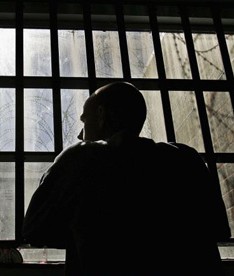 Cossey, R (on the application of) v Secretary of State for Justice [2013] EWHC 3029 (Admin) – read judgment
The High Court has dismissed an “absolutely meritless” claim by a prisoner that, in serving the non-tariff part of his sentence, he should be afforded all the Convention rights enjoyed by prisoners on remand or those serving time for civil offences such as contempt of court. As he had been deprived of the full panoply of rights, he said, he was a victim of discrimination contrary to Article 14.
This, said Mostyn J, was
The sort of claim that gives the Convention, incorporated into our domestic law by the Human Rights Act 1998, a bad name and which furnishes its critics with ammunition to shoot it down.
Were the key architect of the Convention, Lord Kilmuir, alive today, continued the judge, “he would be amazed to be told that a claim for violation of Article 14 was being advanced on the facts of this case.”
Continue reading →
Like this:
Like Loading...
8 December 2012 by David Hart KC
 Global Alliance Against Industrial Aquaculture v. Scottish Ministers, 26 November 2012 read decision
An interesting and robust decision from the Scottish Information Commissioner. An NGO (just look at the tin) asked the Scottish Ministers for information about seal culling licensed by them. The Scottish Ministers did not provide all the information sought; they said which companies had received the licences, and the total number of seals killed, but did not say who killed how many seals where – thus, doubtless, stymieing any focussed debate and engagement by the NGO on the justification for the killings. The industry’s position appears to be that such shootings only took place against occasional rogue seals.
Continue reading →
Like this:
Like Loading...
20 October 2010 by Adam Wagner
 Updated | The House of Lords debated the vexed issue of prisoner voting yesterday, leading to a somewhat bad-tempered clash between a former Lord of Appeal and the new minister of state for justice.
The debate related to the 2005 decision of Hirst No 2, in which the European Court of Human Rights held that preventing prisoners from voting breached their human rights. The judgment has not yet been implemented in the UK, leading to repeated condemnations from the Council of Europe, which monitors compliance the Strasbourg court’s rulings. The CoE will reexamine the issue on 30 November, when it may decide to sanction the UK.
Continue reading →
Like this:
Like Loading...
20 December 2011 by Rosalind English
 Desmond Grant and Roger Charles Gleaves v Ministry of Justice High Court (Queen’s Bench Division) 19 December 2011 – read judgment
The High Court (Mr Justice Hickinbottom) has today dismissed claims by two prisoners that their rights under Articles 3 and 8 of the European Convention on Human Rights were violated by the prison conditions in which they were detained.
The following is based on the High Court’s summary of the case.
About 360 long term prisoners, who were at HMP Albany between 2004 and 2011, brought claims that their right not to be subjected to inhuman or degrading treatment or punishment under Article 3 and their right to respect for private and life under Article 8 had been violated by the regime under which they were detained in that prison, which included the use of a bucket for toilet purposes when they were in a locked cell and the later emptying of the bucket at a sluice (“slopping out”). Five lead claims were selected, of which two reached trial.
Continue reading →
Like this:
Like Loading...



Recent comments