Search Results for: justice and security bill
26 November 2012 by Guest Contributor
 I watched the BBC’s flagship political debate Question Time last week and saw a panel of senior politicians from the three main parties plus UKIP debate the implications of the Abu Qatada affair with the audience. You can watch it here (starts at 8 mins 27 seconds) and I urge you to do so. I found the debate illuminating and alarming in equal measure; it made me reflect seriously on how precarious Britain’s interwoven system of international and domestic protection for human rights may actually be these days.
It seems a long time ago that we naively thought that repeal of the Human Rights Act was “unthinkable” – now withdrawal from the European Convention on Human Rights (ECHR) itself must seemingly be taken as a serious possibility, depending on the outcome of the next election. The failure of the HRA to implant itself into our political, still less our popular culture was starkly apparent from the debate: I don’t think anyone even mentioned it. A statute that should surely be an important reference point in any discussion of a contemporary UK human rights issue has become so marginalised and misunderstood that it simply didn’t come up. Can one imagine American – or German – politicians discussing such an issue without mentioning their constitutional Bills of Rights – or Canadians, without mentioning the Charter?
Continue reading →
Like this:
Like Loading...
7 July 2013 by Sarina Kidd
 Welcome back to the UK Human Rights Roundup, your regular Wimbledon Tennis Championship of human rights news and views. The full list of links can be found here. You can also find our table of human rights cases here and previous roundups here. Links compiled by Adam Wagner, post by Sarina Kidd.
This week, Chris Grayling made a concession, the closed material procedure for evidence in civil trials came into effect, and to Theresa May’s delight, Abu Qatada finally left the country.
Continue reading →
Like this:
Like Loading...
1 March 2018 by Martin Downs
 A speech by Mark Rowley (the outgoing Assistant Commissioner of the Metropolitan Police for Specialist Operations and National Lead for Counter Terrorism Policing) to Policy Exchange has been given the front page treatment with headlines like, “Extremists should lose access to their children.” The speech has been made available in full by the Policy Exchange on their website and on Youtube.
Additionally, The Times quotes Mark Rowley as saying, in response to questions from the press in advance of the speech,
We still see cases where parents convicted of terrorist-related offences, including radicalisers, retain care of their own children.
If you know parents are interested in sex with children, or if you know parents believe that people of their faith or their belief should hate everybody else and corrupt children for it, for me those are equally wicked environments to expose children to.
The speech is phrased more tentatively but included this passage,
The family courts and social services now routinely wrestle with child protection and safeguarding cases arising out of terrorism and extremism. However, we still see cases where parents convicted of terrorist-related offences, including radicalisers, retain care of their own children. I wonder if we need more parity between protecting children from paedophile and terrorist parents.
Continue reading →
Like this:
Like Loading...
23 December 2015 by Jim Duffy

Photo credit: Guardian
It has been a fascinating year in which to edit this Blog. Political and social challenges – from continued government cuts to the alarming rise of Islamic State – have presented new human rights conundrums that have, as ever, slowly percolated to the doors of the country’s highest courts. And all this during the year of an astonishing General Election result and amid continually shifting sands around the future of the Human Rights Act.
Continue reading →
Like this:
Like Loading...
21 March 2013 by Adam Wagner
 1 Crown Office Row’s Robert Wastell is acting for the Treasury in this case – he has had no part in writing this post.
Extraordinary developments in the Supreme Court today as the court, for the first time in its history, conducted a secret hearing during which one of the parties, an Iranian Bank, was not allowed to take part. Full background to the case, Bank Mellat (Appellant) v HM Treasury (Respondent) is here.
If I could just repeat that for effect: the Government, which is being sued, gets to stay in court whilst the person doing the suing – and their lawyers – have to leave. The judges then hear security sensitive evidence which is potentially central to the case. Whilst one side is absent. No wonder Lord Neuberger, who as Master of the Rolls robustly blocked an attempt to introduce closed material procedures in civil trials via the back door (see his judgment in Al Rawi e.g. at para 30), sounds so pained in his statement. Curiously, this final hard-hitting paragraph was sent by the Court to its public email list but was left off the statement published on the Court’s website:
Continue reading →
Like this:
Like Loading...
19 September 2011 by Adam Wagner
 Updated x 2 |Following on from Obiter J’s guest post, when considering the Metropolitan Police Commissioner’s attempt to force a Guardian journalist to disclose her source, it is worth revisiting the seminal case of Shayler, R [2002] UKHL 11. The case, which arose shortly after the Human Rights Act came into force, shows how heavily stacked the law is against those accused of causing to leak state secrets, but may also reveal some limited hope for journalists too.
Although it now appears that the case is being brought under section 9 and Schedule 1 of the Police and Criminal Evidence Act 1984, it is still worth examining the powers which the police have under both PACE and the Official Secrets Act.
Simply, according to the House of Lords in Shayler, there is no public interest defence to the charges under sections 1 and 4 and none will be implied by the courts as a result of human rights law. However, section 5 was not considered and may still bear fruit should a prosecution be brought under it.
Continue reading →
Like this:
Like Loading...
31 August 2018 by Rosalind English
 In the matter of an application by Siobhan McLaughlin for Judicial Review (Northern Ireland) [2018] UKSC 48- read judgment
An unmarried mother has won a landmark Supreme Court case which could allow cohabitees to claim Widowed Parent’s Allowance, a benefit previously only applicable to married parents.
Background
Widowed Parent’s Allowance (“WPA”) is a contributory non-means-tested, social security benefit payable to men and women with dependent children, who were widowed before March 2017. The widowed parent’s entitlement depends upon the contribution record of the deceased partner. Under the relevant law (“s39A”) the widowed parent can only claim the allowance if he or she was married to or the civil partner of the deceased.
The issue before the court was whether this requirement was an unjustifiable discrimination against the survivor and/or the children on the basis of their marital or birth status, contrary to Article 14 of the Convention on Human Rights together with the right to respect for family life under Article 8, or the protection of property rights in Article 1 of the First Protocol ECHR.
Continue reading →
Like this:
Like Loading...
30 September 2010 by Rosalind English
 J M v. The United Kingdom – 37060/06 [2010] ECHR 1361 – Read judgment
The European Court of Rights has declared that rules on child maintenance prior to introduction of the Civil Partnership Act discriminated against those in same-sex relationships.
The events happened nearly a decade ago and the law in relation to same-sex couples has greatly altered since, so it will be of limited relevance to those paying child benefit now. Of more interest is the reasoning of the majority in deciding the case under the right to peaceful enjoyment of property rather than the right to family life.
The case summary is based on the Court’s press release, and is followed by my comment.
Continue reading →
Like this:
Like Loading...
20 July 2011 by Adam Wagner
 Updated |The UK public only really worries about terrorism after an attack or a credible threat of one. Certainly, at the moment, it would take a serious threat to knock the Shakespearean drama of phone-hacking off the front pages. Nevertheless, the government and others continue their efforts to contain the threat, and it is perhaps a sign of the strategy’s success that we are not unduly worried by it.
Part of that strategy is that under terrorism law the secretary of state must appoint a person to review the operation of the Terrorism Act 2000 and Part 1 of the Terrorism Act 2000, and in particular proscription of organisations, stop and search powers, arrest and detention powers and prosecutions for terrorist offences. To that end, the new Independent Reviewer of Terrorism Legislation, David Anderson QC, has released his first annual report.
Continue reading →
Like this:
Like Loading...
22 December 2012 by David Hart KC
 Chagos Islanders v. United Kingdom, ECtHR 4th Section, 11 December 2012 read admissibility decision
The set of injustices which led to these claims is well known – and see my posts here and here. For the uninitiated, in the 1960s, the US wanted Diego Garcia (one of the Chagos Islands) as a major air base. It spoke nicely to the UK, its owners, who consequently evicted and banned all the inhabitants from it and the neighbouring islands. The constitutional arrangements were apparently decorous. A new UK colony was established (the British Indian Ocean Territory or BIOT) with a Commissioner to make laws for the peace, order and good government of the Territory.
The UN was told that the population consisted of migrant workers, their position had been fully protected, and they had been consulted in the process – none of this in fact happened. Those evicted mainly went to Mauritius and the Seychelles. So the peace, order and good government in fact forthcoming from the UK amounted to total depopulation for military objectives.
Continue reading →
Like this:
Like Loading...
13 January 2014 by Celia Rooney
 Welcome back to the UK Human Rights Roundup, your regular delectable dossier of human rights news and views. The full list of links can be found here. You can find previous roundups here. Links compiled by Adam Wagner, post by Celia Rooney.
This week, the International Criminal Court has received a dossier detailing the UK’s involvement in abuse in Iraq. Meanwhile, the House of Lords has put up a fight over the so-called ‘annoyance injunctions’, while the Government has sought to find a solution to the European Court of Human Rights’ ruling on whole life tariffs.
Continue reading →
Like this:
Like Loading...
26 August 2024 by Emilia Cieslak

In UK news
The Children’s Commissioner for England, Dame Rachel de Souza, has published a report which found that black children are four times more likely to be strip searched compared to national population figures. The report analysed a dataset of all the strip searches conducted by all 44 police forces in England and Wales from January 2018 to June 2023. The report found that in almost half (45%) of the strip searches an appropriate adult was not confirmed to be present and the youngest child searched was eight years old. The majority (88%) of searches were conducted on suspicion of drugs and in 47% of cases the search resulted in “no further action”. The Commissioner argues that this calls into question their necessity and that strip searches should only be carried out on children where there is a clear and immediate risk of harm to themselves or others.
The UN’s Committee on the Elimination of Racism (CERD) has recommended that the UK government “implement comprehensive measures to curb racist hate speech and xenophobic rhetoric, including on the part of political and public figures”. The CERD highlighted the riots which occurred in the UK in August 2024, after the Southport stabbings in which three young girls were killed and emphasised the role of social media disinformation regarding the perpetrator’s identity in stoking the riots. The government has responded to the disorder by activating Operation Early Dawn. This is an emergency action to manage the transfer of prisoners as hundreds of people have been charged for involvement in the riots. Under Operation Early Dawn, defendants will only be summoned to a magistrates court when a cell in the prison estate becomes available, and until then, if they are remanded in custody, they will be held in police station cells.
The Home Secretary, Yvette Cooper, has announced new measures to significantly increase the removal of failed asylum seekers. These measures include recruiting 100 specialist intelligence officers to the National Crime Agency to disrupt human smuggling gangs, new measures to target employers who hire illegal workers, and increasing capacity at the Campsfield and Haslar Immigration Removal Centres.
In international news
The Ukrainian Parliament (Verkhovna Rada) has passed legislation to ratify the Rome Statute of the International Criminal Court (ICC) making Ukraine a state party. The Ukrainian Foreign Minister Dmytro Kuleba has stated that the move shows Ukraine’s “unwavering commitment to strengthening international justice” and to work effectively with the ICC to “ensure comprehensive accountability for all Russian atrocities committed in the course of Russian aggression”. The ratification of the Rome Statute is also a requirement for Ukraine to join the European Union, as set out in the Association Agreement between the European Union and Ukraine. The ICC has so far issued arrest warrants for Vladimir Putin, Commissioner for Children’s Rights Maria Lvova-Belova, former Minister of Defence Sergei Shoigu, and Chief of the General Staff of the Armed Forces and First Deputy Minister of Defence Valery Gerasimov.
The UN Special Rapporteur on Torture, Alice Jill Edwards, has expressed concern after video footage was leaked of an Israeli Defence Forces (IDF) soldier sexually assaulting a Palestinian detainee. The Special Rapporteur has urged that “all alleged crimes committed within the context of this terrible war must be investigated transparently and impartially, and those responsible held accountable by civilian courts of law”. The Israeli NGO B’tselem has published a report based on the testimonies of 55 Palestinian detainees who described systematic abuses including violence, sexual assault, and denial of medical treatment. As of July 2024, there are 9,623 Palestinians held in Israeli prisons, 4,781 of which are held in “administrative detention” which means they are held without charge.
In the courts
The UK government has lost an appeal against the decision that it cannot restrict the movement of asylum seekers who inadvertently arrived at the Diego Garcia military base. In October 2021, 47 Sri Lankan Tamil asylum seekers, including a number of children, were rescued at sea by the Royal Navy and brought to the military base which is classified as a British overseas territory. Since then they have been restricted to a small area of the island due to the “operational, security, health and safety risks” if they were granted freedom of movement. The court rejected the government’s grounds of appeal, inter alia, that the judge acted unreasonably in failing to place adequate weight on the authorities security concerns. This long-standing litigation has been followed and reported by Joshua Rozenberg KC (hon), and his commentary is available here.
The Federal Court of Australia has determined that Australian case law has consistently held that sex is “changeable and not necessarily binary”. Ms Roxanne Tickle, a trans woman, sued Giggle for Girls, a social media app for communication between women, alleging unlawful gender discrimination when she was barred from having an account on the app. The court held that the claim of indirect gender discrimination succeeds, as to gain access to the app users had to send a selfie and the reviewer determined that Ms Tickle did not have the appearance of a cisgender woman.
Like this:
Like Loading...
7 February 2020 by Marina Wheeler QC
Shamima Begum v Home Secretary, Special Immigration Appeals Commission, 7 February 2020
When she was fifteen Shamina Begum slipped unimpeded out of the country to join ISIL. Only her image, walking with two school friends, was captured as she made her way through Gatwick Airport onto the aircraft. Her return to the UK, five years on is proving more difficult.
After the collapse of ISIL’s stronghold in Raqqa, Ms Begum appeared, heavily pregnant, in a camp in northern Syria, held by the Syrian Democratic Forces. In an interview she said she wanted to return but did not regret having gone to Syria.
On 19 February 2019, the Secretary of State, Mr Javid, informed Ms Begum’s family he considered she posed a threat to national security and issued an order depriving her of her nationality.
As was her right, Ms Begum issued an appeal against the deprivation order to the Special Immigration Appeals Commission (SIAC). Permission to enter the UK to pursue the appeal was refused by the Secretary of State.
Continue reading →Like this:
Like Loading...
1 January 2012 by Guest Contributor
 Denry Okpor v London Borough of Lewisham, Bromley County Court 25 October 2011 [Transcript not publicly available]
Adam Wagner represented Mr Okpor in this case. He is not the author of this post.
This was a rolled up permission to appeal and appeal hearing (on which more later) for appeal to a Circuit Judge from a possession order made by a District Judge at Bromley. At issue was whether the District Judge was wrong to reject a) a proportionality defence and b) a gateway B public law defence arising from Lewisham’s failure to follow its own policy. It is interesting as an example of proportionality/gateway B defences in action in the County Court, but also somewhat frustrating, for reasons which will become clear.
Mr Okpor was the secure tenant of Lewisham. At the age of 15 he had been taken into care by Lewisham following abuse. He left care aged 18 in 2006. In 2009, aged 21, he was given the secure tenancy. Mr O went into full time higher education later that year and has remained in full time higher education. This meant that the relevant Children Act 1989 provisions for care leavers continued to apply and would do until he was 24, if still in full time higher education. Mr O was receiving support from the Lewisham Leaving Care Team.
Continue reading →
Like this:
Like Loading...
14 November 2016 by Guest Contributor
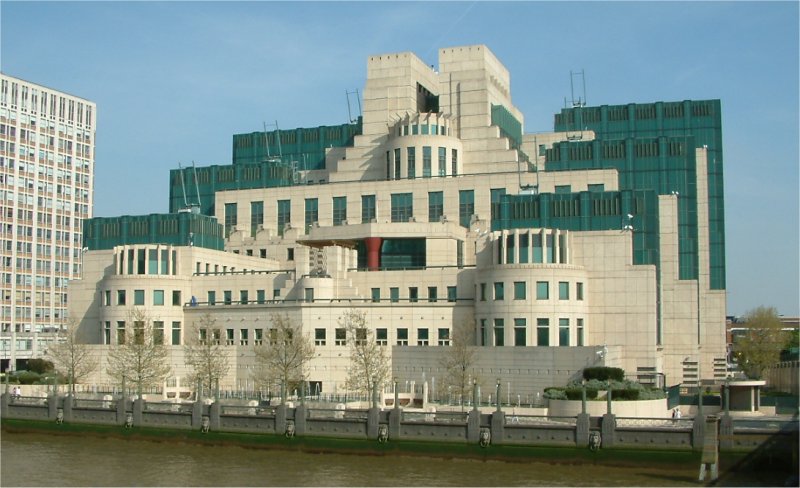 Oversight of the Intelligence Services is a matter of enormous public importance, as counter-terrorism powers are enhanced to combat a pernicious and persistent threat.
A recent Report by the Intelligence Services Commissioner, Sir Mark Waller, assisted by Oliver Sanders of these Chambers, dispels some misconceptions about contact between the intelligence services and Michael Adebolajo, one of 2 men convicted of murdering Fusilier Lee Rigby[1]. It also shines a light on how HMG applies its policy on the treatment of detainees held overseas – in Adebolajo’s case, by a Kenyan partner counter-terrorism unit in 2010. Not all of the Report’s findings make comfortable reading for the Intelligence Services.
HMG’s policy was, and remains, never to assist, condone, encourage, solicit or participate in any form of mistreatment of detainees. The 2010 Consolidated Guidance to Intelligence Officers on the Detention and Interviewing of Detainees Overseas[2], is intended to guide UK personnel who work with overseas agencies where, by definition, they are unlikely to be in total control of the situation in which detainees are held.
Continue reading →
Like this:
Like Loading...



Recent comments