We use cookies to enhance your browsing experience. If you continue to use our website we will take this to mean that you agree to our use of cookies. If you want to find out more, please view our cookie policy. Accept and Hide [x]
UK Human Rights Blog - 1 Crown Office Row
Search Results for: justice and security bill/page/29/www.bailii.org/eu/cases/ECHR/1975/1.html
The Election Court has ruled that the Labour MP for Oldham knowingly and deliberately misled the constituency and as a result his election is void under Section 106 of the Representation of the People Act (1983). Permission for judicial review of the decision has been refused.
The provision of the 1983 Act makes it an offence for anyone to publish “any false statement of fact in relation to the candidate’s personal character or conduct” to prevent them being elected “unless he can show that he had reasonable grounds for believing, and did believe, that statement to be true”. Continue reading →
Yesterday Neil Howard and Rebecca Steinfeld asked via guardian.co.uk whether it is Time to ban male circumcision? The article was prompted by attempts to ban the practice in San Francisco.
Male circumcision is common amongst Muslims and Jews, but judging from the 286 comments (so far!) to the article, there are a lot of people who feel that the practice is outdated and should be banned. I have responded with my own article, arguing that whilst the debate is by no means settled, a ban at present would amount to a disproportionate interference with freedom of religion rights.
It must be something in the air. On the day the “Ratcliffe 20” were spared imprisonment for their planned attack on a power station, the Guardian published environmental lawyer Polly Higgins’ call for a new crime of ecocide and the fringe movement Campaign for Real Farming – rival to the mainstream Oxford Farming Conference – were sewing the seeds for resistance to ecologically damaging agricultural laws and practices.
The widespread perception is that the law and its custodians can no longer be trusted to safeguard the environment, or, to put it in the language of rights, that the protection that flows from current forms of rights entitlement is not only insufficient for, but positively damaging to the interests of the natural world.
London, UK. 11th July, 2016. Human rights campaigners protest against arms sales to Saudi Arabia outside the Defence and Security Organisation (DSO), the Government department responsible for arms export promotions.
In R (Campaign Against Arms Trade) v Secretary of State for International Trade [2019] EWCA Civ 1020, the Court of Appeal upheld a challenge to the lawfulness of the grant by the UK Government of export licences for the sale or transfer of arms or military equipment to Saudi Arabia for possible use in the conflict in Yemen.
The Campaign Against Arms Trade argued that there was a large body of evidence which demonstrates overwhelmingly that Saudi Arabia has committed repeated and serious breaches of international humanitarian law during the conflict in Yemen. CAAT claimed, in particular, that Saudi Arabia has committed indiscriminate or deliberate airstrikes against civilians, including airstrikes which have used “cluster” munitions, and which had targeted schools and medical facilities.
The Court of Appeal held that the decision-making process had been irrational, as it had not included an assessment as to whether there had been previous breaches of international humanitarian law in the past, without which there could not be a proper assessment of the risk of future breaches.
Department of Health v IC, Healey and Cecil(EA/2011/0286 & EA/2011/0287) – Read Decision
In a recent post, Panopticon brought you, hot-off-the-press, the Tribunal’s decision in the much-publicised case involving publication, under Freedom of Information Law, of the NHS Risk Register. Somewhat less hot-off-the-press are my observations. This is a very important decision, both for its engagement with the legislative process and for its analysis of the public interest with respect to section 35(1)(a) of Freedom of Information Act 2000 (formulation or development of government policy) – particularly the “chilling effect” argument. At the outset, it is important to be clear about what was being requested and when.
Risk registers in general
The DOH prepared two “risk registers” documenting the risks associated with implementing the “far-reaching and highly controversial” NHS reforms under what was then the Health and Social Care Bill. The Tribunal heard that risk registers are used widely across government for project planning. They provide snapshots (rather than detailed discussions) combining the probability of and outcomes from any given risk associated with the proposed reform; risks are then classified in red, amber or green terms. According to Lord Gus O’Donnell, who gave evidence in support of the DOH’s case, risk registers are the most important tool used across government to formulate and develop policy for risk management in advising ministers. John Healey MP, one of the requesters in this case, said that he was a minister for ten years and was never shown such a register.
On 17 February the Home Secretary announced that the government was moving ahead with changes to the Civil Partnership Act 2004 which would allow the registration of civil partnerships to take place in religious premises.
While welcomed by many, some have voiced concerns that permission will inevitably become coercion. They fear that religious organisations may face legal action if they refuse to facilitate civil partnership ceremonies, a claim the Government denies. But will they?
The issues relating to imprisonment of individuals with mental health problems in the UK has attracted considerable attention, as the number of self-inflicted deaths has risen to the highest number since records began in 1978. With a rate of one prison suicide every three days, the director of the Howard League described the current rate as having reached “epidemic proportions”. The steady rise of deaths in custody has prompted a seriesofinquiries in recent years, and has drawn scrutiny from UN bodies and Special Procedures, and more recently, UN Member States as part of a periodic review of its human rights performance. However, despite this, little progress has been made.
In view of this reality, the Joint Committee on Human Rights launched an inquiry into mental health and deaths in prison in 2016 in order to determine whether a human rights based approach can help to prevent deaths in prison of individuals with mental health conditions i.e. one that satisfies acceptable standards as laid down by national and international human rights law, and recognises the particular position of vulnerability in which detainees are placed. The inquiry specifically looked at why previous recommendations had not been implemented. To this end, the Committee received both oral and written evidence from authors of the various domestic inquiry reports and individuals whose lives have been directly affected by the issue, including relatives of individuals who had committed suicide in prisons.
However, the inquiry was unexpectedly cut short as a result of the decision to call a snap election.
Cross-government coordination on an issue that affects trade, international development, foreign affairs, business activity and human rights is remarkable, especially at such a difficult economic time. So the UK’s Action Plan on Business and Human Rights, which is the government’s long-awaited strategy for implementing the 2011 UN Guiding Principles on Business and Human Rights, is to be applauded for this achievement. Yet, while the Plan establishes clear expectations that UK companies should respect human rights, there are no effective legal requirements placed on them to do so.
In issuing this Plan, the Foreign Secretary and the Business Secretary reinforce the business case for respecting human rights, which includes reputational, legal and investment risk issues, and consumer expectation reasons. They also note that protection of human rights is good for business and communities, as “the thread of safeguards running through society that are good for human rights – democratic freedoms, good governance, the rule of law, property rights, civil society – also create fertile conditions for private sector led growth”. Adam Smith thought that this was required over two and a half centuries ago.
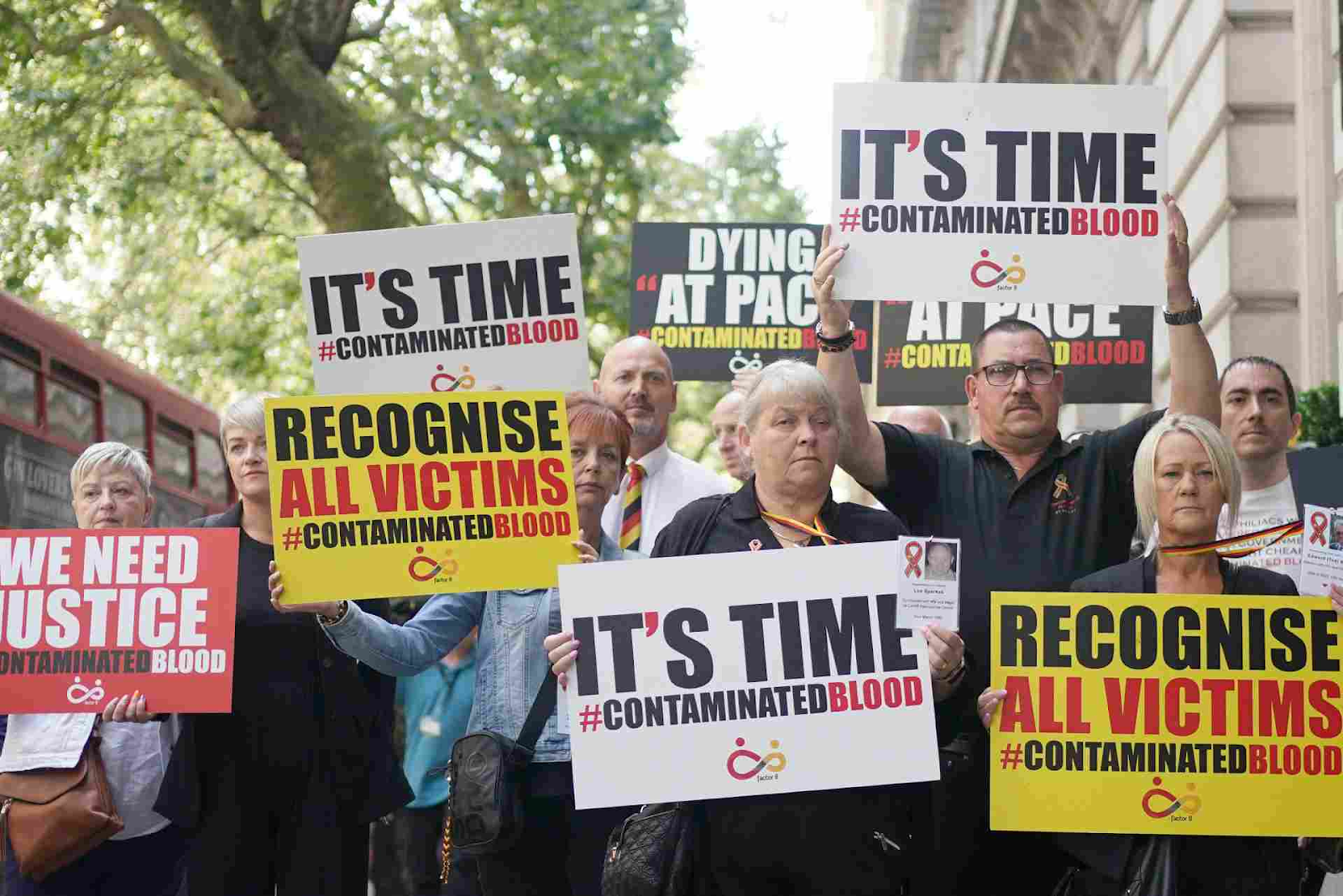
On 20 May, the Infected Blood Inquiry, chaired by Sir Brian Langstaff, published its final report. The inquiry was set up to investigate the circumstances in which people treated by the NHS were given infected blood and blood products, in particular since 1970. The inquiry found that more than 3,000 deaths of NHS patients are attributable to infected blood, blood products and tissue. The report details the many failures which lead to this situation, such as flaws in the licensing regime which allowed for the import of high risk blood products, failing to ensure sufficiently careful donor selection, and treating children at Treloar School (a school for disabled children) with risky commercial blood products for research. The report is strongly critical of the lack of candour shown by the NHS and successive governments. Patients were told they were receiving “the best treatment available” and some documents were deliberately destroyed. The report makes many recommendations to memorialise what happened to the people affected and to ensure lessons are learnt, yet the “principal recommendation” is that “a compensation scheme should be set up now”.
The Post Office (Horizon System) Offences Act received the Royal Assent this week. This is the final stage of the legislative process after the Bill was examined by the House of Lords. The Bill will quash the convictions of hundreds of postmasters and others in England, Wales and Northern Ireland who were charged with fraud, theft and other offences due to the faulty Post Office Horizon IT system. The “Post Office scandal” is also the subject of an inquiry led by Sir Wyn Williams. Paula Vennells, the former CEO of the Post Office Ltd, gave evidence to the inquiry this week. Recordings of the inquiry hearings are available here.
International Criminal Court (ICC) Prosecutor Karim Khan KC made an application for arrest warrants for Yahya Sinwar (Head of the Islamic Resistance Movement “Hamas” in the Gaza strip), Mohammed Diab Ibrahim Al-Masri (Commander-in-Chief of the military wing of Hamas), Ismail Haniyeh (Head of the Hamas Political Bureau), Benjamin Netanyahu (Prime Minister of Israel), and Yoav Gallant (Minister of Defence of Israel). Khan KC submits that the Hamas officials bear criminal responsibility for war crimes and crimes against humanity including extermination, murder, hostage taking, rape and other acts of sexual violence, and torture. He submits that the Israeli officials bear criminal responsibility for war crimes and crimes against humanity including starvation of civilians as a method of warfare, wilful killing or murder, and intentionally directing attacks against a civilian population. Khan KC also published a report by international law experts arguing, amongst other things, that the ICC has jurisdiction over the alleged war crimes in Israel/Palestine. The International Court of Justice (ICJ) has reaffirmed its previous measures and published further provisional measures in relation to South Africa’s case against Israel. One of the most significant measures requires Israel to “immediately halt its military offensive, and any other action in the Rafah Governorate, which may inflict on the Palestinian group in Gaza conditions of life that could bring about its destruction in whole or in part”.
A French court found three Syrian officials guilty of crimes against humanity and sentenced to life imprisonment in absentia. The three men are Ali Mamlouk (former Head of the National Security Bureau), Jamil Hassan (Head of the Air Force Intelligence Directorate) and Abdel Salam Mahmoud (former director of the directorate’s investigations branch). The Syrian officials were charged with complicity in the arrest, torture and deaths of Patrick Dabbagh and Mazzen Dabbagh, both of whom had dual French-Syrian nationality. This case is the first time officials working for the regime led by Bashar al-Assad have been tried and convicted in France.
In the courts
The High Court held that protest regulations, that gave the police the power to intervene in protest where they caused “more than minor” disruption, were ultra vires (i.e. beyond the legal power of the Secretary of State). The regulations were ultra vires because the primary legislation gave the police the power to intervene where there was “serious” disruption. The Secretary of State used a Henry VIII power (i.e. a delegated power which allows them to amend primary legislation using secondary legislation) to define “serious” as “more than minor”. The court held that this was ultra vires because “as a matter of ordinary and natural language ‘more than minor’ is not within the scope of the word ‘serious’”. The regulations were also unlawful because they were introduced after an procedurally unfair and one-sided consultation procedure, in which the Secretary of State consulted law enforcement agencies but failed to consult with the public or any body or organisation who may have opposed the proposed regulations.
Julian Assange has been given permission to appeal his extradition to the USA to face trial for conspiracy to obtain and disclose national defence information, after the US government failed to provide diplomatic assurances requested by the High Court. The court’s ex tempore judgment was reported on by Joshua Rozenberg KC (hon) here.
A report published by the Runnymede Trust on Monday found that black people, and especially black children, are subject to disproportionate rates of strip search across all police forces in England and Wales. The report analysed Home Office data and concluded that black children are 6.5 times more likely to be subject to a strip search than white children, and black adults 4.7 times more likely than white adults. The report described how strip searching “can be severely traumatic and humiliating, particularly for children, with long lasting effects such as anxiety, depression and lower educational attainment”. The Home Office recently a conducted a consultation on proposed reforms to police codes of practice which would create additional protections for children subjected to strip searches, noting that “too often… safeguarding and child protection have not been sufficiently prioritised”. The government’s response is due to be published later this year.
It was the seventh anniversary of the Grenfell Tower fire on Friday. Campaigners from the Infected Blood scandal and the COVID-19 Bereaved Families group joined Grenfell United to call for a national body to scrutinise the implementation of recommendations made following inquests and inquiries. Campaigners said that the lack of oversight prevents lessons being learnt that could prevent future deaths, and argued that if recommendations made by a coroner following the 2009 Lakanal House fire had been implemented, the Grenfell Tower fire might have been avoided. The Grenfell Tower Inquiry’s Phase 2 Report will be published on 4 September.
In international news
Lord Sumption warned that Hong Kong is “slowly becoming a totalitarian state” in an opinion piece explaining his decision to resign from the territory’s final court of appeal. Lord Sumption explained that the “oppressive atmosphere” and challenges such as the “illiberal” national security legislation meant he felt it was no longer realistic to hope that he could help sustain the rule of law as an overseas judge. The government of Hong Kong issued a statement refuting Lord Summation’s comments, stating that any claims of political pressure on judges were “totally baseless”.
In the courts
On Tuesday the European Court of Human Rights handed down judgment in Nealon and Hallam v United Kingdom. Nealon and Hallam spent 17 and 7 years in prison respectively before their convictions were quashed by the Court of Appeal. The two were denied compensation for the time they had spent in prison because they could not prove their innocence beyond all reasonable doubt. The pair argued that once their convictions had been overturned, they should be presumed innocent and that the compensation scheme therefore violated their Article 6 rights. The Court found that Article 6 was engaged, but a majority of 12 found that that the UK’s compensation rules did not breach the presumption of innocence in practice. The Court held that requiring an applicant to show beyond all reasonable doubt that they did not commit an offence was not tantamount to a positive finding that they did the commit the offence. Further, the majority commented that it was not the Court’s role to “determine how States should translate into material terms the moral obligation they might owe to persons who had been wrongfully convicted”. A dissenting judgment of five judges noted that the test in the UK was “virtually insurmountable” and revealed a “highly undesirable attitude towards the presumption of innocence”.
The event will begin at 4:30pm, followed by a drinks reception. Doors will open at 4:15pm. The venue is on the 33th floor of Broadgate Tower, and security passes will need to be issued, so please allow around 10 minutes of time upon arrival.
The Government’s announcement that eleven local authorities across England would be taking part in voter ID pilots for the 2019 local elections was controversial. There is a heated debate as to whether citizens should have to provide photo identification before receiving their ballot at elections. For some, it is a straight-forward measure to avoid the risk of fraud. For others, it is a policy that, by design or inadvertently, leads to the disenfranchisement of certain groups.
This debate was not considered by the courts in the challenge to the legality of the pilot schemes brought by Mr Neil Coughlan, a former district councillor from Witham Essex. But the consequences of the decision of the Court of Appeal in R (Coughlan) v Minister for the Cabinet Office [2020] EWCA Civ 723 could be profound for our electoral law.
The European Court of Justice. Image Credit: The Guardian
The courts open again for Michaelmas term today, but in the meantime the round-up has the latest on a fresh set of challenges to government and NHS policy, plus a successful Brexit reference to the ECJ.
Firstly, a legal action seeking to establish whether the UK can unilaterally revoke Article 50 of the Lisbon Treaty has been referred to the European Court of Justice by the Court of Session, Scotland’s supreme civil court.
The action was brought by a cross-party group of six Scottish MPs, MEPs and MSPs, and the Good Law Project. The case was initially rejected in June as “academic and hypothetical”, but on appeal judges rejected the government’s core argument that the question was “academic” given that their policy is to leave the EU. Lord Carloway, Scotland’s most senior judge, commented: “It seems neither academic nor premature to ask whether it is legally competent to revoke the notification and thus to remain in the EU.”
The Coalition Government has presented its legislative agenda for the coming year in the Queen’s Speech. Below are links to some of our previous posts which address some of the proposed policies.
The full line-up of bills announced can be found on the Number 10 website, or you can also read the full transcript. Our analysis of the Coalition’s human rights policies is here. The list will probably not be exhaustive, as some of the promises made in the Programme for Government may be instituted via secondary legislation or attached to other related Acts of Parliament.
One notable absence is any mention of reform to extradition policy (see our post from yesterday). The Programme for Government included the promise to “review the operation of the Extradition Act – and the US/UK extradition treaty – to make sure it is even-handed.” Liberty, the human rights organisation, had already welcomed the change in a statement on Monday. The family of Gary McKinnon would have also been waiting for this, as Mr McKinnon is currently awaiting a decision from the new Home Secretary as to whether he will be extradited to the United States on computer hacking charges. That being said, a change to the extradition arrangements may be included in another bill, although this seems unlikely.
Science tells us that animals are social and sentient creatures, that they experience the world much like we do. But the law treats them very differently. Despite some progress, animals remain inadequately protected, and they can suffer in entertainment, research, farming, and conflicts.
The interconnectedness of humans, animals and the environment is recognised by the World Health Organisation, and the body of scientific work into intelligence in the animal kingdom continues to grow: the songs of Humpback whales are passed down through generations; crows and ravens are renowned for their exceptional problem-solving skills; elephants display empathy and emotional sensitivity; chimpanzees and orangutans exhibit complex tool use; dolphins engage in sophisticated vocalisations and coordinated behaviours.
This blog is maintained for information purposes only. It is not intended to be a source of legal advice and must not be relied upon as such. Blog posts reflect the views and opinions of their individual authors, not of chambers as a whole.
Our privacy policy can be found on our ‘subscribe’ page or by clicking here.

 Robert Elwyn Watkins v Philip James Woolas [2010] EWHC 2702 (QB) 5 November 2010- read judgment
 Yesterday Neil Howard and Rebecca Steinfeld asked via guardian.co.uk whether it is


 Department of Health v IC, Healey and Cecil(EA/2011/0286 & EA/2011/0287) –
 On 17 February the Home Secretary

 Cross-government coordination on an issue that affects trade, international development, foreign affairs, business activity and human rights is remarkable, especially at such a difficult economic time. So the


 I am co-organising an event to mark the launch of a fascinating new book,


Recent comments