We use cookies to enhance your browsing experience. If you continue to use our website we will take this to mean that you agree to our use of cookies. If you want to find out more, please view our cookie policy. Accept and Hide [x]
UK Human Rights Blog - 1 Crown Office Row
Search Results for: environmental/page/38/Freedom of information - right of access) [2015] UKUT 159 (AAC) (30 March 2015)
On 26 March, the Government of the People’s Republic of China announced sanctions against a number of British individuals and entities. Most publicity has been attracted by the inclusion of well-known politicians on the list. But the most sinister inclusion may be “Essex Court Chambers”. Whereas the sanctioning of a politician, who is unlikely to own property in China, is a largely symbolic gesture, the announcement in respect of the set of barrister’s chambers strikes at the heart of the English legal system and the services offered by English lawyers. It also has serious ramifications for all commercial transactions relating to China.
The decision against Essex Court Chambers is understood to be related to the fact that four individual members of those Chambers had together written an opinion concerning the treatment of the Uighur population in the Xinjiang Uighur Autonomous Region. It appears that that legal opinion was written pursuant to instructions received from the Global Legal Action Network. Each of the four barristers was thus providing independent legal advice for a client pursuant to their professional obligations and qualifications as members of the Bar of England and Wales subject to the regulatory supervision of the Bar Standards Board. According to the chambers’ website, my source for this material, none of those four barristers published that legal opinion.
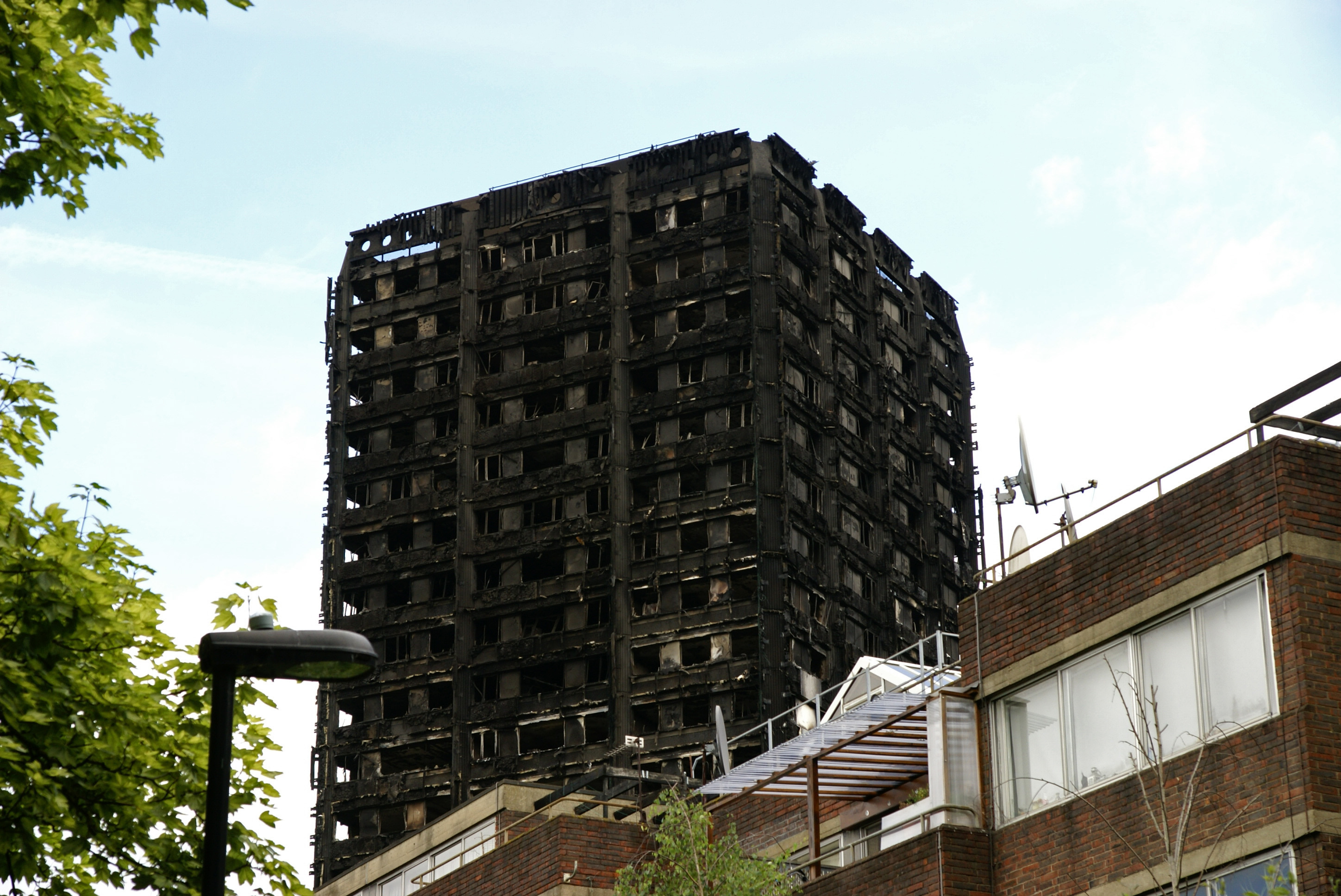
Having been temporarily suspended in early January as a result of an increase in COVID-19 cases, the Grenfell Tower Inquiry hearings resumed on 8 February 2021. The fire killed 72 people.
The hearings are being conducted remotely using a Zoom-based video platform, which the Inquiry describes as “a temporary measure to be used only for as long as absolutely necessary”.
The Inquiry conducted Phase 1 of the investigation, which focused on the events of the night of 14 June 2017, on 12 December 2018. Phase 2 is currently underway, which examines the causes of these events, including how Grenfell Tower came to be in a condition which allowed the fire to spread in the way identified by Phase 1.
O’Neill and Lauchlan v. United Kingdom, nos. 41516/10 and 75702/13, 28 June 2016 – read judgment.
The European Court of Human Rights has ruled that criminal proceedings concerning two Scottish individuals ran beyond the “reasonable” period of time permitted under Article 6, ECHR. Despite considering that the individual stages of the proceedings were all reasonable in length, the cumulative time was excessive and in violation of Article 6(1).
by Fraser Simpson
Background
In August 1998, the applicants were sentenced to periods of imprisonment of eight and six years following convictions for various sex offences. During their incarceration, the police wished to question the applicants about the disappearance, and suspected murder, of their ex-housemate (AM) after she had been reported missing six months earlier. On 17 September 1998 the applicants were detained by police and interviewed separately for over five hours. During these interviews they were directly accused of the murder of AM but, subsequently, neither applicant was arrested or formally charged.
Following release from prison, and subsequent re-arrest and recall to prison due to the apparent abduction of a fourteen year old boy, the applicants were again convicted of various sex offences and sentenced to a further three years in prison. During this period of incarceration the applicants were also placed on petition in relation to the murder of AM in early April 2005. Formal charges were brought on 5 April 2005 whilst the police continued with their investigations. However, in late 2005, Crown Counsel raised concerns about the sufficiency of evidence. Accordingly, a decision to take “no proceedings meantime” was made in December 2005 and subjected to continuous review as investigations continued. Continue reading →
R (on the application of EH) v Secretary of State for the Home Department [2012] EWHC 2569 (Admin) – read judgment
1 Crown Office Row’s Robert Kellar was instructed for the Defendant in this case. He is not the writer of this post.
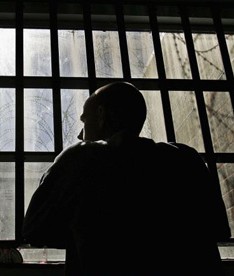
The High Court has ruled that the failure to consider the continued detention of a mentally ill failed asylum seeker in accordance with immigration policy rendered his detention unlawful in part.
The Claimant applied for asylum based upon his account of an attack during the Rwandan genocide and subsequent events. The Home Secretary refused the application and the Claimant appealed. At the appeal he was unrepresented and he adduced no medical evidence. The Immigration Judge dismissed his appeal, disbelieving the entirety of his account. Once his appeal rights had been exhausted (that is, he was unable to appeal any further through the courts), the Secretary of State detained him on 19 October 2010 for the purpose of removal.
Let’s apply some hard history to the 13th century charter governing the obligations flowing between King John and his barons, or at least read the thing (translation here). So says Lord Sumption in a fascinating address to Friends of the British Library on 9 March.
All sides jockey for position at the Magna Carta shrine, but its significance is entirely due to the myth-making tendencies of the seventeenth century politician and judge Edward Coke. Since he plucked the charter quite clean of its historical context, the claims made in its name are extraordinary and downright self-serving:
In his column in the Daily Telegraph, Peter Oborne recently described the European Convention on Human Rights as a “document which entrenches the principles of Magna Carta in international law.” Others have come forward to suggest that the partial abrogation in 2014 of a legal aid system which was first created in 1949 was contrary to Magna Carta. Recently, a Global Law Summit in London, which was essentially an international marketing opportunity for British lawyers, described itself on its website as “grounding the legacy and values of Magna Carta in a firmly 21st Century context.
Sumption is not against liberty of the subject, nor motherhood and apple pie, nor even international marketing opportunities for lawyers, but he does have a problem with “the distortion of history to serve an essentially modern political agenda.” Continue reading →
Welcome back to the UK Human Rights Roundup, your regular festive trifle of human rights news and views. The full list of links can be found here. You can find previous roundups here. Links compiled by Adam Wagner, post by Celia Rooney.
This week, the Church of Scientology registered a win of sorts in the Supreme Court, while London’s biggest university said no to occupational student protests just as others were contemplating the possibility of gender-segregated talks Meanwhile, the Home Secretary puts forward her answer to modern day slavery, while the Joint Committee on Human Rights puts pressure on Chris Grayling regarding the proposed legal aid reforms.
Nothing in Helena Kennedy QC and Philippe Sands QC’s article is particularly surprising. The Commissioners emerge as a dysfunctional group of seasoned advocates on two sides of a case, with no presiding judge to rein them in or decide who was right. The report itself, with its bewildering array of separate papers and minority reports, demonstrated how little common ground there was between the commissioners.
I recommend reading the article in full, but here are a few interesting tidbits. Of course, some caution is necessary as the other members of the Commission (particularly the Conservative ones) may remember things differently.
At this point, it is almost trite to say that we are living through unprecedented events. The global spread of the Coronavirus pandemic poses serious challenges to society. So far, the global death-toll has exceeded 21,000 and life as we know it in the UK has changed dramatically. In response to this crisis the Government has announced drastic measures in order to curb the spread of the virus and to support those who may be affected. Indeed, it seems that Cicero’s famous injunction to let the welfare of the people be the highest law has gained a new relevance in the age of COVID-19.
As readers of this blog will probably know, a significant plank of the Government’s legislative response is the Coronavirus Act 2020, which received royal assent on 25 March having been fast-tracked through Parliament. This substantial piece of legislation –which consists of 102 Sections, 29 Schedules and runs to just under 360 pages– is intended to deal with the various challenges that may be posed by the Coronavirus epidemic. As a result, its provisions are broad ranging, touching on areas as diverse as powers to disperse gatherings, pensions, sick pay, inquests and investigatory powers to name but a few.
Söderman v. Sweden – (application no. 5786/08) – Read judgment
The European Court of Human Rights has decided that it is a violation of the right to privacy if a country does not have a law prohibiting surreptitious photography of people. The ruling has serious implications for paparazzi, and would have been useful to Princess Diana. A ready-made bill exists in the form of a draft published by the Law Commission for England and Wales in 1981.
On 12 November the Grand Chamber of the European Court of Human Rights ruled that Sweden’s lack of a legal ban on invading personal privacy by surreptitious photographs violated the right to privacy. The case involved a camera hidden in the bathroom by the stepfather of a fourteen-year old girl. (Söderman v. Sweden,application no. 5786/08).
In law, time can be everything. Every lawyer will have experienced waking up in the middle of the night in a cold sweat at the realisation that a time limit has been missed. Courts often have the discretion to extend litigation time limits, such as under rule 3.1 of the Civil Procedure Rules, but simple mistakes by lawyers rarely generate sympathy from judges. Even scarier, judges sometimes do not even have the power to extend time at all, however unfair the circumstances. The idea is to encourage certainty and predictability in the legal system.
The lesson of principle is that lawyers should never take risks on time limits. The practical reality is that this is a very easy to say in retrospect. And so we reach the difficult case of Abu Qatada, in which 5 European Court of Human Rights judges are to decide next Wednesday 9 May whether an appeal by the preacher will be heard in full by the court’s Grand Chamber. Whoever you think was right, Abu Qatada’s lawyers or Home Secretary Theresa May, this controversy has demonstrated that rules designed to provide certainty can have exactly the opposite effect in practice.
Principal Reporter (Respondent) v K (Appellant) and others (Scotland) [2010] UKSC 56 – Read judgment / press summary
The Supreme Court has ruled that Scottish law, which previously did not give unmarried fathers the right to take part in a hearing relating to a child with whom they have established family ties, is incompatible with human rights law.
The statutory provision which defines the categories of people who have a right to take part in the hearings must be read to include anyone who has established family life with the child. The Human Rights Act empowers courts to “read” legislation in such a way as to give effect to the European Convention on Human Rights.
Police officers direct traffic in the wake of new legislation
In the News
In the past week, Covid-19 has once again dominated the news, effectively occluding all other topics. Given that Monday evening saw leaders including Emmanuel Macron, Michel Barnier, Donald Trump and Sir Keir Starmer expressing their hopes for Boris Johnson’s swift recovery after his sudden removal to intensive care, this dominance does not seem disproportionate.
Update on 19 June: here are the government’s summary grounds of defencein which the government says that they did not order the schools to close; it was only a “request” (clause 73)
On 26 May, judicial review proceedings were launched in the High Court which not only challenged the lawfulness of the Lockdown Regulations as having been made “ultra vires” under the 1984 Public Health Act, but also claimed that they are disproportionate to the threat posed by Covid-19. Philip Havers QC of 1 Crown Office Row is acting for the claimant: see my post on the launch proceedings here.
This latest communication from the claimant has challenged the legality of the latest lockdown regulations, the Health Protection (Coronavirus, International Travel) (England) Regulations 2020, enforceable from Monday 8 June. (NB whilst there might be changes afoot in respect of people travelling from and within the EU, the current position remains as set out in the regulations which took force this week). The claimant observes that from many weeks of data collected since it first affected the UK, that Covid-19 overwhelmingly affects primarily the elderly and those with pre-existing health conditions, not the “vast majority of the working population.”
Young people and children are scarcely affected at all. Indeed, as of the latest available figures published by NHS England, we note that out of a population of 56 million people in England alone, since the outbreak started, Covid-19 has been cited on the death certificates of just 279 people who died in hospital in England under the age of 60 with no pre-existing health condition. *
The Charity Commission has rejected a bid by a Catholic organisation to amend its charitable objects in order to restrict its adoption services to heterosexuals. The case highlights the significant protections which have been put in place by recent equality law, and the policing role which the Charity Commission is required to play from a human rights perspective.
The Commission was ordered by the High Court in March to look at its initial decision again in light of Article 14 of the European Convention on Human Rights. The law behind the case is quite convoluted, but is worth looking at again as it is likely to have significant implications for gay couples looking to adopt as well as for religious charities in general.
Breyer Group plc and others v Department of Energy and Climate Change [2014] EWHC 2257 (QB) – Coulson J read judgment
This is an important judgment on governmental liability for a rather shabby retrospective change of the rules about subsidies for photovoltaic schemes. The Court of Appeal had decided in 2012 that the changes were unlawful: see judgment and my post here. The question in Breyer was whether businesses could obtain damages under A1P1 arising out of the Secretary of State’s decision. Though the judgment proceeds on a number of assumed facts, some critical findings of law were in favour of the businesses.
This blog is maintained for information purposes only. It is not intended to be a source of legal advice and must not be relied upon as such. Blog posts reflect the views and opinions of their individual authors, not of chambers as a whole.
Our privacy policy can be found on our ‘subscribe’ page or by clicking here.




 R (on the application of EH) v Secretary of State for the Home Department [2012] EWHC 2569 (Admin) –


 Welcome back to the UK Human Rights Roundup, your regular festive trifle of human rights news and views. The full list of links can be found
 In March I

 Söderman v. Sweden – (application no. 5786/08) –
 In law, time can be everything. Every lawyer will have experienced waking up in the middle of the night in a cold sweat at the realisation that a time limit has been missed. Courts often have the discretion to extend litigation time limits, such as


Recent comments