We use cookies to enhance your browsing experience. If you continue to use our website we will take this to mean that you agree to our use of cookies. If you want to find out more, please view our cookie policy. Accept and Hide [x]
UK Human Rights Blog - 1 Crown Office Row
Search Results for: environmental/page/15/Freedom of information - right of access) [2015] UKUT 159 (AAC) (30 March 2015)
At the conclusion of the inquest into the death of Scott Rider, the coroner described Rider’s treatment in prison as “inhumane and indefensible”. Rider died by suicide in June 2022 after serving 17 years of an “imprisonment for public protection” (IPP) sentence, a form of indeterminate prison sentence. A few weeks before his death Rider told a member of prison staff that he felt as though his sentence had ruined his life and there was no hope of release. IPP sentences were abolished in 2012, but the abolition did not apply retrospectively to those who had already received the sentence. As of 31 December 2022 there were 2,892 prisoners serving IPP sentences. The coroner sent a Prevention of Future Deaths Report to the prisons minister, writing that “if action is not taken to review all prisoners sentenced to IPP then there is a risk of further deaths occurring”.
The purpose of inquest proceedings also came under scrutiny this week, with the outgoing Chief Coroner, HHJ Thomas Teague KC, describing “a long-latent tension” at the heart of what the coronial service is trying to achieve in his Annual Report published on Thursday. He criticised the pressure on coroners to expand the scope of their investigations and expressed his view that “an inquest should remain a hearing that is narrowly focused on establishing a person’s immediate cause of a death, as opposed to in effect becoming a surrogate public inquiry”.
Finally, the Safety of Rwanda (Asylum and Immigration Act) 2024 was passed into law on Thursday. The Act requires decision makers to “conclusively treat the Republic of Rwanda as a safe country”, where a “safe country” means a country to which a person may be removed without violating the UK’s obligations under international law. Speaking on 22 April, Prime Minister Rishi Sunak said that he anticipated that first flight removing people to Rwanda would leave in 10-12 weeks, stating that “these flights will go come what may” and that “no foreign court will stop us from getting flights off”.
In international news
Major campus protests have broken out across the US regarding the ongoing conflict in Gaza, with students calling for their universities to divest from companies with ties to Israel. Hundreds of arrests have been made over the last week. At New York University 120 people who had erected an encampment were arrested and all but four were charged with trespass. Hundreds more arrests were made at Emerson University, Yale University, Columbia University, the University of South California and the University of Texas. At the University of Texas, the state Governor called in troopers with the Texas Department of Public Safety, who wore riot gear and were seen using their bikes to push protesters back.
In the Courts
The High Court dismissed the Solicitor General’s claim against Ms Trudi Warner in a judgment handed down on Monday. On 27 March 2023 Warner had stood outside a court where members of an environmental protest group were due to be tried with a placard that read “JURORS YOU HAVE AN ABSOLUTE RIGHT TO ACQUIT A DEFENDANT ACCORDING TO YOUR CONSCIENCE”. The Solicitor General alleged that Warner’s conduct was intended to interfere with the administration of justice and amounted to contempt of court. Mr Justice Saini held that it was “fanciful” to suggest that Warner’s behaviour could be considered to fall within the category of contempt. The content of the placard “accurately informed potential prospective jurors about one of their legal powers… It is not unlawful to accurately communicate the bare principle of law to potential jurors in a public forum”.
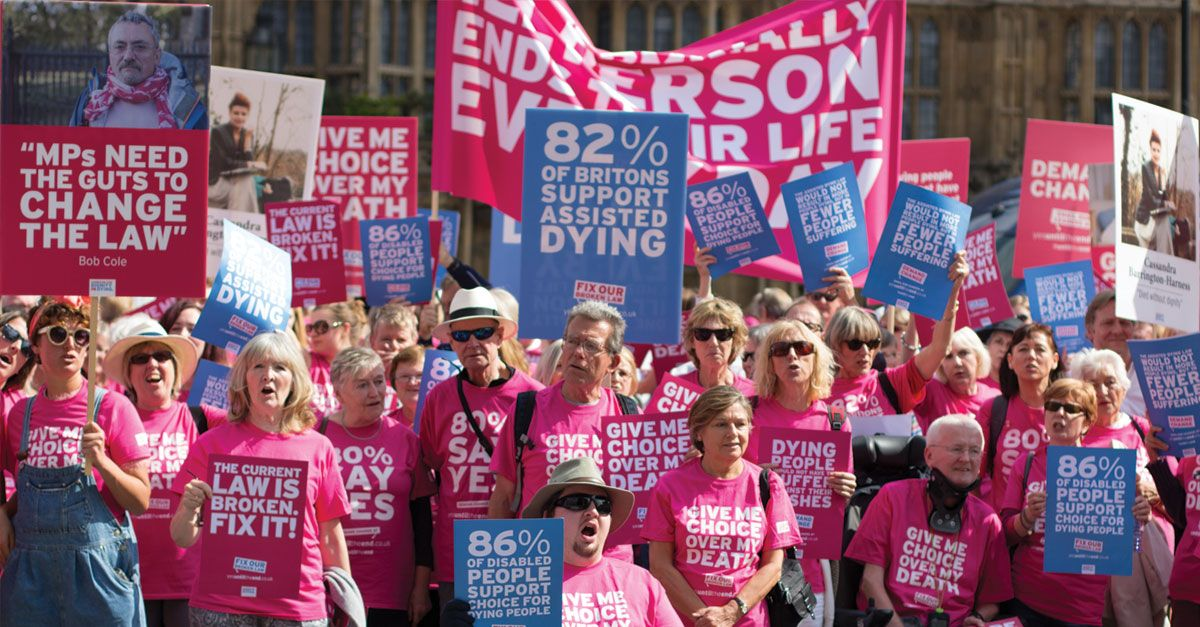
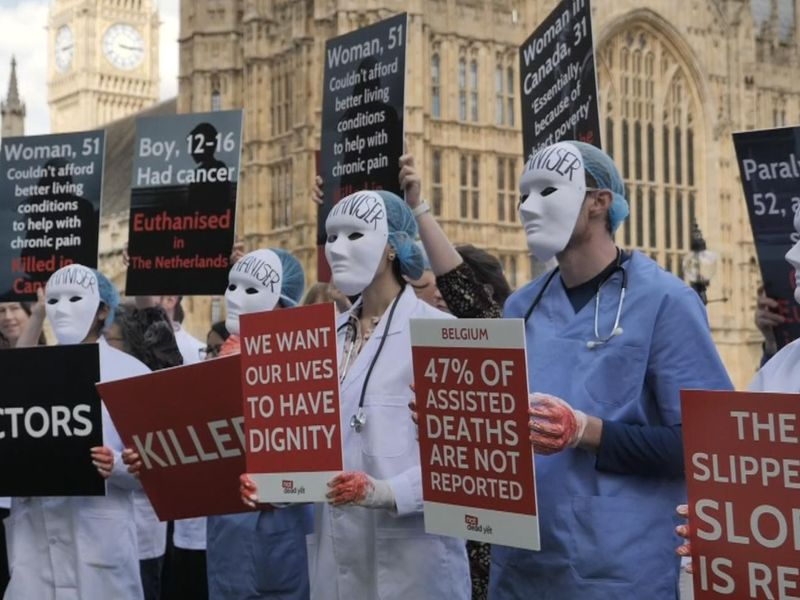
This week the Terminally Ill Adults (End of Life) Bill was published, with the second reading vote scheduled for 29 November 2024. The bill would allow terminally ill adults, who have capacity, to request to be provided with assistance to end their own life (clause 1). “Terminally ill” is defined in the bill to mean that the requestor has an inevitable progressive illness that cannot be reversed by treatment and as a result their death can reasonably be expected within six months (clause 2). The requestor would be assessed by two doctors (see clauses 7 and 8) and their request would be subject to approval from a High Court judge (clause 12). The bill confirms that medical workers who object to assisted dying will have no obligation to provide assistance (clause 23). The bill also creates offences of dishonesty, coercion or pressure in relation to requesting assistance (clause 26) and falsification or destruction of documentation regarding requests of assistance (clause 27). The controversial bill has stirred debate regarding the proper balance between bodily autonomy and safeguarding vulnerable people. On this blog, there has been a debate on whether the bill would place the UK in breach of article 2 ECHR (available here and here). There is also discussion of “slippery slopes” ie. whether once the bill has passed assisted dying could be made available to a wider range of requestors and the potential dangers (available here and here).
Conservative frontrunner Liz Truss is promising to cut taxes this winter to support families amidst rising energy bills, through an emergency budget that would be enacted this September. Sunak, her rival, has pledged to provide a £15bn overall package of assistance with energy bills. Criticisms have been raised of Truss’ plans, however, with suggestions that they could cost £30bn, £40bn or even £50bn per year. Both candidates’ plans have been criticised for not being accompanied by plans for lower spending that would make them sustainable. Labour’s Rachel Reeves has argued that amidst ‘fantasy economics and unfunded announcements from the Tories’, Labour alone can offer Britain the fresh start that it needs.
A survey by the British Dental Association and the BBC has shown that 91% of NHS practices in England are not accepting new adult patients. Louise Ansari, national director of Healthwatch England, has called the results of the survey ‘dire’. Stories have emerged of people pulling out their own teeth and making their own teeth out of resin to stick back on with superglue. The health secretary has noted the ‘urgency’ of preparing the NHS for winter, amidst the pressures of coronavirus, the rising cost of living and seasonal flu. Whether the Department of Health and Social Care’s recent comment regarding the ‘government priority’ of NHS dental care will translate into satisfactory results remains to be seen.
Welcome back to the human rights roundup, a regular bulletin of all the law we haven’t quite managed to feature in full blog posts. The full list of links can be found here. You can also find our table of human rights cases here and previous roundups here.
by Melinda Padron
In the news:
President of the Family Division’s Press Release
Last week the President of the Family Division, Sir Nicholas Wall, issued a press release concerning two judgments in the case Re X which will soon be released in full (save for the identities of the children) to the public. The case involves allegations by a woman who her former partner abused her child and consequently custody issues. There was public support for the woman involved in the proceedings, and amongst these supporters were John Hemming MP (who used parliamentary privilege to name the woman despite the confidential nature of the proceedings) and Christopher Booker (a reporter for the Telegraph).
G v E & Ors [2011] EWCA Civ 939 – Read judgment – 1COR’s Guy Mansfield QC appeared for the Respondent. He is not the author of this post.
Bahta & Ors, R (on the application of) v Secretary of State for the Home Department & Ors [2011] EWCA Civ 895 – Read judgment
The general rule in civil law cases is that the loser pays the winner’s legal costs, even if the case settles before trial. As with all general rules, there are plenty of exceptions, and many relate to public authorities. Two of those exceptions have just been chipped away at by the Court of Appeal.
Two important judgments increasing the likelihood that local authorities will have to pay out costs emerged the usual last-minute glut before the court term ended on Friday. The first concerned costs in the Court of Protection when an authority has unlawfully deprived a person of their liberty. The second was about costs in immigration judicial review claims which had settled following consent orders.
R (o.t.a Cornwall Waste Forum, St Dennis Branch) v Secretary of State for Communities and Local Government [2011] EWHC 2761 (Admin) Collins J, 13 October 2011
I did a recent post on this case based upon a very short report; the full transcript of the judgment is now available. The case concerns who is to decide issues of air quality in a planning case about incinerators/energy-from-waste plants.
The headlines are as before – but there is a good deal in this judgment, particularly for those interested in conservation issues, as well as that vexed question of when a legitimate expectation may arise in the course of a hearing. Sadly, the judgment is still not available on an open access website such as Bailli – bless it, per Adam Wagner’s post– but I hope that will change soon.
Some of this week’s human rights news, in bite-size form. The full list of our external links can be found on the right sidebar or here:
New human rights body must be independent, says Law Society: The Foreign Secretary announced a new independent advisory group, including non governmental organisations and independent experts, to advise ministers on human rights issues (see our post). The Law Society says it should be on it.
Welcome back to the UK Human Rights Roundup, your regular menagerie of human rights news and views. The full list of links can be found here. You can also find our table of human rights cases here and previous roundups here. Links compiled by Adam Wagner, post by Sarina Kidd.
This week, judicial review continued to take a beating, the Home Office backed down over their ‘Go Home’ campaign and the legal implications behind the twitter threat debacle were considered. And, finally, the immigration and asylum tribunal launched a useful online search service.
The Foreign Secretary William Hague has sought in today’s Daily Telegraph to re-emphasise the “centrality of human rights in the core values” of UK foreign policy. On the face of it, this is a laudable aim. But does it really mean anything? And may it in fact amount to an unrealisable promise?
The editorial evokes Mr Hague’s early commitment to put human rights at the “irreducible core” of UK foreign policy. This pledge has been questioned recently due to the potential reduction in scope of the Foreign Office’s annual human rights report. Mr Hague addresses this directly, although with little new detail:
The High Court will hear a case brought by a mother and her 11-month-old baby, who are arguing that they should not be excluded from the UK government’s ‘Healthy Start’ scheme. The scheme provides vouchers for healthy food, nutritional advice, and vitamins to low-income families, but currently excludes many migrant families, including those who have a right to live and work in the UK, have British children, and earn well below the threshold needed to obtain welfare benefits. The judicial review will challenge the eligibility criteria of the scheme on several grounds: it is inconsistent with the intended purpose of the scheme to benefit those in greatest need, it breaches human rights, and it indirectly discriminates against families from Black and Minority Ethnic backgrounds.
Campaigners have welcomed a government announcement that it will introduce several key amendments to the Domestic Abuse Bill currently being debated in Parliament. In particular, the Bill will make non-fatal strangulation a specific offence, with an attached maximum sentence of five years. This is a significant shift from the previous maximum six months’ sentence if tried in the Magistrates Court under the crime of common assault. The Bill will also expand the definition of coercive behaviour by removing the requirement that the victim co-habit with their abuser, and broaden the scope of the laws on revenge porn by enabling those who threaten to share indecent images to be prosecuted.
The European Court of Justice has ruled this week that air pollution in 75% of the United Kingdom’s urban areas has exceeded legal levels for over ten years. Nitrogen dioxide, which is emitted largely by diesel vehicles, significantly contributes to pollution, and was found by a scathing coroner’s report to have contributed to the death of a nine-year-old girl last year. Imposing charges in urban centres to deter polluting vehicles (‘clean air zones’) is thought to be the most effective means of combating the problem. However, the government has only established one such area, in London, in the four years since research was published. The legal proceedings in the CJEU began before Brexit was concluded, and the pollution limits are still part of UK law. The UK could therefore face financial penalties if it fails to remedy the situation within a reasonable period.
In the courts:
A And B (Minors: placement, faith) [2021] EWHC 455 (Admin): In this judicial review case, the Claimants, two brothers with complex medical and behavioural conditions from a strict Orthodox Haredi Jewish community, argued that the decision of Manchester City Council to offer them respite accommodation in a secular residential home in Manchester, rather than an exclusively Orthodox Jewish home in London, was unreasonable. In particular, it was contended that placement in the Manchester accommodation would prevent the boys from fully manifesting their religious faith, for example, in following kosher dietary rules and observing holy days, contrary to Part III of the Children Act (1989), and possibly Articles 8, 9, and 14 of the European Convention for Human Rights, and the Equality Act (2010). There was an important difference between the two brothers: it was agreed that A should undertake a 12-week assessment placement at one of the homes, whereas B would only stay at the home once a fortnight and during school holidays. Accordingly, His Honour Judge Stephen Davies held that the decision of the council to offer only A a place at the Manchester home was unlawful and in breach of his Article 8 and 9 rights under the ECHR, because he would not be able to cook kosher meals nor perform the required prayers by himself, and so the placement would not allow him to manifest his religion. However, the council’s proposal was not unlawful in relation to B, because the limitations imposed by a fortnightly short overnight stay were not significant enough to breach his rights under the ECHR.
Turner, R (On the Application Of) v Secretary of State for Work and Pensions [2021] EWHC 465 (Admin): The High Court rejected the Claimant’s case that the Secretary of State for Work and Pensions acted unlawfully in withdrawing Errol Graham’s disability benefit, who tragically was found to have starved to death in his flat in 2018. It was contended that the Department for Work and Pension’s (DWP) policy for assessing Employment Support Allowance eligibility was unlawful on two grounds. First, the policy placed the onus on the applicant to show ‘good cause’ for failing to attend appointments, which was incompatible with the objectives of the legislation; and, second, the DWP has an implied duty to inquire as to why the applicant had withdrawn their engagement where they are known to have mental health difficulties, under s.149 of the Equality Act (EA) (2010). Justice Bourne held that the reference to ‘good cause’ did not create an unlawful burden of proof, because it was clear from the policy that the Defendant must also utilise information that they could reasonably obtain, rather than just relying entirely on the applicant to demonstrate their eligibility. In addition, s.149 of the EA did not impose a duty to inquire after individuals, but rather a broad obligation to give due regard to the advancement of opportunity for disabled people generally, which the Defendants satisfied. The Equality and Human Rights Commission was given intervenor status, but the judge considered their submissions to be outside the scope of the ground of challenge.
Joanna Curtis reports on the ECtHR’s recent imposition of further interim measures against Russia as a result of the continued imprisonment of opposition figure Alexei Navalny.
Marina Wheeler considers Shamima Begum’s latest loss in the Supreme Court last week in Special Immigration Appeals Commission and Secretary of State for the Home Department v R (Begum) [2021] UKSC 7.
The Grand Chamber of the European Court of Human Rights (“ECtHR”) has held that the risks to the applicant’s psychiatric health posed by his expulsion to Turkey did not reach the threshold for the application of Article 3.
The decision demonstrates the extremely high evidential threshold which applicants bringing such complaints will have to meet in order to establish that there are “substantial grounds” for believing that there is a real risk of a violation of Article 3, i.e., to pass the first stage of the Article 3 analysis articulated in the ECtHR’s case law.
J v B (Ultra-Orthodox Judaism: Transgender) [2017] EWFC 4 (30 January 2017) – read judgment
The Court of Appeal has granted permission to the father to appeal against the decision of the High Court earlier this year. Briefly, Peter Jackson J denied a father, who now lives as a transgender person, direct contact with his five children who live with their mother in the heart of a Charedi community of ultra-orthodox Jews.
The judge said that he had reached the “unwelcome conclusion”
that the likelihood of the children and their mother being marginalised or excluded by the ultra-Orthodox community is so real, and the consequences so great, that this one factor, despite its many disadvantages, must prevail over the many advantages of contact.
The appeal hearing, estimated to last one day, will take place on 15 November 2017. Continue reading →
Help Refugees Ltd, R (on the application of) v Secretary of State for the Home Secretary [2018] EWCA Civ 2098 – read judgment
This was an appeal by Help Refugees Ltd against the refusal of its application for judicial review of the secretary of state’s consultation process regarding the relocation of unaccompanied asylum-seeking children under Section 67 of the Immigration Act 2016.
Background law and facts
This provision was passed in response to the mass migration into Europe of unaccompanied asylum-seeking children (UAS children) from the Middle East and North Africa. Section 67 established a scheme whereby the secretary of state was required to arrange for the relocation of “specified number” of UAS children. That number was to be determined by the secretary of state in consultation with local authorities. Because the s.67 scheme was not the only route by which UAS children might lawfully enter the UK, the specified number was to represent the highest number of s.67 UAS children that the local authorities could reasonably accommodate. It is inherent in the provision that the interests of UAS children in being located in the UK have to be balanced against the interests of other children for whom local authorities are responsible, and the public interest in ensuring that there is reasonable resource capacity in the system to accommodate the UAS children. In late 2015 – 2016 the number of migrants hugely accelerated in France, reflected in the increase in attempts to make unauthorised access to the UK from France through ports in Kent. This in turn imposed a huge burden on the local authorities in that region to fulfil their obligations under the Children Act, necessitating relocation to other parts of the UK.
On 8 September 2016, the Home Office wrote to all local authorities asking each to specify the number of children it could accept under s.67. By October, when the refugee camps in Calais were being cleared, UAS children in France were assessed for transfer under s.67 against published criteria, such as age, length of time in Europe, and country of origin (with older Sudanese and Syrian UAS children being allowed in). UAS children in France were assessed for transfer against these published criteria. For practical purposes, those who satisfied the criteria were transferred; and those who did not were not. The latter were told simply that they had not met the eligibility criteria –
“Age 18+” or “Criteria not met”.
The charity challenged both the lawfulness of the consultation process and the adequacy of the reasons given to the rejected children. The Divisional Court rejected both grounds of challenge ([2017] EWHC 2727 (Admin)).
The charity argued that the secretary of state had (1) failed properly to discharge her duty to consult; (2) breached her common law duty of procedural fairness by failing to give adequate reasons to the rejected children.
Hickinbottom LJ, giving judgment for the Court, allowed the appeal.
Serdar Mohammed and Others v Secretary of State for Defence [2015] EWCA Civ 843 – read judgment
The Court of Appeal has held that UK armed forces breached both Afghan law and Article 5 of the ECHR by detaining a suspected Taliban commander for longer than the 96 hours permitted by ISAF policy.
The MOD was therefore potentially liable at both public and private law for the failures to make arrangements for extended detention and to put in place such procedural safeguards as were required by international human rights law. Moreover, the defence of ‘act of state’ was not available against either the public or private law claims. Continue reading →
On Friday, former Home Secretary Lord Blunkett raised his issues with the Police, Crime, Sentencing and Courts Bill, an enormous piece of legislation that reforms much existing legislation and common law offences. Lord Blunkett pointed to the difficulties the police could face in interpreting the new law, and the sensitive nature of the relationship between the police and protestors. The Bill is currently at the Committee Stage of Parliamentary procedure. Particular attention has been drawn to s.59 of the Bill, which purportedly codifies the common law offence of public nuisance, following the recommendations of the Law Commission’s 2015 report, Simplification of Criminal Law: Public Nuisance and Outraging Public Decency. This section would create an offence of ‘intentionally or recklessly causing public nuisance’, defined as where a person’s act or omission causes serious harm to the public or a section of the public. Subsection (2) states that this offence can be constituted where ‘a person’ suffers ‘serious distress, serious annoyance, serious inconvenience or serious loss of amenity’. On indictment, a defendant is liable to imprisonment for a term up to ten years. While the Law Commission’s recommendation that the fault element should be intention or recklessness as opposed to ‘knew or should have known’ was adopted, the significant maximum term is a new addition.
This blog is maintained for information purposes only. It is not intended to be a source of legal advice and must not be relied upon as such. Blog posts reflect the views and opinions of their individual authors, not of chambers as a whole.
Our privacy policy can be found on our ‘subscribe’ page or by clicking here.




 Welcome back to the human rights roundup, a regular bulletin of all the law we haven’t quite managed to feature in full blog posts. The full list of links can be
 G v E & Ors [2011] EWCA Civ 939 –


 Welcome back to the UK Human Rights Roundup, your regular menagerie of human rights news and views. The full list of links can be found
 The Foreign Secretary William Hague


 Help Refugees Ltd, R (on the application of) v Secretary of State for the Home Secretary [2018] EWCA Civ 2098 –


Recent comments