7 June 2012 by Guest Contributor
 In last week’s judgment in Assange v The Swedish Prosecution Authority [2012] UKSC 22, the Supreme Court decided that the words ‘judicial authority’ in s 2(2) of the Extradition Act 2003 include prosecutors as well as courts. This was because the European Arrest Warrant (EAW) Framework Decision, to which the Part 1 of 2003 Act gave effect, uses the expression in that broad sense, and the presumption is that Parliament meant the same thing (summary here).
The EAW Framework Decision has always guided the interpretation of the Part 1 of the 2003 Act. Until Assange, there were two different reasons for this: (i) a domestic rule of statutory interpretation; and (ii) the rule expounded by the Court of Justice of the EU in Case C-105/03 Criminal proceedings against Maria Pupino.
Continue reading →
Like this:
Like Loading...
6 June 2012 by Rachit Buch
 Last week the UN Human Rights Commissioner published the draft report of the second Universal Periodic Review (UPR) of the UK’s human rights record (draft report here, webcast of the UPR session here). The UPR involves delegations from UN member states asking questions and make recommendations to the UK government on the protection of human rights, which the government will consider before providing its response. The report is extremely wide-ranging, perhaps to its detriment, though many valuable and interesting insights are provided.
The UPR process was established in 2006. It involves a review of all 192 UN member states once every four years. As readers of this blog will know, the protection of human rights has a troubled recent history in the UK, with newspaper campaigns against “the hated Human Rights Act” providing the background to government pronouncements on human rights that veer from the sensible to the ridiculous. In this context, the UPR provides a valuable attempt at a serious assessment of human rights in this country.
Continue reading →
Like this:
Like Loading...
5 June 2012 by David Hart KC
 R (CLIENTEARTH) v SECRETARY OF STATE FOR ENVIRONMENT FOOD & RURAL AFFAIRS, Court of Appeal 30 May 2012, on appeal from Mitting J, 13 December 2011,
A newsflash, really, confirming that ClientEarth’s claim for a declaration and mandatory order against Defra in respect of air pollution was refused by the Court of Appeal, in line with the judgment below. And the lack of a link to the CA’s judgment because it is not available, I imagine, because the judgment was extempore, and it is being transcribed at the moment. Sadly, that does not necessarily mean it gets onto the public access site, Bailli, in due course: the first instance decision still languishes on subscription-only sites. So all I know is that ClientEarth’s appeal did not find favour with Laws and Pitchford LJJ, sitting with Sir John Chadwick, but this, as ClientEarth explains, may not be the end of the line.
Continue reading →
Like this:
Like Loading...
5 June 2012 by Adam Wagner
 Updated | In stark contrast to the pageantry surrounding the Royal Jubilee, here is a somewhat sombre update on the Justice and Security Bill, which was published on 28 May 2012 and is currently receiving its second reading in the House of Lords. The Bill aims to introduce Close Material Procedures, that is secret hearings, into civil trials.
Three key documents were published shortly after the Bill, presenting the Government’s case in response to the forceful criticism which the initial proposals generated. First is the Government’s response to the Joint Committee on Human Rights’ scathing report on the proposals. Secondly, the Government’s response to the 90 submissions received in response to the Justice and Security Green Paper consultation. Thirdly, a summary of European Convention on Human Rights issues relating to the Bill, also published by the Government.
Continue reading →
Like this:
Like Loading...
4 June 2012 by Wessen Jazrawi
 Welcome back to the UK Human Rights Roundup, your weekly buffet of human rights news. The full list of links can be found here. You can also find our table of human rights cases here and previous roundups here.
The big news this week has been the unexpected turn of events in the Assange extradition case. Almost immediately after the Supreme Court handed down its judgment that he could be extradited, his counsel Dinah Rose QC threw a spanner in the works… The upshot is that it looks like Assange shall be sticking around for at least another couple of weeks. The other significant news of the week is that the Government has published the Justice and Security Bill.
by Wessen Jazrawi
Continue reading →
Like this:
Like Loading...
31 May 2012 by Rosalind English
 Writing on the Richard Dawkins website, humanist campaigner Leo Igwe-Ieet declares that there is a gaping hole in the protections listed in international rights instruments.
I have heard it proclaimed at the UN that the rights of women are human rights. I have also heard it proclaimed that the rights of gay people are human rights. These proclamations changed the way human rights are perceived around the globe. Personally I have yet to hear it proclaimed at UN, or at our regional and national human rights bodies that the rights of atheists, agnostics and freethinkers are human rights. I do not want these rights to be implied or assumed as currently the case in most countries. I want them to be expressly declared as universal human rights.
The reason why such explicit protection is urgently needed, the writer claims, is because non-believers are particularly vulnerable in some parts of the world, notably Africa. In parts of Africa where fundamentalist belief holds sway, “religious non-believers are treated as if they are not human beings, as if they do not exist or do not have the right to exist.” The right to freedom of religion is of no avail to those who wish to eschew faith altogether. On the contrary,
freedom of religion is often understood as freedom to profess a religion-the religion sanctioned by the state, by one’s family or community- not freedom to change one’s religion or freedom not to profess any religion at all as contained in article 18 of the Universal Declaration of Human Rights.
Continue reading →
Like this:
Like Loading...
31 May 2012 by Rosalind English
 Catt v Commissioner of the Police of the Metropolis [2012] EWHC 1471 (Admin) – read judgment
Retention of data on a national database of material relating to a protester’s attendance at demonstrations by a group that had a history of violence, criminality and disorder, did not engage Article 8 of the Human Rights Convention.
The claimant, now aged 87, applied for judicial review of the decision of the defendants to retain data, seeking an order that, as he had not himself been engaged in criminality, any reference to him should be deleted from the allegedly unlawfully retained material.
Background
The data in issue was essentially comprised of records (or reports) made by police officers overtly policing demonstrations of a group known as “Smash EDO”, which carried out a long-running campaign calling for the closure of a US owned arms company carrying on a lawful business in the United Kingdom. Disorder and criminality had been a feature of a number of the protests along with harassment of the company’s staff. The defendant authority had retained data relating to the claimant’s attendance at various political protests on the National Domestic Extremism Database, and maintained by the National Public Order Intelligence Unit.
Continue reading →
Like this:
Like Loading...
31 May 2012 by Rosalind English
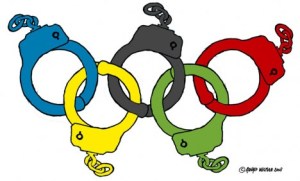 Mohammed Othman v Secretary of State for the Home Department, 28 May 2012 – read judgment
This was a further application for bail to the Special Immigration Appeals Commission (SIAC) after the appellant had failed in his application to the Grand Chamber of the Strasbourg Court earlier this month, but had launched an appeal to be heard by SIAC, against the Home Secretary’s refusal to revoke his deportation order.
Angus McCullough QC appeared for Abu Qatada as his Special Advocate in these proceedings before SIAC. He is not the author of this post.
A full hearing will take place in October. Until then, bail has been refused and Abu Qatada will remain in detention.
Given the evidence before him, Mitting J had to base his judgment on the assumption that the Secretary of State would not have maintained the deportation order unless convinced that she was in possession of material which could support her resistance to the appellant’s appeal and which could satisfy “the cogently expressed reservations of the Strasbourg Court about the fairness of the retrial”which the appellant would face in Jordan.
Two consequences flowed from these developments, according to the judge. One is that SIAC’s final decision in October is likely to put an end to this litigation. The second is that the risk of Qatada absconding has increased, if he assumes, in the light of the expressed determination of the Secretary of State, that he would not avoid deportation to Jordan by litigation in and from the United Kingdom.
Continue reading →
Like this:
Like Loading...
31 May 2012 by David Hart KC
 Assange v. The Swedish Prosecution Authority [2012] UKSC 22, read judgment
Today, the Supreme Court held that Julian Assange should be extradited to Sweden for alleged rape. This is subject to further submissions on one point (concerning the Vienna Convention on Treaties), well covered by Joshua Rozenberg in his post on the lively proceedings when the judgment was handed down.
The whole of the appeal turned on one technical point, simple to state, but it took the Court 266 paragraphs to answer. Was the European Arrest Warrant which triggered the extradition request signed by a”judicial authority,” given that it was signed by a prosecutor? Most English lawyers, unburdened with the detail, would say – no, a prosecutor is not a judicial authority, indeed he or she is the opposite of that, a party. But, according to the Supreme Court, they are wrong, and so are the ministers who told Parliament that a judicial authority has to be some sort of judge or court.
Continue reading →
Like this:
Like Loading...
30 May 2012 by Rosalind English
 R(on the application of Yunus Bakhsh) v Northumberland Tyne and Wear NHS Foundation Trust [2012] EWHC 1445 (Admin) – read judgment
This fascinating short judgment explores the extent to which a judicial review claim, or a free-standing claim under the Human Rights Act, may be precluded by a statute covering the same issue.
If Parliament has decided on a particular avenue of appeal in a certain context, and settled upon a sum in compensation, do the courts have any room for manoeuvre outside those statutory limits? There is very strong authority to the effect that the courts have no discretion to grant any relief going beyond the remedy which Parliament has seen fit to provide (see Johnson v Unisys Ltd [2003] 1 AC 518). But on arguability grounds at least, this short permission decision by Foskett J suggests that public law must attend to the policy behind the statute. If the redress provided by the legislation does not fully serve the aims of that policy, it may be that public law has to come to the rescue.
Background
In essence the claimant, a former mental nurse who had been sacked because of his trade union activities and not granted reinstatement, was seeking to challenge the decision by his employer, a public NHS trust, not re-engage him after it had been ordered to do so by an Employment Tribunal in 2010. The reason they failed to do so was not put forward but was probably because of his anticipated continued trade union militancy.
Continue reading →
Like this:
Like Loading...
29 May 2012 by David Hart KC
 I posted recently on the continuing legal see-saw in France arising from the prosecution of Total and other parties for their responsibility for the loss of the Erika on 12 December 1999. The Erika sank off the Brittany coast, spilling some 20,000 tonnes of heavy fuel oil, polluting some 400 km of the French coastline, and killing this poor guillemot, amongst many.
Last week, on 24 May, this criminal case reached the highest French court, the Cour de Cassation. Some thought that the court was going to rule immediately on whether Total and the others were criminally liable for the oil pollution. Previously, the Criminal Court of First Instance, and the Court of Appeal in Paris had said that Total and others were responsible. But now the prosecutor, Advocate-General Boccon-Gibod, was of the view that Total had no criminal liability. His written opinion appears not to have surfaced on the ‘net, but from the decision of the Court of Appeal (for the brave, and not for those with slow broadband, all 487 pages), you can see the points that Total was making, and which he seems to have accepted.
Continue reading →
Like this:
Like Loading...
29 May 2012 by Guest Contributor
 Publishing the Justice and Security Bill this morning, the Secretary of State for Justice said “I have used the last few months to listen to the concerns of … civil liberties campaigners with whom I usually agree.”
There are many people who today would sorely like to agree that Ken has listened and has taken their concerns on board. Unfortunately, the Government’s analysis remains fundamentally flawed. The Green Paper was clearly a “big ask”. There have undoubtedly been significant changes made from the proposals in the Green Paper. However, the secret justice proposals in the Justice and Security Bill remain fundamentally unfair, unnecessary and unjustified.
Continue reading →
Like this:
Like Loading...
29 May 2012 by Rosalind English
 Monsters are born, not made: the latest round in the debate about criminal responsibility questions the very existence of intuitive morality.
US neuroscientist Sam Harris claims in a new book that free will is such a misleading illusion that we need to rethink our criminal justice system on the basis of discoveries coming from the neurological wards and MRI scans of the human brain in action.
The physiologist Benjamin Libet famously demonstrated in the 1980s that activity in the brain’s motor regions can be detected some 300 milliseconds before a person feels that he has decided to move. Subjects were hooked up to an EEG machine and were asked to move their left or right hand at a time of their choosing. They watched a specially designed clock to notice what time it was when they were finally committed to moving left or right hand. Libet measured the electrical potentials of their brains and discovered that nearly half a second before they were aware of what they were going to do, he was aware of their intentions. Libet’s findings have been borne out more recently in direct recordings of the cortex from neurological patients. With contemporary brain scanning technology, other scientists in 2008 were able to predict with 60% accuracy whether subjects would press a button with their left or right hand up to 10 seconds before the subject became aware of having made that choice (long before the preparatory motor activity detected by Libet).
Continue reading →
Like this:
Like Loading...
29 May 2012 by Adam Wagner
The Justice and Security Bill, which proposes to introduce secret ‘Closed Material Procedure’ (CMP) hearings into civil trials, has been published. Here are some useful resources for picking your way through the controversy:
- The Ministry of Justice’s page on the Bill, including some ‘myth-busting’ (including ‘This is undermining the centuries old legal tradition’) is here.
- 84 responses to the Green Paper which led to this bill can be found here, and the Government’s response of 29 May is here.
- The Joint Committee on Human Rights’ highly critical report on the proposals is here.
- You can access all of the UK Human Rights Blog coverage of the secret trials proposals here, including our exclusive on the Special Advocates’ opposition to the proposals, which became the most damaging aspect of the case against the Green Paper.
More to come on the proposals soon…
Sign up to free human rights updates by email, Facebook, Twitter or RSS
Like this:
Like Loading...
29 May 2012 by Guest Contributor
 On Wednesday 27 June, One Crown Office Row is hosting an informative and entertaining evening examining the present state of the law relating to freedom of speech in the workplace. The centrepiece will be a mock trial, set in the employment tribunal, which will cover whistleblowing, dismissal and human rights obligations.
- The seminar will be chaired by Martin Forde QC, who has extensive experience of workplace disputes, in particular in the healthcare sector.
- The evening’s judge will be Martin Downs, an Employment Judge since 2002, who has expertise in all aspects of employment law.
- Counsel for the parties will be Robert Kellar and Alasdair Henderson, members of 1COR’s employment team and regular advocates in the ET and appellate courts.
- Marina Wheeler, a senior member of the team, will give an introductory talk on recent developments and the legal framework.
This event will be registered for 1.5 CPD points and debate, drinks and snacks will of course follow. Doors open at 5:30pm for a 6pm start.
There are still a few places remaining to attend this event. If you are currently a legal practitioner and would like to attend please contact Charlotte Barrow, Marketing Executive at One Crown Office Row on charlotte.barrow@1cor.com stating your name and organisation. Places will be allocated on a first-come-first-served basis.
Like this:
Like Loading...



Recent comments