Category: LEGAL TOPICS
15 November 2010 by Adam Wagner

Updated x 2 | The lord chancellor Ken Clarke has announced plans for significant cuts to the legal aid system, which provides funding for legal representation to those who otherwise cannot afford it. The plans were largely as expected and will be open to consultation.
Update: The MoJ has published full details of the plans:
- The main documents, including impact assessments are here
- The proposals can be downloaded here
- Views on the consultation can be submitted online here
- A summary of the plans can be found here.
- The consultation on proposals for reform for civl litigation funding (the Jackson review) is here.
The scale of the cuts is expected to be around £350m out of the £2.2bm budget, which is just over 15%. Some of the plans had been leaked with partial accuracy by the Sunday Telegraph.
Update x 2: Read a summary of the reaction to the cuts here and an analysis of the underlying rational here.
Continue reading →
12 November 2010 by Rosalind English
 The much-debated “sovereignty clause” has now been published in the European Union Bill.
As predicted by our previous post on the subject and the wealth of commentary elsewhere, the declaratory provision does nothing more than set out, in unambiguous terms, the common law principle of parliamentary sovereignty; the principle that Parliament, being sovereign, cannot abandon its own sovereignty. It has no effect on the rights and obligations conferred by EU law. It simply serves as a reminder that the enforceability of these rights and obligations are dependent on the continuing survival of the European Communities Act 1972, and nothing more.
Continue reading →
11 November 2010 by Adam Wagner
 The Commons Public Accounts Committee has published a damning report into the Children and Family Court Service’s (‘Cafcass’) response to increased demand following the Baby P scandal.
Cafcass was established nine years ago to advise children and the courts in family proceedings. It has come under significant criticism in that time. The new report deals specifically with the 34% surge in care cases following the Baby P scandal. The report is damning, concluding that Cafcass is not fit for purpose, taking 27 days to allocate a case and finding itself unprepared for the increase of cases following Baby P’s death.
The child protection system is likely to be significantly reformed following the recommendations of Professor Eileen Munro, who has been asked by the coalition government to lead a “fundamental” review. Part 1 of the review can be found here.
Continue reading →
11 November 2010 by Adam Wagner
 The Royal College of Nursing & Ors, R (on the application of) v Secretary of State for the Home Department & Anor [2010] EWHC 2761 (Admin) (10 November 2010) – Read judgment
The High Court has ruled that a scheme which prohibits people convicted or cautioned for certain crimes from working with children or vulnerable adults breaches human rights law.
The system of automatically banning those convicted for or who admit certain crimes from working with children and vulnerable adults without allowing them to make representations breached their rights to a fair trial.
Continue reading →
11 November 2010 by Matthew Hill
 Updated | JXF (a child) v York Hospitals NHS Foundation Trust [2010] EWHC 2800 (QB) – Read judgment
Mr Justice Tugendhat has held that the High Court should withhold the identity of a child claimant when approving the settlement of a clinical negligence case. The decision represents a restatement of the orthodox principle that cases should be heard in public and reported without restrictions, and that anonymity orders should only be granted after careful scrutiny.
His reason for coming to this particular decision was that revealing the name of the claimant would “make him vulnerable to losing the [settlement] money to fortune hunters or thieves.”
Continue reading →
10 November 2010 by Rosalind English
 Robert Elwyn Watkins v Philip James Woolas [2010] EWHC 2702 (QB) 5 November 2010- read judgment
Update – read our 3 December 2010 post on his defeat in the administrative court
The Election Court has ruled that the Labour MP for Oldham knowingly and deliberately misled the constituency and as a result his election is void under Section 106 of the Representation of the People Act (1983). Permission for judicial review of the decision has been refused.
The provision of the 1983 Act makes it an offence for anyone to publish “any false statement of fact in relation to the candidate’s personal character or conduct” to prevent them being elected “unless he can show that he had reasonable grounds for believing, and did believe, that statement to be true”.
Continue reading →
10 November 2010 by Matthew Hill
 R (Booker) v NHS Oldham and Direct Line Insurance PLC [2010] EWHC 2593 (Admin)- read judgment
The High Court has held that where a claimant agrees a damages settlement that includes an indemnity to fund private nursing care should existing NHS provision be withdrawn, it was unlawful for a primary care trust to cease its funding of the claimant’s care on the basis that her needs would be met through the settlement.
The claimant, B, was a tetraplegic who had sustained her injuries in a road traffic accident. She had received care from the defendant NHS trust (“the Trust”) over a number of years, and there was no dispute that her medical needs made her eligible for future care. In October 2009, B’s personal injury case was settled on the basis of both a lump sum and periodical payments, the latter due to commence from 15 December 2011. In respect of the period between the settlement date and the first periodical payment, a series of “safety net undertakings” were given by both sides in the litigation, and by DLI, the insurer of the injury claim defendant. These were to the effect that B would use her best endeavours to maintain the NHS funded care that she was receiving, but, should it nonetheless be withdrawn, DLI would indemnify B against the cost of providing replacement care. In June 2010, the Trust informed B that it intended to withdraw its provision of care from her with effect from the autumn, on the basis that B had elected to receive private care and hence no longer required NHS services. B sought judicial review of this decision.
Continue reading →
10 November 2010 by Catriona Murdoch
 Dr Zakir Naik and The Secretary of State for the Home Department and Entry Clearance Officer, Mumbai India [2010] EWHC 2825 (Admin) – read judgment
As we reported last week, the High Court has approved the exclusion of Dr Zakir Naik, a popular Indian television Islamic preacher, from the UK on the grounds that his presence would not be conducive to the public good.
Despite the High Court finding that the initial decision to exclude Dr Naik was procedurally unfair and that Article 10 ECHR (the right to freedom of expression) was engaged in relation to his supporters, his challenge to the exclusion was rejected. This case focuses the spotlight once more on the somewhat limited territorial reach of the rights and freedoms guaranteed under the Convention, as well as the wide discretion of the Home Office to exclude radicals which it considers have displayed ‘unacceptable behaviours’.
Continue reading →
9 November 2010 by Rosalind English
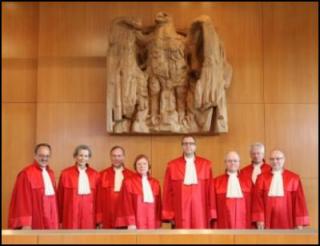 As we have seen from the recent ruling from the Supreme Court in Pinnock, British judges regard themselves as constrained to follow a “clear and consistent” line of authority from Strasbourg, even though the latter has no binding authority over the appellate courts in this country. Indeed, as we have noted in our post on the case, it overruled three of its own precedents without any ado.
How different the picture is in Germany, where the highest Constitutional Court, the Bundesverfassungsgericht, is armed with tremendous powers by the German Grundgesetz, or Basic Law, to uphold its own interpretation of national law in judgments that go to the heart of what the executive is or isn’t allowed to do.
Continue reading →
8 November 2010 by Adam Wagner
 Updated | For those looking for clues as to how the Ministry of Justice will prioritise its funding after the impending 25% budget cut, it has just released its 2011-15 business plan.
The MoJ’s ‘vision’ is certainly ambitious. Despite the cuts, there will be “better law“. This will come from a programme of “fundamental reform” which will cure the problems of “too much litigation, too many people reoffending and too much money spent on systems”.
Under the heading “Coalition Priorities”, the MoJ provides its plans for structural reform. It is not clear whether these are in order of priority:
Continue reading →
8 November 2010 by Richard Mumford
 Updated | On 3 November the judge acting as coroner for the 7/7 inquests ruled that she does not have the power to hold secret hearings to hear evidence which, if made public, would pose a threat to national security. Dame Heather Hallett also ruled that although she, as a Court of Appeal Judge, could look at ‘intercept evidence’ governed by the Regulation of Investigatory Powers Act 2000 (“RIPA”), such material could not form part of the evidence at the inquests.
The fundamental problem faced by Hallett LJ, linking the two parts of her ruling, was what to do about intelligence material , the revelation of which “in unredacted form would threaten national security” but which might have a bearing on her findings at the inquests. The problem can be traced back to Hallett LJ’s earlier ruling concerning the issues to be determined at the inquest, in particular the requirement for:
Continue reading →
5 November 2010 by Adam Wagner

In a new article, Afua Hirsch discusses the difficult question of the place of religion in our courts, in light of comments made by a judge sentencing Roshonara Choudhry, a radicalised Muslim woman, for the murder of a Christian man.
The writer compares this case to Lord Carey’s recent appeal in a same-sex counselling case that religious cases be heard by religion specialists (see our post), as well as the official censure of a judge in a criminal damage case who made overtly political comments about the 2008/9 Israel-Gaza war (our post here). Hirsch argues that religious courts may be the answer to these problems, although this may be unfair to other groups affected by discrimination such as women and ethnic minorities.
Continue reading →
5 November 2010 by Rosalind English
 Updated | We posted earlier on the Supreme Court ruling in Manchester City Council (Respondent) v Pinnock (Appellant), that requires courts to be satisfied that any order for possession sought by local authorities must be “in accordance with the law”, and (ii) “necessary in a democratic society” – that is, that it should be proportionate in the full meaning of the word.
How far this takes us from the previous position, where the role of the county court was limited to conducting a conventional judicial review of the councils’ decision in such cases, remains to be seen.
Continue reading →
4 November 2010 by Adam Wagner
 Today marks the 60th anniversary of the signing of the European Convention on Human Rights on 4 November 1950. This comes hot on the heels of the tenth birthday of the Human Rights Act, which we celebrated on October 2nd.
The European Convention on Human Rights, which came into force on 3 September 1953, guarantees a range of political rights and freedoms of the individual against interference by the State. Before the incorporation of the Convention, individuals in the United Kingdom could only complain of unlawful interference with their Convention rights by lodging a petition with the European Commission of Human Rights in Strasbourg. That all changed on 2 October 2000 when the Human Rights Act 1998 came into force, allowing UK citizens to sue public bodies for breaches of their Convention rights in domestic courts.
Continue reading →
4 November 2010 by Adam Wagner
 Updated | The dust has hardly settled on the government’s decision to allow prisoners to vote when, with uncanny timing, the European Court of Human Rights has denied the Austrian government permission to appeal in a similar case involving prisoners’ voting rights.
The Strasbourg court has notified Austria that its request for referral of the case of Frodl v Austria to the Grand Chamber has been rejected. This is likely to have a significant impact on the UK’s implementation of the prisoner voting system, as the court in Frodl effectively ruled that the disenfranchisement of prisoners could only happen on rare occasions: namely, where a prisoner was detained as a result of the abuse of a public position or a threat to undermine the rule of law or democratic foundations. As I said in Monday’s post:
Continue reading →



Recent comments