Category: LEGAL TOPICS
7 February 2012 by Adam Wagner
 The UK Supreme Court began tweeting yesterday as @UKSupremeCourt to deserved international fanfare. Some even speculated that Wikileaks founder Julian Assange’s extradition fate could now be revealed on Twitter.
The court is already being followed by almost 4,000 Twitter users (for the uninitiated, that is a lot) and has already beaten its own Twitter policy’s prediction of “2-3 tweets a week” with eight on its first day. The eventful debut tweets included seven live updates on the swearing-in ceremony of the court’s newest Justice, Lord Reed, and one relenting to Twitter user @FOImanUK‘s valid point that contrary to the court’s stated policy, it should be possible to put freedom of information requests to the court via Twitter.
This is all excellent news. The UK’s newest and highest appeal court is now setting the international standard for open justice, with its splendid press summaries of judgments, live transmission of hearings online (today’s is a very interesting case about the state’s financial responsibility towards disable people), accessible court facilities and generally public-facing approach. This is also as it should be: the Court has a statutory duty to be “accessible”. But the Supreme Court, which is largely independent from the rest of the court system, is now streaking ahead of it in terms of access to justice. And this open justice gap is becoming a problem.
Continue reading →
7 February 2012 by Guest Contributor
 The media were successful in both the judgments handed down this morning by the Grand Chamber of the European Court of Human Rights. The judgments made it clear that the right to privacy has to be carefully balanced against contribution which a publication makes to a debate of general interest. In both cases, taking account of the nature of the individuals involved and the publications the right to freedom of expression prevailed over the right to privacy.
The judgments demonstrate the need for a careful balancing exercise in privacy cases. Both cases involved “popular journalism” and show that, even in this area, privacy is not a “trump card”. The judgments will be welcomed by the media as showing that the Court of Human Rights remains sensitive to the need to protect its freedom of expression.
Continue reading →
7 February 2012 by Rachit Buch
 On 25 January 2012 Justice Edwin Cameron, Justice of the Constitutional Court of South Africa, delivered an emotive and thoughtful talk entitled “What you can do with rights”. The Law Commission’s annual Lord Scarman Lecture covered apartheid, AIDS denialism, LGBT rights and delved into the essence of moral humanity. It was a lecture delivered with skill and fluency, with only the slight dissatisfaction being the vagueness of Justice Cameron’s conclusion: that legal rights allow people to achieve some progress, but they don’t solve every problem.
Justice Cameron has occupied a seat on the highest judicial bench of South Africa for three years. He was made a judge by President Nelson Mandela in 1994, when his country was emerging from the systemic violence that the apartheid system had wrought on human rights. This position gives him authority, but it is his personal experience that lent the lecture gravitas. The Justice was diagnosed as HIV positive at a time when the true scale of the epidemic was being realised, and publicly fought for access to the anti-retroviral drugs that saved his life at a time when the scale of his government’s folly in denying them to millions was becoming equally clear.
Continue reading →
2 February 2012 by David Hart KC
 In October 2011, I posted on an important consultation, Cost Protection for Litigants in Environmental Judicial Review Claims, in which the Ministry of Justice wheeled out its proposals to get it out of the various scrapes caused by the expense of environmental challenges. The Aarhus Convention requires that environmental challenges not be “prohibitively expensive”, and both the European Commission and the Aarhus Compliance Committee don’t think that the English system complies – it costs way too much.
In a nutshell, MoJ were suggesting that there should be a starting point in the form of costs orders designed to protect unsuccessful claimants against excessive costs incurred by successful defendants – unsurprisingly called Protective Costs Orders. If a Claimant got permission to challenge an environmental decision, but then lost on a full judicial review hearing, he or she should have to pay no more than £5,000. In return, he should not be able to recover any more than £30,000 if he won. MoJ’s consultation period has now closed, and a very significant response has been received from Lord Justice Jackson, who recently carried out a set of mammoth reviews of litigation costs in all areas of the law.
Continue reading →
1 February 2012 by Adam Wagner
 The Julian Assange circus rolls back into London today for the UK Supreme Court’s 2-day hearing of his appeal against extradition. It will be broadcast on Supreme Court live from 10:30am.
The Wikileaks founder was granted permission in November 2011 to appeal to the Supreme Court under Section 32 of the Extradition Act 2003. If he loses, unless he brings a claim at the European Court of Human Rights, he will have to face charges of sexual assault and rape in Sweden.
Continue reading →
31 January 2012 by Guest Contributor

The European Court of Human Rights has announced today that it will deliver two Grand Chamber judgments, in the cases of Axel Springer AG v Germanyand von Hannover v Germany (No.2) on 7 February 2012. The cases were both heard more than 15 months ago, on 13 October 2010.
We had a post about the hearing at the time (and an earlier preview).Both cases concern the publication in the media of material which is alleged to be private. The Axel Springercase concerned the publication in “Bild” of an article about a well-known television actor, being arrested for possession of cocaine. The article was illustrated by three pictures of the actor. The German court granted him an injunction to prohibit the publication of the article and the photos. The applicant company did not challenge the judgment concerning the photos. The newspaper published a second article in July 2005, which reported on the actor being convicted and fined for illegal possession of drugs after he had made a full confession.
Continue reading →
31 January 2012 by Daniel Sokol

Debbie Purdy
Philip Havers QC of 1 Crown Office Row is representing Martin in the judicial review proceedings. He is not the author of this post.
Albert Camus famously wrote: ‘there is but one truly serious philosophical problem and that is suicide.’ However profound a philosophical problem, the question of suicide or, more precisely, assisted suicide is proving quite a legal conundrum.
It is a well-known fact that, at present, it is lawful in England and Wales to commit (or to attempt to commit) suicide but unlawful to help someone else to do so. Encouraging or assisting suicide is an offence under section 2 of the Suicide Act 1961, carrying a maximum penalty of 14 years’ imprisonment. On a literal reading of the Act, even obtaining information about euthanasia for someone who plans to commit suicide could constitute a breach of section 2.
Continue reading →
31 January 2012 by Alasdair Henderson
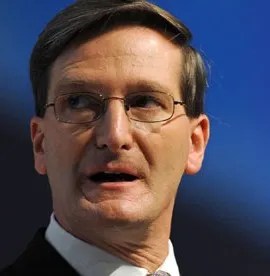 The Prime Minister’s speech at the Council of Europe (see our coverage here) has attracted significant press attention over the past week – ranging from flag-waving, sabre-rattling support to criticism from Sir Nicholas Bratza (the British President of the Court).
Hot on the heels of Cameron’s address on Wednesday, the Attorney-General Dominic Grieve gave a speech on Thursday which set out in further detail the Government’s plans for reform of the European Court of Human Rights and the incorporation of human rights into UK law.
The full text of the Attorney-General’s speech is not yet available (although a similar speech he gave last year and his own speech to the Council of Europe can be found here). However, it was interesting to compare his comments with those of David Cameron just a day before.
Continue reading →
31 January 2012 by Adam Wagner
 A child learns early that if you don’t have anything nice to say, don’t say it. Thankfully that principle does not apply to Government consultations and this is aptly demonstrated by a group of responses to the consultation into whether “closed material” (secret evidence) procedures should be extended to civil trials.
Of the responses that I have read, there is very little support for the proposals as they stand and, as journalist Joshua Rozenberg has pointed out, the most damning criticism has come from the very lawyers who are currently involved in “closed” proceedings.
If you are interested in the issue, the Joint Committee on Human Rights is hearing evidence on it today from two special advocates, including my co-editor Angus McCullough QC (see his post on the topic), as well as the current and former independent reviewers of terrorism legislation. The session begins at 2:20pm and can be watched live here.
As I did with the Bill of Rights Commission consultation, I asked people to send me their consultation responses. What follows is a wholly unscientific summary of the ones I received:
Continue reading →
29 January 2012 by Rosalind English
 Dr John Sentamu, the Archbishop of York, has thrown a firecracker into the consultation on gay marriage, which is about to begin in March. In an interview with the Daily Telegraph he declared that he did not agree that it was the role of the state to define what marriage is. “It is set in tradition and history and you can’t just [change it] overnight, no matter how powerful you are”.
Gay rights campaigners have poured scorn on this pronouncement, calling the Archbishop a “religious authoritarian” who wants to “impose his personal opposition to same-sex marriage on the rest of society.” But this outbreak of bad temper – not unpredictable, given the skirmishing over the consultation on the same issue which took place in Scotland last year – raises the wider issue of the role and influence of church leaders in the process of legal change.
In a secular society, the participation of clerics in the House of Lords is grudgingly accepted as part of an ancient tradition. And on this issue at least, the general view seems to be that the Church has grounds for complaint. The current system recognises gay partnerships under the Civil Partnership Act 2004 (CPA). But the main change is to alter the Equality Act so as to allow such partnerships to take place on religious premises, and it is that which is being so bitterly opposed, apparently because it brings the matter within the church’s bailiwick. But even if it does, we have to ask what it is that privileges Sentamu’s voice over any others in the debate over whether gay and heterosexual partnerships should be on an equal footing in all respects, including the place where they are registered.
Continue reading →
27 January 2012 by Guest Contributor
 Two recent posts on this blog have brought deserved attention to the question of the European Court’s handling of admissibility decisions. In the course of criticising the substantial misrepresentation of the statistics for UK petitions to the European Court, Andrew Tickell’s piece highlighted the significant contribution of “highly discretionary concepts” in the filtering of the Court’s caseload.
Alongside clearer procedural hurdles such as the six month time bar and exhaustion of domestic remedies, the “manifestly ill-founded” criterion may be a clear and meaningful legal term but certainly isn’t manifest exactly what obstacle it sets.
Continue reading →
25 January 2012 by David Hart KC
 Secretary of State for Energy and Climate Change v. Friends of the Earth and others, CA, 25 January 2012, read judgment
So, after an anxious wait for the affected businesses, the Court of Appeal has confirmed today that the Minister was too hasty in the way he went about modifying the scheme for subsidising small solar power schemes. But, as often, the Court went about things differently from the judgment below (see my initial and follow-up posts on this)
The Court held that the Minister had no power to do what he did, which was to say he was going to modify the subsidy rules in respect of schemes which had become eligible prior to the modification coming into effect. The legislation and rules are characteristically impenetrable, but the Minister proposed in a consultation, which closed on 31 October 2011, to reduce the subsidies for schemes which became eligible after 12 December 2011. The key point is that he proposed that this modification should come into force on 1 April 2012, and that those who had signed up to such a scheme between December 2011 and April 2012 lost much of their subsidy from 1 April 2012. The original scheme paid participants 43.3p per kilowatt hour for 25 years. The proposed revised scheme for these new joiners would pay them that rate until April 2012, but thereafter 21p per kilowatt hour for the rest of the 25 years.
Continue reading →
24 January 2012 by Guest Contributor
 Andrew Tickell in his recent post (Is the European Court of Human Rights obsessively interventionist?) makes a number of important points about the European Court of Human Rights’ approach to admissibility, in particular the application of the manifestly ill-founded criterion. Perhaps understandably, the majority of legal scholars have preferred to focus on the more substantive aspects of the Court’s work and its leading judgments.
However, Tickell’s analysis, and his other efforts to ensure that the less glamorous work of the Court on admissibility are not overlooked, must be welcomed, both as redressing that balance and informing the wider debate on the proper role of the Court. This post seeks to build on his contribution by providing an overview of the Court’s approach to admissibility in applications brought against the United Kingdom.
Continue reading →
24 January 2012 by Adam Wagner
 Updated | In the 1939 film Mr. Smith Goes to Washington, James Stewart plays a local Boy Rangers leader who becomes a US Senator and, against all odds, triumphs agains the corrupt bureaucrats in Washington. Tomorrow, according to The Sun, “battling” Prime Minister David Cameron will be travelling to Strasbourg in, it would seem, similar style to “tell Euro judges to stop meddling in British justice”.
Meanwhile, back in London, the British president of the European Court of Human Rights launched a preemptive strike on Mr Cameron’s speech in today’s Independent, arguing that the criticism from “senior British politicians” relating to the court’s interference is “simply not borne out by the facts“.
Bratza is right that the us-vs-them narrative is partly the result of mischievous human rights reporting by the press. Recent examples are the Daily Mail’s extravagant claim that the UK loses 3 out of 4 cases in Strasbourg, resting on a partial reading of the court’s statistics, and the Telegraph’s seemingly endless run of articles based on low-level immigration decisions, the latest being: Bigamist wins ‘family life’ human rights case. In that case, the original tribunal knew nothing about his alleged other marriages, so it is hard to see what it shows about human rights defences to deportation decisions, except that a claimant possibly lied in court, was found out and will probably now be deported.
Continue reading →
22 January 2012 by Guest Contributor
 Associated Newspapers Ltd, R (on the application of) v Rt Hon Lord Justice Leveson [2012] EWHC 57 – Read judgment
On Friday 20 January 2012 the Administrative Court dismissed the second application for judicial review of the Leveson Inquiry. The Court dismissed an application by Associated Newspapers (supported by the Daily Telegraph) to quash the decision of the Chairman, Lord Justice Leveson. decision to admit evidence from journalists who wish to remain anonymous on the ground that they fear career blight if they identify themselves.
Lord Justice Toulson commented “that the issues being investigated by the Inquiry affect the population as a whole. I would be very reluctant to place any fetter on the Chairman pursuing his terms of reference as widely and deeply as he considers necessary”.



Recent comments