Category: LEGAL TOPICS
31 May 2012 by Rosalind English
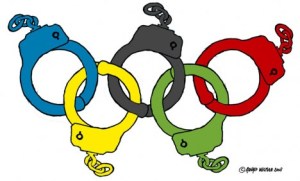 Mohammed Othman v Secretary of State for the Home Department, 28 May 2012 – read judgment
This was a further application for bail to the Special Immigration Appeals Commission (SIAC) after the appellant had failed in his application to the Grand Chamber of the Strasbourg Court earlier this month, but had launched an appeal to be heard by SIAC, against the Home Secretary’s refusal to revoke his deportation order.
Angus McCullough QC appeared for Abu Qatada as his Special Advocate in these proceedings before SIAC. He is not the author of this post.
A full hearing will take place in October. Until then, bail has been refused and Abu Qatada will remain in detention.
Given the evidence before him, Mitting J had to base his judgment on the assumption that the Secretary of State would not have maintained the deportation order unless convinced that she was in possession of material which could support her resistance to the appellant’s appeal and which could satisfy “the cogently expressed reservations of the Strasbourg Court about the fairness of the retrial”which the appellant would face in Jordan.
Two consequences flowed from these developments, according to the judge. One is that SIAC’s final decision in October is likely to put an end to this litigation. The second is that the risk of Qatada absconding has increased, if he assumes, in the light of the expressed determination of the Secretary of State, that he would not avoid deportation to Jordan by litigation in and from the United Kingdom.
Continue reading →
Like this:
Like Loading...
31 May 2012 by David Hart KC
 Assange v. The Swedish Prosecution Authority [2012] UKSC 22, read judgment
Today, the Supreme Court held that Julian Assange should be extradited to Sweden for alleged rape. This is subject to further submissions on one point (concerning the Vienna Convention on Treaties), well covered by Joshua Rozenberg in his post on the lively proceedings when the judgment was handed down.
The whole of the appeal turned on one technical point, simple to state, but it took the Court 266 paragraphs to answer. Was the European Arrest Warrant which triggered the extradition request signed by a”judicial authority,” given that it was signed by a prosecutor? Most English lawyers, unburdened with the detail, would say – no, a prosecutor is not a judicial authority, indeed he or she is the opposite of that, a party. But, according to the Supreme Court, they are wrong, and so are the ministers who told Parliament that a judicial authority has to be some sort of judge or court.
Continue reading →
Like this:
Like Loading...
30 May 2012 by Rosalind English
 R(on the application of Yunus Bakhsh) v Northumberland Tyne and Wear NHS Foundation Trust [2012] EWHC 1445 (Admin) – read judgment
This fascinating short judgment explores the extent to which a judicial review claim, or a free-standing claim under the Human Rights Act, may be precluded by a statute covering the same issue.
If Parliament has decided on a particular avenue of appeal in a certain context, and settled upon a sum in compensation, do the courts have any room for manoeuvre outside those statutory limits? There is very strong authority to the effect that the courts have no discretion to grant any relief going beyond the remedy which Parliament has seen fit to provide (see Johnson v Unisys Ltd [2003] 1 AC 518). But on arguability grounds at least, this short permission decision by Foskett J suggests that public law must attend to the policy behind the statute. If the redress provided by the legislation does not fully serve the aims of that policy, it may be that public law has to come to the rescue.
Background
In essence the claimant, a former mental nurse who had been sacked because of his trade union activities and not granted reinstatement, was seeking to challenge the decision by his employer, a public NHS trust, not re-engage him after it had been ordered to do so by an Employment Tribunal in 2010. The reason they failed to do so was not put forward but was probably because of his anticipated continued trade union militancy.
Continue reading →
Like this:
Like Loading...
29 May 2012 by David Hart KC
 I posted recently on the continuing legal see-saw in France arising from the prosecution of Total and other parties for their responsibility for the loss of the Erika on 12 December 1999. The Erika sank off the Brittany coast, spilling some 20,000 tonnes of heavy fuel oil, polluting some 400 km of the French coastline, and killing this poor guillemot, amongst many.
Last week, on 24 May, this criminal case reached the highest French court, the Cour de Cassation. Some thought that the court was going to rule immediately on whether Total and the others were criminally liable for the oil pollution. Previously, the Criminal Court of First Instance, and the Court of Appeal in Paris had said that Total and others were responsible. But now the prosecutor, Advocate-General Boccon-Gibod, was of the view that Total had no criminal liability. His written opinion appears not to have surfaced on the ‘net, but from the decision of the Court of Appeal (for the brave, and not for those with slow broadband, all 487 pages), you can see the points that Total was making, and which he seems to have accepted.
Continue reading →
Like this:
Like Loading...
29 May 2012 by Guest Contributor
 Publishing the Justice and Security Bill this morning, the Secretary of State for Justice said “I have used the last few months to listen to the concerns of … civil liberties campaigners with whom I usually agree.”
There are many people who today would sorely like to agree that Ken has listened and has taken their concerns on board. Unfortunately, the Government’s analysis remains fundamentally flawed. The Green Paper was clearly a “big ask”. There have undoubtedly been significant changes made from the proposals in the Green Paper. However, the secret justice proposals in the Justice and Security Bill remain fundamentally unfair, unnecessary and unjustified.
Continue reading →
Like this:
Like Loading...
29 May 2012 by Rosalind English
 Monsters are born, not made: the latest round in the debate about criminal responsibility questions the very existence of intuitive morality.
US neuroscientist Sam Harris claims in a new book that free will is such a misleading illusion that we need to rethink our criminal justice system on the basis of discoveries coming from the neurological wards and MRI scans of the human brain in action.
The physiologist Benjamin Libet famously demonstrated in the 1980s that activity in the brain’s motor regions can be detected some 300 milliseconds before a person feels that he has decided to move. Subjects were hooked up to an EEG machine and were asked to move their left or right hand at a time of their choosing. They watched a specially designed clock to notice what time it was when they were finally committed to moving left or right hand. Libet measured the electrical potentials of their brains and discovered that nearly half a second before they were aware of what they were going to do, he was aware of their intentions. Libet’s findings have been borne out more recently in direct recordings of the cortex from neurological patients. With contemporary brain scanning technology, other scientists in 2008 were able to predict with 60% accuracy whether subjects would press a button with their left or right hand up to 10 seconds before the subject became aware of having made that choice (long before the preparatory motor activity detected by Libet).
Continue reading →
Like this:
Like Loading...
29 May 2012 by Adam Wagner
 The Justice and Security Bill, which proposes to introduce secret ‘Closed Material Procedure’ (CMP) hearings into civil trials, has been published. Here are some useful resources for picking your way through the controversy:
- The Ministry of Justice’s page on the Bill, including some ‘myth-busting’ (including ‘This is undermining the centuries old legal tradition’) is here.
- 84 responses to the Green Paper which led to this bill can be found here, and the Government’s response of 29 May is here.
- The Joint Committee on Human Rights’ highly critical report on the proposals is here.
- You can access all of the UK Human Rights Blog coverage of the secret trials proposals here, including our exclusive on the Special Advocates’ opposition to the proposals, which became the most damaging aspect of the case against the Green Paper.
More to come on the proposals soon…
Sign up to free human rights updates by email, Facebook, Twitter or RSS
Like this:
Like Loading...
28 May 2012 by David Hart KC
 Last week Rosalind English did a summary post on the important Supreme Court case of Lukaszewski and others, R (on the application of Halligen) v Secretary of State for the Home Department [2012] UKSC 20 – read judgement.
The technicalities of this decision about extradition time limits are set out in her post. Here, I explore the potential implications for other cases.
The Extradition Act contains firm rules that appeals need filing and serving within 7 or 14 days, depending on the procedure. The Supreme Court decided that there should be a discretion in exceptional circumstances for judges to extend time for service of appeal, where the statutory time limits would otherwise operate to impair the right of appeal and therefore be in breach of the right to a fair trial afforded by Article 6(1) of the Human Rights Convention. And it is this discretion which is important for a whole range of appeals where mandatory time limits are laid down by statutes.
Continue reading →
Like this:
Like Loading...
24 May 2012 by Guest Contributor
 Last Tuesday saw the latest episode in the prisoner voting legal saga with the European Court of Human Rights’ Grand Chamber’s judgment reversing the Chamber judgment which found Italy’s automatic ban on voting for prisoners serving over 3 years in prison (and a lifetime ban with the possibility of future relief for those sentenced to more than 5 years) in breach of Article 3 of Protocol 1 to the European Convention on Human Rights.
Adam Wagner has compared the prisoner voting issue to a ping-pong ball in a wind tunnel, noting that ‘the ball is now back on the UK’s side of the table’. Indeed, the UK must still allow at least some prisoners the vote, as required by the 2005 judgment in Hirst v UK (No.2) and the 2010 judgment in Greens & MT v UK. Over at EJIL: Talk!, Marko Milanovic rightly accounts for the unholy mix of law and (inter)national politics that has generated the Grand Chamber’s unprincipled judgment. Indeed, as Carl Gardner suggests on the Head of Legal blog all that logically remains of the Hirst judgment is that automatic disenfranchisement of prisoners that are sentenced for less than 3 years (probably) breaches the convention.
Continue reading →
Like this:
Like Loading...
24 May 2012 by Rosalind English
 BSkyB and another, R(on the application of) v Chelmsford Crown Court [2012] EWHC 1295 (Admin) – read judgment
The police failed to satisfy the court that their need for footage taken by TV organisations was likely to be of substantial value to criminal investigations and therefore would be a justified interference with the rights of a free press under Article 10 of the Human Rights Convention.
Sky, BBC, ITN etc. succeeded in quashing an order to produce of 100+ hours of video footage to Essex Police of the Dale Farm protesters on the grounds that there were no “reasonable grounds” for believing that the footage of over 100 hours included material likely to be of substantial value to the investigation.
Background facts
After the Dale Farm evictions and the disorder that ensued, the police sought an order for the recordings taken by the claimant organisations to help identify those who had committed indictable offences when attempting to prevent the eviction. They submitted that it was necessary, not least for the prevention of similar disorder on future occasions, to identify as many as possible of those who committed indictable offences in attempting to frustrate the lawful enforcement procedures. Production orders were duly made by Chelmsford Crown Court, defendant in this action.
Continue reading →
Like this:
Like Loading...
22 May 2012 by Adam Wagner

CASE OF SCOPPOLA v. ITALY (No. 3)(Application no. 126/05) – Read judgment / press release / press release on UK implications
The Grand Chamber of the European Court of Human Rights has ruled that states must allow for at least some prisoners to vote, but that states have a wide discretion as to deciding which prisoners. This amounts to a retreat on prisoner votes, but certainly no surrender. As I predicted, the court reaffirmed the principles set out in Hirst No. 2, that an automatic and indiscriminate bans breach the European Convention on Human Rights, but also reaffirmed that it was up to states to decide how to remove those indiscriminate bans.
I have compared the prisoner voting issue to a ping-pong ball in a wind tunnel. Today’s ruling means that the ball is now back on the UK’s side of the table.
Although Scoppola is a case which arose in Italy, the decision is of critical important to the UK for two reasons. First, the Court has made clear to the UK Government that it now has six months from today to bring forth legislative proposals which will end the blanket disenfranchisement of prisoners – see the Court’s helpful press release which explains the effect on the UK. Secondly, the Grand Chamber has now clarified the basic outline of how it expects states to comply with the original prisoner votes ruling, also of the Grand Chamber, in Hirst No. 2. For the full background, see my post from last week or Joshua Rozenberg’s excellent article on Guardian.co.uk.
Continue reading →
Like this:
Like Loading...
22 May 2012 by Isabel McArdle

AHK and Others v The Secretary of State for the Home Department [2012] EWHC 1117 (Admin) – Read judgment
Secrecy and secret justice are rarely out of the public eye. The Queen’s speech included plans to allow secret hearings in civil claims, at a time when their use is highly controversial. The government argues they are necessary to safeguard national security. Civil liberties groups and even the Special Advocates who help administer them, regard them as a bar to real justice and fair hearings.
So it seems appropriate at this time that the High Court has handed down an important decision on the use of Closed Material Procedures (CMP) in Judicial Review claims relating to naturalisation (the process by which foreigners can be ‘naturalised’ as British citizens). In simple terms, this is a variety of procedure where the government can rely on evidence which it has not disclosed to the opposing party, in a closed hearing. In the closed proceedings, the Claimants are represented by Special Advocates, who are subject to strict rules relating to what they can and cannot tell their clients.
Continue reading →
Like this:
Like Loading...
22 May 2012 by David Hart KC

DCLG v. Information Commissioner & WR [2012] UKUT
I have previously posted on the decision leading to this successful appeal by the Planning Inspectorate, against an order that they produce their legal advice concerning a planning appeal. The decision of the First-Tier Tribunal in favour of disclosure was reversed by a strong Upper Tribunal, chaired by Carnwath LJ in his last outing before going to the Supreme Court. So the upshot is that PINS can retain whatever advice which led them to refuse this request for a public inquiry in a locally controversial case.
Now for a bit of background. The claim for disclosure of documents arose out of a planning application by a wind farm operator to install an 80m tall anemometer (and associated guy wires radiating over about 0.5ha) near Fring in North Norfolk. This was to assess the viability of a wind farm near the site. The local planning authority refused permission for the anemometer, and the wind farmer appealed. There are three ways of deciding such an appeal – a full public inquiry with oral evidence and submissions, an informal hearing or written representations. The locals people wanted a public inquiry. They were supported in that by the council, and the local MP thought that the council was the best body to judge that. PINS said no; no complex issues arose for which a public inquiry was necessary.
Continue reading →
Like this:
Like Loading...
21 May 2012 by Adam Wagner

Angus McCullough QC and Jeremy Johnson QC, Special Advocates at the JCHR
It appears that the Government has climbed down, in part, from some of its controversial secret justice proposals. According to the Telegraph, the Justice and Security Bill, which will be published this week, will include a provision whereby judges, not the Government, has the final say on whether a Closed Material Procedure (CMP) is used. Moreover, CMPs will be restricted to “national security cases” rather than any case “in the public interest”.
It “remains uncertain”, however, “whether Mr Clarke will exclude inquests from being subject to the secret hearings.” Junior Justice Minister Jonathan Djanogly caused a stir last week when he appeared prematurely to announce that particular concession in Parliament, but quickly stepped back from his statement. In view of the likely legislative bartering which will occur as the bill progresses through Parliament, perhaps this is a concession which was meant to be left until later in the process.
We will analyse the bill when it is published later this week. But as this important debate resurfaces and the manoeuvring continues, it is important to keep two things in mind.
Continue reading →
Like this:
Like Loading...
20 May 2012 by Rachit Buch
 As expected, last week’s Queen’s Speech included plans to reform libel law. This follows a concerted campaign to improve protection of the right to free expression and bring greater clarity to England’s libel law. But the question for those who wanted to see reform, now the Defamation Bill has been published, is whether the reforms proposed will be the right ones.
The media law blog, Inforrm, published this summary of the Bill, which takes a detailed look at the main clauses. Law blog Jack of Kent also has a libel reform resource page here. Among others, the Bill would make the following major changes:
- Create a test of “serious harm” for statements to be considered defamatory.
- Abolish the common law defences of fair comment, justification and Reynolds privilege, and place them on a statutory footing.
- Create a new statutory privilege for peer-reviewed scientific and academic publications and provide greater protection to online entities.
- Amend the existing law of qualified privilege to include reports of scientific conferences and press conferences.
Continue reading →
Like this:
Like Loading...

 Mohammed Othman v Secretary of State for the Home Department, 28 May 2012 – read judgment


Recent comments