Category: Article 8 | Right to Privacy / Family
11 November 2010 by Matthew Hill
 Updated | JXF (a child) v York Hospitals NHS Foundation Trust [2010] EWHC 2800 (QB) – Read judgment
Mr Justice Tugendhat has held that the High Court should withhold the identity of a child claimant when approving the settlement of a clinical negligence case. The decision represents a restatement of the orthodox principle that cases should be heard in public and reported without restrictions, and that anonymity orders should only be granted after careful scrutiny.
His reason for coming to this particular decision was that revealing the name of the claimant would “make him vulnerable to losing the [settlement] money to fortune hunters or thieves.”
Continue reading →
Like this:
Like Loading...
5 November 2010 by Rosalind English
 Updated | We posted earlier on the Supreme Court ruling in Manchester City Council (Respondent) v Pinnock (Appellant), that requires courts to be satisfied that any order for possession sought by local authorities must be “in accordance with the law”, and (ii) “necessary in a democratic society” – that is, that it should be proportionate in the full meaning of the word.
How far this takes us from the previous position, where the role of the county court was limited to conducting a conventional judicial review of the councils’ decision in such cases, remains to be seen.
Continue reading →
Like this:
Like Loading...
4 November 2010 by Rosalind English
 McLaughlin & Ors v London Borough of Lambeth & Anor [2010] EWHC 2726 (QB) – Read judgment
The High Court has been asked to consider whether the rule which prevents public authorities from suing in libel – to allow uninhibited criticism of government institutions – has the effect of preventing libel actions being taken by individual managers and employees of those institutions.
This was a claim by the defendants to strike out a libel action on grounds of abuse of process.The claimants are respectively head teacher, director of educational development and chairman of the governors of a primary school in Lambeth. The school was maintained by the first defendant pursuant to its statutory obligations. Now it is an Academy it is maintained by central government.
Continue reading →
Like this:
Like Loading...
3 November 2010 by Adam Wagner
 Updated | Manchester City Council (Respondent) v Pinnock (Appellant) [2010] UKSC 45 On appeal from the Court of Appeal [2009] EWCA Civ 852 – Read judgment / press summary
The following is based on the Supreme Court press summary. Our full case comment is to follow.
The Supreme Court has ruled that Article 8 of the European Convention on Human Rights (the right to family life) requires that a court, when asked by a local authority to make an order for possession of a person’s home, must have the power to assess the proportionality of making the order.
The 9-strong court departed from a series of House of Lords (its predecessor’s) decisions in order to follow a strong line of European Court of Human Rights authority (summarised at para 45 of the decision). The judgment was unanimous, and follows the important recent decision of the European court in Kay and Others v United Kingdom (see our post), as well as that in Connors v UK and others. The decision represents a welcome clarification of the rights of council tenants facing eviction, following a long and tortuous line of conflicting decisions from both the UK and European courts.
Continue reading →
Like this:
Like Loading...
3 November 2010 by Richard Mumford
 On 1 November 2010 the Terrorist Asset-Freezing etc. Bill received its third reading in the House of Lords. The bill, which started in the Lords, must now be passed by the Commons before receiving Royal Assent.
The Bill represents the coalition government’s response to the Supreme Court’s decision in HM Treasury v Ahmed (incidentally, the first appeal to have been heard in the Supreme Court) concerning the lawfulness of measures enabling the Treasury to freeze the assets of, amongst others, a person whom it has reasonable grounds for suspecting is or may be a person who facilitates the commission of acts of terrorism.
Continue reading →
Like this:
Like Loading...
3 November 2010 by Matthew Flinn
 Broom v Secretary of State for Justice [2010] EWHC 2695 (Admin) – Read Judgment
When he was transferred from Whitemoor prison to Wakefield Prison in May 2008, Mr. John Broom had 24 historical photos of his children and nieces confiscated. He had been in possession of those photographs for 18 years. He challenged the decision not to return the photos to him by way of judicial review, claiming that it breached his right to respect for his private or family life. Mr Justice Behrens concluded that there was no infringement of Article 8 of the ECHR in this case.
Mr. Broom is currently serving a discretionary life sentence following his conviction in 1992 for buggery and rape of a female. There were two females involved, one of whom was 16. The nature of this conviction was central to the decision to withhold Mr. Broom’s photographs. The Safeguarding Children Panel said that:
Continue reading →
Like this:
Like Loading...
2 November 2010 by Matthew Hill
 Updated | R (McDonald) v Royal Borough of Kensington and Chelsea, [2010] EWCA Civ 1109 – read judgment
The Court of Appeal has held that a local authority was entitled to reduce the care package provided to one of its resident following a re-assessment of her needs, even though this had the effect of forcing her, against her wishes, to use incontinence pads and/or absorbent sheets at night.
In doing so, the authority did not breach Article 8 ECHR (right to privacy and family life), or the relevant disability discrimination legislation. The judgment suggests that the courts will only intervene in disputes about the level of care being provided by local authorities in limited circumstances, something that may be significant in an environment of public spending cuts.
Continue reading →
Like this:
Like Loading...
1 November 2010 by Adam Wagner
 Campaigners are seeking to challenge the rules against gay marriages and straight civil partnerships in the UK.
If they succeed then this would resolve the somewhat jumbled present position, where gay couples can form civil partnerships – which look almost exactly like marriages but aren’t – whereas straight couples are barred from doing the same.
As I posted here, the legalisation of gay marriage may be close at hand, and campaigners have chosen Reverend Sharon Ferguson and Franka Strietzel’s impending marriage application as one of eight test-cases to push through the final barrier for same-sex couples.
Continue reading →
Like this:
Like Loading...
20 October 2010 by Adam Wagner
 Radmacher (formerly Granatino) (Respondent) v Granatino (Appellant) [2010] UKSC 42 On appeal from the Court of Appeal [2009] EWCA Civ 649 – Read judgment / press summary
The Supreme Court has ruled by an 8-1 majority (Lady Hale dissenting) that a court should give effect to a nuptial agreement that is freely entered into by each party with a full appreciation of its implications unless, in the circumstances prevailing, it would not be fair to hold the parties to their agreement.
The court robustly dismissed Mr Granatino’s appeal against a Court of Appeal decision to enforce his pre-nuptial agreement with Ms Radmacher. The agreement provided that if they were to separate, he would receive none of her considerable independent wealth.
Continue reading →
Like this:
Like Loading...
20 October 2010 by Catriona Murdoch
 Ben King and Secretary of State for Justice [2010] EWHC 2522 (Admin) – Read Judgment
True or False: 1. A non-independent tribunal can determine your civil rights? 2. A non-independent tribunal can curtail your civil rights?
The high court has answered “true” to both of these questions . The non-independent tribunal in this case was the adjudication system in young offender institutions (YOI). The high court ruled that whilst the governor adjudicator was not an independent tribunal for the purposes of Article 6(1) ECHR, it could still determine and ultimately curtail an inmates civil rights.
The case of “King” raises important issues concerning the regime for adjudication of disciplinary charges brought against inmates at prisons and young offender institutions across England and Wales. In 2008 alone 190,192 punishments were imposed for disciplinary offences in young offender institutions.
Continue reading →
Like this:
Like Loading...
18 October 2010 by Rosalind English
 An injunction sought against the publication of certain information has been granted by the High Court in Northern Ireland under Article 2 (the right to life). The claimant also invoked the Prevention of Harassment (NI) Order and sought damages for misuse of private information. The Article 8 claim was only partially successful and the harassment claim was dismissed.
The claimant, who had been accused and subsequently cleared of murdering a journalist working for the defendant newspaper sought to prevent the publication of details relating to his address, his partner, his wedding plans and other personal information and photographs. The judge held that the publication of this information, in the light of threats from loyalist paramilitaries and dissident republican paramilitaries, would result in a “real and immediate risk” to the claimant’s life.
Continue reading →
Like this:
Like Loading...
18 October 2010 by Alasdair Henderson
 A (a minor) and B (a minor) v. A Health and Social Services Trust, [2010] NIQB 108 – Read judgment
In a fascinating case involving IVF treatment, the High Court in Northern Ireland has held that no duty of care is owed to human cells and that having a skin colour different to that intended cannot be considered legally recognisable loss and damage.
Professor Robert Edwards, the British scientist who pioneered in vitro fertilisation, was recently awarded the Nobel Prize for Medicine. But while Professor Edwards’ achievements have changed the lives of millions of infertile couples around the world, they have also given rise to a whole host of thorny ethical and legal questions. A recent decision by Mr Justice Gillen in an extremely unusual case has attempted to wrestle with some of these issues, and in particular with the rights (if any) of human cells.
Continue reading →
Like this:
Like Loading...
15 October 2010 by Rosalind English
 Communications from an accountant giving legal advice do not attract legal professional privilege. The rule is only available if the advice is sought from a lawyer.
Notices under the Taxes Management Act 1970 (“Section 20 notices”) were served on the appellant company by the Revenue with a view to investigating a commercially marketed tax avoidance scheme. The appellant asserted that the notices required production of documents by which they sought or received legal advice on tax matters, in some cases from counsel and foreign lawyers, and in others from accountants.
Continue reading →
Like this:
Like Loading...
14 October 2010 by Rosalind English
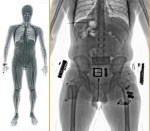 Full body scanners are to become the only security option for people flying out of Manchester Airport, the BBC reports today. The excessive amount of coverage given to the disapproval expressed by civil liberties groups has now been counterbalanced by passengers’ attitudes, since it appears that people actually prefer the scanners to the full body pat down, and have been voting with their feet.
According to Manchester Airport, 95% of travellers prefer the scanners and queuing times have been radically reduced. It takes 2 minutes to undergo a pat down, but a mere 27 seconds to pass through a scanner.
Continue reading →
Like this:
Like Loading...
11 October 2010 by Adam Wagner
 Ex-Guantanamo Bay prisoner Binyam Mohamed failed this weekend to prevent the Daily Mail reporting that he had been granted permanent residency in Britain. The case highlights a growing trend for the courts to enforce open justice in two significant ways, both which rely heavily on protections guaranteed under human rights law.
Interestingly, two crucial aspects of open justice have been reinforced as a result of a case involving Mohamed himself. In fact, the open justice aspects of Mohamed’s case against the security services will probably emerge as amongst the most important legal rulings arising from the ‘war on terror’ era. Unfortunately for him, this may have had the unintended consequence of destroying any chances of maintaining his privacy.
Continue reading →
Like this:
Like Loading...

 Updated | JXF (a child) v York Hospitals NHS Foundation Trust [2010] EWHC 2800 (QB) – Read judgment


Recent comments