Category: Article 8 | Right to Privacy / Family
5 March 2010 by Rosalind English
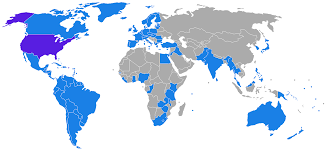 Norris v United States [2010] UKSC 9
SC (Lord Phillips, Lord Hope, Lord Rodger, Lady Hale, Lord Brown, Lord Mance, Lord Judge, Lord Collins, Lord Kerr) 24 February 2010
In determining whether interference with an individual’s right to a family life was justified to achieve the aim of extradition, the court should not consider whether the circumstances were exceptional but should consider whether the consequences were exceptionally serious
SUMMARY
The appellant had recently retired from his job as CEO of a company that had been involved in price fixing. He had successfully resisted an extradition order sought by the United States on the grounds that price-fixing in the UK was not illegal (Norris v United States (2008) UKHL 16, (2008) 1 AC 920). However, the court held that the other charge against him – obstructing justice – justified extradition and his case was remitted to a district judge. The district judge decided that he should be extradited. His decision was upheld by the divisional court, which concluded that the obstruction of justice charges were very grave and that a high threshold would have to be reached before the appellant’s rights under Article 8 could outweigh the public interest in extradition ((2009) EWHC Admin 995, (2009) Lloyd’s Rep FC 475).
Read judgment here or
Continue reading →
17 February 2010 by Adam Wagner
 The Equality and Human Rights Commission have written to the Government urging caution before the introduction of full body scanners at UK airports; not that it has slowed the Government down – apparently, the scanners will be in UK airports as early as next week. Passengers at Manchester Airport have been experiencing full body scans since October, but clearly the recent botched ‘Detroit Bomber’ terrorist attack has speeded up their uptake.
John Wadham, group director legal at the EHRC says:
The right to life is the ultimate human right and we support the government reviewing security in the light of recent alleged terrorist activity. However, the government needs to ensure that measures to protect this right also take into account the need to be proportionate in its counter-terrorism proposals and ensure that they are justified by evidence and effectiveness.
Continue reading →
9 February 2010 by Adam Wagner
R (Degainis) v Secretary of State for Justice [2010] EWHC 137 (Admin)
Mr Justice Saunders
When deciding whether to award damages under Article 5(5) of the European Convention on Human Rights (ECHR) for breach of Article 5(4), regard has to be paid to Article 8 and the limits on damages in that provision. Articles 5 and 8 are not, however, incompatible. There was no basis for the claim that Article 5(4) compensation can only be monetary, and in some cases a finding of a breach can be sufficient compensation.
Continue reading →
1 February 2010 by Adam Wagner
 There was significant media attention over the weekend on the imposing and then lifting of a so-called ‘super injunction’ against press coverage of Chelsea footballer and England Captain John Terry’s alleged extra-marital affair. Mr Justice Tugendhat reversed a previous decision to impose the injunction (read judgment). Super injunctions not only block publication of the details of the case, but also any mention of the case existing at all. This morning’s Guardian asks whether this decision could be the beginning of the end for the super injunction:
Article 8 of the European Convention on Human Rights enshrines the right to privacy. But Index on Censorship is concerned that this right is increasingly used as a pre-emptive alternative to a defamation suit. In some ways, a superinjunction works better than a libel suit: after all, in libel cases, the allegations must be published first, and there is a chance (though only slight) that the litigant may actually lose.
Continue reading →
27 January 2010 by Adam Wagner
 Her Majesty’s Treasury (Respondent) v Mohammed Jabar Ahmed and others (FC) (Appellants); Her Majesty’s Treasury (Respondent) v Mohammed al-Ghabra (FC) (Appellant); R (on the application of Hani El Sayed Sabaei Youssef) (Respondent) v Her Majesty’s Treasury (Appellant) [2010] UKSC 2
The Supreme Court has ruled that the Treasury cannot make orders to freeze the assets of terror suspects. The Terrorism (UN Measures) Order 2006 and the 2006 al-Qaeda and Taliban (UN Measures) Order were made under section 1 of the 1946 UN Act in order to implement resolutions of the UN Security Council, and were found by the Court to be unlawful.
As a preliminary point, the Court considered that a press report identifying M would engage article 8. In a separate judgment, the Court repealed all of the suspects’ anonymity orders, finding that these would not breach the suspects’ Article 8 rights to privacy.
Read press summary and full judgment relating to the asset freezing
Read press summary and full judgment relating to the anonymity orders
10 January 2010 by Elspeth Wrigley
JA (Ivory Coast) and ES (Tanzania) v Secretary of State for the Home Department [2009] EWCA Civ 1353 (CA (Civ Div) (Sedley LJ, Longmore LJ, Aikens LJ)
In these two cases, heard together, the Court of Appeal provided clarification of the circumstances in which Art. 8 of the European Convention of Human Rights entitles foreign nationals’ to remain in the UK in order to receive medical treatment.



Recent comments