Category: BLOG POSTS
25 June 2010 by Adam Wagner
 Baroness Hale of Richmond has spoken to the Salford Human Rights Conference on the development of human rights law, and has lamented the time spent on constitutional wrangling rather than applying the essence of the Act.
Lady Hale is the only female judge on the UK Supreme Court. The speech can be downloaded here, and makes for interesting reading; many thanks to the UK Supreme Court Blog who have provided a useful summary.
Lord Phillips, the head of the Supreme Court also spoke recently on the Human Rights Act, responded to accusations that it is hampering the fight against terrorism. He said that “respect for human rights is a key weapon in the ideological battle”. Lady Hale suggested that the tension between the Government and the courts arising from such cases is preventing judges from doing their job. She concluded:
Continue reading →
Like this:
Like Loading...
24 June 2010 by Rosalind English
 Grzelak v. Poland (no. 7710/02) – read judgment
The European Court of Human Rights has found that A Polish boy who refused to attend religious instruction classes for reasons of personal conviction had been discriminated against human rights because of a policy of reflecting that non-attendance in school reports.
The applicant Mateus Grzelak had been brought up in a non-religious tradition by his parents who were also applicants. Mateus began his schooling at the age of seven, and in conformity with his parents’ wishes, he did not attend religious instruction. Doctrinal classes were scheduled in the middle of the school day, between various compulsory courses.
Continue reading →
Like this:
Like Loading...
23 June 2010 by Rosalind English
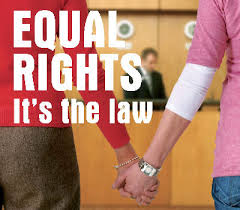 The controversial Equality Act, which was designed to replace a number of anti-discrimination laws, was due to come (partially) into force in October. However the intervening change of government since its enactment in April 2009 appeared to threaten the legislation, particularly after the timetable for the gradual enforcement of its provisions was withdrawn.
Some experts speculated that instead of repealing the Act, the new Government would simply not bring certain parts of it into force, notably the provisions on pay reporting and positive discrimination that were unpopular with the Conservative Party. However the Government Equality Office has now reinstated the original timetable, with the core provisions due to commence in October.
There is still some possibility that some parts of the Act will not become law. Introduced as part of the Labour Party’s 2005 manifesto fulfilment, the Equality Act came under fire for some of its sections dealing with equal pay, positive action and addressing socio-economic disadvantage.
Like this:
Like Loading...
23 June 2010 by Rosalind English
 (1) Richard Rabone (In his own Right & as Personal Representative of the Estate of Melanie Rabone, Deceased) (2) Gillian Rabone(In her own Right) Appellants v Pennine Care NHS Trust 21 June 2010 [2010] EWCA Civ 698 – read judgment
Court of Appeal rules that health trusts did not have operational obligations under Article 2 of the Human Rights Convention to take all steps to prevent the suicide of voluntary patients.
The appellants, parents of the deceased (Melanie) and administrator of their daughter’s estate, appealed against a decision ([ 2009) EWHC 1827 (QB),(2010) PIQR P2) that the respondent NHS trust had not breached Article 2 of the European Convention on Human Rights 1950. Melanie had suffered from a recurrent depressive disorder and at the age of 24, she agreed to be informally admitted to the Trust’s hospital. Despite the fact that it had been noted by employees of the trust that she had thought of suicide and self-harm, she was later granted two days’ home leave. During that leave, Melanie committed suicide.
Continue reading →
Like this:
Like Loading...
22 June 2010 by Adam Wagner
 George Osborne is to announce the Government’s emergency budget today. Although the Government has been seeking to emphasise measures which will soften the blow to the poor, the fact remains that these are the biggest cuts in decades and that many will end up worse off, particularly if wages decrease and unemployment increases.
Update: The full budget can be downloaded here. The section on benefits starts at page 33.
The Government is to cut benefits by £11bn by 2014-15. The huge cost of benefits (“spending on social security and tax credits has increased by 45 per cent, around £60 billion, in real terms over the past 10 years.), the Chancellor told Parliament, were one of the reasons why there isn’t any more money in the Government coffers. The Health in Pregnancy grant will be abolished from 2011 and Sure Start will be limited. Child Benefit is to be frozen for the next three years. Disability Living Allowance will be restricted by a new medical check from 2013. The Chancellor has said he will “increase the incentives to work” and will reassess benefits on the basis of the Consumer Price Index rather than the Retail Price Index. Housing benefit will be limited significantly and maximum limits on what can be claimed are to be introduced for the first time.
Rosalind English posted two weeks ago on whether budget cuts will lead to revised calls for “socio-economic” human rights; a concept which is as old as the European Convention on Human Rights and just as controversial. We will now revisit that post.
Continue reading →
Like this:
Like Loading...
22 June 2010 by Adam Wagner
 Holder v. Humanitarian Law Project, United States Supreme Court – Read judgment
The US Supreme Court has ruled that it does not violate the US Constitution for the government to block speech and other forms of advocacy supporting a foreign organization that has been officially labeled as terrorist, even if the aim is to support such a group’s peaceful or humanitarian actions.
The judgment does not, of course, have any direct effect on the UK. But UK anti-terrorism legislation already provides the police with broad powers to prosecute those who support terrorist groups. The UK Government is likely to be keeping a close eye on the United States in order to guide future policy, in terms of what is and what is not beyond the pale in restriction freedom of expression.
Continue reading →
Like this:
Like Loading...
21 June 2010 by Adam Wagner

Binyam Mohamed
Al Rawi & Ors v the Security Service & Ors [2010] EWHC 1496 (QB) (21 June 2010) – Read judgment
The Government has received another in an increasingly long line of blows in the Al Rawi & Others foreign torture case, with Mr Justice Silber ordering a closed hearing to see whether two key security service documents are to be disclosed to the claimants. If the Government chooses not to claim public interest immunity, which is unlikely, the documents will be disclosed immediately.
The compensation claim involves six claimants who were detained at various locations, including Guantanamo Bay and Bagram in Afghanistan, alleging various forms of mistreatment. They claim to have been subjected to false imprisonment, trespass to the person, conspiracy to injure, torture, breach of contract, negligence, misfeasance in public office and breaches of their rights under the Human Rights Act 1998.
The Government has recently ordered a public inquiry into the security services’ alleged complicity in torture, but this is not likely to start until after the Al Rawi claims are resolved.
Continue reading →
Like this:
Like Loading...
21 June 2010 by Adam Wagner

British Airways Plc v Unite the Union [2010] EWCA Civ 669 (20 May 2010) – Read judgment
Last month Unite won their appeal against an injunction obtained by British Airways in the High Court preventing their members from striking. The judgment has some potentially important implications for human rights, and in particular the right to free assembly.
The strike has already been the most damaging in British Airways’ history and they airline are now preparing for another round of strikes with Unite threatening to ballot its members for a third time.
Today the Confederation of British Industry (CBI) called for a change in the law to make it harder to bring strikes. Amongst other things, they are lobbying for the number of workers who need to agree to a strike before it can take place to be raised to 40%, which they say would “prevent strikes going ahead based on a relatively small turnout of particularly active members.”
Continue reading →
Like this:
Like Loading...
18 June 2010 by Adam Wagner
 This week we started adding links to interesting new articles and case law the sidebar under the heading “Recent selected sources (del.icio.us)”. Below is a quick rundown of the most recent links. The full list of links can be found here.
 Like this:
Like Loading...
18 June 2010 by Adam Wagner
 The controversy generated by the Bloody Sunday Inquiry continues to generate much comment and conjecture.
Lord Saville himself is to resign his judicial post in the Supreme Court early, although he was only a year away from retirement at age 75.
The most pressing concern for many of the relatives of those who were killed will be riding the momentum in order to push for prosecutions; either for the deaths themselves (fairly unlikely given the length of time which has elapsed since the killings) or perjury. Whilst public inquiries are not supposed to lead directly to prosecutions, at least not as a result of a person’s self-incriminating evidence, they can led to charges if someone is found to have lied under oath. The views of the families of the dead appear to be mixed in relation to this possibility.
Continue reading →
Like this:
Like Loading...
18 June 2010 by Adam Wagner
 The Equality Act 2010 may be a quiet addition to the Coalition Government’s repealing agenda as the Government Equality Office (GEO) withdraws the timetable for its implementation.
According to Out-law.com, a spokesperson from the GEO said “An announcement on scheduling for implementation of the Equality Act will be made in due course” and also confirmed that the new Government is not bound by the timetable set by its predecessor.
The Equality Act 2010 was passed into law on in the dying days of the New Labour government despite opposition of from the Pope, who complained that it would run contrary to “natural law” due to its likely effect on Catholic adoption agencies. The Conservatives may have more luck, however, in thwarting the Act’s implementation and in particular three aspects of it which they are opposed to. Some of the main provisions were supposed to come into force in October, but this now appears to have been put on hold. The original timetable can be accessed here.
Continue reading →
Like this:
Like Loading...
17 June 2010 by Adam Wagner
 The BBC report that plastic bags are to be put over “scores” of surveillance cameras in Birmingham following allegations that they deliberately targeted Muslim areas.
Update 19/06/10: Campaigners and the Guardian say police are now facing an investigation for failing to disclose the true purpose of the cameras
The decision marks a victory for campaigners who threatened to bring a judicial review challenging a surveillance project that uses 150 automatic number plate recognition cameras to monitor the roads in two predominantly Muslim areas of Birmingham. We posted earlier this week on the issue, sparked by a Guardian investigation:
The newspaper’s investigation has led to considerable public criticism of the scheme and the threat of legal action. The criticisms have concerned three main areas.First, it has been alleged that the scheme constitutes an unacceptable infringement of civil liberties. Local MPs Roger Godsiff (Labour) and John Hemming (Lib Dem) have attacked it on these grounds, with the latter said to be seeking the support of Deputy Prime Minister Nick Clegg. Second, there have been complaints about a lack of consultation despite the fact that Project Champion is reported to be undergoing tests with the intention of going live in August.
The cameras will not be used “until a consultation has been carried out“.
Like this:
Like Loading...
17 June 2010 by Elspeth Wrigley
 TTM v London Borough of Hackney & Ors [2010] EWHC 1349 (Admin) (11 June 2010) – Read judgment
A man accused of harassing women he did not know has failed in his human rights challenge to his detention under the Mental Health Act 1983. Having successfully secured a writ of habeas corpus to release him from a mental health institution, he has lost his initial bid for the High Court to declare that his detention ran contrary to his human rights. He is now appealing the decision.
This case has raised important questions about the extent of the ancient right of habeas corpus (relief from unlawful detention) and its interaction with the far more recent Article 5 of the European Convention on Human Rights 1950 (“ECHR”), as well as the ability of any wronged claimant to recover damages in circumstances where they are wrongly detained.
Continue reading →
Like this:
Like Loading...
17 June 2010 by Rosalind English

The Gaza Strip
[2010] UKSC 25, 16 June 2010 – read judgement
The Supreme Court has ruled against a man who challenged his immigration decision to remove him to the Palestinian National Authority on the basis that he could not go back as he would not be allowed back in to the place of his birth.
The challenge was based on the contention that the “country” or the “territory” stated in the notice of the decision was not one that satisfied the requirements of the 1971 Immigration Act 1971, and therefore the decision was unlawful under Section 82 of the Nationality, Immigration and Asylum Act 2002 (“the 2002 Act”)
The appellant, who was born in Gaza in 1985, had been living in Libya since the age of 5. In 2007 he entered the UK clandestinely in a lorry, and subsequently claimed asylum. This was rejected by the Secretary of State. His appeal of this decision was dismissed by the Immigration judge. She also dismissed this appeal insofar as it was based on the contention that the original immigration decision to remove him was “not in accordance with the law”.
Continue reading →
Like this:
Like Loading...
16 June 2010 by Adam Wagner
 Secretary of State for the Home Department v AP [2010] UKSC 24 (16 June 2010) – Read judgment
The Supreme Court have given the latest judgment on the controversial control order scheme, and in this case have allowed the appeal of a man suspected of terrorism on the grounds that confinement to a flat 150 miles away from his family amounted to a breach of his human rights.
The Appellant was an Ethiopian national who was the subject of a control order. This confined him to a flat for 16 hours a day in a Midlands town 150 miles away from his family in London.
The Supreme Court unanimously allowed the appeal, set aside the decision of the Court of Appeal and restored the High Court’s order. Lord Brown gave the leading judgment. Lord Rodger and Sir John Dyson SCJ delivered concurring judgments. The press summary of the judgment can be read here and the summary below is drawn from it.
Continue reading →
Like this:
Like Loading...

 Baroness Hale of Richmond has spoken to the Salford Human Rights Conference on the development of human rights law, and has lamented the time spent on constitutional wrangling rather than applying the essence of the Act.


Recent comments