
The Weekly Round-up: Rwanda policy “dead”, pro-Palestinian protest camps evicted, and trans healthcare debate continues
15 July 2024
In UK news
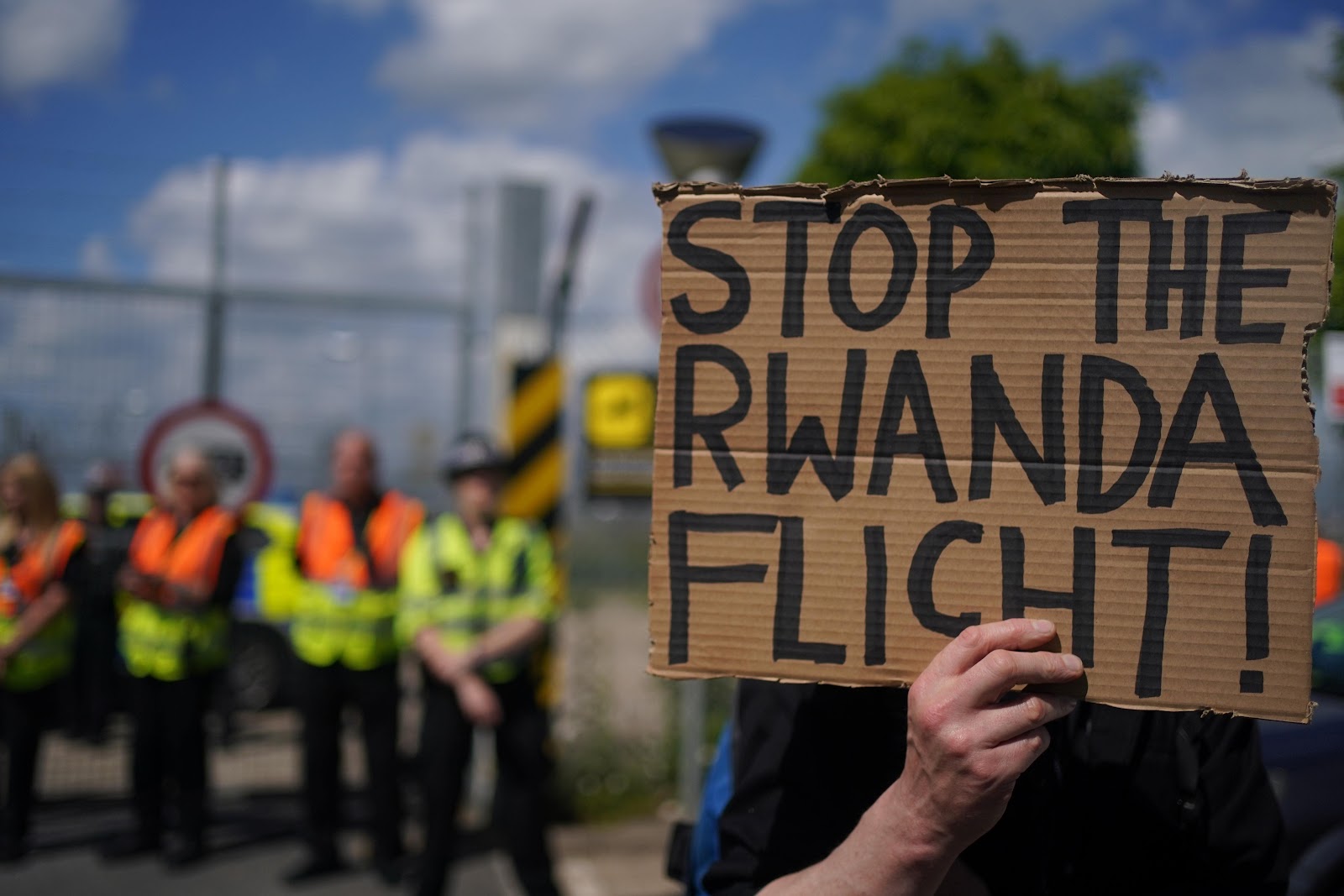
Since coming into power in the recent general election, PM Keir Starmer has announced that the Rwanda asylum scheme is “dead and buried”. The announcement was made as three claimants, known only as SM, SY and YXY, were challenging their imminent removal to Rwanda on a flight scheduled for 24 July. On 09 July, the High Court held a case management hearing in which barristers acting for the government confirmed that no removal flights to Rwanda were planned and the three individuals’ asylum claims would be processed in the UK. However, the barristers did not confirm the government’s wider position on the Rwanda policy, and the impact on asylum seekers whose claims were classified as inadmissible for processing in the UK under the Rwanda policy. The UN High Commissioner for Refugees has sent a list of recommendations to the new government. These include repealing the Illegal Migration Act 2023, resisting the “externalisation” of asylum processing to third countries, and streamlining the asylum process to tackle the backlog of asylum claims.
Despite media speculation and the urging of leading lawyers, the new government has not announced whether or not it will continue the UK government’s intervention in the International Criminal Court (ICC)’s decision regarding arrest warrants against Israeli PM Benjamin Netanyahu and Minister of Defence Yoav Gallant. The UK government seeks to argue that the ICC does not have jurisdiction over Israeli individuals because the Oslo Accords state that Palestine does not have criminal jurisdiction over Israeli individuals and so cannot delegate criminal jurisdiction over Israeli individuals to the ICC. The UK government does not recognise the State of Palestine. The ICC has given the UK government until 26 July to provide their full submissions.
In international news
Amnesty International has published a report analysing what it argues is a decline in protest rights in 21 European countries. The report argues that many European countries have been cracking down on protest rights through “the passing of repressive laws, establishment of onerous procedural obligations, imposition of arbitrary or discriminatory restrictions, racist policing and the use of unnecessary or excessive force against peaceful protestors, arbitrary interferences including the arrest, prosecution and imprisonment of protesters, as well as increasing use of invasive surveillance technology”. Amnesty International comments that those most impacted by these measures are groups already facing discrimination in society due to, among other things, race, religion or immigration status.
In the courts
The High Court has allowed University of Birmingham and University of Nottingham to evict Palestine solidarity protesters who had set up camps on university campuses. The court held that the protesters have no real prospect of establishing discrimination on the grounds of their beliefs, a breach of the public sector equality duty, a breach of section 43 Education (No.2) Act 1986 (which ensures freedom of speech in universities), or European Convention on Human Rights (ECHR) rights. The court held that there were many other ways in which the students could have chosen to protest and so the severity of the impact on their rights by removing the encampment “does not (by a significant margin) come anywhere close to outweighing the importance of the objective of the University being able to regain possession of its own land”. The court therefore gave the universities a summary possession order, which allows them to evict the protest camps without a full trial.
In W.W. v Poland, the European Court of Human Rights (ECtHR) held that the refusal to allow a transgender person to continue hormone therapy in prison amounted to a violation of her Article 8 right to a private life. Ms W.W. is a trans woman who was undergoing a gender reassignment procedure since 2019 while detained in prison. When she was transferred to a different prison in 2020, the head of the prison’s medical unit refused to allow her to continue hormone therapy without additional medical tests and failed to organise prompt appointments with specialist doctors. The ECtHR held that the freedom to define one’s gender identity is “one of the most basic essentials of self-determination” and the prison official’s requirement that Ms W.W. should undergo further consultations, after she had already started a beneficial course of treatment, was disproportionate in the circumstances. In the UK, the advocacy group TransActual is currently challenging the emergency ban on the use of puberty blockers as medication for trans children, arguing that the ban was based on the Secretary of State’s personal view rather than expert or medical evidence.
The impact of the Supreme Court’s decision in R (Finch) v Surrey County Council & Ors is already being felt. In ongoing litigation regarding the approval of a coal mine in Whitehaven, Cumbria, the Secretary of State for Housing, Communities and Local Government conceded the legal challenges. The Secretary of State admitted that an error was made as the downstream emissions caused by the inevitable burning of the extracted coal were not factored into the Environmental Impact Assessment. However, litigation may continue as the other defendant in the case, West Cumbria Mining, does not agree with the Secretary of State’s position.


