We use cookies to enhance your browsing experience. If you continue to use our website we will take this to mean that you agree to our use of cookies. If you want to find out more, please view our cookie policy. Accept and Hide [x]
R (The Motherhood Plan and Anor) v HM Treasury [2021] EWHC 309 (Admin)— read judgment
In a judgment handed down on 17 February 2021, the High Court has ruled that the Self Employment Income Support Scheme (“the Scheme”) introduced during the coronavirus pandemic does not indirectly discriminate against self-employed women who have taken a period of leave relating to maternity or pregnancy in the last three tax years.
Background
On 30 April 2020, HM Treasury (the Defendant) introduced the Scheme in order to provide payments to those who carried on a business which had been adversely affected by the coronavirus emergency. The Scheme was to be based on average trading profits (“ATP”) of the individual business over the preceding three full tax years (i.e. 2016/17, 2017/18, 2018/2019).
Issues
The Claimants’ case was that the Scheme had a discriminatory impact on women who had taken maternity leave during a relevant tax year. The rationale was that trading profits for the year when maternity leave was taken would have been lower, the result being that the payments under the Scheme were less than they otherwise might have been.
The Claimants therefore challenged the Scheme on two main grounds:
The Scheme unlawfully discriminated against self-employed women who have taken a period of leave relating to maternity or pregnancy in the three preceding tax years, contrary to Article 14 read with Article 1 of Protocol 1 of the Human Rights Convention. This discrimination was advanced as taking the form of: (i) “Conventional” indirect discrimination; and/or (ii) discrimination of the Thlimmenos type: the principle that different cases should properly be treated differently.
The Defendant breached the Public Sector Equality Duty in section 149 of the Equality Act 2010.
Human trafficking is internationally recognised as threatening human rights and the fundamental values of democratic societies. States have taken action to prevent, suppress and punish trafficking and to provide support to victims of what is the third largest illicit money-making venture in the world. But what happens when the victims of trafficking commit a crime themselves? Should they be prosecuted? What factors are relevant in this assessment? And which arm of the State should the assessment of whether someone is a victim of trafficking be entrusted to? This is the first time the European Court of Human Rights has tackled these questions. The Court found that the UK had breached its obligations under articles 4 and 6 of the European Convention on Human Rights by prosecuting two Vietnamese children who were potential victims of trafficking.
Background
It was only at the turn of the century that the first comprehensive international instrument on human trafficking was adopted. The Palermo Protocol established a number of obligations to prevent trafficking, punish traffickers and protect victims of trafficking. It defines trafficking as:
the recruitment, transportation, transfer, harbouring or receipt of persons, by means of the threat or use of force or other forms of coercion, of abduction, of fraud, of deception, of the abuse of power or of a position of vulnerability or of the giving or receiving of payments or benefits to achieve the consent of a person having control over another person, for the purpose of exploitation. Exploitation shall include, at a minimum, the exploitation of the prostitution of others or other forms of sexual exploitation, forced labour or services, slavery or practices similar to slavery, servitude or the removal of organs
There are therefore three elements to trafficking: (i) action (recruitment, transportation, transfer, harbouring or receipt); (ii) means (threat or use of force or other forms of coercion etc.); and (iii) purpose (exploitation). When trafficking involves a child, the ‘means’ element of the test does not apply.
A number of legal developments put free speech under the spotlight this week.
First, media commentators disputed the significance of the Duchess of Sussex’s successful privacy claim against Associated Newspaper Limited, covered in last week’s round-up. A leader in The Times issued the grave warning that ‘Mr Justice Warby’s judgment creates a precedent that will have a chilling effect on the media,’ not least ‘given that what was at stake…were issues that affect society as whole’. Some media lawyers took a dim view of such alarm, suggesting there was little to be surprised at in Warby J’s carefully reasoned conclusion that no legitimate public interest was to be found in publishing the intimate contents of a daughter’s letter to her father.
Then came Education Secretary Gavin Williamson’s announcement of a proposed free speech law targeting universities, designed to reverse ‘the chilling effect on campuses of unacceptable silencing and censoring’. Its reception was mixed to say the least. The scheme would impose a statutory free speech duty on universities and student unions, enabling ‘no-platformed’ academics, students and visiting speakers to sue for compensation. Potential infringements would be investigated by a mandated ‘free speech champion’, empowered to recommend various forms of redress. While many academics welcomed the basic principles behind the proposal, others complained that it fomented “phantom fears” of a “cancel culture” crisis.
The last 12 months have provided fertile ground for many significant judgments concerning inquest law. In Episode 136, Emma-Louise Fenelon speaks to Rachel Marcus and Jim Duffy about the developments practitioners will need to know about.
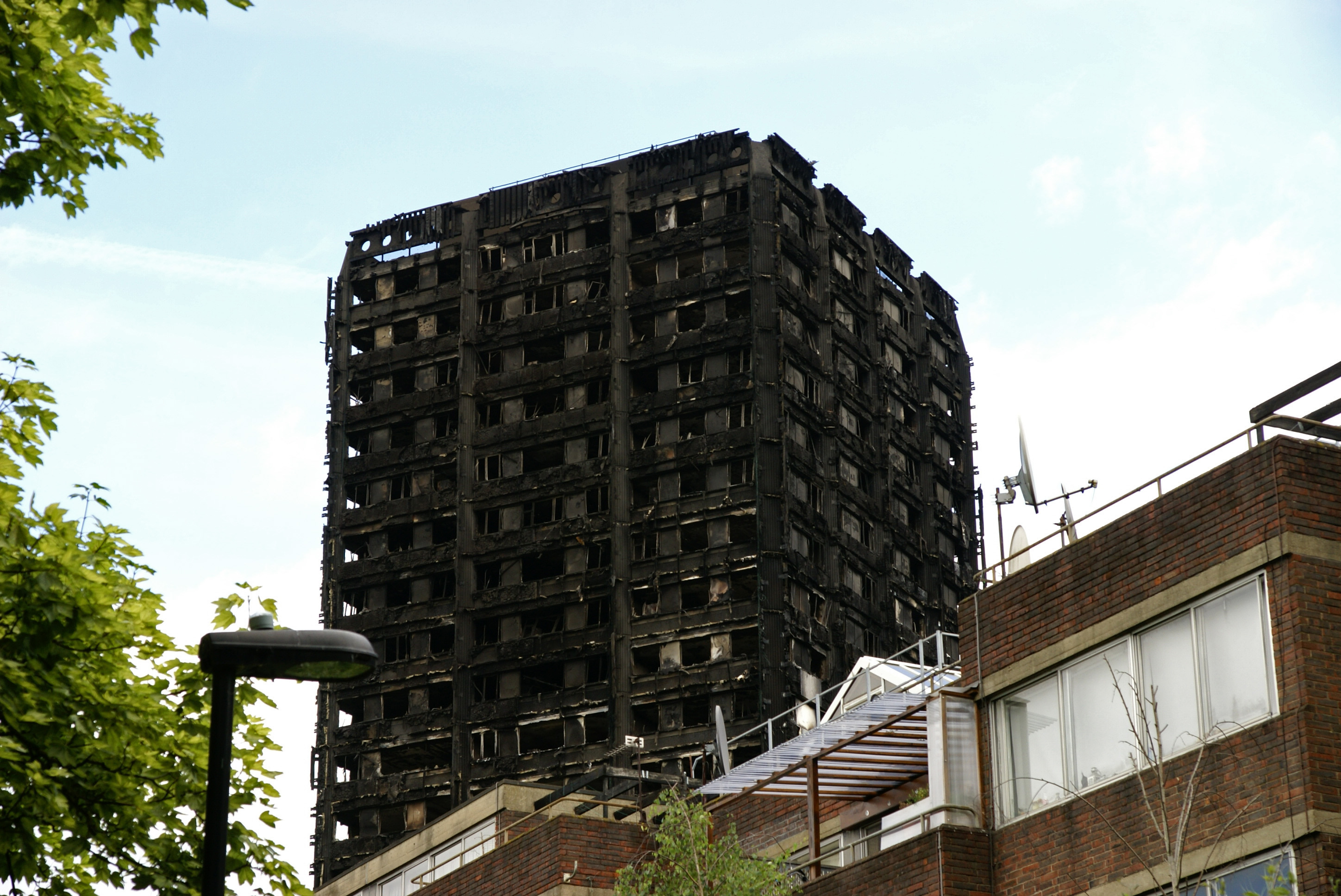
Having been temporarily suspended in early January as a result of an increase in COVID-19 cases, the Grenfell Tower Inquiry hearings resumed on 8 February 2021. The fire killed 72 people.
The hearings are being conducted remotely using a Zoom-based video platform, which the Inquiry describes as “a temporary measure to be used only for as long as absolutely necessary”.
The Inquiry conducted Phase 1 of the investigation, which focused on the events of the night of 14 June 2017, on 12 December 2018. Phase 2 is currently underway, which examines the causes of these events, including how Grenfell Tower came to be in a condition which allowed the fire to spread in the way identified by Phase 1.
In an earlier post I discussed the problem of “vaccine hesitancy” and written evidence to Parliament to Parliament outlining ways in which a vaccination against Covid-19 without consent could be put on a par with capacity under the Mental Capacity Act 2005 and with Section 3 of the Mental Health Act 1983.
Since the announcement of successful clinical trials for the vaccination was made in mid-December, the prospect of population-wide vaccinations has become a reality, and, whilst there are still supply problems, there is no doubt that the issue of medical intervention without consent being made mandatory either through private channels has begun to exercise legal minds across the country. Saga cruise line and the airline Qantas for example have indicated their intention to refuse non vaccinated passengers. Such private prohibitions may have almost as broad an effect as the restrictions on civil liberties passed under the Coronavirus Act since lockdown was declared on March 23 2020 (more specifically, the Health Protection (Coronavirus, Restrictions) (All Tiers) (England) Regulations 2020).
Snowed in while locked down? What would be more cheering reading than news from one of the no-frills airlines that there will soon be a fast track for vaccinated passengers to leave these shores for balmy Mediterranean beaches, or as the ad puts it “sunshine destinations”. Ryanair recently put out the slogan
Jab and Go
This advertising campaign, encouraging consumers to book flights following the roll out of the UK vaccination programme, might have been a perfectly understandable response to the year-long shock of having very few passengers to transport and the equally deranging inability of citizens to travel abroad.
But it turns out that Ryanair were somewhat ahead of themselves, as the Advertising Standards Authority has found that it was misleading for the airline to give the impression that most people who are hoping to take to the air over the Easter or summer holidays this year will have had the Covid-19 vaccination in time to do so.
On 8 February 2020, small but significant changes were made to the Part 3 (Case Management) of the Criminal Procedure Rules and Practice Directions 2020 (“CrimPR”). These changes remove the requirement that defendants in criminal trials provide their nationality to the court at preliminary hearings. The question is now to be asked only where a court passes an immediate or suspended custodial sentence.
As any working parent will tell you, childcare is expensive. Unlike in some other European countries, there is no universal provision of free or affordable childcare for school age children in the UK. This can create a barrier for parents, especially lone parents, returning to work.
There is some support in the system of universal credit, a means-tested benefits for families on low income. This provides for a childcare costs element (CCE), which allows eligible claiming parents to be re-imbursed up to 85% of the costs of childcare.
However, the system has a flaw. Unlike other parts of universal credit, such as the housing costs element (HCE), a claimant is entitled to be paid the CCE only if she has already paid the charges, rather than merely incurred them (the ‘Proof of Payment rule’). This means that a parent claiming the CCE (who is disproportionately more likely to be a woman) must first pay her childcare provider and then re-claim the costs several weeks afterwards. Some may not be able to afford to do so.
Ms Salvato is one such lone mother, who brought judicial review proceedings claiming that the differential method for reimbursing childcare costs constituted indirect discrimination against women contrary to Article 14 (read with Article 8 and/or Article 1 Protocol 1) ECHR and was irrational at common law. The Administrative Court agreed on both grounds.
On 18 December of last year, a judgment was handed down by the cour administrative d’appel à Bordeaux (the appeals court of the administrative court of Bordeaux) which, until quite recently, went under the international radar. In a landmark judgment, the Court ruled that the respondent, an asylum seeker from Bangladesh (‘Mr A’), could not be returned to his country of origin owing to two medical conditions: allergic asthma and sleep apnea. What was remarkable about this judgment was that it was the first time that a French court has taken pollution into account in a decision of this kind. The Court stated:
[Mr A] would be confronted upon arrival in his country of origin […] with a worsening of his respiratory disease because of the atmospheric pollution.
An article published by the Guardian brought the case to the attention of the British media, and the story has since been picked up by a number of national papers. This article will seek to shed light on the judgment, which is only available in French, and the legal circumstances leading to this groundbreaking decision.
In Privacy International v Investigatory Powers Tribunal, the Divisional Court held that s.5 Intelligence Services Act 1994 does not permit the government to issue general warrants to engage in computer network exploitation (“CNE”) – more commonly known as computer hacking. The court also offered valuable guidance on warrants and what is required to make them lawful.
The Issues
There were three issues:
1. Does s.5 Intelligence Services Act 1994 (“the 1994 Act”) permit the Secretary of State to issue ‘thematic’ or ‘general’ warrants to hack computers? General warrants are those which purportedly authorise acts in respect of an entire class of people or an entire class of acts (e.g. ‘all mobile phones in London’).
2. Should the court allow the claim to be amended to include a complaint that, prior to February 2015, the s.5 regime did not comply with Articles 8 and 10 of the European Convention on Human Rights?
3. If permission is given to amend the claim, should the new ground succeed?
The week began with the first Opposition Day of 2021, with Labour choosing to put council tax and employment rights centre of the Parliamentary stage. This followed an admission last week by Business Secretary Kwasi Kwarteng that the government was reviewing certain workers’ rights which had been saved post-Brexit as retained EU employment law. Responding to allegations that the government planned to scrap the 48-hour maximum work week and change the rules around rest breaks and holiday pay calculation, he tweeted ‘[w]e are not going to lower the standards of workers’ rights’. During the Opposition Day Debate Mr Kwarteng confirmed the review was no longer happening and that the government would not row back on the 48-hour work week, annual leave entitlement or rest breaks at work.
This blog is maintained for information purposes only. It is not intended to be a source of legal advice and must not be relied upon as such. Blog posts reflect the views and opinions of their individual authors, not of chambers as a whole.
Our privacy policy can be found on our ‘subscribe’ page or by clicking here.





Recent comments