Monthly News Archives: November 2016
3 November 2016 by Guest Contributor
R (o.t.a. Johnson) v. Secretary of State for the Home Department [2016] UKSC 56
19 October 2016 – read judgment
Summary
In Jamaica in 1985, a baby was born to British father and a Jamaican mother. The child’s parents never married, and at the age of four he moved to the UK with his father. Under the law in force at the time, as an ‘illegitimate’ child, he did not automatically acquire British citizenship. If his mother had been the British parent, if his parents had ever married each other, or if an application had been made while he was a child, he would have become a British citizen. But he did not.
Two decades pass and the Secretary of State attempts to deport that individual, Mr Johnson, following a string of very serious offences. He appeals on the ground that deportation would be unlawful discrimination. If only his parents had been married, he would be a citizen and not be liable for removal.
The Supreme Court agreed. It held that there was no justification for someone in his position being liable to deportation simply through being born out of wedlock, which was an accident of birth over which a child has no control.
The Court also declared that a “good character” requirement for acquiring citizenship which applied only to illegitimate children was unlawfully discriminatory and incompatible with the Convention.
This judgment represents a further step towards equal rights for children born out of wedlock.
Continue reading →
Like this:
Like Loading...
3 November 2016 by David Hart KC
 R (ClientEarth No.2) v Secretary of State for Environment, Food & Rural Affairs, Garnham J, 2 November 2016, judgment here
This is all about nitrogen dioxide in air, an unwanted byproduct of the internal combustion engine. Its effect on UK mortality has been estimated at 23,500 deaths per year.
The long way of telling the story involves circling around 6 hearings, to the Supreme Court, twice, to the CJEU in 2014 (C404-13, my post here), and now to a trenchant judgment from Garnham J.
The short version is this.
The UK has been non-compliant with EU Directive 2008/50 on nitrogen dioxide (et al) over the last 6 years. Art.23 of the Directive requires that the period in which a state is obliged to remedy any non-compliance is to be “as short as possible”.
The UK Air Quality Plan (AQP) produced in 2015 (and responding to the 2nd Supreme Court judgment here) was simply not up to ensuring that urgently required result.
In so concluding, Garnham J started with the construction of Art.23, in response to a Defra argument that it imports an element of discretion and judgment.
Continue reading →
Like this:
Like Loading...
1 November 2016 by Rosalind English
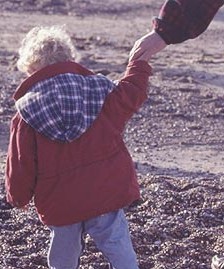 J (A Minor), Re [2016] EWHC 2430 (Fam) 21 October 2016 – read judgment
These proceedings concerned a care order sought by the local authority in respect of a seven year old boy (J). The judge found that his mother, who had separated from his father within 12 months of J’s birth, had caused her son significant emotional harm by making him live as a girl. The care order sought would allow J to continue to live with his father, in whose care he had flourished.
After the separation J had stayed with his mother. Contact arrangements broke down in 2013, causing the father to apply for a child arrangements order. Contact was consistently opposed by the mother. In 2013 and 2014, various agencies raised concerns with the local authority about the mother’s mental health and the fact that J was presenting as a girl. The mother had claimed that J was “gender variant” and should be allowed to go to school dressed as a girl. Social services were concerned that he was made to wear a pink headband and nail polish. And indeed at a hearing in November 2015, the mother told the court that J was living life entirely as a girl: he dressed like a girl and had been registered with a GP as a girl. She was reported to be considering sending the child to a gender reassignment clinic. As the judge said, when all this was properly analysed it was clear that “flares of concern were being sent from a whole raft of multi disciplinary agencies.
Each was signalling real anxiety in respect of this child’s welfare. Whilst it is, I suppose, conceivable that these referrals were considered individually, it is impossible to draw any inference other than that they were never evaluated collectively.
The local authority, concluded Hayden J, had “consistently failed” to take appropriate intervention where there were strong grounds for believing that a child was at risk of serious emotional harm. It was “striking” that the local authority had moved into wholesale acceptance that J should be regarded as a girl.
Once again, I make no apology for repeating the fact that J was still only 4 years of age.
Continue reading →
Like this:
Like Loading...
1 November 2016 by David Hart KC
 This blog has covered a number of claims for damages arising out of the misuse of private information. The Mirror Group phone hacking case is one example (see my post here and the appeal decision here), and the fall-out from the hapless Home Office official who put private information about asylum-seekers on the Internet, being another – (Gideon Barth’s post on TLT here). See also below for related posts.
But this post is to give a bit of context, via the wider and scarier cyber crime which is going on all around us. It threatens the livelihoods of individuals and businesses the globe over – and has given and will undoubtedly give rise to complex spin-off litigation.
So let’s just start with the other week. On 21 October 2016, it seems nearly half the Internet was hit by a massive DDoS attack affecting a company, Dyn, which provides internet services infrastructure for a host of websites. Twitter, Reddit, Netflix, WIRED, Spotify and the New York Times were affected. DDoS, for cyber virgins, is Distributed Denial of Service, i.e. an overloading of servers via a flood of malicious requests, in this case from tens of millions of IP addresses. No firm culprits so far, but a botnet called Mirai seems to be in the frame. It is thought that non-secure items like cars, fridges and cameras connected to the Internet (the Internet of Things) may be the conscripted foot soldiers in such attacks.
And now to the sorts of cases which have hit the headlines in this country to date.
Continue reading →
Like this:
Like Loading...
1 November 2016 by Emma-Louise Fenelon
“The question is,” said Alice, “whether you can make words mean so many different things.”
“The question is,” said Humpty Dumpty, “which is to be master – that’s all.”
Through the Looking Glass, Chapter 6
Few judicial decisions provoke the frenzy of editorials, newspaper articles, opinion pieces, facebook status updates and dinner table debates as were prompted by that of the Employment Tribunal last Friday in Aslam, Farrar and Others v Uber. Fewer still can boast references to both Shakespeare and Milton, nor deliver such a joy to read (assuming you are not, in fact, the Respondents’ lawyers). Volunteering to write about the judgment shortly after its publication on Friday afternoon, it took little time before I realised this piece would be one among a crowded chorus of views.
Among the maelstrom, The Sunday Times (£) was concerned it would herald the end of the end of the ‘gig’ economy, the Guardian argued that avoiding paying benefits was not a fair route to profits, while the Financial Times (£) approved the forging of a ‘middle way’ for fair treatment of workers and the company. For some the decision was seismic, potentially ground-breaking; for others it could spell tragedy; a lone voice thought it would change very little. Rightsinfo have provided an excellent plain English summary here.
Continue reading →
Like this:
Like Loading...



Recent comments