Category: Freedom of Information
8 December 2025 by Guest Contributor
By Kian Leong Tan
INTRODUCTION
In Buzzard-Quashie v Chief Constable of Northamptonshire Police [2025] EWCA Civ 1397, the Court of Appeal has helpfully restated the law on (civil) contempt of court. The decision – arising out of a longstanding refusal by the Northamptonshire police force (“the police force”) to comply with orders from the Information Commissioner’s Office (“ICO”) and the courts to release footage from officers’ body-worn cameras (“BWV”) – also affirms the liability of a chief constable for the acts and omissions of their subordinates.
Continue reading →
30 April 2018 by Eleanor Leydon

Image Credit: Guardian
The National Council for Civil Liberties (Liberty), R (On the Application Of) v Secretary of State for the Home Department & Anor: Liberty’s challenge to Part 4 of the Investigatory Powers Act, on the ground of incompatibility with EU law, was successful. In particular, Liberty challenged the power bestowed on the Secretary of State to issue ‘retention notices’ requiring telecommunications operators to retain communications data for up to 12 months (detail at [22]). This engaged three EU Charter rights: the right to private life, protection of personal data, and freedom of expression and information.
Continue reading →
9 April 2018 by Conor Monighan
Conor Monighan brings us the latest updates in human rights law
The High Court, Court of Appeal and Supreme Court are not sitting at present (Easter Term will begin on Tuesday 10th April). Accordingly, this week’s Round Up focuses largely on the ECHR.

Credit: The Guardian
Correia De Matos v. Portugal
This week, the ECHR held that requiring defendants to have legal representation does not violate Article 6. The vote was split by nine votes to eight.
The applicant, a lawyer by training, alleged a violation of Article 6 s.3(c) of the Convention. This was on the basis of a decision by Portuguese domestic courts which (i) refused him leave to conduct his own defence in criminal proceedings against him, and (ii) required that he be represented by a lawyer.
Continue reading →
3 March 2017 by Guest Contributor
 A study raising concerns about journalists’ ability to protect sources and whistleblowers was launched in the House of Lords last Wednesday.
The Institute of Advanced Legal Studies (IALS), in collaboration with the Guardian, has published the results of a research initiative into protecting journalists’ sources and whistleblowers in the current technological and legal environment. Investigative journalists, media lawyers, NGO representatives and researchers were invited to discuss issues faced in safeguarding anonymous sources. The report: ‘Protecting Sources and Whistleblowers in a Digital Age’ is available online here.
The participants discussed technological advances which facilitate the interception and monitoring of communications, along with legislative and policy changes which, IALS believes, have substantially weakened protections for sources.
Continue reading →
19 July 2015 by David Hart KC
 R (ota Davis et al) v. Secretary of State for Home Department [2015] EWHC 2092 – 17 July 2015 – read judgment
When a domestic Act of Parliament is in conflict with EU law, EU law wins. And when a bit of the EU Charter (given effect by the Lisbon Treaty) conflicts with an EU Directive, the EU Charter wins.
Which is why the Divisional Court found itself quashing an Act of Parliament on Friday – at the behest of four claimants, including two MPs, the Tories’ David Davis and Labour’s Tom Watson.
The doomed Act is the Data Retention and Investigatory Powers Act 2014 or DRIPA. It was in conformity with an underlying EU Directive (the Data Retention Directive 2006/24/EC or DRD – here). However, and prior to DRIPA, the DRD had been invalidated by the EU Court (in the Digital Rights Ireland case here) because it was in breach of the EU Charter.
All this concerns communications data, which tell us who was sending an email, to whom, from where, and when – but not the content of the email. DRIPA in effect compels telecoms providers to keep communications data for 12 months, and to make it available to public bodies such as intelligence and law enforcement agencies.
Continue reading →
10 April 2015 by David Hart KC
 Department of Health v. Information Commissioner et al [2015] UKUT 159, 30 March 2015, Charles J read judgment Simon Lewis requested that the Department of Health supply him with copies of the ministerial diary of Andrew Lansley from May 2010 until April 2011, via a Freedom of Information request. Mr Lewis’s interest in all this is not revealed in the judgment, but I dare say included seeing whether the Minister was being lobbied by private companies eager to muscle in on the NHS in this critical period. But such is the nature of FOIA litigation that it does not really look at the motive of the requester – and this case does not tell us what the diary showed. Indeed by the time of this appeal, Lewis was untraceable, and the burden of the argument in favour of disclosure was taken up by the Information Commissioner. The real interest in this decision is in Charles J’s robust agreement with the First Tier Tribunal that the information should be disclosed. In so doing, he fully endorsed the criticisms made by the FTT of the eminent civil servants who gave evidence before the FTT – in trenchant terms, as we shall see. He also gave an interesting account of how the public interest qualification should be applied in response to FOIA requests.
Continue reading →
11 April 2014 by David Hart KC

A lot is happening in various challenges related to the long-running and shameful exclusion of the Chagossian people from their islands in the Indian Ocean.
Here are the headlines, with a reminder of what these cases are about:
First, the Court of Appeal has just (2 April 2014) heard an appeal by the Chagossians against the dismissal of their challenge to the designation of the waters around the islands as a Marine Protected Area.
Second, the closed hearing of the UNCLOS Arbitral Tribunal on the merits of the Chagos dispute (Mauritius v UK) is to be held at Istanbul on 22 April 2014. This also concerns the designation of the MPA.
Thirdly, the public hearing in the UK Information Tribunal on access to Diego Garcia pollution data appeal under the Environmental Information Regulations 2004, which the FCO — contrary to the view of the Information Commissioner — says is inapplicable to overseas territories) is to be held on May 1st, 2014.
Now to a little more detail.
Continue reading →
26 March 2014 by David Hart KC

Kennedy v. Charity Commission et al, Supreme Court, 26 March 2014 read judgment
In judgments running to 90 pages, the Supreme Court dismissed this appeal by Mr Kennedy, a Times journalist, for access to documents generated by the Charity Commission under the Freedom of Information Act 2000 concerning three inquiries between 2003 and 2005 into the Mariam Appeal. This appeal was George Galloway’s response to the sanctions imposed on Iraq following the first Gulf War, and little Mariam was a leukaemia sufferer. Mr Kennedy’s suspicion, amongst others, was that charitable funds had been used by Galloway for political campaigning.
The Charity Commission had refused the request on the ground that the information was subject to an absolute exemption from disclosure contained in s.32(2) of the FOIA. The Supreme Court (in common with the Court of Appeal) held that the absolute exemption applied and dismissed Mr Kennedy’s request. But the result was a little closer in the SC, with two judges dissenting, essentially on Article 10 grounds.
Continue reading →
16 March 2014 by David Hart KC
 R (o.t.a Rob Evans) v. Attorney-General, Information Commissioner Interested Party, 12 March 2014 – read judgment
The Court of Appeal (reversing a strong court including the former Lord Chief Justice – see my previous post) has decided that correspondence between the Prince of Wales and various government departments should be released. A Guardian journalist had made a request under the Freedom of Information Act and the Environmental Information Regulations to see these documents. The Upper Tribunal had agreed that they should be disclosed.
At that point, the Attorney-General intervened and signed a certificate saying “no”.
Continue reading →
29 January 2014 by Adam Wagner
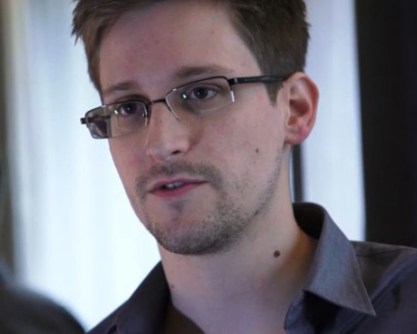 Two barristers have advised a Parliamentary committee that some mass surveillance allegedly undertaken by the UK’s security services is probably illegal. Jemima Stratford QC and Tim Johnston’s advice (PDF) was commissioned by the chair of the All Party Parliamentary Group on Drones.
You may ask why an Parliamentary group on drones is getting involved in the GCHQ surveillance debate, itself kickstarted by the revelations by Edward Snowden (pictured). The slightly tangential answer is that the committee is concerned about the legality of data being passed to the United States for use in drone strikes.
Continue reading →
8 January 2014 by Guest Contributor
 Marines A & Ors v Guardian News and Media & Other Media [2013] EWCA Crim 2367 – read judgment
On 15 September 2011 a patrol of Royal Marine Commandos were involved in an incident, which resulted in one of them, referred to as “Soldier A”, shooting dead an armed but seriously wounded Taliban fighter. Evidence of the shooting emerged later and five members of the patrol were eventually charged with murder. The charges against two of them were later dropped but the three remaining marines were tried for murder before the Court Martial. On 8 November 2013, Soldier A was found guilty of murder.
Quite apart from this extraordinary facts, the trial was unusual for another reason: publication of the identity of each of the defendants was prohibited at the commencement of the proceedings by an assistant Judge Advocate and later the Judge Advocate General (each of the judge’s in the court martial who considered the issue are referred to throughout as “judge”). The Court Martial Appeal Court (essentially the Court of Appeal Criminal Division sitting under a different name) was later invited to review the orders in respect of reporting restrictions. This was linked to the release of video footage and photographs relied on by the prosecution during the case.
Continue reading →
5 December 2013 by Dominic Ruck Keene
 Secretary of State for Foreign and Commonwealth Affairs v Assistant Deputy Coroner for Inner North London [2013] EWHC 3724 (Admin) – read judgment
1 Crown Office Row’s Neil Garnham QC and Neil Sheldon acted for the claimant in this case (the Secretary of State for the FCO). They had no involvement in the writing of this post.
The Foreign Secretary successfully appealed against an order for disclosure of secret documents to the Inquest for the death of former KGB spy Alexander Litvinenko.
The Foreign Secretary in February 2013 issued a certificate of Public Interest Immunity (PII), on the grounds of national security and/or international relations, to prevent the disclosure of a representative sample of Government documents relating to the 2006 poisoning. In May 2013 the Coroner for the Litvinenko Inquest (Sir Robert Owen) partially rejected that certificate and ordered the disclosure of gists of material relating to some of the key issues surrounding the death(read ruling). In this judgement, a panel of three judges of the High Court unanimously quashed that ruling.
Continue reading →
26 August 2013 by Adam Wagner
 As the August news lull continues, the David Miranda controversy is still troubling commentators – see Daniel Isenberg’s superb roundup. In the past week or so, an interesting symmetry has arisen between those defending and criticising the Police’s actions.
The Police’s critics say the detention was probably unlawful, but even if it was lawful it shouldn’t have been as, if this non-terrorism case can fit within existing anti-terror law, then terrorism powers are too wide. This more or less fits with my view, although I am not sure yet about the lawfulness of the detention. A reverse argument is made by the Police’s defenders: the detention was probably lawful, but if if it wasn’t then it should have been, as we need to be able to prevent these kind of dangerous intelligence leaks from occurring. See e.g. Matthew Parris and to an extent Louise Mensch.
Into the second category steps Lord Ian Blair, former Metropolitan Police Commissioner. He has told the BBC that the threat from international terrorism was “constantly changing” and there was a need to “review the law”:
Continue reading →
2 August 2013 by Guest Contributor
 Fenty & Ors v Arcadia Group Brands Ltd (t/a Topshop) & Anor [2013] EWHC 2310 (Ch) – Read judgment
The ruling in the Rihanna/Topshop case marks a significant trend, both in case law and society, towards equating image with commodity. Increasingly, celebrities and sports personalities earn large sums of money from sponsorship and advertising deals because companies recognise that their image sells products. So how can so-called image rights be protected?
The legal regime around image rights has arisen out of common law concepts of property, trespass and tort (civil wrong). The common law system means that precedents for the protection of an individual’s likeness have arisen from judges’ decisions in cases involving unauthorised exploitation of a likeness where an individual has suffered damage as a result. Some US states have enacted specific legislation equating celebrities’ personality rights with property rights, where expiration of the rights occurs 70 years following the death of the celebrity.
Continue reading →
9 July 2013 by David Hart KC
 R (o.t.a Rob Evans) v. Attorney-General, Information Commissioner Interested Party, 9 July 2013 – read judgment
As we all know, the Prince of Wales has his own opinions. And he has shared those opinions with various government departments. Our claimant, a Guardian journalist, thought it would be interesting and important for the rest of us to see those opinions. So he made a request under the Freedom of Information Act and the Environmental Information Regulations to see these documents.
No joy, says the Administrative Court. Yes, a tribunal had ordered production of the letters, but that order had been overridden by the Attorney-General. What, says anybody used to the idea that courts do their bit, and the government does its bit – that’s unfair, government cannot override what the courts say.
The complication, as we shall see, is that the override is built into FOIA.
Continue reading →



Recent comments