human rights
31 May 2012 by Rosalind English
 Writing on the Richard Dawkins website, humanist campaigner Leo Igwe-Ieet declares that there is a gaping hole in the protections listed in international rights instruments.
I have heard it proclaimed at the UN that the rights of women are human rights. I have also heard it proclaimed that the rights of gay people are human rights. These proclamations changed the way human rights are perceived around the globe. Personally I have yet to hear it proclaimed at UN, or at our regional and national human rights bodies that the rights of atheists, agnostics and freethinkers are human rights. I do not want these rights to be implied or assumed as currently the case in most countries. I want them to be expressly declared as universal human rights.
The reason why such explicit protection is urgently needed, the writer claims, is because non-believers are particularly vulnerable in some parts of the world, notably Africa. In parts of Africa where fundamentalist belief holds sway, “religious non-believers are treated as if they are not human beings, as if they do not exist or do not have the right to exist.” The right to freedom of religion is of no avail to those who wish to eschew faith altogether. On the contrary,
freedom of religion is often understood as freedom to profess a religion-the religion sanctioned by the state, by one’s family or community- not freedom to change one’s religion or freedom not to profess any religion at all as contained in article 18 of the Universal Declaration of Human Rights.
Continue reading →
Like this:
Like Loading...
31 May 2012 by Rosalind English
 Catt v Commissioner of the Police of the Metropolis [2012] EWHC 1471 (Admin) – read judgment
Retention of data on a national database of material relating to a protester’s attendance at demonstrations by a group that had a history of violence, criminality and disorder, did not engage Article 8 of the Human Rights Convention.
The claimant, now aged 87, applied for judicial review of the decision of the defendants to retain data, seeking an order that, as he had not himself been engaged in criminality, any reference to him should be deleted from the allegedly unlawfully retained material.
Background
The data in issue was essentially comprised of records (or reports) made by police officers overtly policing demonstrations of a group known as “Smash EDO”, which carried out a long-running campaign calling for the closure of a US owned arms company carrying on a lawful business in the United Kingdom. Disorder and criminality had been a feature of a number of the protests along with harassment of the company’s staff. The defendant authority had retained data relating to the claimant’s attendance at various political protests on the National Domestic Extremism Database, and maintained by the National Public Order Intelligence Unit.
Continue reading →
Like this:
Like Loading...
31 May 2012 by Rosalind English
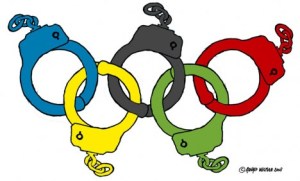 Mohammed Othman v Secretary of State for the Home Department, 28 May 2012 – read judgment
This was a further application for bail to the Special Immigration Appeals Commission (SIAC) after the appellant had failed in his application to the Grand Chamber of the Strasbourg Court earlier this month, but had launched an appeal to be heard by SIAC, against the Home Secretary’s refusal to revoke his deportation order.
Angus McCullough QC appeared for Abu Qatada as his Special Advocate in these proceedings before SIAC. He is not the author of this post.
A full hearing will take place in October. Until then, bail has been refused and Abu Qatada will remain in detention.
Given the evidence before him, Mitting J had to base his judgment on the assumption that the Secretary of State would not have maintained the deportation order unless convinced that she was in possession of material which could support her resistance to the appellant’s appeal and which could satisfy “the cogently expressed reservations of the Strasbourg Court about the fairness of the retrial”which the appellant would face in Jordan.
Two consequences flowed from these developments, according to the judge. One is that SIAC’s final decision in October is likely to put an end to this litigation. The second is that the risk of Qatada absconding has increased, if he assumes, in the light of the expressed determination of the Secretary of State, that he would not avoid deportation to Jordan by litigation in and from the United Kingdom.
Continue reading →
Like this:
Like Loading...
29 May 2012 by Rosalind English
 Monsters are born, not made: the latest round in the debate about criminal responsibility questions the very existence of intuitive morality.
US neuroscientist Sam Harris claims in a new book that free will is such a misleading illusion that we need to rethink our criminal justice system on the basis of discoveries coming from the neurological wards and MRI scans of the human brain in action.
The physiologist Benjamin Libet famously demonstrated in the 1980s that activity in the brain’s motor regions can be detected some 300 milliseconds before a person feels that he has decided to move. Subjects were hooked up to an EEG machine and were asked to move their left or right hand at a time of their choosing. They watched a specially designed clock to notice what time it was when they were finally committed to moving left or right hand. Libet measured the electrical potentials of their brains and discovered that nearly half a second before they were aware of what they were going to do, he was aware of their intentions. Libet’s findings have been borne out more recently in direct recordings of the cortex from neurological patients. With contemporary brain scanning technology, other scientists in 2008 were able to predict with 60% accuracy whether subjects would press a button with their left or right hand up to 10 seconds before the subject became aware of having made that choice (long before the preparatory motor activity detected by Libet).
Continue reading →
Like this:
Like Loading...
29 May 2012 by Adam Wagner
 The Justice and Security Bill, which proposes to introduce secret ‘Closed Material Procedure’ (CMP) hearings into civil trials, has been published. Here are some useful resources for picking your way through the controversy:
- The Ministry of Justice’s page on the Bill, including some ‘myth-busting’ (including ‘This is undermining the centuries old legal tradition’) is here.
- 84 responses to the Green Paper which led to this bill can be found here, and the Government’s response of 29 May is here.
- The Joint Committee on Human Rights’ highly critical report on the proposals is here.
- You can access all of the UK Human Rights Blog coverage of the secret trials proposals here, including our exclusive on the Special Advocates’ opposition to the proposals, which became the most damaging aspect of the case against the Green Paper.
More to come on the proposals soon…
Sign up to free human rights updates by email, Facebook, Twitter or RSS
Like this:
Like Loading...
24 May 2012 by Guest Contributor
 Last Tuesday saw the latest episode in the prisoner voting legal saga with the European Court of Human Rights’ Grand Chamber’s judgment reversing the Chamber judgment which found Italy’s automatic ban on voting for prisoners serving over 3 years in prison (and a lifetime ban with the possibility of future relief for those sentenced to more than 5 years) in breach of Article 3 of Protocol 1 to the European Convention on Human Rights.
Adam Wagner has compared the prisoner voting issue to a ping-pong ball in a wind tunnel, noting that ‘the ball is now back on the UK’s side of the table’. Indeed, the UK must still allow at least some prisoners the vote, as required by the 2005 judgment in Hirst v UK (No.2) and the 2010 judgment in Greens & MT v UK. Over at EJIL: Talk!, Marko Milanovic rightly accounts for the unholy mix of law and (inter)national politics that has generated the Grand Chamber’s unprincipled judgment. Indeed, as Carl Gardner suggests on the Head of Legal blog all that logically remains of the Hirst judgment is that automatic disenfranchisement of prisoners that are sentenced for less than 3 years (probably) breaches the convention.
Continue reading →
Like this:
Like Loading...
22 May 2012 by Adam Wagner

CASE OF SCOPPOLA v. ITALY (No. 3)(Application no. 126/05) – Read judgment / press release / press release on UK implications
The Grand Chamber of the European Court of Human Rights has ruled that states must allow for at least some prisoners to vote, but that states have a wide discretion as to deciding which prisoners. This amounts to a retreat on prisoner votes, but certainly no surrender. As I predicted, the court reaffirmed the principles set out in Hirst No. 2, that an automatic and indiscriminate bans breach the European Convention on Human Rights, but also reaffirmed that it was up to states to decide how to remove those indiscriminate bans.
I have compared the prisoner voting issue to a ping-pong ball in a wind tunnel. Today’s ruling means that the ball is now back on the UK’s side of the table.
Although Scoppola is a case which arose in Italy, the decision is of critical important to the UK for two reasons. First, the Court has made clear to the UK Government that it now has six months from today to bring forth legislative proposals which will end the blanket disenfranchisement of prisoners – see the Court’s helpful press release which explains the effect on the UK. Secondly, the Grand Chamber has now clarified the basic outline of how it expects states to comply with the original prisoner votes ruling, also of the Grand Chamber, in Hirst No. 2. For the full background, see my post from last week or Joshua Rozenberg’s excellent article on Guardian.co.uk.
Continue reading →
Like this:
Like Loading...
21 May 2012 by Sam Murrant
 Welcome back to the UK Human Rights Roundup, your weekly bulletin of human rights news. The full list of links can be found here. You can also find our table of human rights cases here and previous roundups here.
This week saw some commentary on Lord Sumption’s latest speech, which may indicate further advances into the domain of the government by the judges, and on secret justice and vicarious liability for Catholic priests. There have also been two important new decisions on child tax credit for separated parents and when costs will be awarded in settled judicial reviews under the Housing Act.
UKHRB Seminar Podcasts Available
The podcasts and full presentations by 1 Crown Office Row barristers Shaheen Rahman, Adam Wagner and Matthew Hill for UKHRB’s million-hit seminar are now available. The major topics: the Brighton Declaration, Article 8 and when States are complicit in torture. Check them out here if you missed the seminar.
Continue reading →
Like this:
Like Loading...
20 May 2012 by Rosalind English
 The recent standoff between two leading judicial lights, Jonathan Sumption and Stephen Sedley, may make for entertaining reading, but don’t be fooled.
Like the heated question of whether a non-entrenchment clause could be dug into our law to protect UK parliamentary sovereignty, this one wasn’t about law, or even constitutional theory; it was essentially about differing ideological positions vis a vis judicial power.
Joshua Rozenberg welcomes Sumption’s latest speech as indicative of his supportive stance on judicial activism, particularly in the foreign policy sphere. I don’t agree. In his FA Mann Lecture last November Sumption pinned his colours to the mast on judicial activism in general, and this latest fascinating survey of foreign policy case law illustrating the retreat of judicial deference must be read in that light.
Continue reading →
Like this:
Like Loading...
15 May 2012 by Adam Wagner
 The Grand Chamber of the European Court of Human Rights is to deliver its latest, hotly anticipated, decision on prisoner votes next Tuesday 22 May. The case is Scoppola v. Italy (n° 3). The Court’s press release is here.
The UK intervened in the case, with the Attorney General Dominic Grieve QC himself travelling to Strasbourg to explain the UK’s views (including, classily, some submissions in French). As a result, the UK was granted an extension of time to comply with the decision in the original prisoner votes case, Hirst No. 2 and the more recent Greens and MT. The UK will therefore have 6 months from 22 May 2012 to introduce a Bill to Parliament (see this correspondence between the UK and the Court) to make the UK voting system compliant with the European Convention on Human Rights. Which is to say, it will have until 22 November 2012. Or is it 23 November?
Continue reading →
Like this:
Like Loading...
14 May 2012 by Rosalind English
 South African Litigation Centre and Zimbabwe Exiles Forum v. National Director of Public Prosecutions and other governmental units – read judgment
South Africa’s North Gauteng High Court has just ruled that South African prosecutors and police illegally refused to proceed with an investigation of systematic torture in Zimbabwe.
South Africa, like many countries, has adopted the international crime prosecution Treaty (“the Rome Statute”). This means that under ordinary domestic law (the ICC Act) the South African investigative authorities have the power to prosecute anyone who has committed torture, or a crime against humanity anywhere in the world, if the perpetrator is in the country (at any time when investigation is contemplated). Jurisdiction is also vested irrespective of the perpetrator’s whereabouts if the victim is a South African citizen.
Of course this burden of responsibility teems with diplomatic difficulties, but generally it has been discharged with the convenient prosecutions of has-beens like Charles Taylor and Slobodan Milošević.
As Naomi Roht-Arriaza points out in her fascinating post on the subject, this particular case of South Africa v Zimbabwe illustrates the strain put on governments by the principle of complementarity under the 1998 Rome Statute, which puts pressure on implicated states to investigate these major crimes on their threshold, too close to home. It should come as no surprise that South African prosecutors are reluctant to investigate allegations of torture committed in Zimbabwe –
One of the critiques of transnational prosecutions based on universal jurisdiction is that they are a new brand of neo-colonialism, with former colonial powers seeking to bring into court disgraced leaders of their former colonies.
Now the tables are turning, and this universal jurisdiction is not being universally welcomed.
Continue reading →
Like this:
Like Loading...
13 May 2012 by Wessen Jazrawi
 Welcome back to the UK Human Rights Roundup, your weekly bulletin of human rights news. The full list of links can be found here. You can also find our table of human rights cases here and previous roundups here.
This week saw the Queen’s Speech set out a number of legislative reforms, the veto of the release of the NHS risk register and the latest instalment in the Abu Qatada saga after the European Court of Human Rights declared his appeal was within time but nonetheless declined to hear it.
by Wessen Jazrawi
Continue reading →
Like this:
Like Loading...
9 May 2012 by Rosalind English
 The late US law Professor Paul Miller reflected recently that Beethoven, Stephen Hawking and Elton John were examples of individuals whom, if they had been tested for serious genetic conditions at the start of their careers, may have been denied employment in the fields in which they later came to excel.
Earlier this month the Association of British Insurers announced the latest extension on the moratorium on the use of genetic test results for insurance purposes. But is this “Concordat” sufficient protection? Genetic technologies are becoming increasingly available and profound questions are arising in relation to life and health insurance and employability as genetic screening becomes cheaper and widespread.
According to the Human Genetics Commission (HGC)
The advent of cheap whole-genome sequencing, and greatly reduced costs for genetic tests in general, will provide the platform for genetic testing to be used for novel and unpredicted purposes. (Report on The Concept of Genetic Discrimination, Aril 2011)
Continue reading →
Like this:
Like Loading...
8 May 2012 by Adam Wagner
 Remember the far right? They are back. The ultra-nationalist Golden Dawn party has just won 7% in the Greek elections. Although it rejects “neo-Nazi” labels, its symbolism and style clearly channel fascist parties of the past. It has a Swastika-like logo and inflammatory anti-immigration policies. And for those who thought ultra-nationalism was confined to the history books, this YouTube video of leader Nikolaos Michaloliakos‘s victory speech will be particularly unsettling. To members of the audience who stayed after a black-shirted thug screamed at them to stand up for the leader’s entrance, Mr Michaloliakos made the ominous promise that “a “new golden dawn of Hellenism is rising” and for those “who betray this homeland the time has come to fear”.
The recent successes of far right parties in Europe, which have benefited from recession protest votes and anti-immigration populism, is indeed something to fear. But it also presents an opportunity to reflect on the importance of international human rights standards.
In the ongoing debate over the role of a European system of human rights law, lip service is often paid to the origins of the European Convention on Human Rights (ECHR) in post-war Europe. The rise of Fascism had killed tens of millions. The Nuremberg trials, an early experiment for international justice, had been a success. A Europe-wide system of rights protection seemed sensible. It still does.
Continue reading →
Like this:
Like Loading...
7 May 2012 by Rachit Buch
 Calver, R (on the application of) v The Adjudication Panel for Wales [2012] EWHC 1172 (Admin) – Read judgment
The decision to censure a Welsh councillor for comments on his blog was a disproportionate interference with his right to freedom of expression, the High Court has ruled. This right requires a broad interpretation of what counts as “political speech” – even when the speech is sarcastic and mocking.
Lewis Malcolm Calver is a councillor on the Manorbier Community Council and Pembrokeshire County Council and the owner/writer of the at www.manorbier.com blog. These proceedings arose when Mr Calver was censured by the Standards Committee for Pembrokeshire County Council for comments or articles on his blog, which criticised the running of Manorbier Council.
Continue reading →
Like this:
Like Loading...

 Writing on the Richard Dawkins website, humanist campaigner Leo Igwe-Ieet declares that there is a gaping hole in the protections listed in international rights instruments.


Recent comments