We use cookies to enhance your browsing experience. If you continue to use our website we will take this to mean that you agree to our use of cookies. If you want to find out more, please view our cookie policy. Accept and Hide [x]
JS (Disposal of Body), Re [2016] EWCH (Fam) (10 November 2016) – read judgment
A great deal has been written about this case but few of the headlines reflect the humanity and sensitivity of the decision, which may not be ground breaking nor precedent setting, but reflects how the law should respond to individual wishes if those play out in a way that cannot harm anyone else. Post-mortem cryonics may have a certain morbid ring, but it is a matter of individual choice, provided the resources are there to pay for it. As the judge observed, it was
no surprise that this application is the only one of its kind to have come before the courts in this country, and probably anywhere else. It is an example of the new questions that science poses to the law, perhaps most of all to family law.
Background facts and law
Peter Jackson J was faced with an application from JS, a 14 year old cancer patient whose condition had become untreatable. After researching the diminishing options available to her, JS had come across cryonics, the freezing of a dead body in the hope that resuscitation and a cure may be possible in the distant future. The science ofcryopreservation, the preservation of cells and tissues by freezing, is now a well-known process in certain branches of medicine, for example the preservation of sperm and embryos as part of fertility treatment. But whole body cryopreservation has not been achieved in any mammal species, largely due to the difficulties of reviving brain tissue. As the judge said,
cryonics is cryopreservation taken to its extreme.
Only three organisations in the world provide this service, one in the United States being involved in this case. The cost is about ten times as much as the average funeral. Although JS’s family is not well off, her grandparents had raised the necessary funds. Whatever anyone may think of this procedure, there was no doubt about JS’s intelligence and her capacity to make this decision. She wrote, in response to asking to explain why she wanted “this unusual thing done”:
I’m only 14 years old and I don’t want to die, but I know I am going to. I think being cryo-preserved gives me a chance to be cured and woken up, even in hundreds of years’ time. I don’t want to be buried underground. I want to live and live longer and I think that in the future they might find a cure for my cancer and wake me up. I want to have this chance. This is my wish.”
In my 2011 post Why be nice? Human rights under pressure I explored the extent to which our limited tendencies to altruism, insofar as they have survived natural selection, could be institutionalised and enforced. In this article I apply the scientific learning on our cooperative instincts to the question of environmental regulation. I argue that whilst we seem to be hard-wired to cooperate, environmental responsibility will only be instilled under certain conditions that resonate with our evolved psychology, and that most modern environmental law fails to acknowledge these conditions. Continue reading →
Conservative frontrunner Liz Truss is promising to cut taxes this winter to support families amidst rising energy bills, through an emergency budget that would be enacted this September. Sunak, her rival, has pledged to provide a £15bn overall package of assistance with energy bills. Criticisms have been raised of Truss’ plans, however, with suggestions that they could cost £30bn, £40bn or even £50bn per year. Both candidates’ plans have been criticised for not being accompanied by plans for lower spending that would make them sustainable. Labour’s Rachel Reeves has argued that amidst ‘fantasy economics and unfunded announcements from the Tories’, Labour alone can offer Britain the fresh start that it needs.
A survey by the British Dental Association and the BBC has shown that 91% of NHS practices in England are not accepting new adult patients. Louise Ansari, national director of Healthwatch England, has called the results of the survey ‘dire’. Stories have emerged of people pulling out their own teeth and making their own teeth out of resin to stick back on with superglue. The health secretary has noted the ‘urgency’ of preparing the NHS for winter, amidst the pressures of coronavirus, the rising cost of living and seasonal flu. Whether the Department of Health and Social Care’s recent comment regarding the ‘government priority’ of NHS dental care will translate into satisfactory results remains to be seen.
The road to hell as we know is paved with good intentions and here they are, laid bare by the Daily Politics broadcaster in his exposition of everything that has gone wrong with the Convention since it was forged in the crucible of two world wars.
Post war prosperity ensured that genocide and dictatorships did not arise again. But the Convention has become a “political poison” that goes to the very core of how the country is governed.
In “Rights and Wrongs” Neil declares that he is trying “to cut throughout the hype and confusion” surrounding the subject, and his approach is undeniably forthright and populist. No doubt he will be castigated severely for poor reporting. But to be fair, he points out that the media had exaggerated some judgments – you can’t avoid deportation merely by owning a cat, but you can if you have a settled family who happens to own one. He also cites a number of decisions from Strasbourg that most people in this country would support, or at least think nothing of these days – gays in the military, the abolition of corporal punishment in schools, freedom of the press (particularly the ruling that saved Andrew Neil from jail during the Spycatcher affair in the 1980s).
But – inevitably – the documentary focussed on the cases of Abu Qatada and Aso Mohammed Ibrahim, the asylum seeker whose car hit and killed 12-year-old Amy Houston, and who successfully resisted deportation because of his right to a family life. Continue reading →
This case concerned a man, KG, who suffered from the human prion disease CJD. As was explained in the judgment, prion diseases are invariably fatal, neurodegenerative conditions.
They are involve the build-up in the brain and some other organs of a rogue form of a naturally-occurring protein known as the prion protein. The rogue protein results from a change in shape of the normal prion protein. Once formed in the body, these rogue proteins (or prions) recruit and convert more of the normal prion protein into the abnormal form, setting off a kind of chain reaction which leads to a progressive accumulation of the rogue protein.
The proposed requirement for social media platforms to delete ‘legal but harmful’ content has been partly removed from the Online Safety Bill. While the change affects adult users, the requirement to prevent children being exposed to harmful content remains in the Bill. Culture Secretary, Michelle Donelan, denied that this change was ‘weakening’ the laws protecting social media users because there will be more control about what people see on specific sites. The kinds of material people will have control over include content promoting eating disorders or inciting hate on the basis of race, gender, or religion. The removal of the ‘legal but harmful’ element of the Bill has been welcomed by many who criticised it for ‘posing a threat to free speech’. Lucy Powell MP, however, states that the removal of the section gives a ‘free pass to abusers and takes the public for a ride’.
The Domestic Abuse Commissioner has warned that a ‘deeply unjust’ postcode lottery puts victims of domestic abuse at greater risk depending on where they live in the country. The statistics demonstrate that regional inequalities exist in terms of accessing support for domestic abuse, with a 21% difference between the highest performing area (the North-East) and the lowest performing area (Wales). The report also found that black and minority ethnic victims of domestic violence struggle to access necessary support. Consequently, the Commissioner has urged that the Victims Bill place a duty on local authorities to conduct needs assessments along with a new central obligation to provide greater funding to meet those needs.
New data has revealed that 40 potential breaches of the ministerial code have never been referred for investigation by the ethics adviser. In discovering this, the report stated that it would be concerning if Rishi Sunak’s new adviser was not allowed to examine historical cases, which a parliamentary committee warned would be the case previously. One of the recommendations of the report is to make former ministers and civil servants who break the rules regulating the relation between government and the private sector face legal action.
The High Court has been asked to decide whether a teenager who is on life-support following an apparent suicide attempt can be allowed to die. Hospital bosses have prospectively asked whether it would be lawful to remove life-support treatment, but the trial has been adjourned until the new year so that the family could have ‘as normal and as peaceful’ a Christmas as possible.
In the courts
In The Good Law Project v The Prime Minister [2022] EWCA Civ 1580, the Court of Appeal dismissed an appeal and a claim for judicial review regarding duties owed in relation to public records under section 3(1) of the Public Records Act 1958. S3(1) establishes a duty on ‘every person responsible for the public records… to make arrangements for the selection of those records which ought to be permanently preserved and for their safe-keeping.’ The substantive issues on appeal were (i) whether this duty extended to the preservation of records before they are selected; and (ii) whether there was a duty to comply with 8 published policies. In respect of the first issue, the Court held that Parliament did not impose a general duty to retain public records and did not specify that records were to be retained pending their selection. The Court was not willing to find that the duty was implied either, as to do so would mean the duty applied to all records which would overwhelm the Departments and the National Archives [51]. In respect of the second issue, the Court found that there was no duty to comply with the policies. Importantly, they were directed to ministers and civil servants, not to the public. the Appellant could not, therefore, enforce it against the Respondent. The policies were internal and could not be framed as absolute duties not to use certain methods of communication.
In Kays v Secretary of State for Work and Pensions [2022] EWCA 1593, the Court of Appeal dismissed an appeal against the refusal of a claim for universal credit. The Appellant was a student with severe disabilities. He applied for universal credit under the understanding that students in receipt of disability living allowances are entitled. His claim was refused because he had not been assessed as having limited capability for work before the claim was made (as per the 2020 Regulations), which he claimed was unlawful. The grounds for appeal were that the Respondent acted irrationally in deciding not to consult before making the 2020 Regulations, and that it resulted in arbitrary results. It was held that no duty exists to consult on the making of regulations; the Respondent was not obliged to consult and did not see anything necessitating her to do so. It was held that there was nothing irrational in that approach [26]. It was also held that the 2020 Regulations did not lead to arbitrary results because the issues complained of were not caused by the Regulations themselves. The opportunity to obtain an assessment of work capability was contained in the relevant regulations before the 2020 Regulations were made [32].
In Ware v French [2022] EWHC 3030 (KB), the High Court found in favour of the Claimant in a defamation trial regarding the Panorama documentary ‘Is Labour Anti-Semitic?’ that aired in July 2019. An article was published in Coldtype magazine by the Defendant entitled ‘Is the BBC Anti-Labour? Panorama’s biased AntiSemitism Reporting – A Case to Answer, an investigation by Paddy French’. The Claimant, the programme’s reporter, claimed that the article was defamatory because it caused him serious harm by describing him as a rogue and biased journalist. This position was described as ‘overwhelming’. The wide dissemination of the article, the large interest in antisemitism within the Labour Party, and the Claimant’s high profile as a journalist all contributed to a situation where the allegations directly impacted the Claimant’s ability to earn a living.
Kings College Hospital NHS Foundation Trust v Thomas and others [2018] EWHC 127 (Fam) – read judgment
Updated: The Court of Appeal has now ruled that doctors at King’s College hospital, London, could remove Isaiah from the ventilator that has kept him alive since he was deprived of oxygen at birth and sustained catastrophic brain injury. The judges also refused the parents permission to appeal against this ruling. McFarlane LJ said
This case is not about the parents or their hopes. It is and must firmly be about Isaiah and his best interests.
Parental love is to be cherished by society, particularly when a child is sick. But the “flattering voice of hope” is not always in best interests of the object of that love. So concluded MacDonald J in a recent ruling which has attracted considerable media attention. The judge concluded that it was not in the 11- month old boy’s best interests for life-sustaining treatment to be continued. He was satisfied on the evidence of the court, he said, that the boy, Isaiah, had
no prospect of recovery or improvement given the severe nature of the cerebral atrophy in his brain
and that he would remain “ventilator dependent and without meaningful awareness of his surroundings”
Perhaps with the Charlie Gard publicity in mind, MacDonald J was careful to emphasise the weight of the medical evidence as against the parents’ assessment of the boy’s condition. The publicity sparked by this case has led to visits to the child by other medical professionals. There are some forceful concluding remarks in this judgement about the inappropriate nature of these possible “clandestine examinations”. These are now a matter for the police.
The judge also rejected the argument that the court should hear evidence from “foreign” experts on the approach from which other cultures might approach this question in terms of its ethics and outcome. There was a “world of difference” between medical expertise from abroad and a foreign “expert” who simply takes the view that the medical or ethical approach to these issues in this jurisdiction differs from that in their own practice.
It would be extremely unfortunate if the standard response to applications of this nature was to become one of scouring the world for medical experts who simply take the view that the medical, moral or ethical approach to these issues in their jurisdiction, or in their own practice is preferable to the medical, moral or ethical approach in this jurisdiction.
A spokesman for the Taliban has said that working women must stay at home for their own safety as “a very temporary procedure” until systems are in place to ensure their safety. The spokesman also told Afghans not to go to Kabul airport and said the US should not encourage them to leave Afghanistan.
Last week, the former head of religious police for the Taliban confirmed that punishments such as execution and amputation would return to Afghanistan. Prior to the takeover of Kabul, a Taliban judge told the BBC that Sharia law was clear and included punishments of 100 lashes in public for sex out of marriage, being stoned to death for adultery, and “[f]or those who steal: if it’s proved, then his hand should be cut off.”
On Saturday it was reported that the Taliban hung the bodies of four alleged kidnappers from cranes in Herat city square, before moving them to other areas of the city for public display. An unidentified Taliban commander said the aim was “to alert all criminals that they are not safe”.
Comparisons to Orwell’s dystopia have inevitably been drawn with the drone strikes recently carried out by the UK in Syria that killed two British IS fighters, Reyaad Khan and Ruhul Amin. Amnesty reacted with alarm at the news that remote control drones had been used as vehicles of execution – action they say “is difficult to conceive as being a feature of the present” – but particularly against a country with which we are not at war.
Controversy is certainly brewing over what Michael Fallon’s critics have termed a US-style “kill-list” and the legality of the government’s action, which David Cameron initially justified as an act of UK self-defence in his address to the Commons last Monday, necessary to protect the UK from an “imminent threat” – action which is permitted under Article 51 of the UN Charter. Continue reading →
Welcome back to the UK Human Rights Roundup, your weekly summary of human rights news. The full list of links can be found here. You can also find our table of human rights cases here and previous roundups here.
In the news
Human rights continue to be big news this week, with Andrew Neil’s Rights Gone Wrong? programme exploring the rather divisive issues that Human Rights bring up for the British public. The proposed reforms to the European Court of Human Rights and the Bill of Rights made news again also, along with such controversies as the right to die, open justice and kettling.
Adam Wagner acted for victims of the Blood Contamination scandal in a proposed Judicial Review of the refusal to hold an inquiry. He is not the author of this post
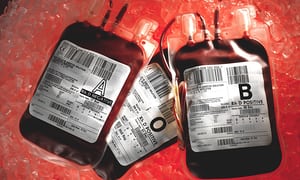
Amid the blizzard of news stories circling Westminster on Friday, it would have been easy to miss an announcement of considerable significance to victims of the contaminated blood scandal and their families.
In a written statement to Parliament, Damian Green confirmed that the inquiry into the scandal – announced by the Prime Minister in July – will take the form of a UK-wide, statutory inquiry.
Not only that, it will no longer be set up by the Department of Health (DoH), but by the Cabinet Office. Campaigners for the victims and their families had boycotted talks with Downing Street, arguing that the DoH would have a conflict of interest, due to the need for the inquiry to investigate the actions of health officials.
However, there was yet more disappointment and frustration over the continued failure to appoint an inquiry chair or to announce terms of reference. Continue reading →
The biggest story filling the headlines this week was that Boris Johnson has resigned as leader of the Conservative Party following over 50 resignations from government ministers. Though predominantly a political development, there are potential legal implications to the decision. This is because, until the leadership campaign announces his successor, current policies are stagnated under the ‘lame-duck government’. There is, therefore, doubt over the future of three particularly controversial policies: the Northern Ireland Protocol Bill; the Bill of Rights Bill; and the Rwanda scheme.
The proposed Bill of Rights Bill is Dominic Raab’s effort to replace the Human Rights Act, with the vision to allow the UKSC to take little account of rulings by the ECtHR. While Raab still remains in office, there are question marks over whether the controversial Bill will survive the administrative overhaul that is soon to unfold. See the reference below to the latest episode of Law Pod UK, which discusses the Bill in detail.
Last month 1 Crown Office Row hosted a fascinating panel debate on the Court of Protection and the incredibly difficult issues surrounding assisted dying. The panel included Philip Havers QC, the philosopher A.C. Grayling and Leigh Day & Co.’s human rights partner Richard Stein. You can now view the video here or below. Also see here for Rosalind English’s report of the event.
We have finished an overhaul of the Convention rights pages to reflect recent political and legal developments since they were last reviewed. The most important of these is the vote to leave the European Union and what implications this might have for the UK’s obligations under the European Charter of Fundamental Rights and Freedoms. For the moment I have left in place the editorial material matching each of the Charter rights with the Convention rights but the Charter and the role of the ECJ in UK legal affairs may be one of the first features of the post-Brexit landscape to change (see Marina Wheeler’s post on how that court might have overstepped the mark with the Charter, and David Hart’s discussion on the topic of ECJ muscle-flexing here, here and here).
On 20 March Dignity in Dying released a report exposing the fact that those behind the legal challenge to the RCP (detailed below) have a long history of campaigning for pro-life causes and connections to American pro-life lobbyists, the Alliance Defending Freedom (ADF).
In January we published episode 63 of Law Pod UK featuring Sarah Wootton, Chief Executive of Dignity in Dying. DID campaigns for a change in the law to allow doctors to prescribe lethal drugs for terminally ill people to hasten their own death in specific situations. Sarah referred in that interview to a poll that was about to be conducted of the members of the Royal College of Physicians, who have hitherto opposed assisted dying. The members are being asked whether they individually support a legal change to permit assisted dying, and what they think the RCP’s position should be. The RCP has said that it will move to a neutral position unless at least 60% of votes in a poll being sent out in the first week of February are either in favour of or opposed to a change in the law. The results will be announced in March but the poll has had a bumpy ride, including a threat of judicial review by one of its members for conducting the exercise as a “sham poll with a rigged outcome.” The Christian charity Duty of Care has called for signatures from doctors and medical students to a petition objecting to the poll.
While that has been going on, DID has supported the family of a man suffering from motor neurone disease. On 7 February Geoff Whaley travelled to Dignitas in Switzerland to end his life.
Before he died, Mr Whaley wrote an open letter all MPs to impress upon them the need for a change in the law after his wife was reported to the police, in an anonymous phone call, as a person potentially assisting someone to end their life. The Whaley’s MP Cheryl Gillan raised the family’s story in the Commons during Business of the House.
Geoff [and his wife] had to suffer the added mental anguish of facing a criminal investigation at a time when the family, and most of all Geoff, wanted to prepare his goodbyes and fulfil his last wish in peace. May I ask the Leader of the House if we can have a debate in Government time so that we can re-examine this area of law, particularly in the light of this amazing man’s efforts to give terminally ill people a choice over the way they leave this world, and to afford protection to their loved ones?
This blog is maintained for information purposes only. It is not intended to be a source of legal advice and must not be relied upon as such. Blog posts reflect the views and opinions of their individual authors, not of chambers as a whole.
Our privacy policy can be found on our ‘subscribe’ page or by clicking here.

 JS (Disposal of Body), Re [2016] EWCH (Fam) (10 November 2016) – read judgment




Recent comments